Crossing a Road Legally in Nova Scotia
One of the biggest head-scratchers for off-highway vehicle (OHV) riders in Nova Scotia is how to legally get from one trail section to another when there's a paved road in the way. It's incredibly frustrating to be on a fantastic ride, only to hit a public road and feel completely lost about what you're allowed to do. This comprehensive guide will walk you through the ins and outs of legally crossing roads, understanding the new road trail system, and ensuring you stay within the law while enjoying Nova Scotia's incredible riding opportunities.
The Basics: Why Road Crossings are Tricky in Nova Scotia
Let's be real, the rules around riding ATVs and UTVs on or across public roads can feel like a minefield. You're out there for fun, for the adventure, and suddenly you're bogged down in legal technicalities. It’s not just you; many riders find this confusing because we're dealing with two distinct legal frameworks that often seem to clash.
The Off-highway Vehicles Act vs. the Motor Vehicle Act
At the heart of the confusion lies the interplay between two very important pieces of legislation in Nova Scotia. On one hand, you have the Off-highway Vehicles Act, which governs where and how you can operate your ATV or UTV. This act is all about promoting safe and responsible off-road use, often in designated trail systems or on private land. It sets out rules for registration, insurance, helmet use, and age restrictions specific to OHVs.
Then, there's the Motor Vehicle Act, which dictates everything about vehicles on public roads. Think cars, trucks, motorcycles—these are all covered by this act, which has very strict rules about licensing, vehicle standards (like turn signals, proper headlights, etc.), and where and how they can operate. The challenge is that your OHV is generally not considered a "motor vehicle" under this act, which means it doesn't meet the standards for most public road use. This fundamental difference is why simply riding your quad down the road like a car is almost always illegal, leading to hefty fines and potential safety risks. It's a classic square peg, round hole scenario, and it leaves many riders scratching their heads about how to navigate these often-necessary road connections.
The General Ban on Road Riding
For a long time, the rule of thumb was pretty straightforward, if frustrating: ATVs and UTVs were generally banned from public roads in Nova Scotia. This meant that if your trail ended at a provincial highway or a municipal road, you were expected to load your machine onto a trailer or find an alternative route that didn't involve pavement. This wasn't just an inconvenience; it often meant that perfectly good trail networks were fragmented, making long-distance touring difficult or impossible.
This ban was in place primarily for safety reasons, as OHVs are designed for off-road terrain, not for sharing space with faster-moving traffic. They lack many of the safety features of on-road vehicles, like standard lighting packages, mirrors, and robust suspension for hard surfaces. While the province has made strides with the [Nova Scotia Road Trails Act Explained], the general principle still holds true: don't assume you can ride on any public road. The default setting is "no," and any exceptions are very specific and must be strictly followed. Ignoring this general ban can lead to serious legal consequences and, more importantly, put yourself and others at risk.
The Need for Patience and Planning
Given the complexities, successfully and legally navigating road crossings in Nova Scotia demands both patience and meticulous planning. You can't just wing it when you hit a paved section; you need to know the rules, understand where you're allowed to be, and have a clear plan before you even leave your staging area. This might mean studying maps beforehand, looking for designated [Nova Scotia Road Trails: Where You Can Ride], or identifying legal crossing points.
Planning also involves ensuring your machine and your riding gear meet all the necessary requirements for any on-road segment, however brief. Are your lights working? Do you have your insurance and registration handy? Are you wearing your helmet? These aren't just minor details; they are critical components of legal and safe operation. Rushing into a crossing or a short road ride without this preparation is a recipe for trouble. Taking the time to understand the nuances and prepare accordingly can save you from a frustrating encounter with law enforcement, or worse, an accident.
Understanding Legal Road Crossing Rules
While riding an OHV on a public road for extended periods is generally prohibited, the law does make specific allowances for crossing roads. These aren't meant to be loopholes to ride on roads, but rather practical measures to connect trail segments safely and legally. It’s crucial to understand these distinctions to avoid misunderstandings and potential fines.
Designated Crossing Points
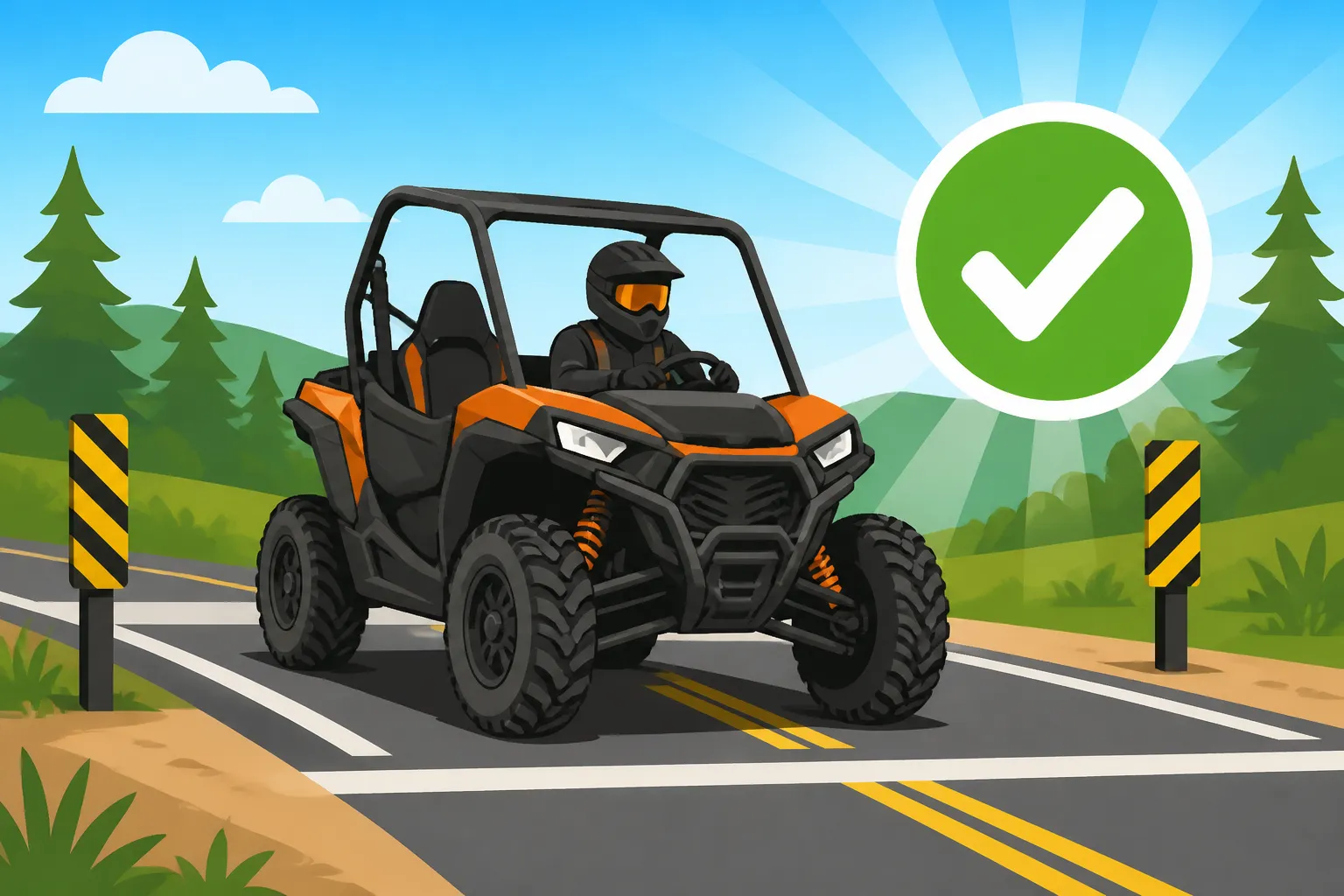
The most common and safest way to get your ATV or UTV across a public road is at a designated crossing point. These are typically marked areas where an off-highway trail intersects with a public road. They are designed to provide the shortest, most direct path across the road, minimizing the time your machine spends in traffic. These points are often signposted by ATV clubs or the province, indicating where riders can legally cross.
When you approach a designated crossing point, it's not a free-for-all. You must stop, look both ways, and yield to all oncoming traffic. Think of it like a pedestrian crossing a street, but with a powerful machine under you. The goal is to get from one side of the trail to the other as quickly and safely as possible. You should not linger, change direction, or travel along the road more than is absolutely necessary to complete the crossing. Many of these crossings are clearly visible on trail maps provided by organizations like ATVANS, and checking these resources before you head out is always a smart move.
The Quickest and Most Direct Route
Even if you're not at a formally "designated" crossing point, the principle of the "quickest and most direct route" is paramount for any necessary road crossing. This means that if you absolutely must cross a public road to reach another part of a trail or your destination, you must do so by the shortest possible path perpendicular to the flow of traffic. You cannot parallel the road for any distance beyond what is necessary to safely complete the crossing.
For example, if a trail ends on one side of a road and picks up directly opposite on the other side, you're expected to cross straight over. You can't turn right, drive down the shoulder for a hundred meters, and then cross. That's considered riding on the road, which falls under different, stricter regulations (or is outright illegal). The intention behind this rule is to minimize your exposure to road traffic and ensure your OHV is on the paved surface for the absolute minimum time required. Always approach these crossings with caution, ensure your path is clear, and execute the crossing decisively, minimizing any potential disruption or hazard to other road users.
Requirements for Your Machine and You
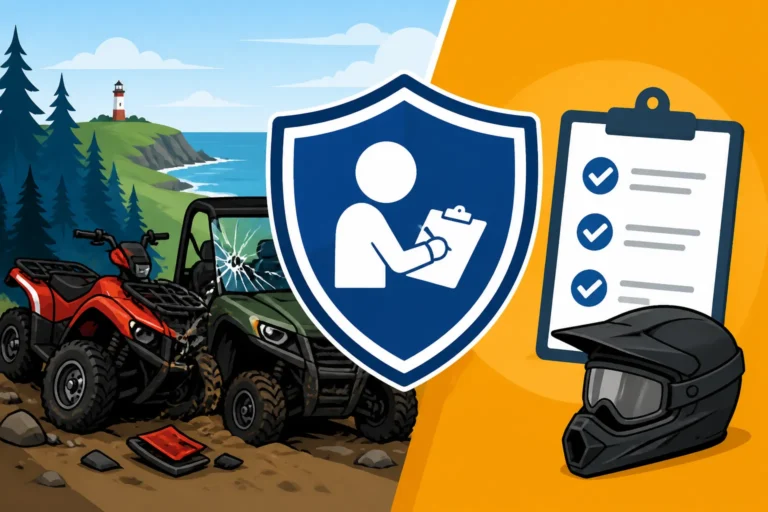
To legally cross a public road in Nova Scotia, both your machine and you, the operator, must meet certain requirements. These aren't suggestions; they are legal necessities that an officer can and will check. First and foremost, your OHV must be properly registered with Access Nova Scotia. This includes having a valid [Nova Scotia Certificate and Vehicle Permit] and displaying your registration sticker. Without current registration, you're looking at fines even for a brief crossing.
Next, you must have adequate insurance. [Nova Scotia Requires Registration and Insurance] for any OHV operated off private property, and this certainly extends to road crossings. Carrying proof of your [Nova Scotia's $500,000 Liability Minimum] insurance, often called a "pink card," is essential. For the rider, you must be at least 16 years old to operate an OHV on a highway or road shoulder for a crossing, and you must possess a valid driver's license. While you don't need a full driver's license to ride an OHV off-road in all circumstances, you absolutely do for any interaction with a public road. Lastly, a helmet is non-negotiable. [Nova Scotia Helmet Law for Riders] requires approved head protection whenever you're operating an OHV, including during road crossings. Failing any of these points can turn a simple crossing into a costly citation.
The Rise of Nova Scotia's Road Trail System
In a significant step forward for OHV enthusiasts, Nova Scotia has been expanding its "Road Trail" system. This development is a game-changer for connecting communities and making longer, multi-day rides a reality, finally addressing that long-standing frustration of fragmented trails.
What Are Road Trails and How Do They Differ?
Road trails are specific sections of public roads—often quieter, secondary roads or shoulders—that have been officially designated by a municipality or the province as legal routes for OHVs. They are not simply "any road you choose to ride on"; they are explicitly identified and marked for off-highway vehicle use. The key difference here is the designation. Unlike general road crossings, which are about getting from point A to point B across a road, road trails allow for travel along a road for a defined distance.
This distinction is crucial. When you're on a road trail, you're operating within a legal framework that permits your OHV to share a portion of the public road with other vehicles, albeit under very specific conditions. These segments are designed to bridge gaps between traditional off-highway trail networks, enabling riders to link up with gas stations, restaurants, or simply continue their journey to the next trail segment. This system acknowledges the growing popularity of OHVs and their importance to local economies and recreation, providing a much-needed solution for connectivity.
Where You Can Find Road Trails (and How to Identify Them)
Finding these elusive road trails is critical for planning your ride and avoiding illegal detours. The Nova Scotia government, often in conjunction with local municipalities and organizations like ATVANS, maintains information on where these designated road trails exist. The number and extent of these trails have been growing significantly, moving beyond initial pilot projects in specific communities. The [Nova Scotia Road Trail Site Lists] is your go-to for finding official information.
Typically, road trails will be clearly marked with signage indicating that OHV use is permitted. These signs often show an OHV symbol and may include speed limit reminders or other specific regulations for that section. It's imperative that you look for these official markers. Don't just follow another rider or assume a road is a road trail because it looks quiet or feels like a logical connection. Without proper signage, you could be riding illegally. Always check official maps and resources before heading out, especially if you're exploring a new area. Municipalities like those participating in Pictou's All-Roads Trial in Nova Scotia, for example, have very specific boundaries and rules that riders must respect.
Key Rules for Riding on Designated Road Trails
Riding on a designated road trail isn't like riding on a typical off-highway trail; it comes with a distinct set of rules designed to ensure safety for everyone. First, speed is a major factor. You are typically restricted to a [Nova Scotia's 25 km/h Road Trail Limit] on these sections, which is significantly slower than regular road traffic. This speed limit is strictly enforced and is in place to help prevent accidents and reduce conflicts with other vehicles.
Second, you must obey all traffic laws as if you were operating a regular motor vehicle. This means stopping at stop signs, yielding to oncoming traffic, and signalling turns if your machine is equipped to do so (and if not, using hand signals where appropriate). Riders are generally expected to travel single file and must not pass other OHVs on these sections. Visibility is another huge factor; [Nova Scotia Night Riding Equipment Rules] specify requirements for headlights and tail lights if you're out during low light conditions, and reflective gear is always a good idea. Furthermore, your machine must be registered and insured, and you, the operator, must possess a valid driver's license. [Nova Scotia Bans Learner Drivers on Road Trails], so make sure you have the appropriate licensure. These rules are in place not to make riding less fun, but to integrate OHVs safely into the existing road network.
Essential Gear and Preparedness for Road Crossings
Venturing onto any public road, even for a brief crossing, requires more than just knowing the law. It demands that both your machine and you, the rider, are adequately prepared and equipped for the interaction with on-road traffic. This isn't just about avoiding a ticket; it's about ensuring your safety and the safety of others.
Your Machine's Road-Ready Components
While ATVs and UTVs aren't designed to be street-legal in the same way cars are, there are certain components they must have (or should have) to legally and safely navigate road crossings and designated road trails. Foremost among these are working lights. [Nova Scotia Lighting Requirements] state that your machine must have at least one headlight and one tail light in good working order, especially if you anticipate riding during low light conditions or at night. These lights are critical for making you visible to other road users. Consider upgrading to brighter LED lights, such as those offered by SuperATV, for enhanced visibility on the road.
Beyond lights, ensure your brakes are in excellent condition. Being able to stop quickly and effectively is crucial when interacting with road traffic. While turn signals aren't always mandatory for OHVs, having working mirrors is incredibly helpful for checking traffic behind you before crossing or merging onto a road trail. If your machine doesn't come with them, consider aftermarket options from brands like SuperATV that are designed for rugged use. Lastly, ensure your tires are in good shape and properly inflated. While knobby tires are great for mud, they perform differently on pavement and a worn-out set can reduce grip and stability, especially during braking.
Rider Safety Gear and Visibility
Your personal safety gear is just as important as your machine's setup when it comes to road interactions. The absolute non-negotiable item is an approved helmet. [Nova Scotia Helmet Law for Riders] requires that you wear a helmet that meets recognized safety standards (such as DOT or CSA) at all times when operating an OHV, and this rule applies rigorously on public roads. This isn't just for avoiding a fine; it's for protecting your head in case of an unforeseen incident.
Beyond your helmet, consider what you're wearing. While not always legally mandated for adults, brightly coloured clothing, especially reflective gear, significantly increases your visibility to other motorists, particularly on cloudy days or near dawn/dusk. Wearing long sleeves, pants, and sturdy over-the-ankle boots provides protection against scrapes and impacts. [Nova Scotia Gear Rules for Riders Under 16] are even more stringent, requiring eye protection, long sleeves, long pants, gloves, and boots for younger riders. Adopting these habits for all riders, regardless of age, is a smart move for any road interaction. The more visible you are, the safer you'll be.
Paperwork You Must Carry
When you're out riding, especially when you're going to interact with public roads, the last thing you want is to be caught without your essential paperwork. An officer performing [Nova Scotia Equipment Checks by Officers] will definitely ask to see these documents. First, you absolutely must carry your OHV registration. This means your [Nova Scotia Certificate of Registration at $39.80] and your [Nova Scotia Vehicle Permit at $13.20]. This proves your machine is legally on the books.
Second, proof of insurance is mandatory. This is often referred to as your "pink card" or liability card. [Nova Scotia Pink Card Rules] require you to carry this document as evidence that you meet the minimum liability coverage. Without it, you could face penalties for riding uninsured. Third, as mentioned earlier, you need your valid driver's license if you are operating on a public road or road trail. This confirms you are legally allowed to operate a vehicle on a public roadway. Keeping these documents in a waterproof bag or container on your machine, or safely in your riding jacket, ensures they are accessible and protected from the elements.
Common Mistakes and How to Avoid Penalties
It's easy to make a mistake when the rules feel complicated, especially when you're just trying to enjoy a ride. However, ignorance of the law isn't an excuse, and penalties for OHV infractions on or near roads can be significant. Understanding the common pitfalls is your first line of defense.
Assuming All Roads are Fair Game
One of the biggest and most dangerous assumptions riders make is believing that if a road looks quiet or connects two trails, it must be acceptable to ride on. This is a critical error. As we've discussed, the vast majority of public roads in Nova Scotia are not open to OHV traffic. Unless it is a specifically designated "road trail" with clear signage, or you are making a direct, perpendicular crossing at the shortest point, you are likely operating illegally.
This assumption can lead to serious consequences. Riding an OHV on a non-designated public road is considered operating an unregistered and uninsured vehicle (as your OHV's registration and insurance typically don't cover general road use), and can result in significant fines. Furthermore, it creates a serious safety hazard. OHVs are slower, less visible, and handle differently on pavement compared to cars, increasing the risk of collision. Always double-check your route with official maps or the [Nova Scotia Road Trail Site Lists] before assuming any stretch of pavement is fair game. A quick check can save you a lot of grief and keep you safe.
Overlooking Speed Limits and Yielding Rules
Even when you are legally on a road (either for a crossing or on a designated road trail), it's easy to overlook or underestimate the importance of strict adherence to traffic laws. On designated road trails, the [Nova Scotia's 25 km/h Road Trail Limit] is paramount. This isn't a suggestion; it's a legal requirement designed for safety. Going faster not only puts you at risk but can also upset local residents and other road users, potentially jeopardizing the future of road trail access.
For any crossing, you must yield to all traffic on the public road. This means coming to a complete stop, looking both ways, and only proceeding when it is completely safe to do so. Think of it as entering a highway from a side road – the responsibility is entirely on you to ensure the way is clear. Many riders treat a brief crossing as an extension of the trail, but it is not. It's a temporary interaction with a different, more dangerous environment. [Nova Scotia Rules for Crossing a Highway] are particularly strict for these reasons. Ignoring these fundamental rules can lead to collisions, and you'll almost certainly be found at fault.
The Financial Consequences of Unlawful Riding
The financial repercussions of unlawful riding on Nova Scotia roads can be quite severe, ranging from immediate fines to long-term increases in insurance costs. Operating an unregistered OHV on a public road can result in a [Nova Scotia Minimum Fine of $250], with potential increases depending on the severity and context of the infraction. This can quickly escalate to [How High an Unregistered Machine Fine Can Go], potentially reaching thousands of dollars.
Beyond the registration, being caught without valid insurance will also incur heavy penalties, as your OHV insurance typically doesn't cover general road use unless on a designated road trail. If you are involved in an accident while riding illegally, your insurance company may deny coverage, leaving you personally liable for damages to other vehicles or property, as well as any medical costs. This can amount to hundreds of thousands of dollars. Moreover, repeated infractions or serious incidents could lead to your OHV being impounded, requiring additional fees to retrieve it. It's simply not worth the risk to your wallet or your peace of mind. Always prioritize legal compliance to avoid these significant financial burdens.
Practical Scenarios: Crossing in the Real World
Let's move beyond the rules and talk about how these situations play out in the real world. Every crossing or road interaction presents unique challenges, and being prepared for common scenarios can make a huge difference in your safety and legality.
Crossing a Busy Highway (and Why You Shouldn't Ride Alongside)
Imagine you're on a fantastic trail in the Annapolis Valley, and suddenly it dead-ends at a busy provincial highway. Your map shows the trail picks up directly across the highway. This is a classic "crossing" scenario, and it demands extreme caution. First, assess the traffic flow. Are there gaps in traffic that are large enough for you to cross safely and quickly? Remember, you need to be able to accelerate across without forcing other vehicles to slow down or swerve.
You must stop your machine completely before entering the roadway. Look left, then right, then left again. Pay attention to both directions and any approaching vehicles, especially larger trucks which travel at higher speeds. Once a clear, safe gap appears, proceed directly and perpendicularly across the highway to the other side of the trail. Under no circumstances should you ride along the shoulder of a busy highway, even for a very short distance, unless it is a clearly marked and designated road trail, which is rare for major highways. Riding alongside fast-moving traffic on an OHV is incredibly dangerous due to speed differentials, wind buffeting, and the limited protection an OHV offers. Nova Scotia rules specifically prohibit riding on controlled-access highways, and attempting to do so is not only illegal but extremely hazardous. The shortest, safest path is always the only option here.
Navigating Through a Small Town Without Designated Trails
Picture yourself riding through Cumberland County, and your trail guides you into the outskirts of a small, quaint Nova Scotia town. There are no obvious "road trail" signs, but you need to get to the other side to pick up the next section of trail, or perhaps to grab a snack at a local convenience store. This is where it gets tricky. If the town does not have a municipal by-law or specific provincial designation allowing OHV use on its roads (like the full-town access trials in some areas), then riding on the streets, even for a short distance, is generally illegal.
In such a situation, your options are limited: you either need to find an alternative off-highway route that bypasses the town entirely, or you must trailer your machine through the town. While this can be a huge inconvenience, it's the only way to remain legal and safe. Do not assume that because it's a small town, the rules are relaxed. Local police departments are often very familiar with OHV regulations and will enforce them to protect their communities. Always check for specific local regulations or road trail maps beforehand. If you plan to stop for fuel or supplies, identify designated road trail access points, or plan to park your truck and trailer at the edge of town and walk or drive in. It’s a pain, I know, but it keeps you out of trouble.
What to Do When Road Trails Connect to Private Property
Sometimes, designated road trails are established on roads that border or even run through private property, such as woodlots or residential areas. This introduces another layer of responsibility for riders. While you might be legally on the road trail, remember that the land directly adjacent to the road might be private, and respecting property lines is paramount.
When a road trail borders private land, do not assume you have permission to leave the designated road surface. This means no pulling off to the side to stretch your legs if you're on someone's lawn, no detouring into a field, and absolutely no riding into someone's driveway unless you have explicit permission. Always stay on the pavement or the marked shoulder of the road trail. If the road trail is used to connect to a private woodlot or another trail that crosses private land, ensure you have proper permissions from the landowner before leaving the road trail. [Nova Scotia Private Woodlot Permission] is essential for avoiding trespass charges. Respecting private property is not just good etiquette; it's a legal requirement and crucial for maintaining positive relationships with landowners, which, in turn, helps preserve OHV access for everyone.
Table: Nova Scotia OHV Road Interaction Rules
Here's a quick comparison to help you distinguish between the two primary ways OHVs interact with public roads in Nova Scotia:
| Feature | Road Crossing (General Rule) | Designated Road Trail Riding |
|---|---|---|
| Purpose | To get from one off-highway trail section to another. | To travel along a road or shoulder to connect trail networks, access amenities, or bridge gaps. |
| Duration on Road | Minimum time possible; quickest, most direct path. | For the length of the designated segment. |
| Direction of Travel | Perpendicular to traffic flow. | Parallel to traffic flow, usually on shoulder or designated lane. |
| Required Signage | May or may not have explicit "crossing" signs; implicit at trailheads. | Must be clearly signed as an OHV Road Trail. |
| Speed Limit | Implied lowest safe speed to cross; yield to all traffic. | [Nova Scotia's 25 km/h Road Trail Limit] (or posted speed if lower). |
| Traffic Laws | Stop, yield, obey traffic signals. | Obey all traffic laws (stop signs, signals, yield, speed, etc.). |
| Required Paperwork | Registration, Insurance, Driver's License. | Registration, Insurance, Driver's License. |
| Required Safety Gear | Approved Helmet. | Approved Helmet (and recommended full riding gear). |
| Machine Requirements | Working Headlight/Tail light, functional brakes. | Working Headlight/Tail light, functional brakes, good tires. |
| Typical Location | Intersections of trails and any public road. | Often quieter secondary roads, municipal roads, or designated shoulders. |
| Legal Authority | OHV Act provisions for crossings. | OHV Act and specific municipal by-laws/provincial designations. |
| Penalties for Misuse | Significant fines, impoundment, liability for accidents. | Significant fines, impoundment, liability for accidents. |
Disclaimer
This article is for general informational purposes only and does not constitute professional advice. Laws, prices and regulations vary by location and change over time. Consult a qualified professional for guidance on your specific situation.