Nova Scotia Rules for Riding a Watercourse
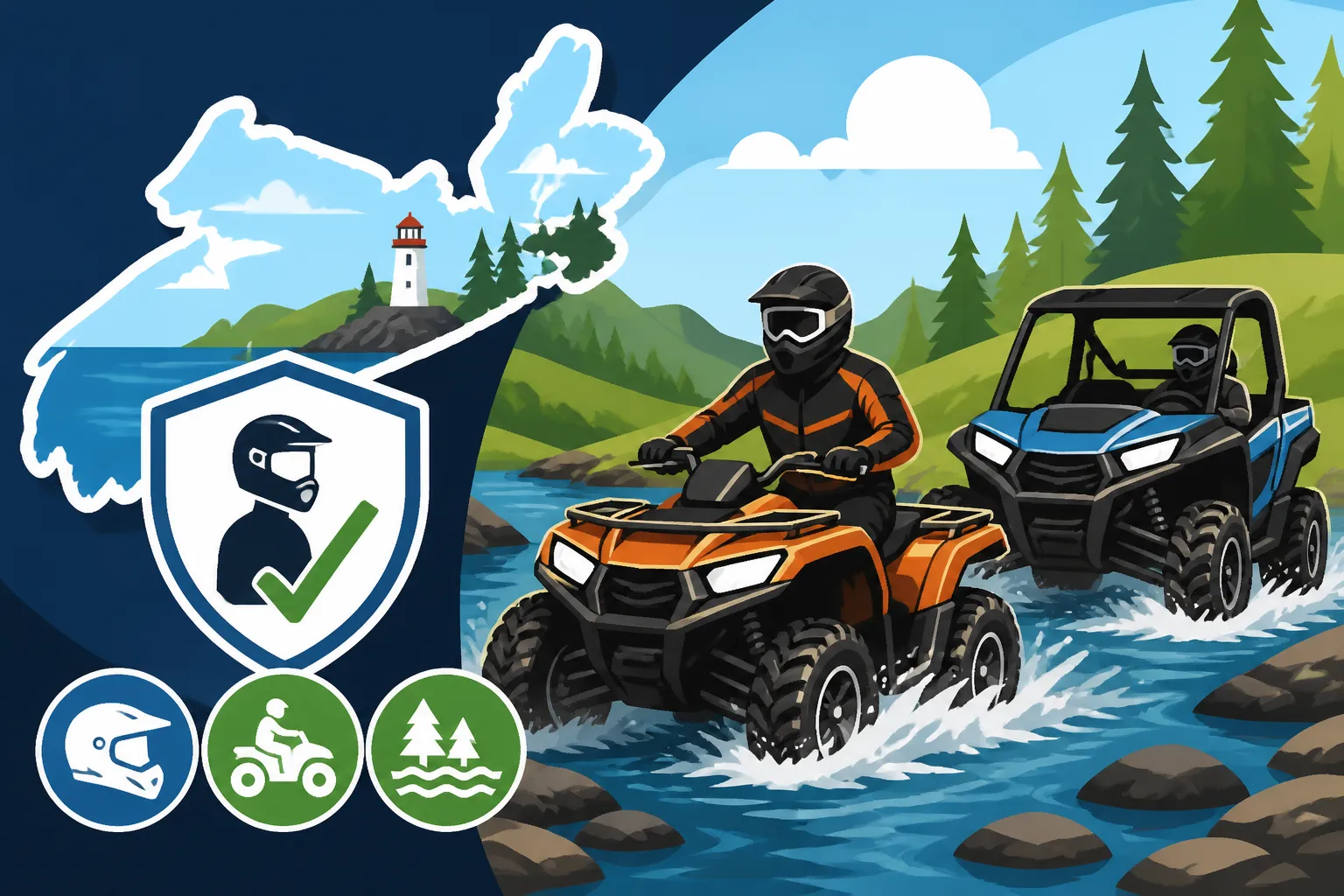
It's incredibly tempting when you're out on the trails in Nova Scotia, enjoying the freedom of your ATV or UTV, to think nothing of splashing through a stream or even taking a shortcut across a shallow riverbed. However, this seemingly innocent act can lead to significant environmental damage and some pretty hefty legal trouble. This guide is here to clear up exactly what Nova Scotia's rules are when it comes to riding through watercourses, helping you stay legal and protect our beautiful natural environment.
Why Riding Through Watercourses is a Big No-No in Nova Scotia
Let's face it, we all love the thrill of riding, but there's a reason why the rules are so strict about avoiding watercourses. It's not just about keeping your machine clean; it's about safeguarding the delicate ecosystems that depend on those waters.
The Environmental Impact: More Than Just a Splash
When an off-highway vehicle (OHV) drives through a stream, river, or even a small brook, it does a lot more than just churn up some water. The tires can significantly disturb the streambed, dislodging sediment. This sediment then clouds the water, reducing light penetration and smothering fish eggs, insect larvae, and aquatic plants that form the base of the food chain. Imagine trying to breathe when your entire home is suddenly filled with dust and grit – that's what it's like for these aquatic creatures.
Beyond the immediate disturbance, there's the risk of introducing contaminants. Even a well-maintained machine can leak a tiny bit of oil, gasoline, or other fluids, especially when under the stress of a water crossing. These chemicals, even in small amounts, are toxic to aquatic life and can accumulate in the environment, causing long-term harm. It's a chain reaction: if the insects are affected, the fish that eat them are, too, and so on up the food chain, impacting everything from local wildlife to the pristine beauty of our waterways.
Repeated crossings in the same spot can also erode the banks of the watercourse. This erosion destabilizes the soil, further increasing sedimentation and potentially widening the stream, altering its natural flow, and destroying critical habitat along the riparian zone – the land right next to the water. These areas are vital for filtering runoff, stabilizing banks, and providing shade and food for aquatic life, so protecting them is paramount.
The Legal Precedent: Protecting Our Natural Resources
Nova Scotia takes the protection of its natural resources, especially its water quality, very seriously. The provincial laws are designed to ensure that these vital resources remain healthy for everyone, including future generations. Riding through watercourses is seen as a direct violation of these protective measures.
The primary piece of legislation governing off-highway vehicles in the province is the Off-highway Vehicles Act. While this act covers everything from registration to safety, it also includes provisions about where and how you can operate your machine, with environmental protection being a key focus. Complementing this, other provincial legislation like the Environment Act and regulations related to watercourse alteration further reinforce the prohibitions against disturbing these sensitive areas. These laws aren't just suggestions; they carry significant weight and consequences.
When these laws are applied to OHVs, they essentially create a blanket prohibition against operating machines in or on watercourses. This isn't just about preventing intentional damage; it's about minimizing any potential harm. The spirit of the law is to preserve the integrity of our waterways, and riding through them directly counteracts that goal. It means that even if you think a crossing is harmless, the law views it as a potential risk to the environment, and therefore, it's generally forbidden.
What Exactly Counts as a "Watercourse" Under Nova Scotia Law?
This is where things can sometimes get a little fuzzy in people's minds. You might think of a watercourse only as a big river, but the legal definition is much broader, encompassing a wide array of natural water features that demand respect and protection. It's important to understand these distinctions to avoid accidental violations.
Defining Rivers, Streams, and Brooks
Under Nova Scotia law, a "watercourse" isn't just limited to major rivers. It generally includes any natural channel that carries water, whether continuously or intermittently. This means everything from a rushing river to a quiet brook, or even a small seasonal stream that might only flow heavily during spring runoff or after a significant rain, can be considered a protected watercourse. The key is the presence of a defined channel, even if it's not always wet.
Sometimes, riders might encounter what looks like a dry ditch or a shallow depression that only holds water for a few days after a storm. It's easy to assume these aren't "real" watercourses. However, if that depression or channel is part of a natural drainage system, it very likely falls under the protective umbrella of the law. Think of it this way: if water naturally flows through it, or has historically flowed through it, it's best to treat it as a watercourse. The intention behind the law is to protect the entire hydrological network, not just the parts that are visibly flowing all year round.
This broad definition means that even what you perceive as a minor trickle or a small, damp spot on the trail could technically be a part of a protected water system. It's a common mistake to differentiate between a "puddle" and a "stream," but the legal distinction hinges on whether there's a natural, defined channel. If in doubt, err on the side of caution. Remember, common trail puddles – those divots or low spots that simply collect rainwater on a trail surface without a natural inlet or outlet – are different from actual watercourses. Always be vigilant and use your best judgment.
Wetlands, Bogs, and Sensitive Areas
Beyond flowing water, Nova Scotia's environmental protection extends to other crucial water-dependent ecosystems, specifically wetlands and bogs. These areas are incredibly important for biodiversity, water filtration, and even flood control, despite not always having visible flowing water. They are defined by saturated soil conditions and specific types of vegetation adapted to those wet environments.
Wetlands can include marshes, swamps, and bogs, each with its unique characteristics but all sharing the common trait of being highly sensitive and ecologically vital. Driving through these areas, even if they appear firm in some spots, can cause irreversible damage to the delicate plant life, disrupt nesting grounds for birds, and churn up the anoxic (oxygen-deprived) soil, releasing harmful gases and sediments. These ecosystems take decades, if not centuries, to form and are extremely slow to recover from disturbance.
The concept of riparian zones, as mentioned earlier, is also key here. This is the interface between land and a river or stream. These areas are considered especially sensitive due to their critical role in supporting both terrestrial and aquatic ecosystems. They are prime examples of areas where OHV operation is strictly regulated, even if you're not driving directly in the water itself. Staying clear of these margins is just as important as avoiding the watercourse itself. The legal framework ensures that these areas are respected and protected from the impacts of off-highway vehicle use.
Facing the Music: Penalties for Illegal Watercourse Riding
Nobody wants to get a ticket, especially not when they're out enjoying the outdoors. However, the penalties for riding through watercourses in Nova Scotia are significant, reflecting the serious environmental harm that such actions can cause. It's crucial to understand what you're risking if you choose to ignore these rules.
Fines and Enforcement: What an Officer Can Do
If you're caught operating your OHV in a watercourse, you can expect a stern conversation with a law enforcement officer or a conservation officer. The fines for such infractions under the Off-highway Vehicles Act can be substantial, often starting at a minimum of several hundred dollars for a first offense. These aren't just minor slaps on the wrist; they're designed to deter harmful behavior and reflect the cost of potential environmental damage.
Enforcement patrols are common on Nova Scotia's trail networks, especially in areas known for sensitive ecosystems or where complaints have been lodged. Officers have the authority to issue tickets on the spot, and they are well-versed in identifying illegal activities, including watercourse crossings. They can approach you on the trail, assess the situation, and take appropriate action. Don't assume that just because you're in a remote area, you won't be seen or caught. Many officers patrol these areas regularly, often with their own OHVs.
For repeat offenders or in cases where significant environmental damage has occurred, the fines can escalate dramatically. There are provisions in the legislation for much higher penalties, potentially reaching into the thousands of dollars. Beyond the financial hit, there's the possibility of your machine being impounded or your riding privileges being revoked. It's a clear message: illegal watercourse riding is not tolerated, and the consequences can be severe. Remember, just like other violations, officers can also look for things like [Nova Scotia Fines for an Unregistered Machine] or [Nova Scotia Penalties for Riding Unregistered] if your paperwork isn't in order.
Beyond the Fine: Other Legal Ramifications
The financial penalty is often just the beginning. Depending on the severity of the environmental damage caused by riding through a watercourse, you could potentially face civil penalties. This means that environmental agencies or even private citizens could pursue legal action to recover the costs associated with remediation or restoration of the damaged area. Cleaning up contaminated water or repairing eroded stream banks can be incredibly expensive, and those costs could fall squarely on the individual responsible.
Furthermore, an environmental violation can have an impact on your machine's registration status. While it might not lead to an immediate suspension, a history of non-compliance can be a red flag for authorities. It also impacts the overall perception of the OHV community. When a few individuals break the rules, it can lead to tighter restrictions for everyone, potentially closing off trails or limiting access to certain areas that were once open.
It's also worth noting the potential impact on your insurance. While specific environmental damage might not directly void your standard liability insurance, persistent illegal activities can certainly lead to issues when renewing your policy or making a claim. Insurers want to see responsible riders, and a record of environmental infractions could mark you as a higher risk. Always ensure you understand [Nova Scotia Insurance Requirements for Riders] and maintain valid coverage, but remember that insurance doesn't grant you permission to break the law. Riding legally and responsibly is the best way to protect both your wallet and your peace of mind.
Navigating Water Safely and Legally in Nova Scotia
Okay, so we've established that riding in watercourses is a major no-go. But what about encountering water on the trail? It's inevitable. Nova Scotia is famous for its beautiful, rugged terrain, which often means wet trails and natural water crossings that are legal. The key is knowing the difference and understanding how to navigate responsibly.
Authorized Crossings: Bridges, Culverts, and Designated Paths
The good news is that trail designers and clubs recognize that riders need to get from point A to point B, and sometimes that involves crossing water. The solution isn't to blast through a stream, but to use authorized, engineered crossings. These come in various forms, most commonly bridges and culverts. A bridge allows you to cross over the watercourse, keeping your machine entirely out of the water, while a culvert channels the water underneath the trail, creating a solid path over it.
These structures are often built and maintained by ATV clubs, in partnership with landowners and government agencies, specifically to facilitate safe and legal crossings while protecting the environment. When you see a well-maintained bridge or a clearly installed culvert, that's your cue: this is the designated, legal way to cross this particular water feature. It's an investment in responsible trail use and a testament to the dedication of organizations like ATVANS (All-Terrain Vehicle Association of Nova Scotia).
The temptation to bypass a bridge or culvert, especially if it looks like a short cut, must be resisted. Improvising your own crossing, even if it seems easy, is highly likely to be an illegal watercourse violation and can cause environmental damage. Stick to the marked trail and use the infrastructure provided. This also helps maintain the integrity of the trail system and respects the hard work of volunteers. [Nova Scotia Trail Etiquette Locals Expect] definitely includes respecting these designated crossings.
Here’s a quick overview of legal vs. illegal water crossings:
| Feature/Action | Legal Crossing (Generally) | Illegal Crossing (Generally) | Potential Impact |
|---|---|---|---|
| Watercourse Type | Designed bridges, culverts over defined streams/rivers | Natural rivers, streams, brooks, wetlands, bogs, marshlands | Sedimentation, habitat destruction, pollution |
| Trail Condition | Clearly marked trail over water infrastructure | Unmarked, direct drive through natural water features | Erosion, chemical contamination |
| Water Depth | Water contained within engineered crossing or a puddle | Deep or flowing water in a natural channel | Machine damage, rider safety risk, environmental harm |
| Vehicle Status | No part of machine directly in flowing watercourse | Tires, chassis submerged in flowing watercourse | Streambed disturbance, aquatic life disruption |
| Environmental Risk | Minimized by engineered design | High risk of direct environmental damage | Long-term ecosystem degradation |
The "Turn Around, Don't Drown" Principle for Trail Water
Sometimes, even on a designated trail, you'll encounter standing water. This could be a large puddle, a flooded section after heavy rain, or even a slow-moving, shallow area that's difficult to distinguish from a true watercourse. This is where the "Turn Around, Don't Drown" principle, often associated with flood safety, applies perfectly to OHV riding. It's about exercising extreme caution and good judgment.
Before you attempt to cross any standing water on a trail, stop, assess the situation, and if possible, walk it first. You need to gauge the depth, the firmness of the bottom, and whether there are any hidden obstacles like rocks, logs, or deep ruts. What looks like a shallow puddle from a distance can often hide significant depth or treacherous conditions that can stall your machine, damage components, or even put you in a dangerous situation. Your safety, and the integrity of your machine, depend on this careful assessment.
If you can't assess it safely, or if it looks too deep, too rocky, or too uncertain, the best course of action is to turn around and find an alternative route. There's no shame in playing it safe; in fact, it's the mark of a responsible and experienced rider. Pushing through unknown water can lead to costly repairs (water in the engine or transmission is a major headache), personal injury, or an environmental violation if you accidentally cross into a protected area. Always check [Nova Scotia Trail Conditions and Closures] before you head out, especially after heavy rain, as clubs will often update riders on impassable sections.
Equipping Your Machine for Wet Trail Conditions (Legally!)
While we're emphasizing avoiding watercourses, it's an undeniable fact that Nova Scotia trails can be wet, muddy, and present their share of deep puddles or legal, shallow crossings. Equipping your machine properly isn't about preparing to break the law, but about ensuring durability and protection against the unavoidable challenges of legal trail riding.
Think about robust undercarriage protection. Skid plates and A-arm guards, for instance, protect vital components like your drivetrain, CV joints, and engine casing from impacts with submerged rocks or debris in those legitimate muddy sections. They also help prevent mud and grit from packing into critical areas. Products from companies like SuperATV are well-known for their heavy-duty construction and can make a significant difference in how your machine handles tough, wet terrain. These are investments in longevity and reliability, not an invitation to disregard environmental laws.
For those deep (but legal!) mud holes or unforeseen water-filled ruts on designated trails, a winch can be an absolute lifesaver. Getting stuck happens to the best of us, and having a reliable winch allows you to self-recover or assist a fellow rider without damaging the environment further by trying to force your way out. Snorkels, while often associated with extreme mudding, can also provide peace of mind in legitimate, approved deep water crossings (like designated bog bridges or exceptionally deep trail puddles) by protecting your engine's air intake. However, always remember the "Turn Around, Don't Drown" principle first. These accessories are about preparedness for legal riding challenges, not about enabling illegal watercourse activities. Ultimately, responsible riding means always prioritizing the environment and your safety above all else.
Disclaimer
This article is for general informational purposes only and does not constitute professional advice. Laws, prices and regulations vary by location and change over time. Consult a qualified professional for guidance on your specific situation.