Nova Scotia Rules for a Visiting Ontario Rider
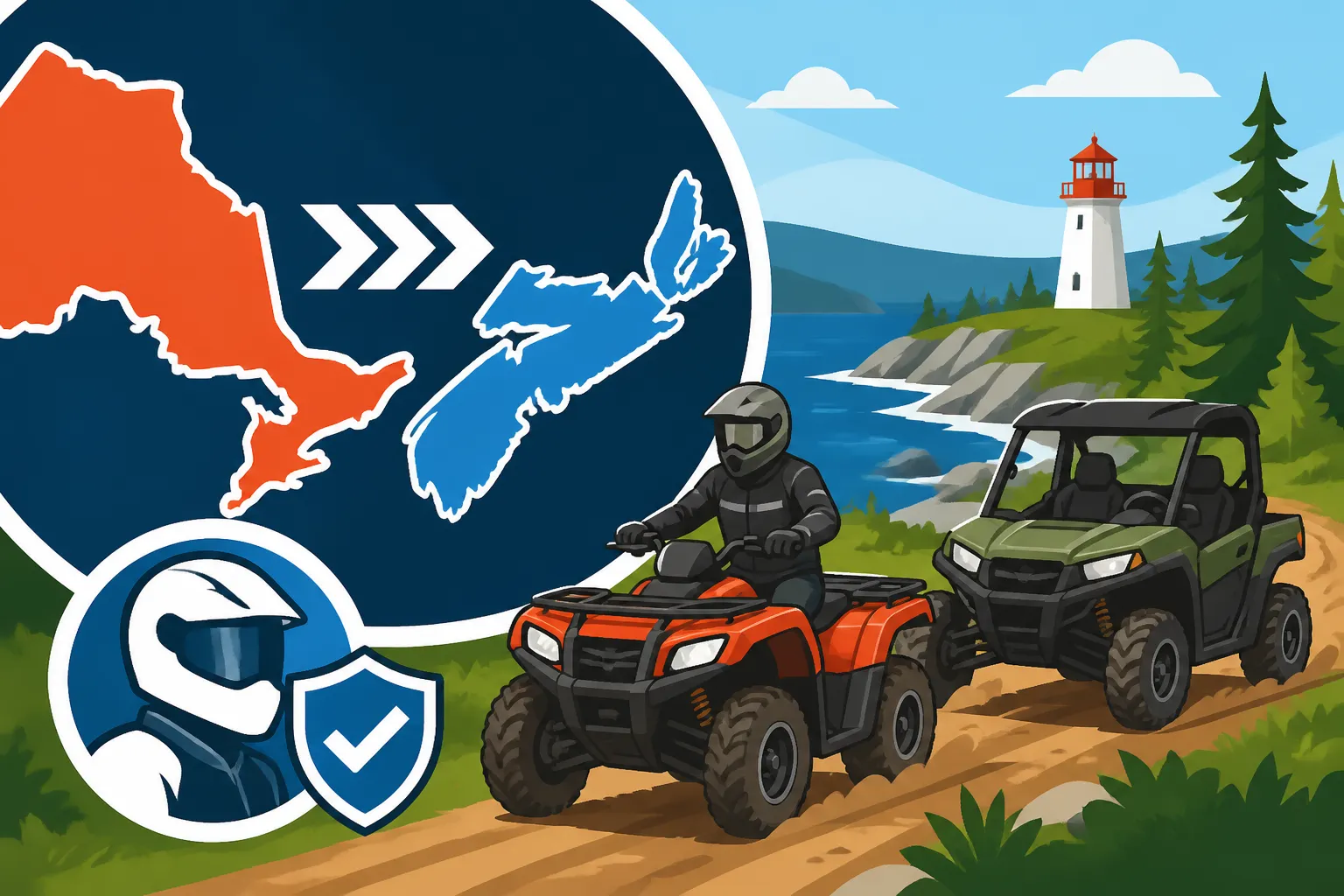
You’ve been dreaming of riding the stunning coastal trails of Nova Scotia, picturing yourself cruising through picturesque landscapes, perhaps with some gear from SuperATV on your machine, admiring the rugged beauty of the Maritimes. But before you hitch up your trailer and point your rig east from Ontario, there’s a crucial question many riders face: "Will my Ontario ATV registration, insurance, and trail permit work once I cross into Nova Scotia?" It's a completely valid concern, and navigating the regulations of a new province can feel like hitting a hidden mud bog. This guide is here to untangle the specifics for visiting Ontario riders, ensuring your Nova Scotia adventure is filled with joy, not unforeseen fines.
Understanding Nova Scotia's OHV Registry for Visitors
When you're planning a trip from Ontario to Nova Scotia with your off-highway vehicle (OHV), one of the first things that comes to mind is often "what about my plates?" In Ontario, some ATVs are registered and plated for road use, which can lead to confusion about inter-provincial recognition for trail riding. Nova Scotia, however, operates under its own distinct set of rules for OHVs, and it’s critical to understand that your Ontario provincial registration doesn’t automatically grant you carte blanche here.
Provincial Registration and What Nova Scotia Expects
Let's be clear upfront: Nova Scotia has its own dedicated Off-highway Vehicles Act and a provincial registry for all ATVs, side-by-sides, and other off-highway machines. This is separate from any road-vehicle registration you might have for your truck or even a road-legal ATV in Ontario. When you bring your machine here, the expectation isn't that you "re-register" it in Nova Scotia, but rather that you meet specific local requirements for use.
For most visiting riders from Ontario, their machine's existing provincial registration is accepted as proof of ownership and origin. Nova Scotia doesn't require you to obtain a new [Nova Scotia's Certificate and Vehicle Permit] if your machine is properly registered in your home province. The province acknowledges that you're a visitor, not a new resident moving your machine permanently. However, this acceptance comes with a big caveat: you still need to ensure you meet all other Nova Scotia OHV rules, particularly regarding trail access and insurance. Think of it like this: your Ontario driver's license is valid in Nova Scotia, but you still have to obey Nova Scotia's traffic laws.
The Essential Nova Scotia Trail Permit for Out-of-Province Riders
Here’s where a significant difference often arises for Ontario riders. While your provincial registration might be recognized, your Ontario ATV Federation (OFATV) or other provincial trail permit is not directly reciprocal in Nova Scotia. The trails you'll want to ride here are largely maintained and managed by the provincial association, ATVANS (All-Terrain Vehicle Association of Nova Scotia), and its member clubs. They fund their extensive network, like the [Celtic Shores Coastal Trail in Nova Scotia], through the sale of their own trail permits.
To legally access the vast majority of managed OHV trails in Nova Scotia, you will need to purchase a Nova Scotia Trail Permit. This is a non-negotiable requirement if you plan to hit those fantastic club trails. ATVANS offers several options, including a full calendar-year permit and a [Nova Scotia's Thirty-Day Visitor Permit] specifically designed for folks like you who are visiting for a shorter period. It's a small investment that goes directly back into trail maintenance, signage, and insurance for the trails you'll be enjoying. You can easily purchase these permits online or through many local ATVANS clubs once you arrive. Having a good set of SuperATV tires will help you conquer the Nova Scotia terrain, but it won't get you on the trail without that permit!
Navigating Nova Scotia's Insurance Requirements as an Ontario Visitor
Insurance is one of those topics that can make even the most seasoned rider's eyes glaze over, but it's absolutely critical, especially when riding in another province. You might assume your Ontario insurance policy will simply cover you no matter where you ride in Canada, and while that's often true for some aspects, Nova Scotia has specific mandatory requirements that you need to be aware of. Getting this wrong can lead to significant headaches and financial liabilities if something goes awry.
Nova Scotia's Mandatory Liability Coverage: What to Expect
Nova Scotia mandates that all off-highway vehicles operating off private property carry a minimum of $500,000 in third-party liability insurance. This is the cornerstone of OHV insurance in the province and is designed to protect you financially if you're deemed responsible for an accident that causes injury to another person or damage to their property. This isn't just a suggestion; it's the law. If an officer stops you on a trail or road trail, they will expect to see proof of this coverage, often referred to as your "pink card" or liability card. This is just as important as having your machine equipped with quality SuperATV accessories for safety and performance.
The good news is that most reputable OHV insurance policies issued in Ontario will generally extend liability coverage across Canada. However, "generally" isn't good enough when it comes to legal requirements and potential financial exposure. The nuances of your specific policy, including any limitations or exclusions for out-of-province riding, are what truly matter. It's not uncommon for basic policies to have different clauses regarding geographical limits or specific types of riding. For instance, while your policy might cover you for general trail riding, some may have limitations if you were, say, participating in an organized race (though [Nova Scotia Racing Machine Exemptions] might apply in specific, regulated circumstances).
Confirming Your Coverage Before Your Trip
This step cannot be stressed enough: Before you even pack your first piece of gear, contact your Ontario insurance provider directly. Don't rely on assumptions or what a friend "heard." Speak to a licensed agent and explicitly state that you plan to bring your ATV or UTV to Nova Scotia and ride it on provincial trails and designated road trails. Ask them these specific questions:
- Does my current policy meet Nova Scotia’s minimum $500,000 third-party liability requirement while I'm operating my OHV within the province?
- Are there any geographical limitations or specific endorsements I need to ensure continuous coverage in Nova Scotia?
- Will my existing policy provide any personal accident benefits or uninsured motorist coverage if I'm involved in an accident with an unregistered or uninsured machine while in Nova Scotia?
It’s far better to clarify these details and potentially adjust your policy beforehand than to discover a gap in coverage after an incident. An accident out of province, especially one where you are deemed at fault, can quickly become a devastating financial burden if you're not adequately insured. Make sure you fully understand your [Nova Scotia Insurance Requirements for Riders] and carry that proof with you when you ride.
Key Riding Rules, Age Limits, and Equipment for Ontario Riders
Beyond the paperwork, understanding Nova Scotia's operational rules for ATVs and UTVs is vital for a safe and enjoyable trip. While many general safety principles are similar to Ontario, there are specific provincial laws regarding helmets, age, passengers, and where you can actually ride your machine. Knowing these differences will help you avoid fines and ensure you're riding responsibly on Nova Scotia's beautiful trails and designated road networks.
Mandatory Helmet Laws and Essential Riding Gear
Just like in Ontario, Nova Scotia has a strict mandatory helmet law for all OHV riders and passengers. This isn't optional; it's a critical safety measure. Your helmet must meet recognized safety standards such as DOT, ECE, Snell, or BSI. A well-fitting, approved helmet is your most important piece of safety gear, even more so than any advanced suspension or protection like SuperATV's various offerings.
Beyond helmets, while not all gear is legally mandated for adults, it's highly recommended to wear appropriate riding attire. This includes eye protection (especially if your helmet doesn't have a visor or if you're using an open-face helmet), sturdy gloves, long sleeves, long pants, and over-the-ankle boots. For riders under 16, Nova Scotia has more specific gear rules, including mandatory eye protection, long sleeves, gloves, and boots. Ignoring these rules can lead to fines and, more importantly, put your safety at serious risk. Always ensure your gear is in good condition, and that your machine's headlights and tail lights are fully functional, especially if you anticipate riding near dusk or dawn. For more details, check out [Nova Scotia Helmet Law for Riders].
Road and Trail Access: Where You Can Legally Ride
This is often one of the biggest points of confusion for visitors. In Nova Scotia, you generally cannot ride your OHV on public roads, highways, or within highway rights-of-way, except for specific, legally designated "road trails" or for short crossings. The province has implemented the [Nova Scotia Road Trails Act Explained], which allows municipalities to designate certain sections of public roads for OHV use, typically with a strict 25 km/h speed limit and other regulations. These are clearly marked with specific signage.
It’s absolutely critical that you understand these designations. Riding on an undesignated public road could result in significant fines and potentially having your machine impounded. Always check local signage and trail maps provided by ATVANS. Beaches, sand dunes, and environmentally sensitive areas are also generally off-limits to OHVs in Nova Scotia to protect fragile ecosystems. Stick to marked trails and designated areas. When exploring, keep in mind that many of Nova Scotia's popular trails are former rail beds or forestry roads. While your SuperATV machine might be capable of tackling tough terrain, always respect private property and access rules. If you're unsure about a specific area, err on the side of caution or consult local ATVANS clubs for guidance. For a deep dive into permitted areas, see [Can You Ride an ATV on the Road in Nova Scotia?].
Age Requirements and Supervision for Younger Riders
Nova Scotia has clear age requirements for operating off-highway vehicles, which apply to visitors as well as residents:
- Minimum Age: The youngest a person can legally operate an OHV is 6 years old.
- Ages 6 to 13: Must be supervised by someone 19 or older who holds a valid safety certificate. They must also operate the machine on private land or a closed course (though Nova Scotia currently has no accredited closed courses, so private land is the practical option). The machine must be appropriate for their size and weight.
- Ages 14 and 15: Must be supervised by someone 19 or older who holds a valid safety certificate. They can operate an OHV on trails, but the machine must be appropriate for their size and weight.
- Age 16 and older: Must hold a valid OHV safety certificate (or be grandfathered in) and can operate without direct supervision, provided they meet other requirements like registration and insurance.
If you're traveling with younger riders, ensure you understand and comply with these supervision and age guidelines. An Ontario safety certificate might be considered, but the primary requirement is the presence of a trained, adult supervisor if the rider is under 16. For comprehensive details, review [Nova Scotia Passengers Must Be 9 or Older] and [Nova Scotia Safety Certificates Are Mandatory].
Here's a quick comparison table for key considerations when visiting Nova Scotia from Ontario:
| Requirement | Ontario (Home Province) | Nova Scotia (Visiting) | What You Need to Do |
|---|---|---|---|
| Provincial OHV Registration | Valid registration/ownership papers (e.g., MTO) | Ontario registration recognized for ownership proof | Carry your Ontario ownership/registration papers with you. |
| Trail Permit | OFATV or other provincial trail permit | Nova Scotia Trail Permit (ATVANS) | Purchase a Nova Scotia Trail Permit (e.g., 30-day visitor permit) before riding on managed trails. |
| Liability Insurance | Minimum liability coverage (often $1M or $2M) | Minimum $500,000 Third-Party Liability | Contact your Ontario insurer to confirm your policy extends coverage to Nova Scotia for OHV use. |
| Helmet Standard | DOT, ECE, Snell, CSA accepted | DOT, ECE, Snell, BSI accepted | Ensure your helmet meets an accepted standard. |
| Riding Age | Generally 12+ on trails (varies), specific youth rules | 6+ with strict supervision/machine fit; 16+ with safety certificate | Understand and adhere to Nova Scotia's specific age and supervision rules. |
| Road Access | Varies by municipality/designated routes | Only on designated "Road Trails" or for short crossings (25 km/h limit) | Always check local signage and trail maps for legal access points. |
| Safety Certificate | Required for certain ages/training | Mandatory for 16+ (or grandfathered); supervisor for youth | While your Ontario certificate is good, meet NS supervision rules for youth riders. |
By being proactive and understanding Nova Scotia's specific requirements for registration, permits, insurance, and riding rules, your trip from Ontario to the Maritimes can be an unforgettable, penalty-free adventure. Enjoy the trails, take in the breathtaking scenery, and ride safely!
Disclaimer
This article is for general informational purposes only and does not constitute professional advice. Laws, prices and regulations vary by location and change over time. Consult a qualified professional for guidance on your specific situation.