Nova Scotia Lighting Requirements
It can be incredibly confusing trying to keep track of all the rules and regulations for riding your off-highway vehicle (OHV) in Nova Scotia, and one area that often leaves riders scratching their heads is lighting. Nobody wants to be caught off guard, especially when dusk settles in or a thick fog rolls off the ocean, which is why this guide is going to walk you through exactly what you need to know about lighting requirements for your ATV or UTV, whether you're hitting the main trails or venturing onto a designated road trail.
The Bare Minimum: Understanding Basic Lighting Requirements
Let's start with the basics. Even on a bright, sunny day, your ATV or UTV isn't just a toy; it's a vehicle that needs to be visible and safe. The laws around OHV operation in Nova Scotia are designed to protect everyone, and that starts with making sure your machine is equipped to be seen and to help you see where you're going.
Many riders, especially those new to the sport or coming from other regions, might think that if they're only riding in daylight, lights aren't a big deal. However, this isn't always the case, and having properly functioning lights is a fundamental safety measure. Think about those unexpected dips in the trail that might be in shadow, or crossing paths with another rider around a blind corner. Visibility is key.
Daytime Running: What You Need (Even When It's Bright)
Even during daylight hours, your ATV or UTV should technically be equipped with at least one headlight and one tail light. While you might not need to have them switched on during the brightest part of the day on an open, well-lit trail, they must be in good working order. This means no burnt-out bulbs, no cracked lenses, and no loose wiring. It’s about being prepared for any condition, not just the ideal ones.
Imagine you're out for a leisurely ride in the morning, and a dense fog suddenly rolls in off the Bay of Fundy. What was a clear trail suddenly becomes a low-visibility challenge. If your lights aren't working, you're not only putting yourself at risk but also anyone else sharing the trail. It's a fundamental part of the Nova Scotia Lighting Requirements for safe operation. A quick pre-ride check, just like you'd do with your tires or fuel, should always include a glance at your lights to ensure they're ready for anything.
The Purpose of Tail Lights and Reflectors
While headlights illuminate your path forward, tail lights and reflectors are crucial for your machine to be seen from behind. This is particularly important on shared trails where other riders might be following you or approaching from the rear. A working tail light dramatically increases your visibility, especially when dust is kicked up or light conditions are fading.
Reflectors, often built into the machine's rear and sides, serve as a passive safety feature. They don't require power, but they catch light from other vehicles, making your OHV visible even when its own lights are off or fail. Sometimes, older machines might have damaged or missing reflectors, and it's a good idea to replace them. Aftermarket options are readily available, and brands like SuperATV offer a range of universal reflectors and light kits that can easily be added to enhance your machine's rear visibility. Don't underestimate the simple yet effective role these components play in preventing rear-end collisions.
Night Riding and Low Visibility: When Lights Become Non-Negotiable
When the sun dips below the horizon, or the weather turns murky, your lighting system transitions from a 'good to have' to an absolute necessity. Nova Scotia has specific rules about riding after dark, and these are enforced for good reason: safety. Operating a machine without adequate lighting in these conditions is incredibly dangerous and can lead to significant fines.
It's not just about seeing the obstacles in front of you, though that's a huge part of it. It's also about ensuring other trail users, whether they're other OHVs, hikers, or even wildlife, can see you. Many a rider has been surprised by how quickly twilight turns into true darkness in a wooded area, leaving them scrambling.
Headlight and Tail Light Rules for After Dark
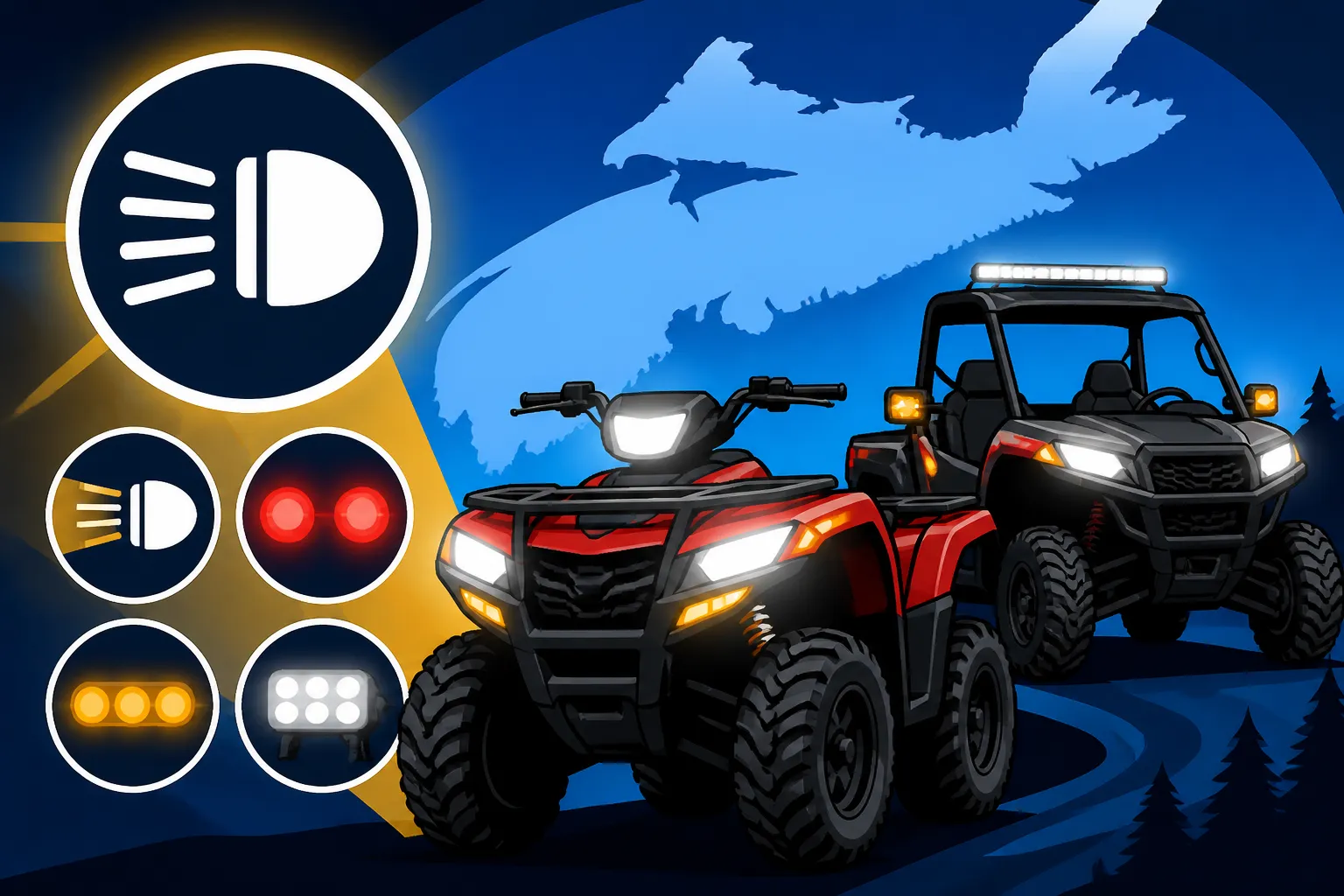
The Off-highway Vehicles Act is pretty clear on this: if you're riding your OHV between one-half hour after sunset and one-half hour before sunrise, or at any other time when visibility is limited due to weather conditions like fog, rain, or snow, your machine must have its headlight(s) and tail light(s) switched on. The rules stipulate that your headlight must be capable of showing a white light at a distance of at least 300 feet (about 90 meters) in front of the vehicle. Your tail light, on the other hand, needs to display a red light visible from at least 200 feet (about 60 meters) to the rear.
This isn't just a suggestion; it's the law. Imagine you're on a remote trail near Kejimkujik National Park at dusk, and your single, dim headlight isn't meeting that 300-foot requirement. Not only are you struggling to see, but an approaching rider might not spot you until it's almost too late. This is precisely why officers conduct [Nova Scotia Equipment Checks by Officers] – to ensure everyone is compliant and safe. Investing in brighter, more reliable headlights, perhaps an LED conversion kit from a reputable supplier like SuperATV, can make a world of difference for your nighttime visibility and confidence.
The Importance of Auxiliary Lighting and Light Bars
While your stock headlight and tail light meet the minimum legal requirements, many experienced Nova Scotia riders opt for additional auxiliary lighting, especially for serious night riding or utility work. Auxiliary lights, such as LED light bars or spot/floodlights, can dramatically improve your field of vision, helping you spot wildlife, navigate challenging terrain, and avoid hazards that a standard headlight might miss.
Consider a scenario where you're working on a woodlot near Sheet Harbour after hours, and you need to see branches and debris clearly. A robust LED light bar mounted on your UTV can turn night into day, making tasks safer and more efficient. While auxiliary lights aren't legally required for general trail riding, they are an excellent safety upgrade and a smart choice for anyone frequently riding in low-light conditions. Just remember that if you are using these on public trails, especially on road trails, ensure they are aimed appropriately so as not to blind oncoming traffic, and consider having them on a separate switch from your main headlights.
Road Trail Specifics: Riding on Designated Paths
The introduction of Nova Scotia's Road Trails Act has opened up incredible new riding opportunities, allowing OHVs to access certain public roads and highways. However, with these new freedoms come very specific responsibilities, especially concerning lighting. When you take your ATV or UTV onto a designated road trail, you're essentially sharing the road with other vehicles, and the lighting requirements become much more stringent, aligning closer to those for conventional vehicles.
This is where many riders can get confused. The rules for an isolated woods trail are different from those for a segment of road that might lead you from one trail system to another, or into a community for fuel or food. It's crucial to know the difference and be equipped for it. [Nova Scotia Road Trail Operating Hours] often dictate when you can ride, and naturally, if you're out during those times, your lights must be fully functional.
Headlights, Tail Lights, and Brake Lights on Road Trails
When operating on a road trail, your OHV must be equipped with a headlight, a tail light, and most importantly, a brake light. The brake light, which illuminates when you apply the brakes, is a critical safety feature that alerts drivers behind you to your deceleration. This is standard for any road-going vehicle and is absolutely essential when you're interacting with cars, trucks, or other OHVs on a shared road surface.
The visibility requirements for road trails are generally stricter. Your headlight must be able to project a beam that illuminates the road for a significant distance, and your tail light and brake light must be clearly visible from the rear, often needing to meet standards similar to those for motorcycles or cars. If your stock lights are dim or not functioning, you could easily be pulled over by an officer. This is not only about avoiding a [Nova Scotia Minimum Fine of $250] but also about preventing serious accidents. Ensuring all your lights, including your brake light, are in perfect working order before you venture onto any road trail is not just good practice, it's mandatory.
Turn Signals and Reflective Gear for Road Use
While not explicitly mandated for all OHVs on road trails, some municipalities that have fully opened their roads to OHVs might have additional recommendations or requirements, such as turn signals. While turn signals might not be a province-wide requirement for OHVs on road trails, it's always a good idea to check specific municipal bylaws if you're riding in an area with extensive road access. Even if not required, adding aftermarket turn signals can greatly enhance your safety and communication with other road users.
Beyond actual lights, reflective gear is also highly recommended, especially if you plan on riding during low light conditions on road trails. Wearing a high-visibility vest or jacket, and ensuring your machine has reflective tape on its sides, can make a huge difference in how quickly other drivers spot you. Remember, even with your lights on, a small OHV can be harder to see than a larger vehicle, so every bit of added visibility helps. Consider this as part of your overall [Nova Scotia Night Riding Equipment Rules] compliance.
Maintaining and Upgrading Your Lighting System
Just having lights isn't enough; they need to be maintained and, in some cases, upgraded to ensure optimal safety and compliance. A burnt-out bulb or a frayed wire can turn a safe ride into a risky situation, and nobody wants that. Taking a proactive approach to your OHV's lighting system will save you headaches and keep you safer on the trails.
The harsh Nova Scotia weather, from salt air on coastal trails to mud and water crossings, can be tough on electrical systems. Regular checks and timely replacements are key to ensuring your lights are always ready to go.
Common Lighting Issues and Troubleshooting
Over time, your OHV's lighting system can develop issues. Common problems include burnt-out bulbs, corroded wiring connections, broken lenses, or issues with the electrical system itself, such as a faulty switch or stator. If you notice your lights flickering, dimming, or simply not working, it's time to investigate.
A good first step is to check the bulbs themselves. Replacing them is often a simple fix. If the bulbs are fine, move on to checking the wiring for any obvious breaks or signs of corrosion, especially where wires connect to the lights or switches. Sometimes, a bit of electrical contact cleaner can resolve connection issues. Always check your fuse box too; a blown fuse is a common culprit. For more complex electrical problems, it might be worth taking your machine to a qualified mechanic or consulting your OHV's service manual. Ignoring these issues can lead to unsafe riding conditions and potential fines if you're caught operating with [Nova Scotia Rules for a Machine Without Lights] on a trail or road trail.
Upgrading for Enhanced Safety and Performance
Many riders find that their factory-installed lighting, while meeting minimum requirements, isn't always sufficient for their specific riding needs, especially for challenging nighttime trails or utility work. This is where upgrades come in. LED lights, for example, are a popular choice as they are much brighter, more durable, and consume less power than traditional halogen bulbs.
You can find a wide range of aftermarket lighting solutions, from replacement LED headlights and tail lights to powerful LED light bars and pod lights. Brands like SuperATV specialize in these kinds of upgrades, offering robust and weather-resistant options that can significantly improve your visibility and ability to see in dark conditions. When choosing upgrades, consider your typical riding environment:
- Spot beams are great for distance, ideal for faster open trails.
- Flood beams provide a wider spread, perfect for technical, slower sections or working in a camp.
- Combination beams offer the best of both worlds.
Upgrading your lighting isn't just about looking cool; it's a genuine investment in your safety and enjoyment of riding. Just remember that any upgrades should still comply with local regulations, particularly regarding brightness and beam direction if you intend to use them on designated road trails.
Summary of Nova Scotia OHV Lighting Requirements
To help make sense of the various requirements, here's a quick overview of what you need to remember regarding your OHV's lighting in Nova Scotia. This table highlights the core expectations based on different riding scenarios.
| Scenario | Headlight Requirement | Tail Light Requirement | Brake Light Requirement | Other Considerations |
|---|---|---|---|---|
| Daytime Trail Riding | At least one, operational | At least one, operational | Not explicitly required | Must be in working order, even if not always on. Reflectors. |
| Nighttime Trail Riding | At least one, visible 300 ft, switched on | At least one, red, visible 200 ft, switched on | Not explicitly required | Auxiliary lights highly recommended. Reflective gear. |
| Road Trail Riding | At least one, visible 300 ft, switched on (similar to road) | At least one, red, visible 200 ft, switched on (similar to road) | Required, operational | Turn signals (check local bylaws), high-vis clothing. |
| Low Visibility (Fog, Rain) | At least one, visible 300 ft, switched on | At least one, red, visible 200 ft, switched on | Not explicitly required | Operate with extreme caution, reduce speed. |
Remember, these are the minimum requirements. Exceeding them with quality aftermarket lights and maintaining your system well only adds to your safety and enjoyment. Always consult the official Nova Scotia Off-highway Vehicles Act and local municipal bylaws for the most current and specific regulations for your area and riding intentions. Stay safe out there, and let your lights shine bright!
Disclaimer
This article is for general informational purposes only and does not constitute professional advice. Laws, prices and regulations vary by location and change over time. Consult a qualified professional for guidance on your specific situation.