A Pilot That Started in 2018
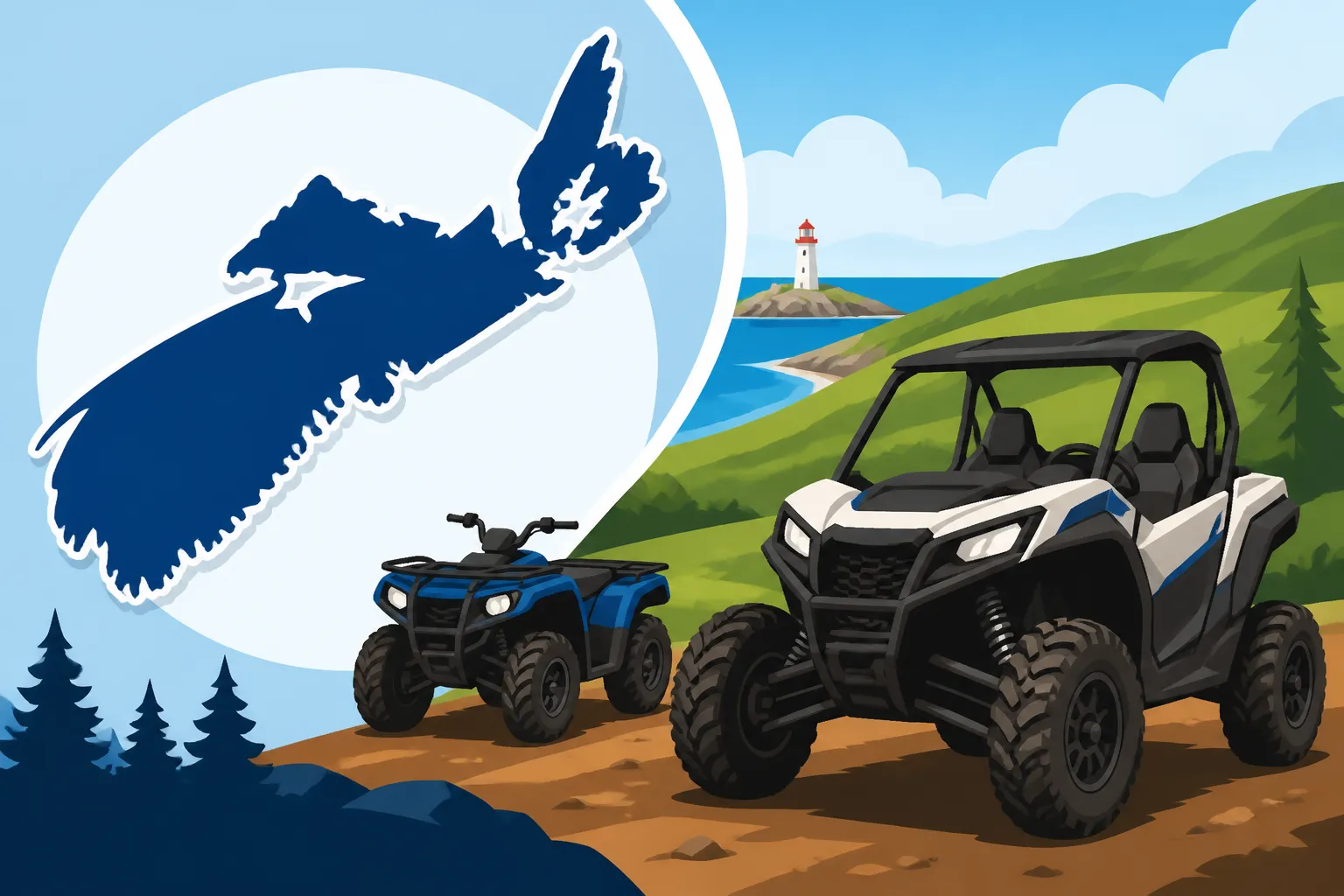
For years, Nova Scotia ATV and UTV riders faced a frustrating patchwork of regulations, often making it nearly impossible to legally connect trails, access fuel, or even grab a bite to eat in a nearby community without skirting the law. This guide dives deep into the groundbreaking pilot project that started in 2018, illuminating how it gradually transformed the off-highway vehicle landscape, paving the way for safer, more integrated riding experiences across the province.
The Road Ahead: Why Nova Scotia Launched the 2018 OHV Road Trail Pilot
Before 2018, the idea of legally riding your ATV or side-by-side on a public road in Nova Scotia was largely a pipe dream for most. Unless you were actively engaged in specific exempted activities like farming or forestry, your machine was strictly confined to trails, private land with permission, or dedicated off-highway areas. This created significant headaches for riders who wanted to embark on longer journeys, explore different regions, or simply get to a gas station without the hassle of loading and unloading their machines onto a trailer. The provincial trail networks, while extensive thanks to the hard work of local clubs, often had frustrating gaps where they met municipal roads, leaving riders with no legal option but to either trespass or turn back.
The Problem: Disconnected Trails and Limited Access
Imagine planning a fantastic weekend ride through some of Nova Scotia's breathtaking scenery, only to discover that a crucial section of trail requires you to cross a paved road for a few hundred meters, or worse, ride along a shoulder to get to the next section. Before the pilot project, such a move was technically illegal, putting riders at risk of fines and frustrating their experience. This wasn't just an inconvenience; it was a significant barrier to the growth of OHV tourism and the enjoyment of the sport. Local businesses in rural communities also felt the pinch, as riders couldn't easily access their services, missing out on potential revenue from gas, food, and accommodations.
The lack of legal road access also meant that communities missed out on opportunities to be part of a larger interconnected trail system. Clubs worked tirelessly to maintain and expand trails, but without the ability to legally link these segments, the full potential of a seamless network remained untapped. Riders often yearned for the kind of connectivity that riders in some other provinces enjoyed, allowing them to ride directly from their driveways to the trails, or from one village to the next.
The Promise: Initial Goals and Community Engagement
Recognizing these challenges and hearing the persistent calls from the OHV community, the Nova Scotia government embarked on the 2018 Road Trail Pilot. The primary goal was clear: to explore the feasibility and safety of allowing off-highway vehicles on designated public roads, under specific conditions. It wasn't about opening up every road to every machine; it was a cautious, measured approach designed to test the waters and gather real-world data.
The pilot was rooted in collaboration. The province worked closely with municipalities and local OHV clubs, understanding that local knowledge and buy-in would be critical to its success. They aimed to identify communities where such a pilot could be implemented safely, connecting existing trail networks and providing riders with legal access to essential services. It was an acknowledgment that the OHV community was a vital part of Nova Scotia's outdoor culture and economy, and that their needs deserved a structured, official pathway forward. The pilot was truly a turning point, marking the beginning of a conversation about how to responsibly integrate OHVs into the broader transportation landscape.
Putting Rubber to Pavement: How the Pilot Project Operated
When the pilot project launched in 2018, it marked a significant shift in how off-highway vehicles were perceived and regulated in Nova Scotia. It wasn't a free-for-all, but rather a carefully structured experiment designed to determine if OHVs could safely share certain public roads with other traffic. This meant specific rules, clear signage, and a limited scope, all aimed at ensuring public safety while addressing the long-standing needs of the riding community.
Early Participants: Seven Communities Lead the Way
The pilot didn't roll out across the entire province simultaneously. Instead, it began in [Seven Communities at the Start], strategically chosen for their geographical spread, existing trail networks, and willingness to participate. These communities became the testing grounds for what would eventually become the province-wide road trail system. Each participating municipality had to designate specific roads where OHVs would be permitted, usually lower-speed, less-trafficked routes that could effectively bridge gaps in the trail system or provide access to amenities like gas stations or restaurants.
For riders, this meant that while the dream of legal road access was becoming a reality, it was still very localized. You couldn't just ride on any road; you had to know which specific stretches were designated as part of the pilot. This required local knowledge, often gained through ATVANS (All-Terrain Vehicle Association of Nova Scotia) club communications or municipal announcements. It was a learning curve for everyone involved, but the excitement among riders was palpable, as they finally had legal routes to connect their adventures.
Here's a look at some of the initial communities involved in the pilot project, and what kind of connections they aimed to provide:
| Community Name | Key Focus of Road Trail | General Location |
|---|---|---|
| Mabou / Port Hood | Connecting coastal trails; village access | Cape Breton (Inverness Co.) |
| Moose River Gold Mines | Linking wilderness trails; community services access | Eastern Shore (Halifax Co.) |
| Nictaux | Bridging sections of the Harvest Moon Trailway | Annapolis Valley (Annapolis Co.) |
| Pugwash | Connecting the Salt Express Trail to village amenities | Northumberland Shore (Cumberland Co.) |
| Sherbrooke | Accessing village services from nearby trails | Eastern Shore (Guysborough Co.) |
| Tusket / Pubnico | Connecting trail networks in the Acadian Shore region | Yarmouth / South Shore (Yarmouth Co.) |
| Wallace | Linking trails; village access for services | Northumberland Shore (Cumberland Co.) |
This table provides a glimpse into the localized nature of the initial pilot, highlighting the diverse geographical areas and specific connectivity needs it aimed to address.
The First Set of Rules: What Riders Encountered
Operating an OHV on these designated road trails came with a strict set of rules, many of which are still in place today. Safety was paramount, and the province ensured that riders understood their responsibilities. One of the most critical rules was the [25 km/h on a Road Trail] speed limit. This limit was put in place to ensure that OHVs operated at a speed compatible with other local traffic, especially in residential or mixed-use areas, reducing the risk of accidents. It was a stark contrast to the higher speeds often enjoyed on dedicated trails, requiring riders to adjust their mindset when entering a road trail section.
Furthermore, riders were required to have a valid driver's licence, ensuring they understood road rules and were experienced in operating a motor vehicle. [Nova Scotia Requires a Full Driver's Licence] was a non-negotiable point, effectively banning anyone with only an OHV safety certificate from these shared roadways. Machines also had to be registered and insured, just like any other vehicle operating on public roads. [Nova Scotia Requires Registration and Insurance] was fundamental, providing a layer of protection for all road users. And of course, the [Nova Scotia Helmet Law for Riders] applied rigorously, as it does on all trails. These initial rules, while sometimes feeling restrictive, were the foundation upon which the future expansion of the road trail system would be built, proving that OHVs could indeed be integrated safely. Many riders, eager to take advantage of these new connections, found themselves upgrading their machines with accessories to meet the spirit of road-use safety. Products from companies like SuperATV offer excellent lighting kits, mirrors, and even street-legal conversion kits that can enhance visibility and safety when transitioning from trail to road.
From Pilot to Policy: Expanding Nova Scotia's Road Trail Network
The success of the initial 2018 pilot project was undeniable. It demonstrated that, with proper regulation and community cooperation, off-highway vehicles could indeed share designated public roads safely and effectively. This positive outcome paved the way for more comprehensive changes, moving beyond a temporary pilot to a permanent, legislated framework that would reshape OHV use across Nova Scotia. The enthusiasm from riders, the economic benefits observed in participating communities, and the relatively low incidence of issues all contributed to the government's decision to formalize and expand the program.
Legislative Changes Pave the Way
The experiences and data gathered during the pilot directly informed the development of new provincial legislation. This culminated in the proclamation of the [Nova Scotia Road Trails Act Explained] in September 2023. This was a monumental step, transitioning the concept from an experimental pilot into a permanent legal reality. The Act provided the necessary legal framework for municipalities across Nova Scotia to formally designate roads as "road trails" for OHV use. This meant that communities no longer had to apply for special pilot status; they could, if they chose, follow a clear process to integrate OHV access into their local road networks.
The new legislation codified many of the rules that were tested during the pilot, ensuring consistency and clarity for riders and local authorities alike. It underscored the importance of [Nova Scotia Road Trail Signage] to clearly delineate where OHVs were permitted and where they were not, removing ambiguity for all road users. This move from pilot to formal Act was a direct response to the proven benefits and operational feasibility demonstrated by the communities that had participated since 2018, opening doors for broader access and connectivity.
Growth and Geographic Reach
With the legislative framework in place, Nova Scotia's road trail network began to expand significantly. What started with just seven communities mushroomed into a much larger system. By late 2025, the province anticipates having [Seventy-Four Sites by Late 2025] designated as road trails, with plans for further expansion in 2026. This growth isn't just about adding more locations; it's about strategically connecting larger segments of the existing trail network, making long-distance touring a more viable and enjoyable option for OHV enthusiasts.
The expansion has also seen more municipalities, including various [Nova Scotia Municipal Road Trails], embrace the concept, recognizing the positive impact it can have on local economies and recreational opportunities. This means that a rider today has a far greater chance of encountering legal road trail sections than they did back in 2018, making it easier to plan routes that bridge gaps and access services without legal concerns. The goal is to create a truly interconnected system that allows riders to experience more of Nova Scotia's beauty, whether they're planning a trip from the Annapolis Valley to the Eastern Shore, or a multi-day adventure in Cape Breton. The foresight of the [Nova Scotia's 2018 Road Trail Pilot] has blossomed into a comprehensive network designed to serve the vibrant OHV community.
Navigating Nova Scotia's Road Trails: Essential Rules for Riders
The expansion of Nova Scotia's road trail network is fantastic news for OHV enthusiasts, offering unprecedented opportunities for exploration and connectivity. However, this increased access comes with a critical responsibility: understanding and adhering to the rules designed to ensure safety for everyone. While the pilot project laid the groundwork, the formalized system now has clear guidelines that every rider must follow when operating on these shared public roads.
Key Operating Requirements for Your Machine
When you're riding your ATV or UTV on a designated road trail, your machine needs to meet certain standards. Beyond the obvious requirements of being registered and insured – which are non-negotiable as highlighted by [Nova Scotia Requires Registration and Insurance] – there are specific operational rules. Your machine must be equipped with working headlights and taillights, especially if you plan on riding during [Nova Scotia Road Trail Operating Hours] that extend near dusk or dawn. Visibility is key, and ensuring your lights are bright and functional is not just a recommendation, it's a legal requirement.
Furthermore, a critical aspect that emerged from the pilot and is now firmly in place is the speed limit. You must adhere to the [25 km/h on a Road Trail] maximum speed. This isn't just a suggestion; it's the law. This lower speed is crucial for safe integration with other traffic, pedestrians, and cyclists who might also be using these municipal roads. Think of it as transitioning from a wilderness trail mentality to a neighbourhood street mentality. Some riders opt to upgrade their machines with additional safety features for road use, beyond the minimum. Aftermarket mirrors, turn signals, and even full windshields, often found through suppliers like SuperATV, can significantly improve your awareness and protection when sharing the road, making for a much safer experience.
Rider Conduct and Safety
Your behaviour on a road trail is just as important as your machine's compliance. First and foremost, a helmet is mandatory at all times. This is consistent with [Nova Scotia Helmet Law for Riders] on any OHV terrain, but it bears repeating for road trails. Beyond your helmet, [Nova Scotia Requires a Full Driver's Licence] to operate on these designated roads. This means no learner's permits; you need to be a fully licensed driver, demonstrating your understanding of general road rules and traffic etiquette.
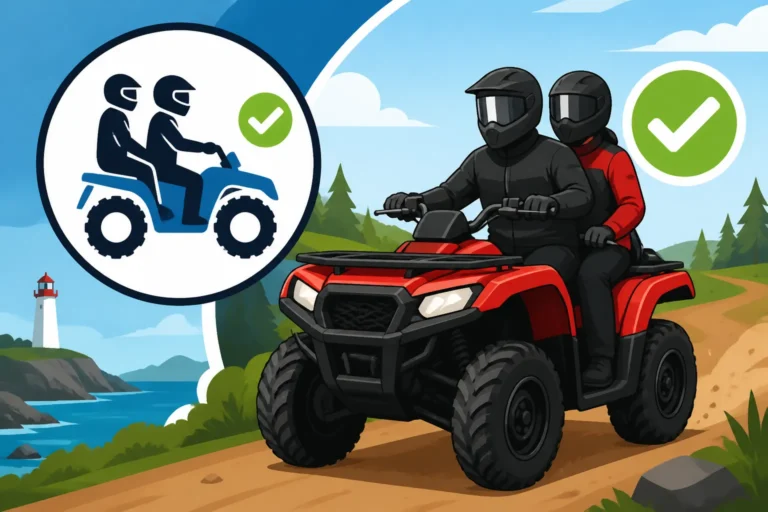
When riding on road trails, you are expected to operate your machine single file and yield to all other traffic, including pedestrians and bicycles. These are shared spaces, and courtesy goes a long long way to maintaining positive relationships within communities. Passing other OHVs on a road trail is also generally prohibited. The intent of these designated sections is to bridge gaps, not to serve as high-speed thoroughfares. Remember, the privilege of [Can You Ride an ATV on the Road in Nova Scotia?] on these designated routes depends on all riders demonstrating responsible and safe conduct. If you're unsure about specific local rules, checking municipal websites or contacting your local OHV club can provide valuable, up-to-date information. Staying informed and riding responsibly is how we ensure this hard-won access continues to grow and benefit the entire OHV community.
Disclaimer
This article is for general informational purposes only and does not constitute professional advice. Laws, prices and regulations vary by location and change over time. Consult a qualified professional for guidance on your specific situation.