Riding After Dark Without a Working Headlight
Picture this: you're enjoying a late afternoon ride on a scenic Nova Scotia trail, the sun begins to set, and suddenly, your ATV's headlight flickers and dies. You’re now faced with not only a safety concern but a potential legal issue. This guide aims to thoroughly explain Nova Scotia's regulations concerning headlights for off-highway vehicles, the serious consequences of riding without proper illumination after dark, and crucial steps to take if your lighting fails.
Why a Working Headlight is Absolutely Non-Negotiable
Riding an off-highway vehicle (OHV) in Nova Scotia comes with a set of responsibilities, and few are as critical as ensuring your machine is properly equipped for the conditions you might encounter. When the sun dips below the horizon, or even during adverse weather conditions in daylight, a working headlight isn't just a convenience; it's a fundamental safety device and a legal mandate. It’s easy to think, "Oh, I'll just be back before dark," but trails can be unpredictable, weather can change quickly, and mechanical issues can arise unexpectedly, leaving you stranded as twilight descends.
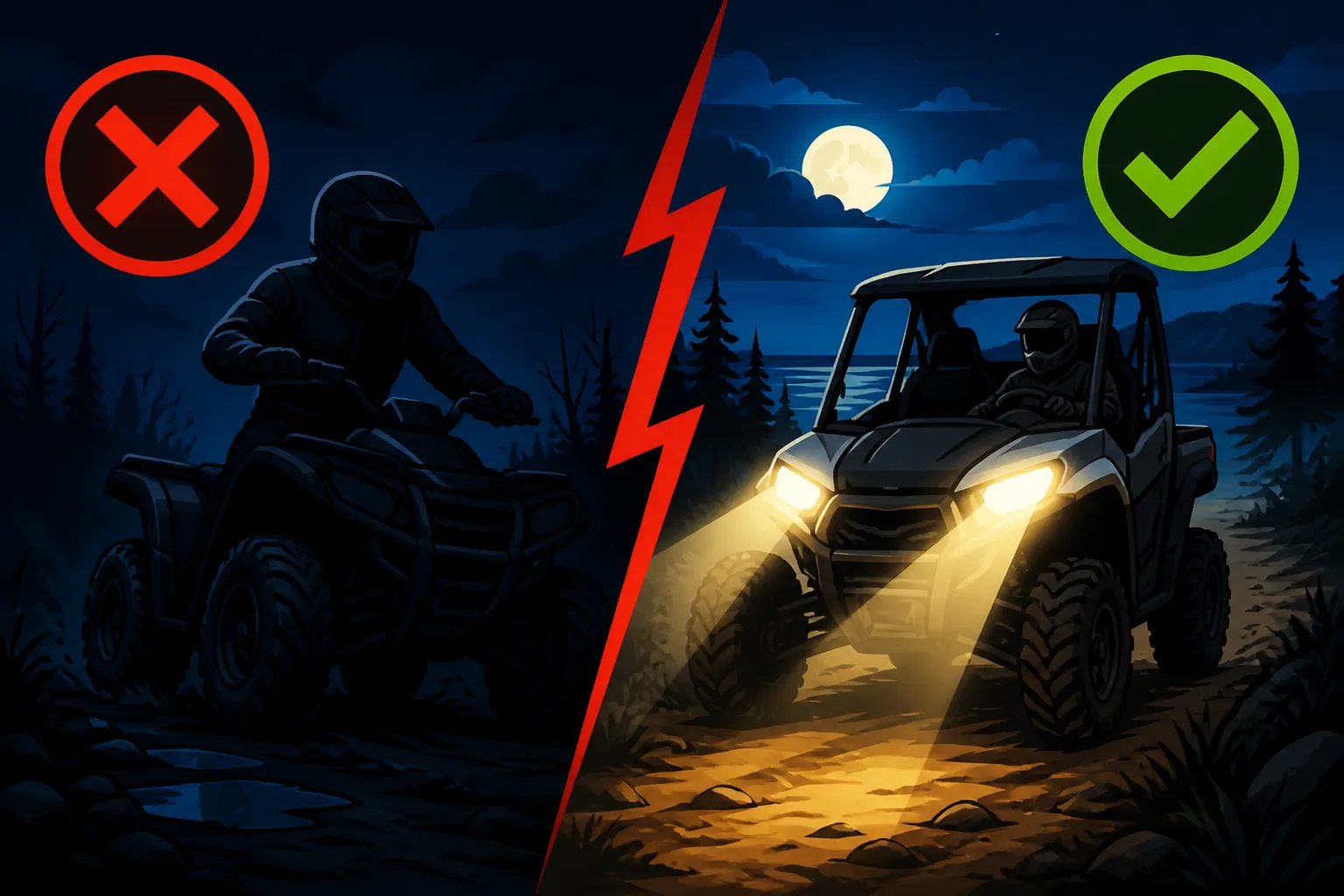
Consider the sheer danger of navigating winding trails, uneven terrain, or shared multi-use paths in the dark without adequate forward illumination. You simply won't see obstacles like fallen trees, deep ruts, or unexpected changes in the trail surface until it's too late. This puts you, your passengers, and any other trail users – be they hikers, cyclists, or other OHV riders – at immense risk. Beyond your own ability to see, your headlight is also vital for making you visible to others, preventing potential collisions.
Moreover, Nova Scotia's regulations are clear on this point. They aren't suggestions; they are laws designed to protect everyone. Riding after dark without a functioning headlight isn't merely frowned upon; it's an offense that can lead to significant penalties. This isn't about bureaucracy; it's about acknowledging the inherent risks of off-road riding and mitigating them with necessary safety equipment. Ignoring this rule can turn an enjoyable evening ride into a dangerous and costly ordeal.
Visibility for You and Other Trail Users
When you're out on the trails, especially as day turns to night, your primary concern should be safety. A properly functioning headlight casts a beam far enough ahead to illuminate the path, giving you crucial time to react to hazards. Think about those sudden dips, hidden rocks, or low-hanging branches that are easily visible in daylight but become invisible threats in the dark. Without a headlight, even at slow speeds, you're essentially riding blind, dramatically increasing your risk of an accident, injury, or severe damage to your machine.
But it’s not just about what you can see. It's equally important that others can see you. Many Nova Scotia trails are multi-use, meaning you might encounter walkers, cyclists, or even snowmobilers in the winter months on shared corridors. A bright, steady headlight clearly signals your presence and direction of travel, allowing others to anticipate your approach and take appropriate action. Without it, you become an invisible hazard, particularly on blind corners or crests.
This reciprocal visibility is the cornerstone of safe trail etiquette and accident prevention. It’s why companies like SuperATV specialize in high-quality lighting upgrades, understanding that enhanced visibility often means enhanced safety. Whether you're navigating a dense woodlot or crossing an open field, your headlight is your most powerful tool for mutual awareness and accident avoidance.
Legal Obligation for Night Riding
In Nova Scotia, the rules regarding lighting on off-highway vehicles are explicit and apply any time you're operating your machine "after dark" or when visibility is otherwise reduced. This isn't a grey area; it's a clear legal requirement. The Off-highway Vehicles Act and its associated regulations spell out precisely what kind of lighting your machine must have and how it must function when you're riding outside of daylight hours.
The province has established these rules to ensure a baseline level of safety for all OHV operators and other users of trails and roads where OHVs are permitted. Failing to meet these requirements isn't just a lapse in judgment; it's a direct contravention of the law. Officers conducting [Nova Scotia Equipment Checks by Officers] will be looking for proper lighting, especially if you're out during times of low light.
These regulations are particularly strict on [Nova Scotia Night Riding Equipment Rules] and are designed to prevent the very situations we're discussing – a rider being unable to see or be seen. Understanding and adhering to these legal obligations is a critical part of being a responsible OHV owner and operator in Nova Scotia. It's not just about avoiding a ticket; it's about operating within the framework designed to keep everyone safe.
Nova Scotia's Specific Lighting Regulations for OHVs
Nova Scotia doesn't leave headlight requirements up to interpretation. The province has clear guidelines on what constitutes adequate lighting for off-highway vehicles, especially when operating outside of daylight hours. These rules are put in place to ensure that all riders have sufficient visibility to navigate trails safely and to be seen by others. It’s important to remember that "after dark" often starts well before complete darkness, encompassing dusk and dawn when visibility is naturally compromised.
It's not enough to simply have a light; it must be in good working order and meet specific performance standards. This includes how far the beam projects and its overall intensity. These standards are critical for safe operation, whether you're on a designated trail or using your machine for permitted work purposes. Ignorance of these rules is not an excuse when an officer pulls you over or, worse, if an accident occurs.
If you ride regularly, especially in varied conditions or during the shoulder seasons when daylight hours are shorter, it's wise to review the full details of [Nova Scotia Lighting Requirements] to ensure your machine is always compliant. Staying on top of maintenance and considering aftermarket upgrades are proactive steps to avoid finding yourself in a difficult situation.
Headlight Requirements: Distance and Brightness
The primary rule for your OHV's headlight in Nova Scotia is that it must be capable of illuminating objects at a specified distance ahead of your machine. Specifically, your headlight must be strong enough to plainly show persons and vehicles at least 90 metres (or roughly 300 feet) ahead when the OHV is travelling at a reasonable speed under normal atmospheric conditions. This is a crucial detail that many riders might overlook, thinking any light will suffice. If you read [Why Your Headlight Must Show at 300 Feet], you'll understand the importance of this regulation.
This 300-foot rule isn't arbitrary; it provides the rider with enough reaction time to avoid hazards at typical trail speeds. Imagine travelling at 30 km/h (about 18 mph); 300 feet gives you several seconds to see, react, and safely maneuver around an obstacle. If your light only illuminates 50 feet, your reaction window shrinks dramatically, making sudden stops or turns much more dangerous. This is where quality lighting, perhaps an LED upgrade from a brand like SuperATV, can make a significant difference.
Beyond the distance, the headlight also needs to project a steady, white light. Flickering, dim, or improperly aimed lights don't meet the standard. Regular checks of your bulbs, wiring, and even the cleanliness of your lens are essential. A cracked or muddy lens can severely diminish your headlight's effectiveness, turning a legally compliant light into a dangerous liability.
Tail Light Requirements
While the headlight is crucial for seeing where you're going, your tail light is equally vital for making sure you're seen by anyone approaching from behind. Nova Scotia regulations stipulate that every OHV must be equipped with a red tail light that is visible from at least 60 metres (approximately 200 feet) to the rear. This applies particularly when you're operating the machine after dark or in periods of reduced visibility. [Why Your Tail Light Must Show at 200 Feet] highlights this requirement.
Much like the headlight, the tail light must be in good working order, emitting a steady red light. A burnt-out tail light is just as much a safety hazard and legal violation as a non-functioning headlight. Imagine you're on a dusty trail at dusk, and another rider is following you; without a visible tail light, they might not realize how close they are until it's too late, leading to a rear-end collision.
Before every ride, especially if you anticipate being out during low-light conditions, it’s a good practice to quickly check both your headlight and tail light. Have someone stand behind your machine while you engage the brakes to ensure your brake light also works, as this is often integrated with the tail light and is another critical safety feature. These simple checks can prevent accidents and fines.
Other Required Lighting and Reflectors
Beyond the primary headlight and tail light, Nova Scotia's OHV regulations may also cover other forms of lighting and reflective materials designed to enhance visibility. While the core focus is often on forward and rear illumination, some machines, depending on their size and design, might have additional requirements or best practices for side visibility. This is especially true for larger UTVs or side-by-sides, which have a broader profile.
Many off-highway vehicles come equipped with reflectors on the front, rear, and sides from the factory. These passive safety devices become active when hit by another light source, making your machine more visible even if your active lighting fails or is temporarily obscured. It's important to keep these reflectors clean and undamaged. A missing or painted-over reflector can compromise your machine's overall visibility profile.
While not always legally mandated for all OHVs, many riders choose to add auxiliary lighting such as light bars, floodlights, or side-mounted LEDs for enhanced safety and utility. While these can be incredibly helpful, especially in truly remote or challenging conditions, they don't replace the need for your primary, compliant headlight and tail light. Always ensure any aftermarket lighting is installed correctly and doesn't interfere with your machine's electrical system or blind other trail users.
| Lighting Type | Legal Requirement (Nova Scotia) | Visibility Distance |
|---|---|---|
| Headlight | Steady, white light | 90 metres (300 ft) |
| Tail Light | Steady, red light | 60 metres (200 ft) |
| Brake Light | Red, illuminates upon braking | Varies (part of tail light system) |
| Reflectors | Often factory-installed on sides/front/rear | Active when illuminated by other sources |
Consequences of Non-Compliance: Fines and Hazards
Ignoring Nova Scotia’s OHV lighting regulations, particularly the requirement for a working headlight after dark, isn't just a minor oversight. It carries significant consequences that can impact your wallet, your safety, and your legal standing. Many riders think they can "chance it," especially if they're only going a short distance or believe they know the trail like the back of their hand. However, officers take these infractions seriously for good reason: they are directly tied to rider safety and the safety of the public.
The penalties for operating an improperly equipped OHV can be steep, ranging from monetary fines to more serious repercussions if an accident occurs. It's a risk that simply isn't worth taking, especially when the solution—ensuring your lights work—is so straightforward. Beyond the immediate legal trouble, consider the profound personal impact of an accident caused by poor visibility.
Before you ever consider riding into the dusk or dark without a proper headlight, pause and think about the full spectrum of potential fallout. It’s far more than just a potential ticket; it's about safeguarding your well-being and maintaining your peace of mind.
Fines and Penalties
Operating an off-highway vehicle without a working headlight when required is a violation of Nova Scotia's Off-highway Vehicles Act. This isn't a simple warning offense; officers have the authority to issue tickets, and the fines can be substantial. While specific amounts can change, you can generally expect a minimum penalty that can quickly add up, especially if other infractions are found during the stop. Articles like [Nova Scotia Fines for an Unregistered Machine] give you a sense of the kind of penalties the province levies for OHV-related offenses, and lighting violations are no exception.
The financial hit is just one aspect. A fine goes on your record and can indicate a pattern of unsafe operation if combined with other violations. Repeated offenses might lead to more severe actions, though that's less common for a single lighting issue. The province's commitment to OHV safety means they will enforce these rules, and they train officers to look for compliance with [Nova Scotia Road Trail Operating Hours] and lighting during patrols.
Think about the cost of a fine versus the cost of a new headlight bulb, or even an upgraded LED light bar from SuperATV. The preventative measure is almost always the more economical choice in the long run. It's a small investment for compliance and immense peace of mind.
Accident Risk and Liability
Beyond the legal penalties, the most immediate and terrifying consequence of riding without a working headlight after dark is the dramatically increased risk of an accident. When you can't see properly, your reaction time plummets, and your ability to navigate safely is severely compromised. This isn't just a risk to you; it's a risk to anyone else on or near the trail, including wildlife. A collision under these circumstances could result in serious injuries, property damage, or even fatalities.
Should an accident occur while you are operating your OHV without the legally required lighting, your liability will likely be significantly higher. Even if another party was partially at fault, your non-compliance with lighting regulations could be used as evidence of negligence, shifting a greater portion of blame onto you. This can lead to substantial personal financial costs if you are found responsible for damages or injuries.
The consequences of an accident extend far beyond the immediate incident. There are medical expenses, lost wages, vehicle repair costs, and potential legal fees, all of which can be devastating. [Nova Scotia Accident Reporting Rules] must be followed after any collision, and the lack of proper lighting will undoubtedly be a factor in the investigation.
Insurance Implications
One of the often-overlooked consequences of riding without proper lighting is how it can affect your OHV insurance coverage. Most insurance policies have clauses that require you to operate your vehicle in a legal and safe manner. If you're involved in an accident while riding after dark without a working headlight, your insurance provider might deny your claim, or significantly reduce the payout, citing your failure to comply with provincial safety regulations.
This could mean you're left to cover all the costs associated with the accident out of your own pocket—including repairs to your machine, medical bills, and any damages or injuries to other parties. Considering [Nova Scotia Insurance Requirements for Riders] and the mandatory liability minimums, you might think you’re covered, but operating illegally could void that protection. It's a sobering thought: you pay for insurance to protect yourself, but your own actions could render that protection useless.
Before you head out, especially for an evening ride, always confirm your machine is fully compliant with all safety regulations, including working headlights and tail lights. This ensures your [Nova Scotia Pink Card Rules] are respected and that your policy remains valid, providing the coverage you expect if the unexpected happens. The peace of mind that comes from knowing you're fully covered and compliant is invaluable.
What to Do if Your Headlight Fails on the Trail
Even the most diligent riders can experience unexpected equipment failures. A bulb can burn out, a wire can fray, or a fuse can blow, plunging you into darkness when you least expect it. Finding yourself on a Nova Scotia trail after dark with a non-functioning headlight is a serious situation, but it’s not one where you should panic. Having a plan and knowing what immediate steps to take can make all the difference between a minor inconvenience and a dangerous incident.
The key is preparation and knowing when to push on and when to call it quits and seek assistance. Attempting to navigate unfamiliar terrain or public trails in complete darkness is incredibly risky and should be avoided at all costs. Your immediate priority must be safety: for yourself, for your machine, and for anyone else who might be sharing the trail.
This section will walk you through practical steps, from routine maintenance checks to emergency measures, helping you manage a sudden loss of illumination and safely get back to base.
Pre-Ride Checks and Preventative Maintenance
The best way to deal with a headlight failure on the trail is to prevent it from happening in the first place. Incorporating a quick, thorough pre-ride check into your routine can catch potential issues before they leave you stranded. Before every ride, especially if you plan to be out past sunset, take a few moments to inspect your OHV's lighting system.
Turn on your machine and activate your lights. Walk around the entire vehicle, checking your headlight, tail light, and brake light. Ensure they are all working, bright, and not flickering. Check for any obvious signs of damage to the wiring or lenses. It’s also a good habit to keep your lenses clean, as mud or dust can significantly reduce light output. If you've upgraded your lighting with products from SuperATV, make sure all connections are secure and corrosion-free.
Preventative maintenance goes beyond visual checks. Regularly inspect your machine's electrical system, including battery terminals, fuses, and wiring harnesses. Carrying spare fuses and even a spare bulb (if your machine uses common incandescent bulbs) can be a lifesaver. Ensure your battery is properly charged, as a weak battery can lead to dim or failing lights. These simple steps drastically reduce your chances of being caught without a working headlight.
Temporary Fixes and Emergency Measures on the Trail
If your headlight does fail while you're out on the trail, your first priority is to stop in a safe location. Pull over to the side of the trail, away from traffic and hazards, and assess the situation. Do not continue riding in the dark. Once stopped, if it’s safe to do so, you can attempt some basic troubleshooting. Check for a loose wire connection to the bulb or light assembly, or if your machine has easily accessible fuses for the lighting circuit, check if one has blown. A small flashlight or multi-tool can be invaluable here.
Even if you can't fix the issue immediately, you need an emergency light source. This is where your preparedness pays off. Always carry a powerful headlamp or a handheld flashlight, fully charged or with fresh batteries. These can serve as a temporary headlight, allowing you to walk your machine out, or, in very specific and safe circumstances (e.g., extremely low speed, familiar, deserted trail), carefully ride out. Attach a headlamp to your helmet or handlebars if possible to direct light forward.
Additionally, consider carrying reflective tape that you can quickly apply to your machine or even your helmet and gear. This will increase your visibility to others, even if you can't see the trail ahead. Remember, the goal is to get yourself and your machine back to a safe location without further incident. If the terrain is too challenging or you're too far from help, it's always better to call for assistance rather than risk an accident.
Calling for Help and Safe Retreat
There will be times when a headlight failure, especially in remote areas of Nova Scotia, is simply beyond a quick fix on the trail. In these situations, your safety—and the safety of others—depends on making the right decision: seeking help. Don't be afraid or too proud to call for assistance. This might involve calling a riding buddy, a family member, or even emergency services if you are in a precarious situation or injured.
Before you head out on any extensive ride, especially into less populated areas, inform someone of your route and estimated return time. Carry a fully charged cell phone, and if you frequent areas with unreliable cell service, consider a satellite messenger or a two-way radio. These devices can be literal lifesavers for communicating your location and situation. If you're riding with a group, rely on their lights to guide you out, riding slowly and staying directly behind a well-lit machine.
If you must retreat on foot, ensure your temporary light source (headlamp/flashlight) is working, and wear any reflective gear you have. Mark your machine's location accurately so you can retrieve it later. Never abandon your machine in a way that blocks a trail or poses a hazard. Making the safe and responsible choice to call for help or retreat, rather than pushing through dangerous conditions, is the mark of an experienced and smart OHV rider.
Disclaimer
This article is for general informational purposes only and does not constitute professional advice. Laws, prices and regulations vary by location and change over time. Consult a qualified professional for guidance on your specific situation.