Nova Scotia Poker Runs and Rallies
A Nova Scotia poker run can look like a relaxed day of riding, but unfamiliar trails, changing conditions and event-specific rules can make planning feel complicated. This guide explains how poker runs and rallies usually work, what to bring, how to prepare your ATV or UTV, and what to check before joining an organized ride anywhere in the province.
How Nova Scotia poker runs and rallies work
The usual poker run format
A poker run is generally a group ride with designated checkpoints along a route. At each stop, participants receive a playing card or another way to record a card. At the end, the hands are compared and prizes may be awarded. The fun is in completing the route and enjoying the ride; you usually do not need poker experience to take part.
Organizers set the details, so one event may handle cards differently from another. Some may use a sealed card draw, while others may have riders collect cards at staffed stops. Ask before the event whether the route is marked, whether every checkpoint is required, how hands are scored, and what happens if you arrive after a checkpoint closes.
A rally may be less focused on cards and more on following a route, meeting other riders, completing activities or supporting a club fundraiser. The terms “poker run” and “rally” can overlap, so do not assume the name tells you everything. Check the organizer’s event notice for the actual schedule, route length, registration process, food arrangements and any rider or machine requirements.
What to ask the organizer before signing up
A few practical questions can prevent a long day from becoming stressful. Ask where the event starts, when participants can check in, whether riders leave together or in staggered groups, and whether the route has a sweep rider or support vehicle. If you are bringing a passenger or a younger rider, confirm that the route and event rules are suitable for your group.
Find out whether the ride uses club trails, public roads, private land or a mix. A marked event route does not automatically mean that every nearby road, woods road or trail is open to ATVs or UTVs. Confirm whether the organizer provides a route map and what navigation method participants should carry if they lose sight of the group.
| Before the event | What to confirm |
|---|---|
| Route | Distance, terrain, checkpoints and whether the route is marked |
| Timing | Check-in, start window, checkpoint closing times and finish time |
| Access | Required trail permit, insurance and any event-specific rules |
| Navigation | Paper map, digital map, signs or a combination |
| Support | Sweep rider, recovery plan and contact method |
| Machine and passengers | Suitable machine type, passenger rules and youth requirements |
| Weather | Cancellation, reroute or postponement process |
For ideas on managing a larger ride, see [Nova Scotia Group Ride Planning]. It is also worth reviewing [Nova Scotia Trail Etiquette Locals Expect] before riding a route that may be shared with other trail users.
Choose a route and prepare your navigation
Match the ride to your group and machine
A route that feels easy to an experienced rider may be tiring for someone new to trail riding. Ask about the surface and expected pace: an old rail corridor may feel very different from a rough, narrow woods trail with mud, roots, rocks or sharp turns. Consider the least experienced rider in your group, not just the most capable machine.
If an event is near a familiar region, check the route details rather than relying on the place name. Cape Breton rides, for example, may involve very different terrain depending on the trail corridor and starting point. The same goes for routes near Truro, Pictou, Amherst, Bridgewater or the Eastern Shore. A nearby town is not a reliable guide to trail difficulty or access.
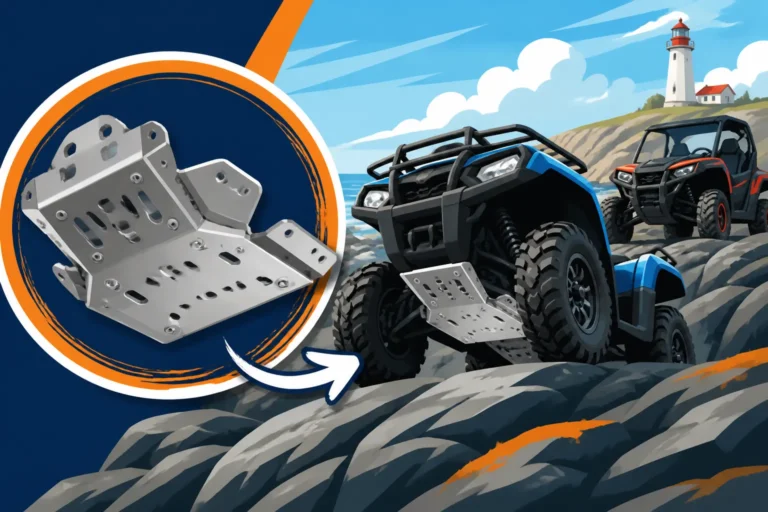
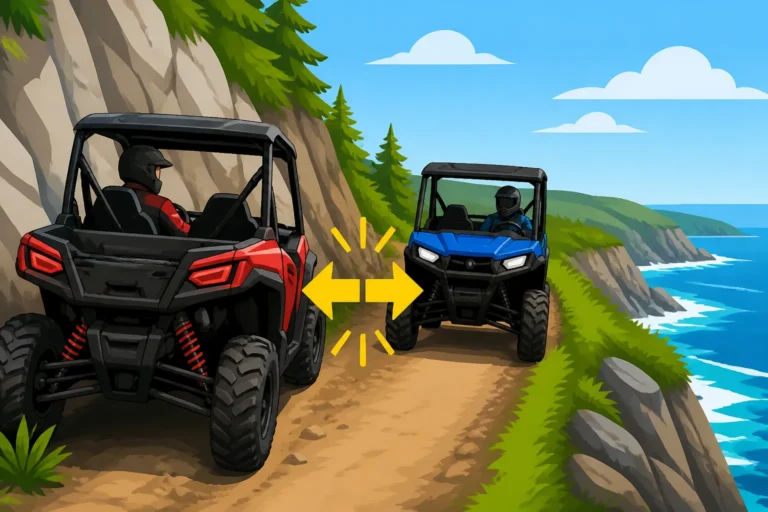
Machine fit matters, too. A wide side-by-side may be comfortable for a long ride but less convenient on a tight corridor. A smaller ATV may handle narrow sections more easily but offer less storage for warm layers, tools and food. If you are unsure whether a particular machine is welcome or suitable, ask the organizer rather than assuming all routes accommodate every vehicle.
Carry a backup map and expect conditions to change
Use the event’s route information as your starting point, then make sure you can still navigate if a phone battery dies or cell service drops. Download maps for the area before leaving home if you use an app such as onX Offroad, and check that your intended route is actually on a corridor open to your machine. A digital trail line is a navigation aid, not proof of permission or current access.
For areas with weak reception, keep a paper map or saved route information as a backup. Tell someone outside the ride where you are going and when you expect to return. If you use onX Offroad, check your saved map before departure and keep the device protected from rain, vibration and cold. Do not let route-following distract you while operating a machine; stop in a safe place to check directions.
Trail status can change after heavy rain, washouts, maintenance work or seasonal closures. Check with the event organizer and relevant local club shortly before the ride. [Nova Scotia Trail Conditions and Closures] and [Nova Scotia Trail Maps Worth Downloading] can help you think through what to verify, but the event’s latest instructions should guide your day.
Get your paperwork and machine ready
Check permits, registration and insurance
Before an organized ride, confirm which permissions apply to the event’s route. Registration, insurance and a trail permit are separate considerations; having one does not necessarily replace the others. Organizers may ask participants to show proof or may explain what is required for their specific ride. If you are visiting from another province, ask rather than assuming your usual permit or paperwork is accepted.
Read [Nova Scotia Trail Permits From ATVANS] for background on trail access, and check [Nova Scotia Insurance Proof at a Trailhead] if you are unsure what proof to carry. Keep required documents where you can reach them without unpacking your entire machine. If your paperwork is stored in a phone, make sure you can access it without relying on a strong signal.
Also check the rules for the particular trail or road segment. An event route does not waive ordinary riding requirements. Helmets, legal riding locations, machine equipment and passenger rules still matter. If the route includes a road trail, confirm the applicable conditions with the organizer; do not treat a brief road connection as permission to ride wherever you choose.
Do a practical pre-ride check
A short inspection at home can prevent a minor fault from turning into a stranding. Check tires, brakes, lights, steering, throttle return, battery condition and fluid levels. Look for loose parts or damage from the last ride, and make sure any cargo is secured so it cannot shift into a wheel or interfere with controls.
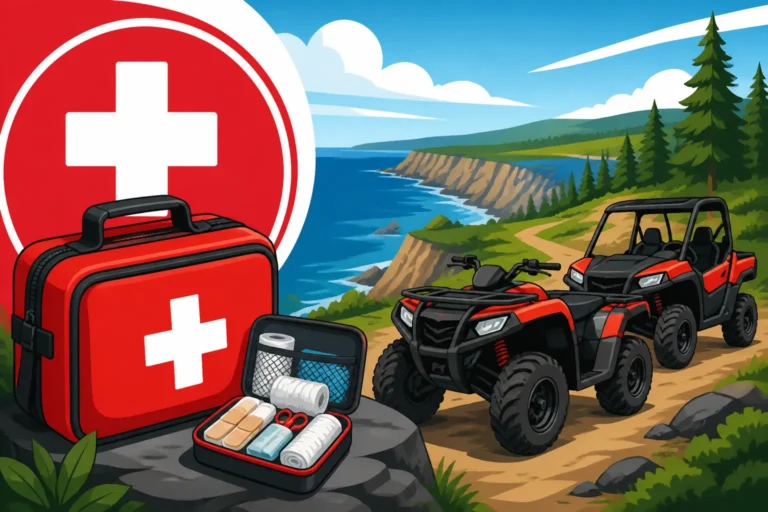
Carry a small repair kit suited to your machine and the route. That might include basic tools, a tire repair option, a tow strap, drinking water, snacks, a first-aid kit and a spare layer. For a longer or remote ride, ask the organizer what recovery support is available and what riders are expected to bring themselves. A group event can provide company, but it does not guarantee that help will be close by.
Think about comfort as well as mechanical readiness. Coastal weather can change quickly, and a warm, sunny start does not promise the same conditions later in the day. Pack rain protection and an extra insulating layer, and avoid carrying so much that it affects handling. If your group needs parking or a meeting point before the ride, check [Nova Scotia Trailheads With Parking] for planning considerations.
Ride considerately and make the event enjoyable
Follow the group plan without riding beyond your comfort level
At the start, listen for the route briefing, regrouping points and instructions for missed turns. Ask what to do if you become separated or need to stop. Keep enough space to react to the rider ahead, and avoid pressuring someone who is travelling at a careful pace. If the group is split into smaller units, know who is leading and who is checking that no one is left behind.
At checkpoints, park where directed and keep access clear for other riders, volunteers and local traffic. Take the time to drink water, check your machine and ask about the next section. A poker run is not improved by rushing through a stop and then discovering that a rider in your group is tired, lost or dealing with a mechanical issue.
Stay on the marked route and respect gates, signs and private property. If a trail is blocked or damaged, do not create a new path around it. That can widen the disturbance and cause problems for landowners and clubs. Follow the event’s detour instructions, or stop and contact the organizer if the route is unclear.
Be thoughtful about communities, volunteers and trail users
Poker runs and rallies often depend on volunteers who mark routes, staff checkpoints, manage parking and help participants stay on track. Follow their directions, keep the start and finish areas tidy, and be patient if check-in takes longer than expected. A friendly interaction at a checkpoint helps keep the event welcoming for the next group of riders.
Ride at a pace that suits visibility and trail conditions. Dust near homes, noise in villages and fast riding around other trail users can quickly affect local support for organized events. Slow down when passing people, leave room, and follow posted signs and club guidance. If conditions become muddy or fragile, resist the temptation to ride around wet spots and make the trail wider.
Spring deserves special attention. Thawing ground can be vulnerable, and clubs may close sections to prevent damage. Before travelling to an event, check whether the route remains open and whether any reroutes have been announced. [Nova Scotia Spring Thaw and Trails] explains why a planned ride may need to change when trail conditions are soft.
When the event ends, check that everyone in your group has returned, report any hazards or damage to the organizer, and take your garbage with you. The best rally is not only one where riders finish the route; it is one that leaves the trail usable, respects the surrounding community and gives participants a reason to come back.
Disclaimer
This article is for general informational purposes only and does not constitute professional advice. Laws, prices and regulations vary by location and change over time. Consult a qualified professional for guidance on your specific situation.