Why a Woodlot Owner Closes a Trail
A familiar trail can be closed without warning because the land beneath it is privately owned, and the owner may need to log, protect a wet area, or stop damage to the property. For Nova Scotia ATV and UTV riders, understanding why a woodlot owner closes a trail—and what to do next—can prevent conflict and help keep access possible in the future.
Why a Nova Scotia woodlot owner may close a trail
A trail can cross private land even when it looks established, appears on a map, or has been open for years. Access often depends on the owner’s permission and on the trail being used in a way that works for both riders and the people managing the land.
That’s why a closure can feel abrupt to riders but still be necessary for the owner. It may apply to one section, a particular season, or the whole property. Don’t assume a familiar route remains open just because you rode it last year. For more context on shared access, see Nova Scotia Trails That Cross Private Woodlots.
Logging and other forestry work
Woodlots are working properties. An owner may close a trail when harvesting, hauling, road building, or other forestry work is underway. Logging trucks and heavy equipment can move along narrow access roads, sometimes with limited visibility or room to pass. A recreational machine can create a serious hazard if it enters an active work area unexpectedly.
A closure may also be needed before work begins. Contractors may need unobstructed access, or the owner may want riders kept away from a section where trees are being felled, branches are being cleared, or equipment is moving. Even if no machinery is visible when you arrive, that doesn’t mean the route is safe or that work has stopped for the day.
Forestry activity can change conditions quickly. A once-familiar corridor might be blocked by slash, ruts, or equipment, while a temporary access road may look like a new trail. Stick to marked routes and posted instructions rather than treating a fresh track as an invitation to explore. If you’re unsure whether a section is open, check with the local club or land manager before riding it. The guidance in When Forestry Work Closes a Trail is relevant when a closure appears tied to active work.
Wet ground, erosion, and trail damage
A woodlot owner may close a trail because repeated use is damaging soil, water crossings, or the trail surface. This is especially likely when the ground is soft after heavy rain or during a seasonal thaw. A vehicle that sinks into a wet section can leave deep ruts; riders who steer around those ruts may widen the trail and damage vegetation beside it.
That widening can turn a small muddy patch into a much larger disturbed area. On sloped ground, exposed soil may wash downhill. Near a brook or culvert, careless riding can affect the crossing or surrounding banks. A closure may give the surface time to dry or allow a club or owner to repair the route before it deteriorates further.
It’s tempting to think one more careful pass won’t matter, particularly if the trail looks open ahead. But if the ground is soft, the most responsible choice is to turn around instead of carving a bypass. Why Riding Around a Wet Section Widens the Trail explains how that well-intended detour can make a damaged section worse.
Property protection, privacy, and safety
Not every closure is about forestry or mud. Owners may need to protect a gate, crop, boundary, habitat area, or other part of the property. A route may also run near a home, work site, livestock, or equipment that the owner doesn’t want exposed to regular vehicle traffic.
Safety concerns can be very specific. A bridge or culvert may be damaged; a tree may be unstable; or a section may have become dangerous after a storm. The owner may close access while arranging repairs or assessing the risk. Riders usually can’t tell from the trail entrance whether a problem is minor or serious, so don’t treat an unmarked route around a hazard as an approved alternative.
Privacy and neighbour concerns matter, too. Noise, dust, litter, repeated trespassing beyond the marked corridor, or riders passing close to a residence can strain a landowner relationship. Even when a particular rider behaves respectfully, the owner may decide that the overall use is no longer acceptable. That’s one reason local etiquette and staying within the agreed route are so important.
What a closure may look like on the ground
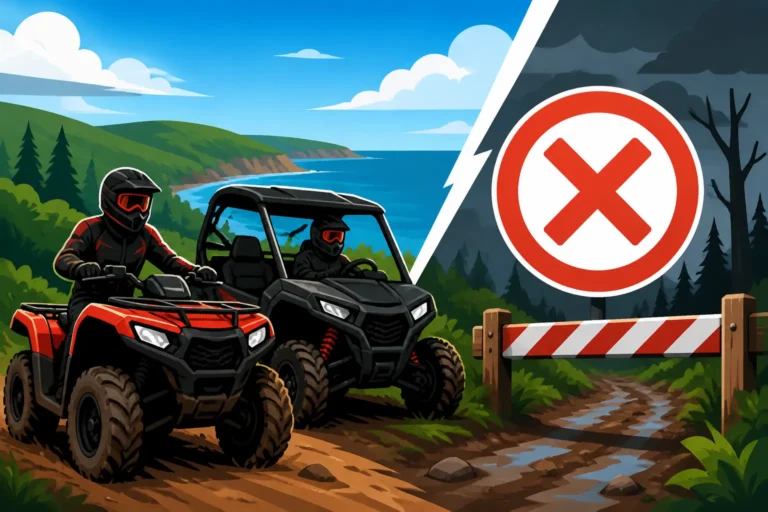
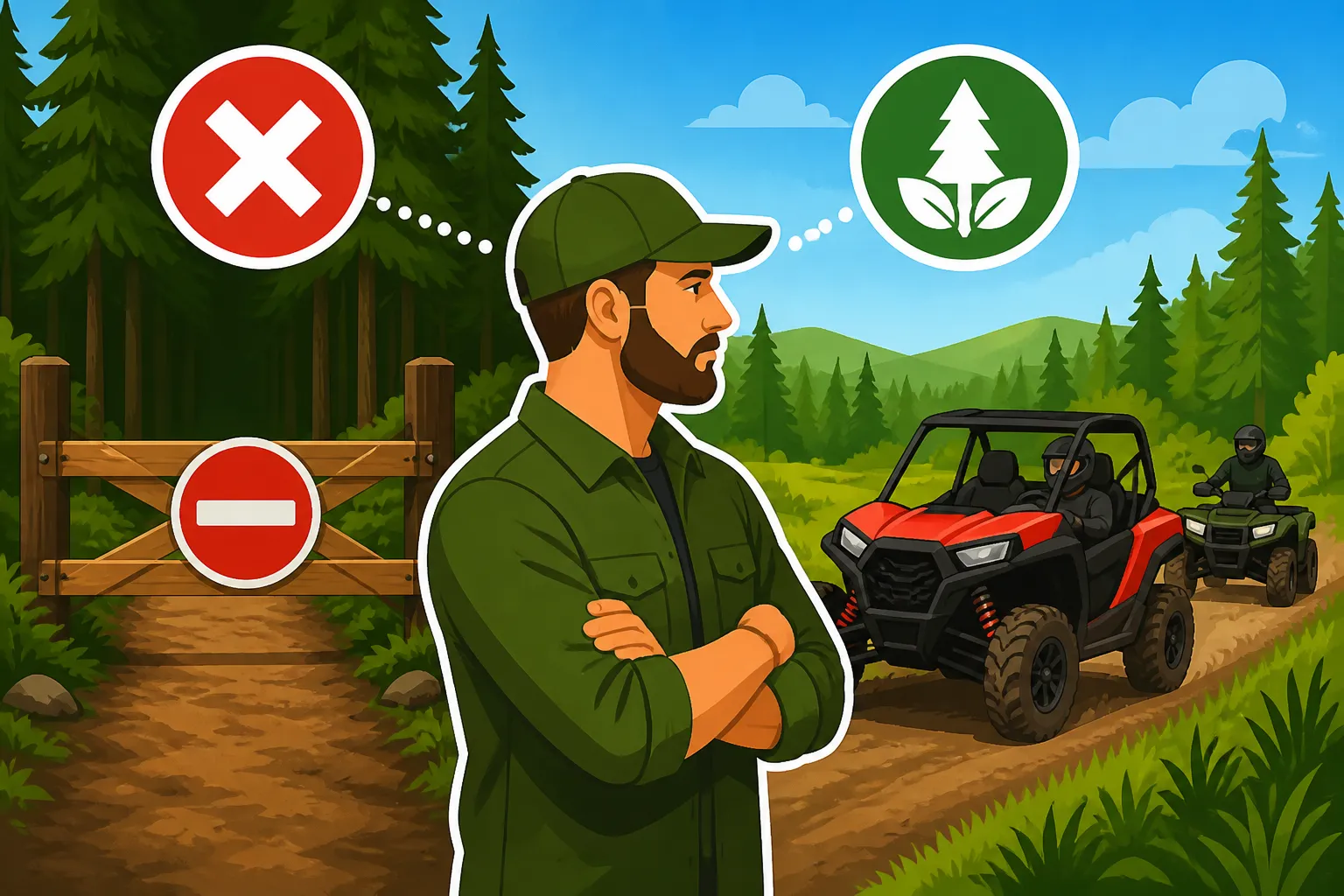
A closure isn’t always marked by a large, permanent sign at the trailhead. It might be a temporary notice, a barrier, a gate, a club update, or a change to the marked route. Treat signs and physical barriers seriously, and don’t assume an opening in a fence or a gap beside a gate is a permitted entrance.
A digital map can help with orientation, but it can’t give you permission to cross private land or guarantee that a trail is open today. If you use onX Offroad or another mapping tool to plan a route, compare it with current club information and follow posted signs at the site. The property owner’s permission and current access instructions take priority over a line on a screen.
Temporary closures and permanent closures
A temporary closure may be tied to logging, repairs, wet ground, storm damage, or another short-term concern. It might be lifted once work is complete or the trail surface is ready for use again, but riders should wait for confirmation rather than deciding for themselves that the route looks passable.
A permanent closure means access has ended, at least for the foreseeable future. A landowner may withdraw permission, change how the property is used, or decide that ongoing trail traffic is not a good fit. A route that has been used for years can still close if the arrangement changes. Familiarity doesn’t create a right to keep riding there.
When closure details aren’t clear, don’t test the boundary. Ask a local club whether it has an update or an approved detour. The club may know whether the closure is temporary, whether a nearby section remains open, or whether the route has been removed from the network. For updates across the wider network, Nova Scotia Trail Conditions and Closures is a useful topic to check alongside local notices.
A map line does not override a gate or sign
GPS tracks, downloaded routes, and older maps can continue to show a trail after access has changed. Some mapping information may be submitted by users or may not reflect a recent closure. A mapped route is best treated as a navigation aid, not as proof that you’re allowed to ride a property.
onX Offroad can help riders see where a planned route goes and keep track of their position, but it cannot confirm every landowner agreement or real-time closure. If a digital route leads to a gate marked closed, stop there. Don’t ride around the barrier, lift it, or follow a vehicle track that appears to bypass it.
Before heading out, look for current information from the relevant trail club, read notices at the trailhead, and be ready to change plans. Keeping an alternate route in mind makes it easier to turn back without feeling pressured to push through a closed section. Nova Scotia Trail Maps Worth Downloading can help with planning, but always check whether the specific corridor is open.
| What you encounter | A sensible response |
|---|---|
| A closed sign or barrier | Stop and turn around; don’t go around it |
| Logging or equipment nearby | Leave the work area and follow posted instructions |
| Fresh ruts or soft ground | Avoid creating a bypass; return by an open route |
| An old map showing a trail | Confirm current access with the local club |
| No sign, but uncertainty about permission | Ask before riding onto the property |
What riders can do when a trail closes
The first response should be practical: stop, read the notice, and use an open route. A closure can disrupt a planned ride, especially when a group has travelled a long way to reach a trailhead. Still, trying to sneak through or arguing at a gate can make it harder for clubs to maintain access elsewhere.
For a closure that affects a club trail, the local club may be able to explain what’s happening and whether a detour is available. Clubs often coordinate maintenance and communicate with landowners, but they may not be able to reopen a route without the owner’s agreement. The principles in Nova Scotia Club Trail Maintenance help explain why access depends on ongoing care and cooperation.
Turn around and report the information
If you find a closure that isn’t already listed, note the location and what you observed. A clear report might include the trail name or nearby road, the date, the sign or barrier you saw, and whether the route appears blocked by work or damage. Share the information with the relevant club rather than posting speculation about the landowner online.
If the closure appears to involve an immediate hazard, such as damaged infrastructure or a dangerous washout, don’t attempt a repair or ride across it. Let the club or responsible contact know what you saw. Photos can be useful if they can be taken safely and without crossing a barrier or entering a closed area. Reporting Trail Damage to a Nova Scotia Club covers the kind of details that can make a report useful.
When you’re riding with friends, make sure everyone knows the route is closed before the group separates or someone tries to scout ahead. A lead rider who turns around should clearly signal the decision to the rest of the group. OnX Offroad or another navigation app may help the group regroup and choose a different route, but it shouldn’t be used to find a way around a closure.
Respect gates, signs, and marked corridors
A gate is there for a reason, even if it doesn’t look locked. Leave it as you found it, and don’t assume that an open gate means the trail is open to recreational riding. It may have been opened for a landowner, contractor, or other authorized user.
Stay on the marked route when access is permitted. Don’t take an unmarked shortcut through the woods, cross a fence, or ride around a muddy or damaged patch. Small deviations can disturb property and vegetation, and they may create a new track that other riders mistake for an approved trail. Leaving Woodlot Gates Exactly as You Found Them and Staying on the Marked Corridor Through Private Woodlots offer useful reminders for riding where access depends on cooperation.
The same respect applies after a closure notice disappears. Don’t infer that the trail has reopened just because a sign is missing or a barrier has moved. Check with the club or owner if the status isn’t clear. That extra step can prevent an uncomfortable confrontation and reduce the risk of losing access to a route that may be important to the local riding network.
How to help keep woodlot access possible
Access on private land is a relationship, not a permanent guarantee. Owners may allow riding because a club communicates with them, users follow agreed routes, and problems are reported instead of ignored. A considerate ride can help preserve that relationship; repeated damage or disrespect can undermine it.
Riders can’t control every closure. Forestry plans change, storms damage infrastructure, and owners may need their land for other purposes. But riders can control how they respond and whether their own behaviour adds pressure to an already difficult situation.
Make your ride easier on the land and neighbours
Before setting out, confirm that the route is open and that your group understands the posted rules. Keep to a reasonable pace near homes and shared-use areas, avoid unnecessary noise, and pack out any litter. If conditions are wet enough to leave deep tracks, turn back rather than widening the corridor.
Give active work areas plenty of space. A machine operator may not see or hear an approaching ATV or UTV, especially in a wooded area. If you encounter logging or maintenance work, follow signs and instructions; don’t stop where you block equipment or assume workers will move aside so the group can pass.
For broader guidance on conduct, see Nova Scotia Trail Etiquette Locals Expect. Courtesy can’t guarantee that a particular trail will stay open, but careless riding can make a landowner less willing to support access. Think of every ride as part of the reputation riders leave behind.
Ask before using a route that crosses private land
If you’re planning to ride an unfamiliar woods road or a route that isn’t clearly part of a maintained trail network, don’t assume it’s open to motorized use. Find out who manages the route and whether permission applies to the machine, season, and purpose you have in mind. An old track, a wide road, or a route used by another vehicle doesn’t automatically mean recreational access is allowed.
When a club manages a marked trail, use its current information and follow any conditions attached to the route. If the route is outside a maintained network or the permission status is uncertain, seek guidance before riding. Nova Scotia Private Woodlot Permission is a helpful starting point for understanding why access needs to be confirmed rather than presumed.
A closure can be frustrating, particularly when it changes a ride you’ve planned around. But turning around, checking reliable local information, and respecting the owner’s decision are the best ways to avoid making the problem worse. That approach also gives trail clubs a better chance to maintain trust with the people whose land makes many riding routes possible.
Disclaimer
This article is for general informational purposes only and does not constitute professional advice. Laws, prices and regulations vary by location and change over time. Consult a qualified professional for guidance on your specific situation.