Nova Scotia Safety Training at 16
Nova Scotia Safety Training at 16
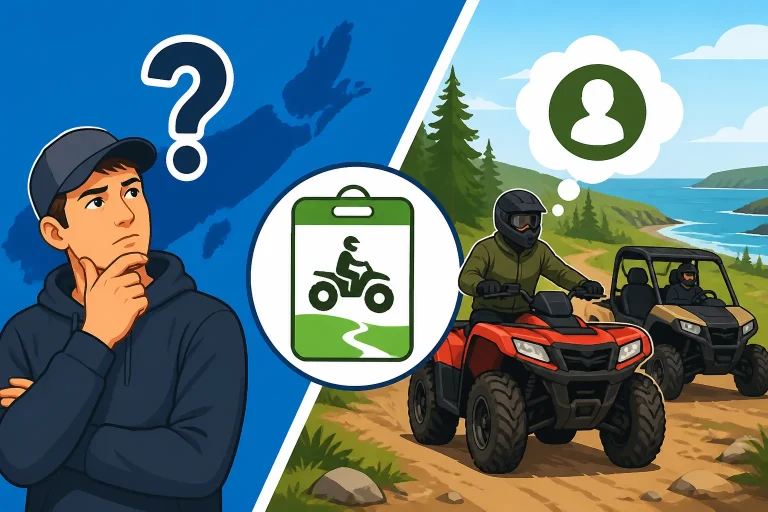
Turning 16 can change what a young rider needs before taking an ATV or side-by-side onto a Nova Scotia trail. The confusing part is that training, age limits, registration and trail permits are separate requirements. This guide explains how they fit together, what to check before booking a course, and how to avoid assuming that a permit or an older certificate covers everything.
What safety training at 16 means in Nova Scotia
A safety course is about whether a person is qualified to operate an off-highway vehicle under Nova Scotia’s rules. It is not the same thing as registering the machine, buying a trail permit or getting permission to ride on a particular property.
For a 16-year-old, the first question is not simply, “Am I old enough to ride?” It is: “Do the current rules require me to hold a safety certificate, and does my certificate meet those rules?” The answer can depend on the rider’s circumstances, including whether a valid exemption applies. Age alone does not settle every case.
The safest approach is to treat the training requirement as a separate item to verify before riding. A completed course may satisfy a qualification requirement, but it does not automatically give a rider permission to use every trail, road trail, private woodlot or piece of Crown land.
Four different requirements that are easy to mix up
A young rider may need to think about several separate rules at once:
| Requirement | What it concerns | What it does not replace |
|---|---|---|
| Safety training or certificate | The rider’s knowledge and qualification to operate an OHV | Registration, insurance, a trail permit or landowner permission |
| Registration and vehicle permit | The machine’s legal registration status and paperwork | The rider’s training or trail access |
| Trail permit | Access to participating club trail systems under the applicable permit rules | Registration, insurance or permission to ride elsewhere |
| Riding-age and supervision rules | Who may ride, what supervision is required and whether the machine suits the rider | A safety certificate or machine paperwork |
A rider can have one requirement covered and still be missing another. For example, a youth may have completed training but be riding a machine that is not properly registered or insured. Another rider may be on a registered machine but not have the required trail permit for a club corridor.
That distinction matters especially for families. It is easy to assume that the adult who owns the ATV has taken care of everything. But the adult’s papers do not automatically qualify a teenager to ride, and a teenager’s certificate does not make the machine’s documents current.
Training is not a general licence
An OHV safety certificate should not be treated as a road driver’s licence. It is a qualification related to off-highway vehicle operation, not permission to drive a car or to use any road whenever the rider chooses.
Nova Scotia road-trail rules are their own subject. A machine that can legally use a designated road trail must meet the road-trail requirements, and the operator must meet the applicable rules for that route. A safety certificate alone does not turn a woods road into a road trail or authorize riding on a highway shoulder.
Before planning a route that uses a road trail, review Nova Scotia Road Trail Rules Explained and confirm that the particular road or segment is open to OHVs. For ordinary trail riding, check the route, club access and current closures as well as the rider’s qualification.
The certificate belongs to the rider, not the machine
Training is tied to the person who completed it. It is not a transferable feature of an ATV, and it does not move from a parent to a child when the machine changes hands.
That makes it useful to keep the rider’s certificate information separate from the vehicle documents. A family can store the registration and insurance papers with the machine, while keeping each rider’s training record where it can be found when needed. If several people use one machine, check each operator’s requirements individually.
For a broader explanation of the training requirement, see Nova Scotia Safety Certificates Are Mandatory. The important practical point is that a course, a paper certificate and permission to ride are related but distinct things.
Before booking a course
At 16, a rider or parent should confirm the actual requirement before paying for a course. The rules can involve age, prior training and exemptions, so a quick assumption based on a friend’s experience may not be reliable.
Start by checking the current Nova Scotia government information or asking the relevant office or recognized course provider what applies to the rider. If the rider may qualify for an exemption, ask what evidence is accepted and whether the exemption needs to be recorded or documented. Do not rely on an old certificate or a family story without checking the details.
Confirm the course is recognized
Not every safety talk, online video or informal lesson is necessarily an accepted course. Ask the provider directly whether successful completion results in a certificate recognized for Nova Scotia’s OHV safety requirement.
Before registering, confirm:
- The provider is authorized or otherwise recognized for the required training.
- The course covers the type of OHV the rider expects to operate.
- The rider meets the course’s minimum age and participation requirements.
- The certificate will be issued in a form the rider can keep and show if needed.
- The provider explains how to correct an error in the rider’s name or other certificate information.
- The certificate can be verified later if the original is lost.
A course that is useful for general knowledge is not automatically the course that satisfies a legal requirement. That does not mean extra instruction is wasted; it means families should distinguish supplementary learning from recognized certification.
For details on the practical questions that come up when choosing training, see Nova Scotia Safety Course for a 16-Year-Old, Nova Scotia Safety Course Length and Nova Scotia Safety Course Cost. Course arrangements and costs can change, so confirm current information with the provider before making plans.
Ask whether the course can be taken before the birthday
If a young person is close to 16, it is reasonable to ask whether the course can be completed before the birthday and when the certificate becomes valid. Do not assume that a course can be taken early, or that an early completion automatically satisfies the rule from the rider’s birthday onward.
The provider can explain its own enrollment policy. For the legal effect of taking the course early, confirm with the appropriate Nova Scotia authority. This small check can prevent a family from booking a course at the wrong time or expecting the certificate to take effect differently than it does.
It is also worth asking how long it takes to receive proof of completion. A course may be finished before a planned ride, but a certificate or record may take additional time to issue. Leave enough room for that process rather than scheduling the first ride for the same day and hoping the paperwork is ready.
What training should help a new rider understand
A good course is more than a formality. It should help a young operator recognize hazards and make better decisions before a situation becomes an emergency. Course content varies, but families can use these topics as a practical checklist when discussing the training:
- Basic controls and safe starting, stopping and turning.
- How rider size, strength and experience affect machine choice.
- The risks of steep, loose, wet or uneven ground.
- Braking and cornering without treating the machine like a car.
- Safe speed for visibility, terrain and the rider’s ability.
- How passengers and cargo affect handling.
- How to respond when the machine becomes stuck or disabled.
- The importance of protective gear and a properly fitted helmet.
- How to plan a route and communicate with the group.
- What to do after a collision or mechanical problem.
Training is valuable, but it cannot compensate for a machine that is too large or powerful for the rider, inadequate supervision, unsafe modifications or riding beyond the operator’s skill. A young person who has passed a course still needs practice in appropriate conditions and clear limits from the adults responsible for the ride.
Age, supervision and the machine itself
Safety training is only one part of the rules for young riders. A 16-year-old should not be treated automatically as an experienced adult operator simply because they have reached a particular birthday or completed a course.
Nova Scotia has separate youth-riding rules, including requirements that can apply to younger operators and their supervisors. Families with children who ride together should check the rules for each age group rather than applying one rule to all young riders. See [Nova Scotia Rules for Riders Under 16] and [Nova Scotia Supervision Requirements] for the related age and supervision questions.
Match the machine to the rider
The machine needs to fit the rider’s body and ability. The operator should be able to reach and use the controls, steer confidently, brake effectively and manage the vehicle’s weight without relying on someone else to correct every mistake.
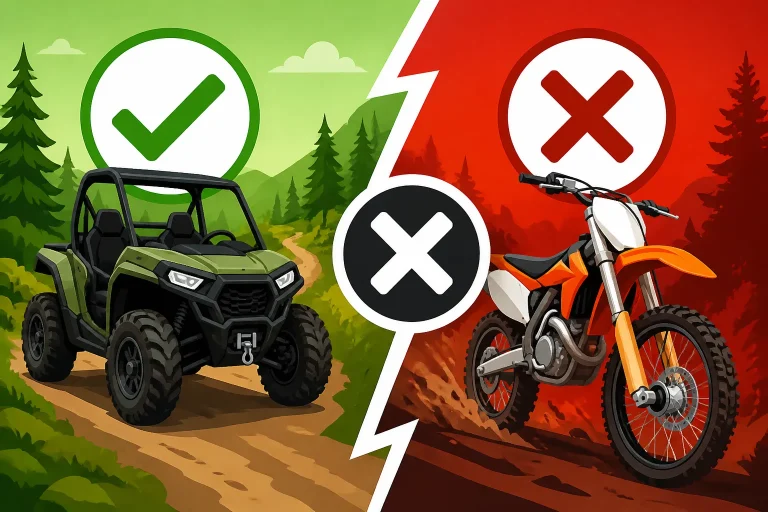
A young rider’s experience on a small quad does not automatically transfer to a larger ATV or a side-by-side. Different machines have different controls, weight, turning behaviour and passenger or cargo considerations. A rider who is new to a UTV should receive an appropriate introduction even if they already have experience on a quad.
When choosing a machine, consider:
- Whether the rider can operate all controls without stretching or losing balance.
- Whether the rider can manage the machine’s weight while stopped and moving slowly.
- How the vehicle behaves on the terrain where it will be used.
- Whether carrying a passenger changes the handling or creates additional risk.
- Whether the rider has practiced in a controlled, suitable area before joining a group ride.
- Whether the machine’s size and power are appropriate for the rider, not simply available in the household.
Do not let the vehicle’s purchase price or ownership status drive the decision. A family machine may be convenient, but convenience is not the same as suitability.
Supervision still matters
A certificate is not a substitute for supervision where supervision is required, and it is not a guarantee that a young rider is ready to ride alone. Parents and guardians should think about the rider’s judgment, familiarity with the route, ability to handle a breakdown and ability to communicate if separated from the group.
Set clear expectations before the ride:
- Which trails or areas are allowed.
- Who the young rider must stay with.
- What speed and following distance to maintain.
- What to do if the group stops or separates.
- Whether passing, riding ahead or taking a different route is prohibited.
- How to signal a problem and where the group will regroup.
- What conditions mean the ride should stop.
A short conversation at the trailhead is not a replacement for training, but it can prevent misunderstandings during the ride. For a young operator, a predictable route with an experienced adult nearby is usually a better learning environment than a long, unfamiliar ride with a large group.
Ownership age is not riding age
Families sometimes confuse the age at which a person can be listed as an owner with the age and qualifications needed to operate the machine. These are separate questions. A young person may be able to ride under the applicable rules without being the registered owner, and a person’s name on ownership paperwork does not by itself prove that they are qualified to operate.
Nova Scotia registration rules have specific requirements about who can be the registered owner and when an adult’s permission may be needed. If a family plans to register a machine in a 16-year-old’s name, check Nova Scotia Registration at 16 With Permission and What a Parent Signs for a 16-Year-Old Owner. Do not treat that paperwork as a substitute for the rider’s safety training, insurance or trail-access requirements.
Exemptions and older certificates
Some riders may not need to follow the standard training path because they qualify for an exemption or hold a certificate that is already accepted. This is one of the areas where it is especially unwise to rely on informal advice.
An exemption is not the same as having no rules. It applies only if the rider’s situation meets the relevant criteria, and the rider may still need to follow age, machine, supervision, registration, insurance and trail-permit requirements.
Why the grandfather rules need careful checking
Nova Scotia has historical provisions connected to earlier OHV ownership and qualifying certificates. Riders sometimes describe these as “grandfathering,” but that label can hide important details. Eligibility may depend on dates, proof of ownership or the kind of certificate held, not merely on being an older rider or having used an ATV for a long time.
If someone in the family says, “I’ve been riding for years, so I’m exempt,” ask what evidence supports that claim. Long experience may be helpful, but it is not necessarily the same as meeting a formal exemption. Likewise, a certificate from another period or program should not be assumed to qualify until its status is confirmed.
The relevant questions include:
- Which exemption is being claimed?
- What dates or past circumstances determine eligibility?
- What documents are accepted as proof?
- Does the exemption apply to this rider personally?
- Is the certificate or exemption recorded in a way that can be verified?
- Does it apply to the kind of riding planned?
The reference topics Nova Scotia’s Grandfather Exemption, Nova Scotia’s Pre-2006 Grandfather Rule and Nova Scotia Safety Certificate Lookup can help frame those questions. Because historical cutoffs and evidence requirements can be easy to misunderstand, confirm the rider’s exact situation with an official source rather than relying on a general description.
Keep proof even if an exemption applies
If a rider is exempt, keep evidence of the exemption or the records used to establish it. If the basis is an old certificate, retain the certificate and any identifying details that will help verify it. If the original is missing, ask about the correct way to search for or replace the record before the riding season.
A practical record folder might include:
- The rider’s certificate or written confirmation of recognized training.
- Any official record or letter confirming an exemption.
- The rider’s name and identifying details as shown on the certificate.
- The date and provider associated with the training.
- Contact information for the provider, if available.
- A copy stored separately from the original.
Some families keep digital copies on a phone. That is useful as a backup, but do not assume that a phone image will satisfy every request. Keep the original or the form of proof accepted by the relevant authority, and check what riders are expected to carry while operating.
If an old certificate was issued under a different program, ask whether it is recognized rather than trying to infer its status from the course name alone. Nova Scotia Canada Safety Council Certificates is a relevant topic for riders checking older or previously issued training records.
An exemption from training does not exempt the machine
Even when a rider qualifies for a training exemption, the ATV or UTV may still need registration, insurance and any permit required for the route. An exemption from one requirement does not normally cancel unrelated obligations.
This is a common source of confusion when an older operator rides a family machine. Their personal status does not make the machine’s registration current, and it does not automatically give a visiting rider access to a club trail. Check the vehicle documents and the route requirements separately.
Safety certificates, registration and trail permits
Before riding, think of the paperwork as a set of separate checks rather than one all-purpose “ATV licence.” The certificate relates to the operator. Registration relates to the machine. Insurance protects against certain financial risks and may be legally required. A trail permit relates to access on participating trails.
Registration and insurance
Nova Scotia registration is a separate process from safety training. If the machine needs registration, the registered owner must have the required paperwork in order. A young operator riding a parent’s registered machine does not need to become the owner merely to demonstrate training, but the family should be able to show that the machine is properly documented.
Insurance is another separate check. Do not assume that a safety course includes insurance or that a trail permit provides the coverage needed for the machine. The policy, registration status and certificate should each be verified on their own. For related questions, see Nova Scotia Registration Before Your First Ride and Nova Scotia Insurance Requirements for Riders.
When carrying documents, keep them protected from moisture and damage. Some families use a sealed document pouch attached securely to the vehicle, while others carry the papers with a responsible adult. If buying accessories through Amazon, check that a pouch or case will stay secure, remain readable and not interfere with the machine’s controls. A storage accessory does not replace carrying the actual required documents.
The trail permit is not a safety certificate
A trail permit can be required for access to particular club trails, but it does not certify the rider’s training. Similarly, a safety certificate does not buy trail access.
Permit rules can also differ for residents and visitors, and arrangements with neighbouring provinces may change. A rider who holds a safety certificate from another province should not assume it replaces Nova Scotia’s trail-permit requirement. A Nova Scotia rider visiting another province should check that province’s rules too.
For a local riding season, start with How to Buy a Nova Scotia Trail Permit and Nova Scotia Club Permit vs Standalone Permit. For visiting riders, review Nova Scotia Permit for a Visitor and the relevant reciprocity information before crossing the border. The key point is to verify the training credential and the trail permit separately.
Road trails are a different layer of rules
A designated road trail introduces additional operating rules. The rider may need to meet requirements beyond basic OHV training, and the machine must be eligible and properly equipped for the route. Rules can also govern speed, hours, riding position, passengers and the operator’s licence status.
Do not infer that a rider can use a road trail because they hold an OHV safety certificate or because the machine is registered. Check the road-trail requirements and the specific route. A legal trail connection can change how a trip is planned, but a road-shoulder shortcut or a road that looks like a trail is not automatically authorized.
For a route crossing a public road, confirm the legal crossing point and follow the applicable rules. The same goes for private land: a marked club route does not give permission to wander beyond its corridor, and an unmarked woods road is not automatically open to OHVs.
A practical checklist for a 16-year-old rider
Use this sequence before the first ride, or whenever the rider changes machines, routes or provinces. It helps catch the common mistake of checking one item and assuming the rest are covered.
- Confirm the rider’s training status. Check whether the current rule requires a certificate for this rider or whether a documented exemption applies.
- Verify the course or certificate. If training is needed, confirm that the provider and certificate are recognized for Nova Scotia.
- Check the rider’s age and supervision rules. Review the requirements that apply to the rider’s age, not just the rules for the adult owner.
- Match the vehicle to the rider. Make sure the controls, size, weight and power are suitable, and provide practice before a difficult or unfamiliar route.
- Check the machine’s registration. Confirm that the registration and vehicle permit are current and that ownership paperwork is in order.
- Confirm insurance. Make sure the machine has the required coverage and that the rider understands what the policy does and does not cover.
- Check the trail permit. Confirm that the permit fits the rider’s intended access, machine and trail system.
- Confirm the route is open and legal. Check club notices, closures, land access and any road-trail rules that apply.
- Prepare the rider and machine. Use suitable protective gear, inspect the machine and carry the documents and emergency items needed for the trip.
- Set a group plan. Agree on the route, pace, meeting points, signals and what to do if someone becomes separated.
A short checklist is especially helpful when another adult is organizing the ride. The parent who booked the course may not be the person who takes the teen out on the weekend. Make sure the person leading the ride knows what the teenager is qualified to do and what limits the family has set.
Protective equipment and useful preparation
Training should lead to safer choices, not just a certificate in a drawer. A properly fitted helmet and appropriate riding gear are basic parts of preparation. The helmet must meet the applicable requirements; do not choose one solely because it is inexpensive or marketed for general recreation.
Amazon may offer accessories such as document pouches, gloves or basic tool organizers, but a product listing is not proof that an item meets a legal safety standard. For a helmet or other regulated protective equipment, verify the accepted certification marks and fit before buying. If there is doubt, ask a knowledgeable local dealer or safety instructor.
It can also help to keep a simple ride kit with the machine: a first-aid kit, basic tools, water, a charged phone where service is available and a way to contact the group. The right equipment depends on the route and conditions. For remote rides, do not assume a phone will work everywhere.
A second Amazon use is for inexpensive organization items, such as a waterproof folder or labelled storage bag, if the item can be secured safely. Keep important paperwork legible and protected. Do not put loose items where they could become caught in controls, wheels or moving parts.
Make the first ride a learning ride
A newly certified rider may be eager to join a full-day group trip. Consider starting with a shorter, familiar route and manageable conditions instead. A controlled first ride gives the operator time to get used to the machine’s braking, turning and response without the pressure of keeping up with an experienced group.
A good first outing has:
- A route suitable for the rider’s experience.
- An adult or experienced operator nearby.
- A pace that allows the young rider to maintain control.
- Enough daylight and time to turn back.
- Stops to check comfort, fatigue and machine condition.
- A clear plan for what happens if the rider becomes anxious or the machine has a problem.
The goal is not to prove how far or fast the rider can go. It is to build sound habits: looking ahead, leaving room, slowing for reduced visibility and stopping when conditions exceed the rider’s ability.
Amazon might be useful for small non-safety essentials, but no purchase can replace instruction, practice or good judgment. A compact rain cover or storage organizer can make a ride more comfortable; it cannot make an unsuitable trail or machine safe for a beginner.
Visitors, reciprocity and riding in another province
Safety training and reciprocity are easy to confuse because both involve whether a rider’s documents are accepted. They answer different questions. Reciprocity generally concerns whether a visitor’s permit or trail-access credential is recognized. Training concerns whether the operator meets the applicable safety qualification rules.
A visitor from another province should check both before riding in Nova Scotia:
- Is the rider’s safety certificate accepted for the type of OHV operation planned?
- Does the rider need a Nova Scotia trail permit or another access credential?
- Does the machine need registration or documentation recognized for visiting use?
- Does the visitor’s insurance meet Nova Scotia’s requirements?
- Are there age, supervision or equipment rules that apply locally?
- Is the specific trail or road-trail segment open to visiting machines?
Do not assume that a home-province safety card automatically acts as a Nova Scotia trail permit. Likewise, a recognized visitor permit does not necessarily settle the operator’s training status.
If a 16-year-old is travelling with family, the adult should verify the rules before departure, not at the trailhead. Keep proof of the course or exemption available, and check the current visitor arrangements because reciprocity policies can change. The same work is needed before a Nova Scotia rider takes a machine to another province: confirm both that the training is accepted and that the rider has the correct permit or pass.
For current local trail access, start with Nova Scotia’s Club Membership Trail Permit and Nova Scotia’s Thirty-Day Visitor Permit. The precise permit needed depends on the rider’s situation and the trails planned, so confirm current details with the appropriate association or club.
Common mistakes families can avoid
Assuming a birthday removes every restriction
Turning 16 may change which rules apply, but it does not automatically make a rider eligible for every machine, route or type of riding. Check training, supervision, machine suitability, insurance and access separately.
Treating experience as formal certification
Years of riding can build skill, but they do not necessarily meet a formal certificate requirement. If the rider claims an exemption, identify the exact exemption and the proof needed to establish it.
Believing a parent’s certificate covers the teenager
Training applies to the individual. A parent’s certificate does not transfer to a child, and a child’s course does not qualify other family members.
Assuming the trail permit includes the training requirement
A trail permit is about access under permit rules. It is not a course certificate. The reverse is also true: a safety certificate does not automatically provide trail access.
Booking without checking recognition
A course may be informative without being the course that satisfies the legal requirement. Confirm recognition before registering, and keep the completion record.
Leaving the first ride until paperwork is uncertain
If an exemption, old certificate or missing record is involved, resolve that question before the ride. Waiting until someone asks for proof can turn a straightforward outing into a frustrating problem.
Choosing a machine by age alone
A machine that seems suitable for a 16-year-old may still be too large, heavy or powerful for that particular rider. Physical fit and demonstrated control matter more than the birthday by itself.
Relying on old online posts or a friend’s recollection
Rules, course options and reciprocity arrangements can change. Use current official information or confirm directly with the relevant provider or authority. If two sources disagree, ask which source is current and what rule applies to the rider’s exact circumstances.
A rider who has completed a recognized course, has the right documents, understands the route and is matched to an appropriate machine is in a much stronger position to ride safely. The certificate is a useful foundation, not a blanket permission slip. Keep the operator’s qualification, machine paperwork and trail access checks distinct, and the family can plan with fewer surprises.
Disclaimer
This article is for general informational purposes only and does not constitute professional advice. Laws, prices and regulations vary by location and change over time. Consult a qualified professional for guidance on your specific situation.