Meeting a Logging Operation on a Pictou Trail
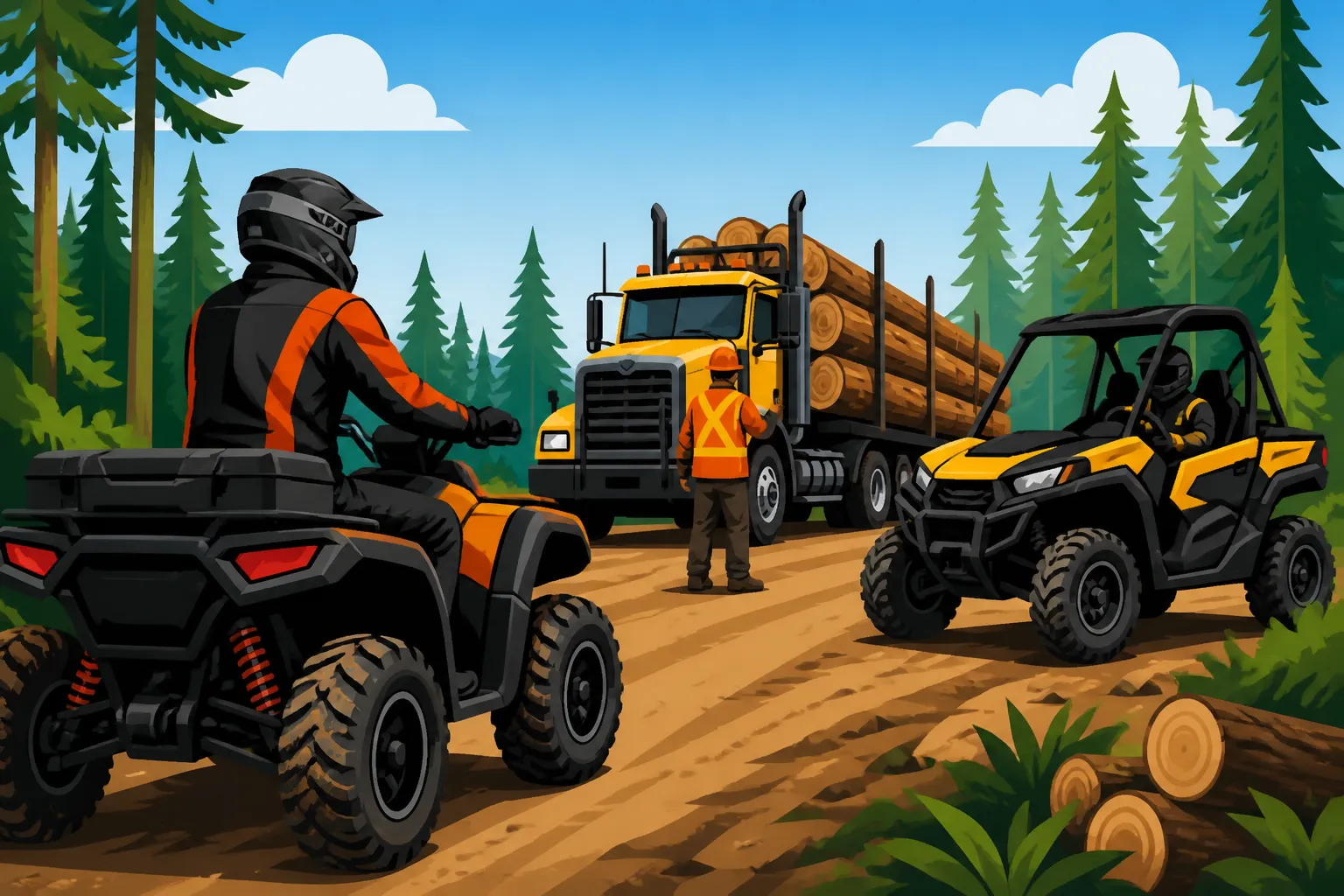
A logging truck around a bend on a Pictou County trail can turn an easy ride into a tense one fast. Heavy equipment, loose material, dust and blind corners all change what’s safe. This guide explains how to spot an active operation, share the corridor carefully, decide when to turn back and report a hazard without adding to the risk.
Recognize when logging is active
Look for signs before you reach the work area
Logging activity may be obvious once you’re close: you might hear machinery, see trucks moving timber, or encounter fresh ruts and debris. But visibility can be limited by trees, hills and bends, so don’t wait for a clear view of equipment to start slowing down. Watch for posted notices, barriers, warning signs, fresh tire tracks and recently disturbed ground as you approach a trail segment.
A trail that looks familiar from a past ride may have changed since then. Work can begin after you last travelled a route, and a corridor may be affected even when the cut area itself is out of sight. Check for updates before leaving and again at the trailhead. Nova Scotia Trail Conditions and Closures is a useful place to start when planning around changing conditions.
In Pictou County, a group may be travelling on a club trail that runs near a working woodlot or an access road used by logging trucks. The trail, the woodlot and the road can be close together without being the same route. Don’t assume that a track shown on a map is open to riders, or that a route is safe simply because you can see tire marks. Pay attention to the signs and barriers actually present on the ground.
Treat trucks and equipment as a serious hazard
Logging trucks need room to turn, stop and manoeuvre. Their drivers may have restricted sightlines, and the vehicle may take much longer to stop than an ATV or side-by-side. Dust, branches, uneven ground and engine noise can make it harder for both riders and operators to notice one another. A quiet stretch of trail can become an active work area in moments.
If you hear machinery but cannot see it, slow down and stop somewhere that leaves the route clear. Turn off your engine and listen. Don’t ride toward the sound to investigate, and don’t pull into a work area to ask questions. If you can’t establish a safe way through, turn around where you have room and use a route you know is open.
Fresh logging debris is another reason to stop and assess. Branches, bark, loose gravel and deep ruts can make a familiar trail unpredictable, particularly around a corner or on a descent. Avoid weaving suddenly around obstacles if another rider is close behind you. Give your group time to stop and regroup before deciding what to do next.
Decide whether to stop, pass or turn around
Follow closures and barriers rather than trying to judge the operation yourself
A closure sign or barrier is a clear instruction to stay out. Don’t go around a gate, move a barricade, follow a truck into the cut or try to find a side route through the work area. Even if the equipment appears idle, it may restart without warning, and a closed section may be unsafe for reasons that aren’t visible from the trail.
If there’s no clear closure but active machinery is nearby, pause well back from the work area and look for a safe alternative. Never stop in the path of a truck, on a blind corner or where another rider may not have room to pass. If you’re uncertain whether a corridor is open, the safer choice is to turn back and confirm conditions before trying again. Nova Scotia Trail Signage Explained can help riders understand why signs and temporary notices matter, but on-the-ground instructions should guide your immediate decision.
A mapping app can help you keep track of your planned route and identify where you are, but it can’t establish that a trail is currently open or that a work area is safe to enter. You might use onX Offroad to review a route before a ride or understand where a detour could lead, then verify closures through local trail information and signs. Treat any digital map as a planning aid, not permission to pass a barrier.
Make a calm decision with your whole group
When you reach a potential conflict, stop the group in a safe place and agree on one plan. If some riders continue while others turn around, people can become separated in an unfamiliar area. Choose a clear meeting point away from the work zone, confirm that everyone understands the route back and make sure no one is left behind.
| What you encounter | Safer response |
|---|---|
| A posted closure or barrier | Stop and do not enter or go around it |
| Machinery heard but not visible | Stop well back, listen and avoid riding toward the sound |
| A truck approaching on a narrow route | Move to a safe place only if there is room; otherwise stop clear of the truck’s path |
| Fresh debris or deep ruts | Slow down, assess the group’s ability to continue and turn back if the route is unsafe |
| Unclear status and no safe way to confirm | Choose a known open route and check conditions later |
If you meet a worker, don’t assume they can pause the job or safely come over to talk. Keep a respectful distance, don’t block an access road and follow any direction they give you. If it isn’t safe to communicate, leave the area rather than trying to get an answer. The principles in Nova Scotia Trail Etiquette Locals Expect apply especially well when a working operation shares space with recreation.
Share the corridor carefully if it is open
Give equipment space and avoid sudden moves
If there is no closure and you can safely continue, reduce your speed well before reaching the work area. Stay alert for trucks, machinery, workers and other riders. Don’t assume a truck operator has seen you, and don’t pass equipment unless you have a clear, safe place to do so and it is plainly appropriate. On a tight or obstructed section, waiting well out of the way—or turning back—may be safer than trying to squeeze through.
Never stop where a vehicle needs to turn or where you could be hidden from its operator. If you need to move aside, choose a wide, stable spot with good visibility and keep your group together. Avoid parking on loose slopes, soft shoulders or piles of debris. When the trail is narrow, it’s safer for riders to follow one another carefully than to spread out or crowd the work area.
Riders should also avoid using an unofficial bypass around a wet or blocked stretch. Going around the edge can widen the trail, damage vegetation or lead into private land or an active work zone. Keep to the marked corridor and follow the route as it is signed. For background on this issue, see Staying on the Marked Corridor Through Private Woodlots and Nova Scotia Trails That Cross Private Woodlots.
Prepare your route and equipment before you go
Before riding, tell someone your planned route and when you expect to return. Carry a charged phone, but don’t count on reliable service in every rural area. A paper map or an offline route can be helpful if reception drops. You can use onX Offroad to organize a route and keep track of your location, while still checking local club updates and respecting closures that may not appear in the app.
Make sure your group has enough fuel and daylight to backtrack if a route is closed. This matters when a planned loop depends on a particular connector: a few minutes of delay near a work site can make the rest of the trip harder to complete safely. Before you set out, identify a couple of alternative routes that avoid the area rather than relying on a last-minute detour.
Keep your machine and gear ready for changing ground conditions. A helmet, eye protection, gloves and suitable clothing help protect against ordinary trail hazards, but they don’t make it safe to enter an active work area. Carry basic first-aid supplies and any equipment your group needs to handle a minor delay without riding on when someone is tired or uncomfortable. Nova Scotia Trail Maps Worth Downloading and Nova Scotia ATV Trails: The ATVANS Network can help with broader route planning and finding trail information.
Report hazards without creating another one
Share useful details with the relevant trail contact
If you find a downed tree, damaged sign, blocked corridor or unexpected hazard, make a note of where it is and what you observed. Useful details include the trail name or nearby road, the direction you were travelling, a recognizable landmark and whether the issue appears to block passage. A photo taken from a safe location can help explain the problem, but don’t approach machinery, workers or unstable debris to get a better shot.
For an urgent threat to someone’s safety, use the appropriate emergency service. For a non-urgent trail condition, contact the relevant club or trail organization. Avoid posting a precise location as “open” or “passable” if you don’t know whether a work area is active or a closure remains in effect. A short, factual report is more useful than speculation. Reporting Trail Damage to a Nova Scotia Club offers a starting point for understanding how to pass along trail information.
When you report an issue, distinguish between what you saw and what you’re guessing. For example: “A truck was moving timber near the signed trail entrance at this location, and I turned back” is clearer than “The whole trail is closed.” This helps the club or relevant contact assess the situation without spreading an unverified closure notice.
Don’t rely on yesterday’s route conditions
Trail conditions can change between rides, especially when a route intersects with work access, private woodlots or weather-damaged sections. Check for recent notices before heading out, look for signs at the trailhead and remain ready to change your plan. If the information is unclear, take the more conservative option: avoid the work area, keep your group together and ride only where access is clearly allowed.
The safest ride is not always the one that completes the loop. Turning back can be frustrating when you’ve planned a full day, travelled to the trailhead or brought along friends who are eager to ride. But a detour or an early finish is a small inconvenience compared with the risk of entering an active work zone or meeting heavy equipment where there’s no room to manoeuvre. Leave the corridor clear, respect closures and report what you saw from a safe distance.
Disclaimer
This article is for general informational purposes only and does not constitute professional advice. Laws, prices and regulations vary by location and change over time. Consult a qualified professional for guidance on your specific situation.