Nova Scotia Registration Compared to New Brunswick
It can be incredibly frustrating trying to figure out the rules for off-highway vehicles (OHVs) when you live in a border region, or simply want to explore trails in a neighbouring province. You might assume that because Nova Scotia and New Brunswick are so close, their ATV and UTV registration rules would be pretty similar, but that's often not the case! This guide is here to walk you through the distinct differences between registering your machine in Nova Scotia compared to New Brunswick, helping you avoid headaches and potential fines.
The Basics: Why Nova Scotia and New Brunswick Differ
It's easy to assume that provincial neighbours would have harmonized rules, especially for recreational activities like ATVing and UTVing. However, both Nova Scotia and New Brunswick have their own unique histories, legislative processes, and priorities when it comes to regulating off-highway vehicles. These differences aren't just minor quirks; they can significantly impact how you register your machine, what you pay, and even where you can ride.
Provincial Autonomy and Separate Regulations
Each province in Canada operates with a high degree of autonomy when it comes to setting its own laws and regulations. This means that while there might be some overarching federal guidelines for things like vehicle safety standards, the specifics of registration, licensing, and trail access fall squarely under provincial jurisdiction. Nova Scotia, for instance, has its own Off-highway Vehicles Act and associated regulations, which are distinct from those governing OHVs in New Brunswick.
This provincial autonomy means that decisions made in Halifax regarding trail funding, safety initiatives, or even the type of information collected during registration don't automatically translate to Fredericton. So, if you've recently moved from one province to the other, or you simply own property in both, you can't just assume your existing paperwork will cut it. You'll need to understand the local requirements fully to stay compliant, which can certainly feel like navigating a maze. It’s why topics like [Nova Scotia Registration for a New Resident] are so important for folks making a move.
Different Funding Models for Trails
One of the biggest drivers behind the differences in registration fees and processes between Nova Scotia and New Brunswick often comes down to how each province chooses to fund its off-highway vehicle infrastructure. Trail systems, maintenance, signage, and even safety programs all require significant financial investment. Each province has developed its own model for collecting revenue to support these initiatives, and this directly influences the fees you pay as an OHV owner.
For example, Nova Scotia utilizes a portion of its registration fees to contribute to an infrastructure fund that supports trail development and maintenance. This helps to ensure that the province's extensive network of trails, often managed by volunteer clubs, remains in good condition for everyone to enjoy. New Brunswick might have a different structure, perhaps relying more heavily on dedicated trail permits or alternative funding sources. These different funding philosophies not only affect the costs you incur but also reflect the priorities and relationships between provincial governments and their respective OHV associations, like ATVANS in Nova Scotia. Understanding [Nova Scotia's OHV Infrastructure Fund] can shed more light on where some of your registration dollars go.
Key Registration Differences: Nova Scotia vs. New Brunswick
When you're trying to figure out how to get your ATV or UTV legally on the trail, the devil is definitely in the details. Nova Scotia and New Brunswick, despite being neighbours, have distinct processes and requirements. Getting it wrong can lead to fines, so paying close attention to these differences is crucial for any rider in the Maritimes.
Fees and Permits: Breaking Down the Costs
Let's talk money, because that's often where the rubber meets the road. In Nova Scotia, there are typically two main components to the initial registration cost for an OHV. First, there's a one-time Certificate of Registration fee. This is the foundational piece of paper that legally links you to your machine. Once you have it, you usually don't pay it again for that specific machine, unless you're transferring ownership. Then, there's an annual Vehicle Permit fee, which you renew each year. This annual fee helps cover ongoing administrative costs and contributes to trail maintenance efforts through the infrastructure fund. This combination is why you'll often hear about [Nova Scotia's Combined $53.20 Annual Figure] which includes both.
New Brunswick, on the other hand, might structure its fees differently, possibly with a single annual registration fee that encompasses both the ownership record and the right to operate. They might also have different levies or contributions to their provincial trail association integrated into their registration system. It’s critical to remember that these fee structures can change, so always check the most current information directly from the provincial registry service for both Nova Scotia and New Brunswick. What you pay in one province for a similar service might be quite different in the other, reflecting local policies and needs.
Required Documentation and Process
Getting your machine registered means gathering the right paperwork, and this is another area where Nova Scotia and New Brunswick can diverge. In Nova Scotia, when you're registering a new or used machine, you'll generally need proof of ownership, such as a bill of sale, and identification. If you've just bought a machine privately, having a clear and comprehensive bill of sale is non-negotiable. It proves you're the rightful owner and prevents future headaches. This is where a service like LawDepot can be really useful for generating a proper bill of sale if you're buying from a private seller, ensuring all necessary details are covered. You can learn more about [Nova Scotia Registration After a Private Sale] to understand the specific steps.
New Brunswick will also require proof of ownership and identification, but the specific forms, declaration requirements, or even the format of the bill of sale might have slight variations. For instance, some provinces are more particular about the details listed on a bill of sale, or whether a previous registration certificate from another province is acceptable. Always assume that the provincial registry office (like Access Nova Scotia in Nova Scotia) will be your primary point of contact for exact requirements, and don't hesitate to call their OHV line if you have specific questions about documents from "away." Getting your paperwork in order correctly the first time can save you multiple trips and delays.
Age and Ownership Requirements
Age requirements for owning and registering an OHV can also vary between provinces, reflecting different approaches to youth safety and responsibility. In Nova Scotia, for example, the registered owner of an off-highway vehicle must be 19 years of age or older. This is a firm rule that ensures an adult is legally responsible for the machine. However, there are provisions for younger riders. A 16-year-old, for instance, can be listed as an operator if they have their parent or guardian's written consent, but the legal owner on record still needs to be 19. This distinction is really important, especially for families. If you're looking into it, check out [Nova Scotia Requires Owners to Be 19] for more detail.
New Brunswick might have a different age threshold for ownership, or perhaps different stipulations for minors operating machines. It’s not uncommon for provinces to have slightly varied rules regarding the age at which a person can register a vehicle in their own name, or what parental permissions are required for younger riders. These rules are put in place for safety and legal accountability, so it's not an area where you want to guess. Always verify the specific age requirements for both ownership and operation in the province where you intend to register and primarily ride your machine.
Insurance and Reciprocity Across Borders
Beyond registration, having the right insurance is absolutely non-negotiable for OHV riders. And just like registration, insurance rules and how permits are recognized across provincial borders can create a lot of confusion. It’s not enough to just have a policy; it needs to meet the specific requirements of the province you’re riding in.
Mandatory Insurance and Liability
Nova Scotia has clear rules about mandatory liability insurance for off-highway vehicles. Since 2007, it has been a legal requirement to carry a certain level of liability insurance to operate an OHV on trails and designated areas. This isn't just a suggestion; it's the law, and you can face penalties if you're caught without it. The province typically mandates a specific minimum liability coverage, which helps protect you financially in case you're involved in an accident that causes injury or property damage to others. When you go to register your machine, you'll be asked for proof of this insurance. You can get more details on [Nova Scotia's $500,000 Liability Minimum].
New Brunswick also has mandatory insurance requirements, but the minimum liability thresholds or specific types of coverage might differ slightly from Nova Scotia's. Both provinces want to ensure that riders are financially protected and accountable, but the exact legislative language and required policy details can vary. It’s crucial to speak with an insurance broker who understands OHV policies in the specific province where your machine is registered and where you primarily intend to ride. They can ensure you have adequate coverage that meets all legal requirements and provides peace of mind. Remember, carrying your "pink card" or proof of insurance on the trail is just as important as having your registration papers.
Crossing the Border: What About Your Permit?
This is where things can get particularly tricky for riders in the Maritimes. For many years, Nova Scotia and New Brunswick had a reciprocity agreement regarding OHV trail permits, meaning a permit from one province was often recognized in the other. However, these agreements can change, and it's essential to stay updated. As it stands now, Nova Scotia ended its reciprocity agreement with New Brunswick regarding OHV trail permits. This means that if you are a New Brunswick resident and want to ride on Nova Scotia's club trails, you generally need to purchase a Nova Scotia trail permit. The same applies in reverse – a Nova Scotia permit might not be valid for riding New Brunswick's trail systems. This policy change can be a real bummer for riders who are used to exploring trails across the provincial line. You might find more context in [Nova Scotia Ended Reciprocity With New Brunswick].
So, if you're planning a trip from, say, Amherst, Nova Scotia, to ride the trails near Moncton, New Brunswick, you should absolutely confirm the current permit requirements for New Brunswick before you head out. Conversely, if you're a New Brunswick resident eyeing the beautiful trails in Cape Breton, you'll need to sort out a Nova Scotia trail permit first. It’s not about whether your machine is registered, but whether your permit grants you access to the trails. Always check with the provincial OHV association (like ATVANS in Nova Scotia) or the equivalent in New Brunswick for the most current information on visitor permits or required passes. Don't risk a fine or turning back from a planned ride because of outdated information.
Consequences of Non-Compliance
Nobody wants to get stopped by an officer on the trail, but it's an even worse feeling when you realize you're not in compliance with the rules. The penalties for operating an unregistered or uninsured OHV can be significant in both Nova Scotia and New Brunswick, highlighting the importance of understanding and following the specific regulations of each province. These aren't just minor slaps on the wrist; they can hit your wallet hard and even impact your riding privileges.
Fines for Unregistered or Uninsured Machines
In Nova Scotia, riding an off-highway vehicle that is not properly registered or insured can result in substantial fines. The province takes these regulations seriously, as they relate directly to safety, liability, and the funding of the trail system. You'll find specific figures outlined in the provincial Off-highway Vehicles Act and its associated regulations, but it's safe to say that the minimum fines can be quite steep, and they can increase depending on the severity of the offense or if it's a repeat violation. Imagine being out on a beautiful trail near the Annapolis Valley, only to have your day cut short and your wallet lightened by a [Nova Scotia Minimum Fine of $250] for not having your paperwork in order.
New Brunswick will have its own set of fines and penalties for similar infractions. While the exact amounts might vary, the principle remains the same: unregistered or uninsured operation is illegal and comes with financial consequences. Beyond the immediate fine, there can be other repercussions, such as impoundment of the vehicle, or even points on your driver's license if the infraction is severe enough or occurs on a public roadway. It's always a good idea to factor these potential costs into your riding budget and ensure you're fully compliant before hitting any trail.
Enforcement and What Officers Look For
Law enforcement officers in both Nova Scotia and New Brunswick are trained to enforce their respective OHV regulations. They conduct patrols on designated trails, woods roads, and sometimes even in rural areas where machines are commonly operated. When an officer stops an OHV rider, they are typically looking for several key pieces of information.
First and foremost, they'll ask for proof of registration and insurance. In Nova Scotia, this means showing your Nova Scotia Certificate of Registration and your annual Vehicle Permit, along with your valid insurance card (your "pink card"). They'll check the VIN (Vehicle Identification Number) on your machine against your paperwork to ensure it matches. They might also inquire about your safety training certificate, especially if you're a younger rider or if your machine's category requires it. Officers are also looking for compliance with safety gear requirements (like helmets), age restrictions for operators and passengers, and any modifications that might violate noise or exhaust regulations.
If you're stopped in New Brunswick, officers will be looking for the equivalent documentation and compliance with their provincial laws. This is why having all your papers, including any required provincial trail permits if you're a visitor, readily accessible and in good condition is so important. An officer's primary goal is to ensure public safety and compliance with the law, so being prepared and cooperative goes a long way. Understanding [What a Nova Scotia Officer Can Ask to See] can help you feel more prepared.
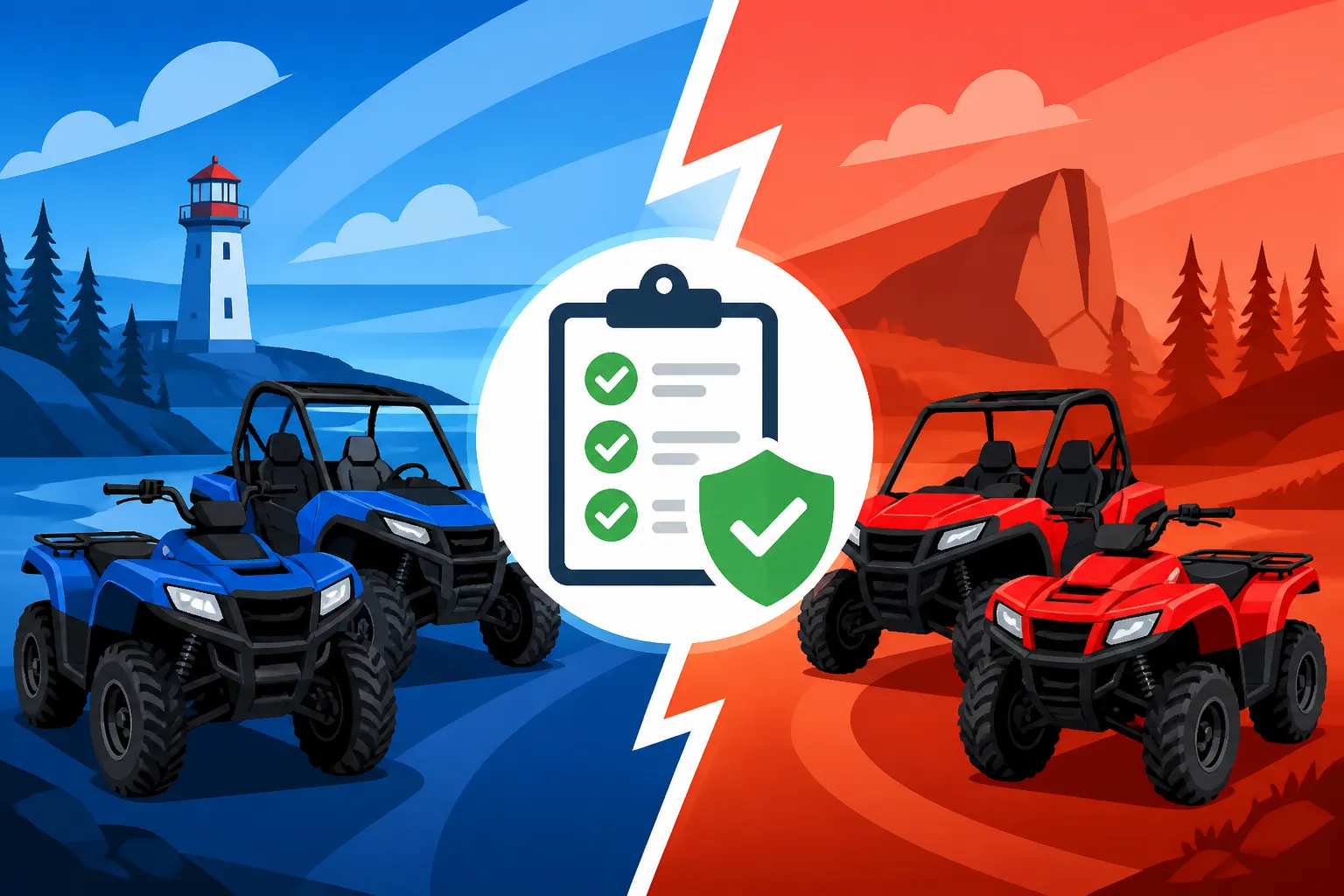
Nova Scotia vs. New Brunswick OHV Registration & Permit Comparison
Here’s a quick overview of some of the key differences you might encounter when comparing OHV registration and permit rules between Nova Scotia and New Brunswick. Please remember that regulations can change, so always verify the latest information with official provincial sources.
| Feature | Nova Scotia | New Brunswick |
|---|---|---|
| Primary Legislation | Off-highway Vehicles Act | Off-Road Vehicle Act |
| Registration Fees | One-time Certificate fee + Annual Vehicle Permit fee | Typically an annual registration fee |
| Trail Levy/Fund | Contributes to OHV Infrastructure Fund | May have a different fund or permit system |
| OHV Registered Owner Age | 19 years old (with provisions for younger operators) | Varies, check current NB regulations for specifics |
| Mandatory Insurance | Yes, specific liability minimums | Yes, specific liability minimums |
| Trail Permit Reciprocity with NB | Ended. NS permit required for NB riders on NS trails. | Ended. NB permit required for NS riders on NB trails. |
| Proof of Ownership | Bill of sale, previous registration | Bill of sale, previous registration |
| Where to Register | Access Nova Scotia | Service New Brunswick (or equivalent) |
Disclaimer
This article is for general informational purposes only and does not constitute professional advice. Laws, prices and regulations vary by location and change over time. Consult a qualified professional for guidance on your specific situation.