Nova Scotia Riding to a Beach Lookout
A beach lookout can make a memorable Nova Scotia ATV ride, but a trail that appears to lead toward the coast does not automatically allow machines onto the shore. This guide explains how to plan a legal ride to an ocean view, check the route before leaving, and avoid the common mistake of treating a beach or dune as an extension of the trail.
Plan a coastal ride without riding on the beach
A beach lookout is not the same as beach access
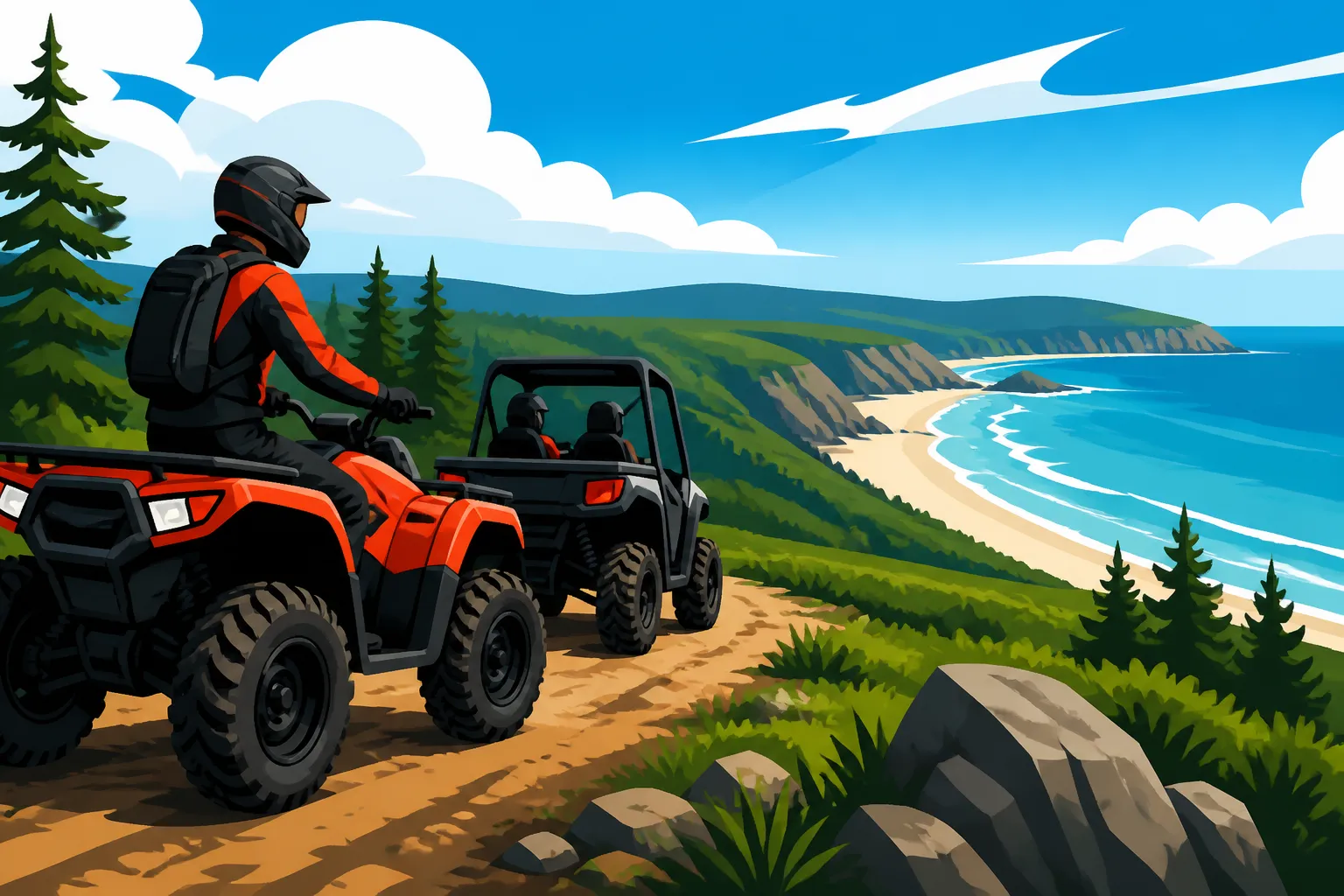
The safest way to think about a beach-view ride is to separate the destination from the route. Your goal might be a coastal viewpoint, a trail-side opening, or a public access area where you can stop and look toward the water. That does not mean you may drive an ATV or UTV onto the sand, dunes, or beach itself.
Nova Scotia has restrictions on riding in coastal areas, and a beach that looks empty or easy to reach may still be closed to off-highway vehicles. Dunes are especially sensitive: tire tracks can damage fragile vegetation and contribute to erosion, even when the surface seems firm. Read [Nova Scotia Beach and Dune Riding Bans] before planning a route that approaches the shore.
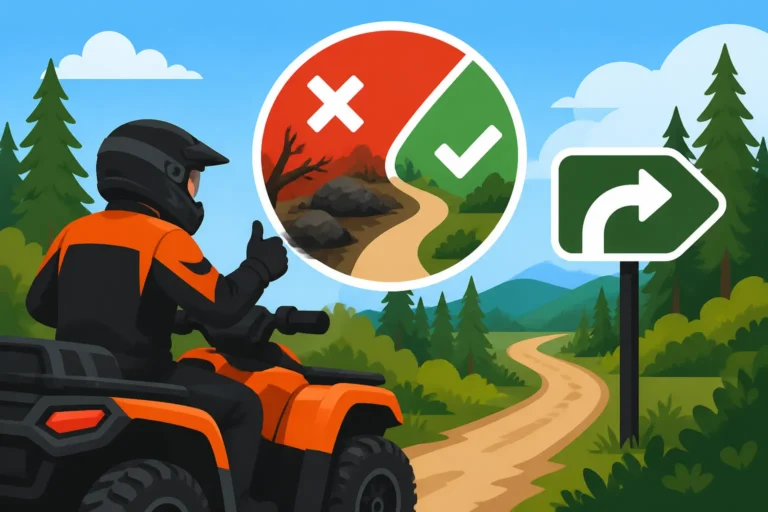
A practical rule is to stop where the marked, authorized trail ends. Park only where permitted, stay clear of soft ground and vegetation, and continue on foot only if there is a public route allowing pedestrian access. If a sign, gate, or trail steward indicates that the corridor is closed, do not ride around it to get closer to the water.
Choose a trail that offers a view from an authorized corridor
Nova Scotia has varied coastal scenery, from the rugged Atlantic side of Cape Breton to the Northumberland Shore and the South Shore. Some maintained trail corridors offer glimpses of the ocean or lead near coastal communities, but scenery alone does not establish permission to ride. A route can pass through private woodlots, cross a road, or include a segment where motorized access is not allowed.
The [Nova Scotia Trails With Ocean Views] guide can help you explore the kinds of coastal scenery riders may seek. Treat any suggested area as a starting point for research, not proof that every connecting segment is open to ATVs. For example, a trail corridor near the Celtic Shores region may offer an appealing coastal setting, but machine access can depend on the specific segment, land permissions, signs, and current conditions.
Before setting out, identify a legal stopping point rather than trying to reach the water’s edge. A scenic rest beside a designated trail or public viewpoint can be just as satisfying as getting physically close to the beach—and it avoids the risk of trespass, environmental damage, or a ticket.
Verify the route before loading your machine
Check permissions, closures, and trail conditions
Coastal routes can change. A trail may be affected by erosion, washouts, construction, storm damage, seasonal restrictions, or a landowner’s decision to close access. A line on a map may not reflect a current closure, and a route that was passable on a previous visit may now require a detour.
Check the [Nova Scotia Trail Conditions and Closures] information before leaving, and pay attention to signs at the trailhead and along the route. If a trail association, landowner, or local authority has posted a closure, follow it even if a mapping app still shows the route. When the status is unclear, contact the local club or trail organization rather than assuming the route remains open.
Use a map to plan, but do not let the map make the access decision for you. Apps such as onX Offroad can be useful for organizing route ideas and reviewing map information, but riders still need to confirm that the specific corridor is authorized for motorized use. A track that appears continuous may include a road, private land, a non-motorized section, or an unmaintained connection.
Build a route around confirmed trail access
Start with a recognized trailhead or an established ATV route, then work outward toward a potential viewpoint. Confirm where the machine-accessible corridor begins and ends, and note every road crossing, gate, and junction. Avoid creating a route by connecting nearby-looking lines across a beach, field, private driveway, or unmarked woods road.
| Planning question | What to confirm before riding |
|---|---|
| Is the trail open to ATVs or UTVs? | Look for current machine-access information and posted signs |
| Does the route cross private property? | Confirm permission or use an authorized trail corridor |
| Is the coastal endpoint a legal stopping area? | Check parking, access, and any restrictions on vehicles |
| Could weather affect the route? | Review closure notices and expect changes after storms or heavy rain |
| Is there a safe return plan? | Record turnarounds, fuel options, and alternate routes |
The [Nova Scotia Trail Maps Worth Downloading] guide can help you prepare maps for a ride, while [Nova Scotia Trail Access From a Road Trail] is useful when your planned route includes a connection from a road trail to a recreational corridor. Still, downloaded maps are planning tools—not permission slips. Keep a current offline map available in case cell service drops, and check the route against signs and local guidance as you ride.
onX Offroad may also help you compare route ideas and keep track of where you plan to stop. Use it alongside local trail information, not instead of it. If a track seems to end at the shoreline, pause and confirm whether the final segment is actually open to your machine before continuing.
Prepare for coastal conditions and a safe turnaround
Expect fog, wind, and changing surfaces
Coastal weather can shift quickly. Fog may roll in and reduce visibility, while strong wind can make exposed sections uncomfortable or difficult to navigate. Wet ground, loose gravel, and coastal clay can also change the character of a trail. A route that feels straightforward under clear skies may become harder to follow when visibility drops or rain softens the surface.
Read [Nova Scotia Coastal Fog and Riding] as part of your planning, especially if your route includes exposed coastal areas or narrow corridors. Check the forecast before departure, but be ready to change plans on the trail. If you cannot see signs or identify the route clearly, slow down, stop in a safe location, and retrace your path rather than guessing at a junction.
Set a turnaround point before the ride begins. That might be a specific trail junction, a fuel threshold, a time of day, or a point before the trail narrows or becomes exposed. A planned turnaround is not a failed outing. It is a sensible way to make sure the ride stays manageable when fog, weather, or trail conditions are not cooperating.
Pack for a day away from services
A coastal ride may pass through rural areas where fuel, food, and reliable cell coverage are limited. Do not assume that a village or gas station will be open when you arrive, or that your phone will work in a remote section. Tell someone where you are going and when you expect to return, especially if your route is unfamiliar.
Carry water, basic first-aid supplies, appropriate layers, rain protection, a charged phone, and a way to navigate without a mobile signal. Bring the machine’s required documents and keep them accessible. If riding with a group, agree on what to do if someone gets separated or a machine has a mechanical problem. Keep enough fuel in reserve for the return trip and any detour around a closure.
When using onX Offroad to plan, save your intended route and key waypoints before leaving service. Mark the trailhead, likely turnaround points, and any confirmed places to stop. Then share the plan with your group. This can make it easier to regroup if riders become separated, but it does not replace carrying appropriate safety equipment or telling someone outside the group about your plans.
Ride respectfully and protect the places you came to see
Follow trail etiquette near homes and shared corridors
Coastal trails are often close to homes, working land, walking routes, and other recreational users. Keep to the marked corridor, reduce speed near people and buildings, and follow signs at gates. Do not leave litter, block an access point, or create a new path around a wet or damaged section.
Good habits matter even when nobody is watching. If a trail is muddy, stay on the established route rather than widening it to find a drier line. Close gates only as instructed, and do not assume a gate is an invitation to pass through. A route can cross private property under a specific access arrangement, and ignoring the rules can jeopardize access for other riders.
Review [Nova Scotia Trail Etiquette Locals Expect] before a group outing. If you meet walkers, cyclists, or maintenance crews, slow down and give them room. Keep noise down near homes and coastal communities, and avoid revving the machine while stopped at a viewpoint. The quieter and more considerate the ride, the more likely those shared corridors will remain welcoming.
Use trailheads and viewpoints carefully
Parking can be limited near popular areas, and roadside shoulders are not automatically safe or permitted places to leave a truck and trailer. Use a designated staging area whenever possible, and make sure your vehicle does not obstruct a gate, driveway, emergency access, or working trail equipment. The [Nova Scotia Trailheads With Parking] guide can help you identify possible starting points, but confirm the details before arriving with a trailer.
At a viewpoint, leave room for others and stay within the area intended for public use. Do not drive across vegetation to find a better angle or position a machine on unstable ground. If the viewpoint is reached by a walking path, leave the ATV or UTV at the authorized parking or trail location and continue on foot only where access is allowed.
A beach lookout ride works best when the ocean is the reward, not a reason to push past a closure. Check access before you go, stay on authorized routes, and turn back when the trail or signs make the limit clear. For more ideas about coastal riding areas, see [Nova Scotia Riding to a Beach Lookout] alongside the broader guidance on [Nova Scotia Trail Conditions and Closures].
Disclaimer
This article is for general informational purposes only and does not constitute professional advice. Laws, prices and regulations vary by location and change over time. Consult a qualified professional for guidance on your specific situation.