Wind on an Exposed Cape Breton Ridge
A calm ride through a sheltered forest can feel completely different once a trail climbs onto an exposed Cape Breton ridge. Wind can shove a quad off line, buffet a side-by-side, and make a familiar route feel unexpectedly risky. This guide explains how to judge conditions, prepare your machine and group, and decide when turning back is the smartest choice.
Why wind changes the ride on a Cape Breton ridge
Exposed terrain can make a manageable breeze feel much stronger
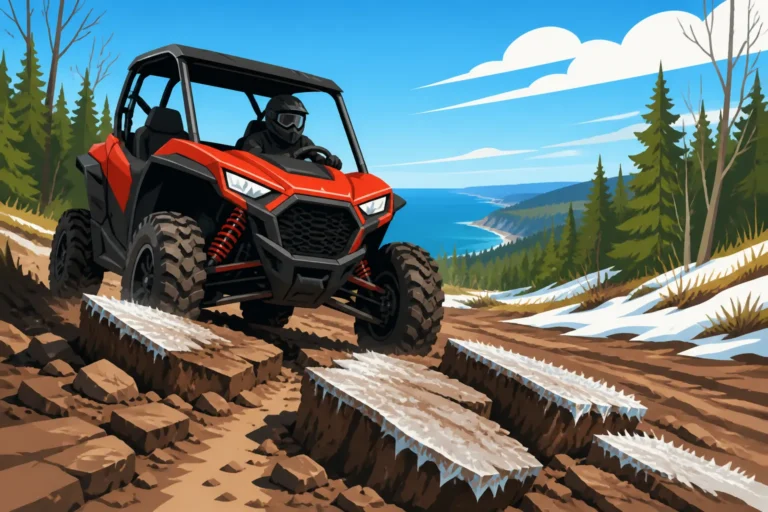
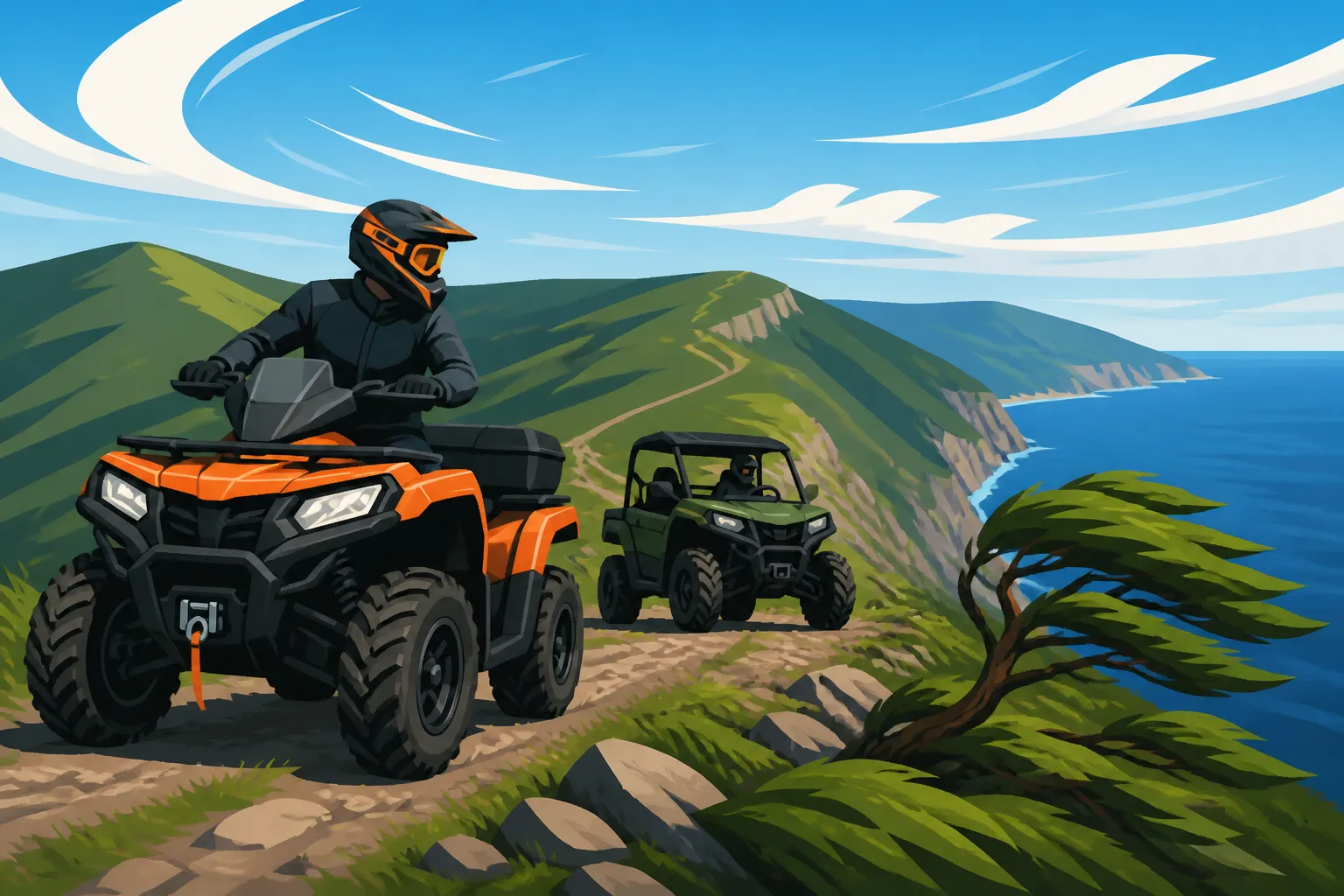
A ridge is exposed by definition: trees and terrain that shelter you lower down may no longer block the wind once you climb. Wind can arrive in gusts, change direction around a hill or cut across an open section of trail. A forecast that sounds comfortable at home may not describe what you feel at the top.
The machine matters, too. A light ATV can be pushed sideways by a sudden gust, especially on a narrow, uneven track. A side-by-side has more surface area for the wind to catch, and a high-sided cab, windshield, roof or cargo can affect how it responds. Neither machine is automatically safe or unsafe in wind; the important question is whether you can keep it under control on the actual terrain.
Riders often notice the difference first in their bodies. You may need to brace your shoulders, grip the bars harder or lean into the gusts. That extra effort can become tiring, and fatigue makes it easier to miss a rut, loose rock or trail marker. If you find yourself concentrating on staying upright rather than reading the route, treat that as a warning sign.
Gusts matter more than a single forecast number
A general wind forecast can be useful for planning, but it may not capture conditions on a particular ridge or trail segment. A steady wind can be challenging, yet sudden gusts are often the bigger problem: they can hit while you are crossing an open patch, passing another group or negotiating a slope.
Pay attention to how conditions change as you move. If the wind is mild in a sheltered valley but the machine starts being nudged around on a higher stretch, assume the exposed sections may be more demanding. A worsening forecast, blowing debris, branches moving sharply, or difficulty standing comfortably outside the machine are all reasons to reassess.
Fog and coastal weather can complicate the decision. Wind can push mist across an exposed route, reduce visibility and make it harder to judge the trail edge. For more on that combination, see Nova Scotia Coastal Fog and Riding. Visibility and wind are separate hazards, but they can arrive together and leave you with less time to respond.
The trail surface and shape can magnify the risk
A broad, level trail is not the same as a narrow cut along a slope. On a sidehill, a gust can add force in the direction you are already trying to manage. On a rocky or rutted climb, it can disturb your balance just as you need careful throttle and steering. Loose material, standing water or a soft shoulder can make a small correction more consequential.
Avoid assuming that a familiar route will behave the same way every time. Wind direction, recent rain, seasonal vegetation and trail maintenance can all change the feel of a section. A track that was sheltered on your last trip may be more exposed after a tree comes down or when leaves are off the branches.
If you are unsure what the route involves, review its map and ask a local club or knowledgeable rider about the terrain before you leave. Nova Scotia Trails on the Cabot Trail Side can help you explore the broader riding context, but the route you choose still needs to be open to machines and appropriate for your group. A nearby road, rail corridor or scenic pull-off is not automatically an ATV trail.
How to decide whether to continue
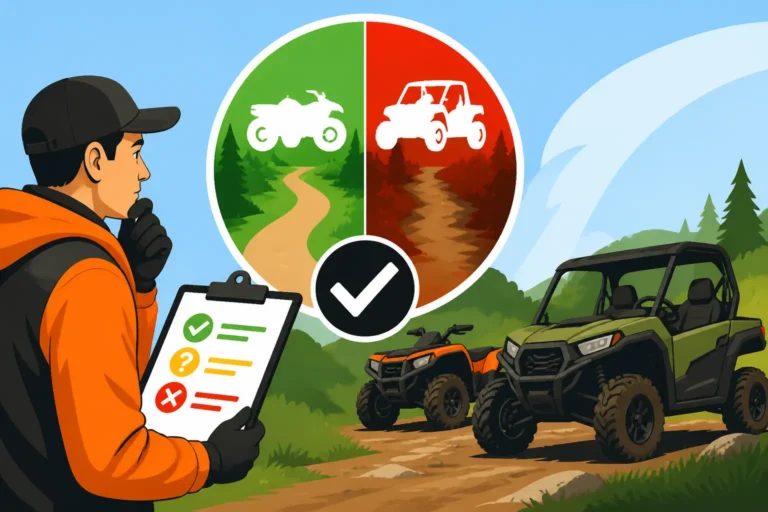
Use a practical go or turn-back check
Before leaving, check the forecast for the area and time you expect to be on the ridge, not only the conditions at your starting point. Look for wind direction, gusts, precipitation and visibility. Then ask whether your planned route has exposed sections, narrow traverses or places where there is no easy sheltered stopping point.
During the ride, make the decision based on what you experience rather than on the effort already spent getting there. If the machine is being pushed around, you are struggling to hold a steady line, or the group is becoming separated, pause in a safe place and talk it through. Do not stop on a blind corner, on a steep slope or where other riders cannot see you.
A simple check can help keep the decision grounded:
| What you notice | What it may mean | Safer response |
|---|---|---|
| Gusts are moving the machine off your intended line | Control is becoming less predictable | Slow down, increase spacing and consider turning back |
| Wind is worsening as the route climbs | More exposed sections may be harder | Stop at a safe sheltered point and reassess |
| Dust, mist or blowing debris reduces visibility | Hazards and other riders may be harder to see | Wait in a safe place or choose a sheltered route |
| A rider is tired, tense or struggling to keep pace | Concentration and control may be slipping | Take a break, shorten the ride or return |
| Branches or debris are appearing on the trail | The route may have changed or become obstructed | Avoid forcing through; check conditions and use a safe alternative |
This is not a substitute for local rules or judgment. It is a way to prevent the common trap of pressing on because the group has already invested time, fuel or effort. Turning around before the most exposed section is a sensible ride plan, not a failed outing.
Keep the group together without crowding
Wind can make conversation difficult and obscure signals. Agree on how the group will communicate before you reach exposed ground. Use simple hand signals where they can be seen, and make sure riders know where the next safe stopping point is. If radios are part of your group’s routine, check them before departure and do not rely on them as your only way to communicate.
Leave enough room between machines that one rider’s sudden correction does not become another rider’s emergency. On a narrow trail, however, excessive gaps can make it harder to keep everyone in sight. Set the spacing based on visibility, terrain and the abilities of the least experienced rider, then regroup at safe pullouts rather than stopping wherever the trail happens to narrow.
A lead rider should not treat a quiet group as proof that everyone is comfortable. Ask directly how people are doing, especially after a difficult exposed stretch. A rider who is tense or cold may not volunteer that they want to turn back. Nova Scotia Group Ride Planning and Nova Scotia Trail Etiquette Locals Expect are useful topics to review when setting expectations for a shared ride.
Know when to reroute or call the ride
Sometimes the best choice is not a full retreat but a change of plan. If a safe, permitted route returns the group to sheltered terrain, use it only when you can confirm it is open to your machine and does not cross private land without permission. Do not create a new track around a blocked or exposed section; riding off the marked corridor can damage the trail and create conflict with landowners.
If there is no safe alternate route, return the way you came only if doing so is manageable. A route that was difficult going uphill may be more challenging on the descent, particularly if wind is affecting your balance or visibility. Take it slowly, keep the group coordinated and stop at appropriate safe locations. If conditions become too hazardous to proceed, prioritize getting to shelter and contacting help as needed.
Before you start, check for local notices and closures. A mapped route is not a promise that the corridor is passable today. Nova Scotia Trail Conditions and Closures and Nova Scotia Trail Closures After a Storm are relevant checks when weather has recently affected the area. Trail status can change, so confirm information with the responsible club or land manager when possible.
Prepare your ATV or UTV and your ride plan
Set up the machine for predictable handling
Before a windy ride, inspect tires, steering, suspension and brakes. Uneven tire pressure or worn components can make a machine feel less predictable when you need small, controlled corrections. Secure cargo so it cannot shift in a gust, and avoid stacking bulky items high where they can catch the wind. On a side-by-side, check that doors, panels and accessories are properly secured.
A roof, windshield or enclosed cab can improve comfort in cold or wet conditions, but it does not remove the effects of wind. A windshield may also change how the air moves around the vehicle. If you have recently added accessories or loaded gear differently, take time to get a feel for the machine in a sheltered area before tackling an exposed route.
Choose a speed that leaves room to respond. Going slowly is not enough if you are still travelling too fast for the surface, visibility or the group. Avoid abrupt steering and throttle inputs, and do not attempt to counter a gust with a sudden movement that could destabilize the machine. If control feels uncertain, stop in a safe place and reconsider the route.
Pack for a delay, not just the planned ride
Conditions can make a short trip take longer than expected. Carry water, food, warm layers, rain protection, a first-aid kit, basic repair supplies and a way to contact someone. Keep essentials secured and accessible rather than buried beneath gear. In cool, wet weather, spare dry gloves and an insulating layer can make a meaningful difference if you have to wait.
Cell coverage may be unreliable in parts of the Highlands, so do not assume you can call for help from every section. Review Cell Dead Zones in the Highlands before planning a remote route. A satellite messenger can offer another communication option in areas without reliable service; Carrying a Satellite Messenger Into the Highlands covers why some riders include one in their kit.
Tell someone who is not riding with you where you plan to go and when you expect to return. Give them a realistic route and a check-in time, and tell them what to do if they do not hear from you. Make sure everyone in the group knows the plan, too. If a rider becomes separated, the group should have an agreed place and method for regrouping rather than searching randomly in poor conditions.
Use maps as a planning aid, not as permission
A map app can help you study the route, identify junctions and estimate where the trail becomes more exposed. Some riders use onX Offroad to review route lines and prepare a ride plan. It can be useful to compare the mapped route with local trail information, but a digital map is not a guarantee that a trail is open, legal for your vehicle or safe in current weather.
Before departure, download the information you need for offline use if your app supports it. Keep a backup plan for navigation, such as a saved route or another map source, and make sure you know how to orient yourself if the screen stops working. Battery drain, poor reception, rain and cold can all interfere with a phone-based plan.
Use onX Offroad as one planning tool alongside local club updates, landowner permissions and official signs. When a map line conflicts with a closure notice or an on-the-ground sign, respect the closure and do not ride through. Nova Scotia Trail Maps Worth Downloading is a useful companion topic for thinking about map preparation and route context.
Make exposed ridges part of a flexible ride plan
Build in a sheltered alternative
A good plan includes more than one option. Before setting out, identify a shorter loop, a lower-elevation route or a sheltered corridor you can use if the ridge is too windy. This is particularly helpful when riding with mixed experience levels or when the forecast is uncertain. The alternative should be a legitimate riding route, not an improvised detour across a field, private woodlot or closed trail.
Discuss the fallback before the group is cold, tired or frustrated. Agree on who makes the call and where the group will regroup if anyone wants to turn back. If some riders want to continue and others do not, do not split casually on remote terrain. A divided group can create navigation and communication problems, especially when visibility is poor.
Keep the outing enjoyable by treating flexibility as part of the adventure. You might spend more time on sheltered trails, stop earlier for a warm drink or save the ridge for another day. Nova Scotia Spring Thaw and Trails is also worth reviewing in shoulder seasons, when wind may be only one part of a changing trail picture.
Respect closures, property and changing conditions
A scenic ridge can be tempting, especially when it appears on a map or a friend says they rode it before. But an old track, woods road or line visible on a navigation app does not necessarily mean public ATV access is allowed. Stay on marked, authorized corridors, follow posted directions and get permission before crossing private land.
After high winds, treat fallen branches, leaning trees, washouts and debris as real hazards. Do not squeeze past unstable trees or ride around an obstruction into vegetation. If a section looks damaged or unsafe, turn back if possible and report the issue to the responsible club or land manager. Nova Scotia Trail Closures After a Storm can help you think through why a route may be closed even when it looks passable from a distance.
Wind also affects other trail users. Slower speeds, clear signals and extra patience help when you meet walkers, cyclists or other riders. Keep noise down near homes and communities, and leave gates as you found them. A considerate approach helps preserve access and makes it easier for everyone to share the corridor.
Make the final call before the ride becomes difficult
On an exposed Cape Breton ridge, the right decision may change from one hour to the next. A comfortable start does not guarantee comfortable conditions at elevation, and a forecast does not replace what you observe on the trail. Keep checking the group, the machine and the surroundings as you ride.
If gusts compromise your steering, visibility is deteriorating, or anyone in the group feels unsafe, turn back or use a confirmed sheltered alternative. A well-planned ride is not measured by whether you reach the highest point. It is measured by whether everyone returns safely with the machine under control and the trail left in good shape.
Disclaimer
This article is for general informational purposes only and does not constitute professional advice. Laws, prices and regulations vary by location and change over time. Consult a qualified professional for guidance on your specific situation.