Nova Scotia Supervisors Limited to Eight Riders
When children ride off-highway vehicles in Nova Scotia, the hard part is more than matching a machine to a rider. You also need enough qualified adults: one supervisor cannot cover an unlimited group. Here’s how the eight-rider limit works, who counts toward it, and how to plan a ride without confusing supervision with permits or training.
What Nova Scotia’s eight-rider limit means
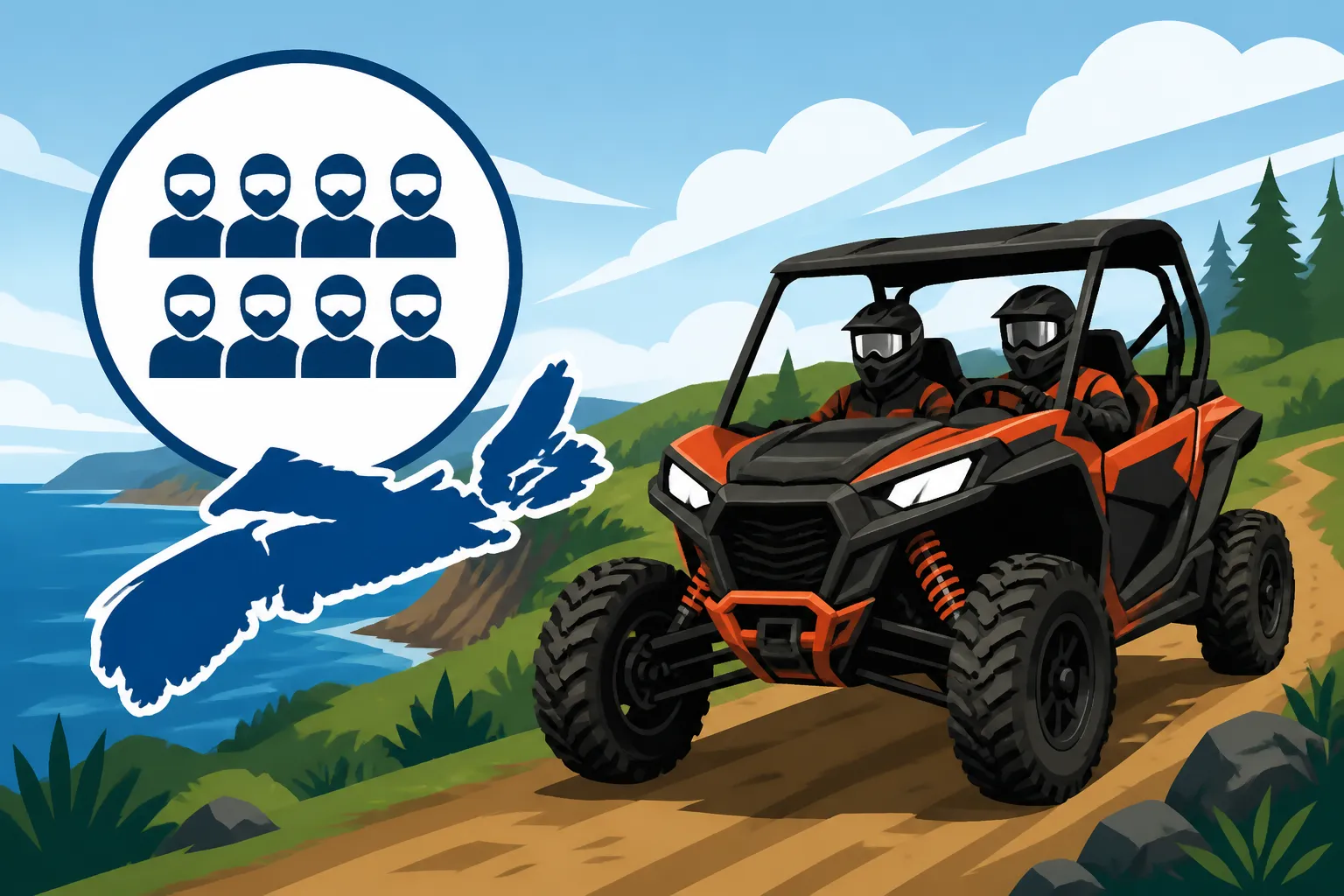
A qualified supervisor may supervise no more than eight riders under 14 at a time. In practical terms, if your group includes nine riders who fall into that age group, one supervisor is not enough. You need another qualified supervisor or a smaller group.
The limit is about the number of younger riders assigned to a supervisor, not the total number of machines on a trail. Adults and older youth riding alongside the group do not automatically count toward the eight, though they may add to the practical demands of the outing. Keep the count focused on riders under 14 who require supervision.
| Group of riders under 14 | Minimum supervisors needed to meet the eight-rider limit |
|---|---|
| 1 to 8 | 1 qualified supervisor |
| 9 to 16 | 2 qualified supervisors |
| 17 to 24 | 3 qualified supervisors |
This table shows the basic numerical limit, not a promise that a group is safe simply because it meets the ratio. A supervisor might have difficulty managing eight riders if the terrain is challenging, visibility is poor, or some riders need more individual attention. A smaller group may be the sensible choice even when the legal maximum has not been reached.
The age threshold matters. The limit applies to riders under 14; do not treat it as a general rule that every child under 16 has the same supervision requirements. Youth riding rules can depend on age, training, the type of machine, and where the riding takes place. For a broader look at those age-based distinctions, see Nova Scotia Rules for Riders Under 16 and [Nova Scotia Supervision Requirements].
This is also not a limit of eight vehicles per adult. The relevant count is the number of supervised riders under 14. A group may include other family members or adults, but that does not make the supervisor’s responsibility disappear. Keep a clear list of which riders are under 14 and who is responsible for each one.
Count the riders before the ride starts
The easiest time to check the ratio is before anyone starts a machine. Make a simple roster with each younger rider’s name, age, machine, and assigned supervisor. If a family arrives late or the group changes, update the assignment before setting off.
Do not rely on a rough estimate such as “about eight kids.” A birthday, a last-minute guest, or two groups joining at a trailhead can change the count. If a supervisor has eight riders under 14 and another eligible rider joins, the group needs to adjust before continuing under that arrangement.
An assignment should be clear to both the adults and the riders. If several adults are present, decide who is supervising whom instead of assuming that “the adults will keep an eye on everyone.” Shared attention can be helpful, but it can also leave a child with no clearly responsible supervisor when the group spreads out.
Who qualifies as a supervisor
The eight-rider ceiling applies to a qualified supervisor, not simply to any adult who is nearby. Nova Scotia’s youth riding rules include requirements for the supervisor’s age and training. The supervisor must be at least 19 and meet the applicable training requirement. For the details behind those conditions, see Nova Scotia Requires a Supervisor Nineteen or Older and Nova Scotia Safety Training at 16.
Being a parent, guardian, older sibling, or experienced rider does not by itself replace the required qualifications. Check the supervisor’s eligibility before the ride, rather than assuming that age or years of riding are enough. If you are unsure whether a particular certificate meets the requirement, confirm it with the relevant provincial authority or safety-training provider before relying on it.
A qualified supervisor should also be in a position to take responsibility for the group in practice. That means knowing which riders are assigned to them, understanding the planned route and conditions, and being prepared to pause or turn back if the group becomes difficult to manage. Those are sound planning steps, even where the rules do not spell out each one as a separate qualification.
A supervisor is not just an extra rider
It can be tempting to count an adult who is riding with the group as a supervisor and leave it at that. But riding along is not the same as actively supervising. If an adult is leading a group, navigating, helping with a mechanical problem, or riding far ahead, they may not be able to respond promptly to a younger rider’s needs.
When assigning supervisors, think about the whole outing. Consider whether the adult can pay attention to the riders assigned to them, communicate with the group, and stop safely if a child falls behind or becomes uncomfortable. The maximum ratio is a ceiling, not a target that every ride should try to reach.
If the planned route is unfamiliar or the group includes new riders, splitting the children into smaller groups can make supervision more manageable. Keep each group together with its assigned adult, and avoid letting groups separate at junctions or continue out of sight from one another unless your plan and applicable rules allow it.
Training and the rider’s own readiness are separate questions
A supervisor’s training does not make an unprepared child ready to ride. Likewise, a young rider’s practice does not replace the supervisor’s qualifications. Both questions matter: is the rider eligible and equipped for the activity, and does the supervising adult meet the applicable requirements?
Nova Scotia’s rules for young riders include age and machine considerations as well as supervision. Check Nova Scotia Youth Machine Size Rules before choosing a machine, and consult Nova Scotia Safety Certificates Are Mandatory for the role of safety certification. A machine that is too large or difficult for a child to control can turn a manageable outing into a risky one, even when the group meets the supervisor ratio.
Plan the group, route, and riding area
Before the ride, confirm that the planned location is appropriate for the ages and machines in your group. Younger riders may be subject to specific restrictions about where they can operate. The requirements for children aged 6 to 13 are covered in Nova Scotia’s Closed Course Rule for Ages 6 to 13. Do not assume that an ordinary trail ride is suitable for every child simply because an adult is present.
If you are relying on a closed course or a particular riding area, verify that the location meets the applicable requirements. The terms used in rules and guidance can matter, and a private property or open field is not automatically an approved course just because it is away from traffic. If the status of a location is unclear, check before the group arrives rather than trying to interpret it at the gate.
Plan around the least experienced rider, not the fastest or most confident one. Choose terrain and distances the younger riders can handle, and build in time for breaks. A short, familiar route gives a supervisor more opportunity to assess how the group is doing than a long outing on unfamiliar ground.
Make a simple supervision plan
A short plan can prevent confusion once everyone is wearing helmets and machines are running. Before departure:
- List the riders under 14 and confirm each rider’s age.
- Assign no more than eight of those riders to each qualified supervisor.
- Confirm that every assigned supervisor meets the age and training requirements.
- Identify the intended route, meeting points, and a way to stop or return if conditions change.
- Check that each rider has a suitable machine and required protective equipment.
- Tell riders which adult is responsible for them and what to do if the group stops or becomes separated.
The exact route plan will depend on the property, trail access, and experience of the group. Even a familiar outing benefits from a clear agreement about where riders should wait if they lose sight of the group. Keep the plan simple enough that children can remember it.
If a supervisor has to leave, do not treat the remaining adults as an automatic replacement. Recheck the assignments. If the new arrangement would put more than eight riders under 14 with one qualified supervisor, redistribute the group or stop the ride until another eligible adult can supervise.
Think beyond the numerical ratio
Eight younger riders may be within the stated ceiling, but several factors can make a smaller group wiser. A mix of experience levels can make it harder to keep the pace appropriate. Riders who are new to machines may need frequent help, while a narrow or uneven route can make it harder to keep everyone together. Weather, fatigue, and poor visibility can also change how manageable a group feels.
Use the ratio as a minimum planning check, then make an honest judgment about the circumstances. If a child is nervous, struggling to control the machine, or repeatedly falling behind, stop and reassess. The aim is not to complete the route at all costs; it is to keep the ride within the abilities of the riders and the attention the supervisors can provide.
How the limit relates to permits and other requirements
A trail permit and a supervisor are different things. A permit does not make someone qualified to supervise, increase the number of riders one supervisor may oversee, or cancel age-based restrictions. Likewise, having the right number of supervisors does not automatically give a group permission to ride on a particular trail or property.
Before setting out, check the rules that apply to the machine, the rider, and the location. Depending on your situation, you may need to consider registration, insurance, trail access, training, and the conditions set by a landowner or trail organization. See Nova Scotia Permit Questions Clubs Hear for more on permit-related questions, and check the relevant source for current requirements before riding.
Young riders may also have obligations that differ from those of adults. For example, training requirements can depend on age and circumstances. Do not assume that a child is exempt from every training rule simply because an adult is supervising. The relevant details are explained in Nova Scotia Safety Training at 16 and Nova Scotia’s Pre-2006 Grandfather Rule. If the rider’s situation does not fit a straightforward example, confirm the rule rather than guessing.
A permit does not solve a supervision shortfall
Suppose a family has nine riders under 14 and one qualified adult. Buying an additional trail permit would not address the supervision issue. The group needs another qualified supervisor or fewer riders in that supervised group.
The reverse is also true. A group with two eligible supervisors may meet the numerical limit but still need to confirm that each machine and rider is permitted to use the planned route. Treat supervision, machine eligibility, trail access, and paperwork as separate checks. Completing one does not guarantee the others are satisfied.
Keep any required documents accessible, and make sure the adults understand who is carrying them. If a parent is not the supervisor assigned to a child, both should know the plan and have a way to communicate if the group changes. Clear communication can prevent a child from being left with an adult who has not agreed to supervise them.
Common mistakes when applying the eight-rider limit
Counting all children the same way. The eight-rider cap is specifically about riders under 14. Other age groups may have different requirements. Check the rules for each rider rather than applying one ratio to every child in the group.
Treating any adult as a qualified supervisor. The adult must meet the applicable requirements, including the age and training conditions. Family relationship or riding experience does not substitute for checking eligibility.
Assuming the maximum is automatically a good group size. The limit sets an upper boundary. It does not account for every route, machine, rider, or weather condition. Use a smaller group when that is what the situation calls for.
Letting the group grow without recalculating. If another younger rider joins, count again. A group that was within the limit at the start can exceed it later.
Assuming a trail permit covers youth supervision. Permits and supervision rules answer different questions. Keep both on your checklist.
Confusing supervision with course or location eligibility. A qualified adult does not make every location suitable for every age group. Confirm where younger riders may operate and whether the planned area meets the relevant requirements.
Relying on another adult without an explicit handoff. If one supervisor takes over for another, state which children are now assigned to them and check the count. A casual handoff can leave responsibility unclear.
Planning for the most capable rider. The least experienced child often determines a safe pace and route. If the outing is too demanding for one member of the group, consider changing the plan instead of expecting that rider to keep up.
If you are arranging a club outing, family ride, or organized youth activity, put the assignments in writing and share them with the adults beforehand. Make sure a replacement supervisor is available if someone has to leave. If you cannot maintain the required supervision, stop or reorganize the outing rather than continuing with an informal arrangement.
Frequently Asked Questions
Can one supervisor watch nine riders under 14?
No. The stated limit is eight riders under 14 for one qualified supervisor at a time. For nine younger riders, arrange another qualified supervisor or reduce the group.
Do adult riders count toward the eight?
The limit concerns riders under 14. Adults are not part of that count, but their presence does not remove the need to assign the younger riders clearly to qualified supervisors.
Does a parent automatically qualify to supervise?
No. Being a parent does not by itself establish that the adult meets the applicable age and training requirements. Confirm those qualifications before the ride.
Does having a trail permit change the limit?
No. A permit does not change the supervision ratio. Check permit and access requirements separately from youth supervision rules.
Is a group of eight always safe with one supervisor?
Not necessarily. Eight is the maximum, not a recommendation for every route or group. Rider experience, terrain, visibility, machine fit, and conditions may call for a smaller group.
Disclaimer
This article is for general informational purposes only and does not constitute professional advice. Laws, prices and regulations vary by location and change over time. Consult a qualified professional for guidance on your specific situation.