Nova Scotia Rules for a 14-Year-Old Rider
A 14-year-old may be able to ride an ATV or UTV on a permitted off-road trail in Nova Scotia, but age alone does not make every route or machine legal. The key questions are whether an adult is supervising, what kind of route you plan to use, and whether the machine and rider meet the rules for that setting.
Where a 14-year-old can ride
A 14-year-old’s options depend on the route. Nova Scotia distinguishes ordinary off-road trails from designated road trails. A trail permit or an adult riding alongside does not make those routes interchangeable.
| Riding location | What a 14-year-old should know |
|---|---|
| Club or other off-road trail | Riding may be possible with the required supervision, valid machine paperwork and any trail permit required for that trail. |
| Private land | Get the landowner’s permission and follow any applicable safety and operating rules. |
| Designated road trail | A 14-year-old cannot ride there as an operator because road-trail riding requires a full driver’s licence. |
| Closed course | The closed-course provisions are aimed at younger riders aged 6 to 13. A 14-year-old should check the rules for the particular course and activity rather than assume those provisions apply. |
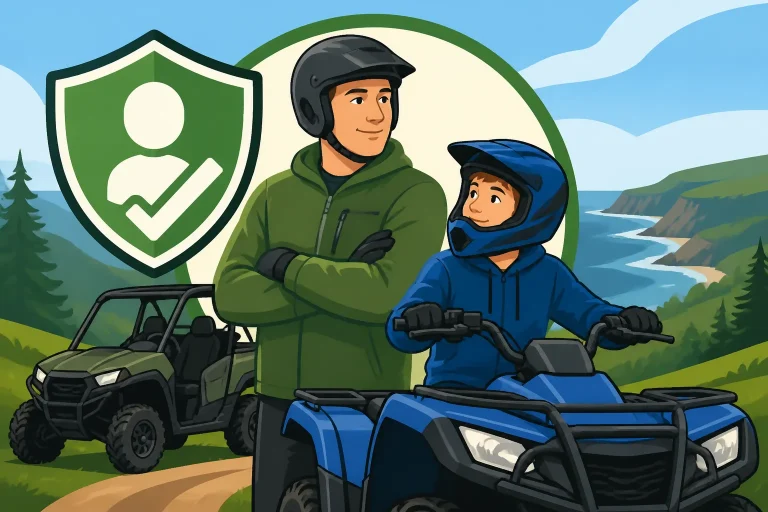
For ordinary off-road riding, the age-specific rules generally require riders from 6 through 15 to be supervised by someone who is at least 19. The supervising adult must meet the applicable training requirements. At 14, a rider is still under 16, so adult supervision remains part of the plan; turning 14 does not create the independence that comes with adulthood.
Road trails are different. A road trail is a route specifically authorized for off-highway vehicles on or along roads. It is not simply any road, shoulder, woods road or trail that happens to connect to a road. Operators must hold a full driver’s licence, so a 14-year-old cannot operate a machine on one. See Nova Scotia Requires a Full Driver’s Licence and Can You Ride an ATV on the Road in Nova Scotia? for the distinction between road-trail access and ordinary trail riding.
Before heading out, confirm the route is open to the type of machine you have and that you have permission to use it. A provincial trail permit does not authorize riding on every piece of land or every road. Club trails, private woodlots, Crown land and municipal road trails can have different access conditions. Nova Scotia Crown Land Riding Rules and Nova Scotia Private Woodlot Permission explain why checking the land and route matters.
What supervision means in practice
Plan for the adult to supervise actively, not merely to be somewhere in the group. Choose a route that suits the young rider’s ability, keep the adult close enough to intervene, and agree on what to do if the group separates or a machine has a problem. A 14-year-old should not be sent ahead alone or expected to manage an unfamiliar route without help.
The supervisor also needs to be eligible to supervise under the applicable rules. A parent or guardian is not automatically qualified just because they are an adult. Review [Nova Scotia Supervision Requirements] and Nova Scotia Requires a Supervisor Nineteen or Older before planning a ride.
The machine needs to fit the rider
A 14-year-old may be legally old enough for some off-road riding, but that does not mean every ATV or UTV is suitable. The rider needs to be able to reach and operate the controls, steer, brake, shift if applicable, and keep control over the terrain they will encounter. They should be able to mount and dismount safely and understand how the machine responds before riding on a trail.
For a UTV, consider whether the young rider is permitted to operate that particular machine and whether they can use its controls safely. Do not assume that a passenger seat, seat belt or roll cage makes a UTV appropriate for a young operator. Follow the manufacturer’s instructions, applicable rules and any restrictions imposed by a trail, landowner or organized event.
Nova Scotia has youth machine-size guidance, but choosing solely by engine size can be misleading. Rider height, strength, judgment, experience and the machine’s weight and power all matter. A machine that feels manageable in a flat yard may be difficult to control on a hill, in mud or around a sudden obstacle. See Nova Scotia Youth Machine Size Rules for more on matching a machine to a rider.
A useful pre-ride check is to have the rider demonstrate, in a safe area, that they can:
- Reach and use the controls without stretching or losing their balance.
- Start, stop and turn smoothly.
- Keep a stable position while moving over gentle, predictable terrain.
- Identify the throttle, brake and emergency stop, and explain what to do if the machine behaves unexpectedly.
- Follow instructions and stop when asked.
If the rider cannot do those things comfortably, choose a smaller or less powerful machine, arrange training, or postpone the ride. The adult should also check that the machine is maintained and equipped for the route. A mechanically sound machine does not replace supervision, but poor brakes, worn tires or a faulty throttle can turn a manageable situation into a dangerous one.
Registration, insurance and trail access are separate checks
The rider’s age is only one part of legal access. The machine may need registration and insurance, and a trail may require a separate permit. These requirements are not the same thing:
- Registration identifies the machine through the provincial registration system.
- Insurance provides the coverage required for the machine and intended use.
- A trail permit provides access to participating trails under the permit’s terms.
A young rider generally should not be treated as the registered adult owner simply because they are the person riding. Check who is named on the machine’s registration and whether the paperwork matches the machine. The rules for age and ownership are explained in Nova Scotia Requires Owners to Be 19. For a broader pre-ride paperwork list, see Nova Scotia Registration Before Your First Ride.
Likewise, a trail permit does not replace registration or insurance, and registration does not grant access to a club trail. Check the trail operator’s requirements before travel. How to Buy a Nova Scotia Trail Permit explains the permit process, while Nova Scotia Club Permit vs Standalone Permit covers the difference between common permit options.
Equipment, training and road-trail limits
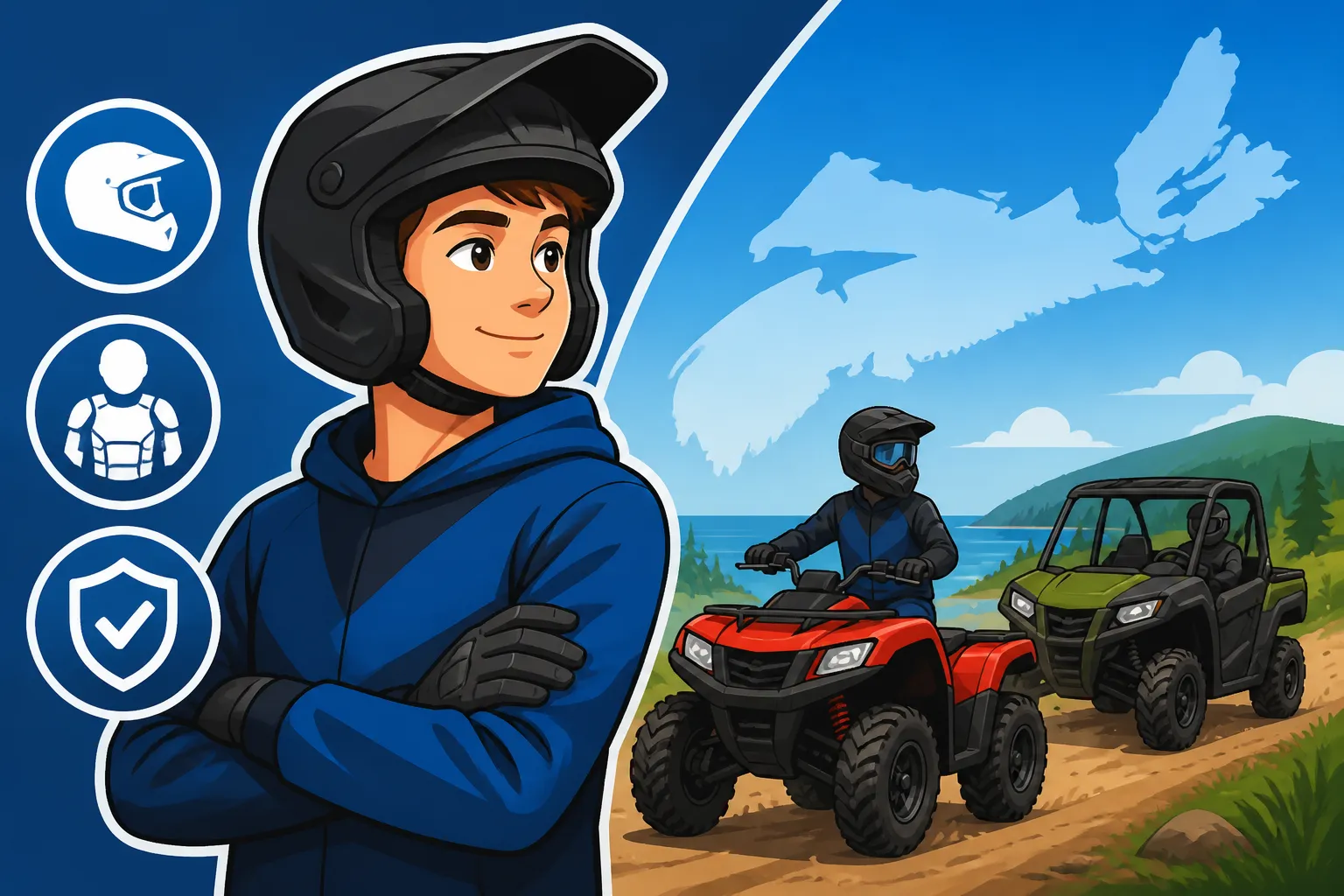
Riders under 16 have additional clothing and protective-equipment requirements. A 14-year-old should wear a compliant helmet and eye protection, along with long sleeves, gloves and suitable boots. These are not optional upgrades for a more comfortable ride; they are part of the safety rules for younger riders.
Check the helmet for an accepted safety standard and make sure it fits securely. A loose helmet can shift when the rider turns or hits rough ground. Eye protection should stay in place and provide clear vision in the conditions expected. Boots should protect the feet and ankles and remain secure on the footrests or floor area. Ordinary sneakers are a poor substitute.
When buying gear online, including on Amazon, check the helmet’s certification, fit guidance and return conditions rather than relying on a product photo or a generic size label. Fit is personal, and protective equipment only works as intended when it is suitable for the rider and worn correctly. The broader requirements are covered in What a Rider Under 16 Must Wear.
A safety course is also worthwhile even where the age-based mandatory training requirement has not yet applied to the rider. Nova Scotia’s age-related safety-certificate rules become especially important as a rider gets older, and a supervisor may have training obligations of their own. Confirm the current requirements with the official source before the ride; do not assume a course certificate for one person satisfies another person’s requirement. Nova Scotia Safety Course for a 16-Year-Old explains the later age threshold and why planning ahead helps.
For a 14-year-old, the road-trail restriction deserves particular attention. A rider who can use an off-road trail under supervision still cannot operate on a designated road trail without the required full driver’s licence. That restriction applies even if the road-trail segment is short, the adult is riding beside them, or the group needs to cross a town to reach another trail. Follow signed routes and local access rules, and do not use an ordinary roadway as a shortcut.
Other route-specific rules may also affect the ride. A trail can be closed, restricted to certain machines or unavailable because of landowner conditions. Weather, washouts, seasonal closures and local signage can change what is safe or permitted. Check the route before departure and be prepared to turn around if conditions or permissions do not match the plan.
A practical pre-ride checklist for a 14-year-old
Use this checklist before the machine leaves home. It helps separate the questions about the young rider from the paperwork and access rules for the machine.
- Confirm the route. Identify whether it is an off-road trail, private land, Crown land or a designated road trail. Do not assume a road or woods road is open to ATVs.
- Check the rider’s eligibility. A 14-year-old needs the required adult supervision for off-road riding. A designated road trail is not an option for a rider without a full driver’s licence.
- Choose a manageable machine. Check the manufacturer’s guidance and make sure the rider can operate the controls and stop reliably. Do not use engine size alone to decide that a machine is suitable.
- Verify the supervisor. Confirm the adult meets the applicable age and training requirements, understands the route and can stay with the rider.
- Check documents. Confirm registration and insurance requirements are met, and that the responsible adult has the relevant documents available. Keep machine paperwork separate from trail access permission.
- Confirm trail access. Check whether a trail permit is required, which routes it covers and whether any closures or local restrictions apply.
- Inspect clothing and equipment. Use a properly fitting compliant helmet, eye protection, long sleeves, gloves and suitable boots. Check that the machine’s safety equipment is working.
- Set a simple ride plan. Agree on a pace, stopping points, signals and what the rider should do if they lose sight of the adult or encounter a problem.
- Start with an easy route. Avoid steep, fast or technically difficult terrain until the rider has demonstrated control and the adult is confident the route is appropriate.
- Stop if circumstances change. Fatigue, poor visibility, mechanical trouble, a closed trail or an uncomfortable rider are good reasons to end the ride.
The biggest practical mistake is treating “14 and supervised” as a complete permission slip. It is only one part of the decision. The route, rider’s skills, machine suitability, adult’s qualifications, protective gear and machine paperwork all matter. If any of those pieces is uncertain, resolve it before riding rather than relying on assumptions at the trailhead.
Disclaimer
This article is for general informational purposes only and does not constitute professional advice. Laws, prices and regulations vary by location and change over time. Consult a qualified professional for guidance on your specific situation.