Choosing a Machine That Matches the Rider’s Size
Choosing an ATV or UTV for a young or smaller rider is about more than engine size. A machine that is too heavy, wide or difficult to control can be unsafe even if its listed capacity seems appropriate. Use the rider’s reach, strength, experience and intended use to assess fit, then check Nova Scotia’s current operating and permit rules before riding.
Start with fit, not engine size
Engine capacity is an easy number to compare, but it cannot tell you whether a rider can steer, brake or stop a particular machine. Two machines with similar engine sizes may feel very different because of their weight, seat height, width, throttle response and control layout. A smaller engine does not automatically make a machine easy to handle.
The rider should be able to sit upright with a stable posture and reach the controls without stretching or shifting their weight awkwardly. Their hands should operate the throttle and brake levers smoothly. Their feet should rest securely where intended, and they should be able to mount and dismount without struggling.
A machine that fits in a driveway may still be difficult to control on uneven ground. Consider where it will be used: a broad, open field, a narrow trail, a wooded property or a road trail each brings different demands. Tight turns, ruts, slopes and soft ground can expose handling problems that are not obvious during a short, straight test.
A practical fit assessment should include the following:
- Can the rider reach and operate every control while seated normally?
- Can they turn the handlebars through their full range without their arms locking or their body being pulled forward?
- Can they use the brakes with enough control to slow and stop the machine?
- Can they keep a stable position while turning, standing on the footrests if the machine is designed for it, or moving over uneven ground?
- Can they get on and off without help and without catching clothing or footwear?
- Can they move the machine’s weight safely at very low speed?
If the answer to one of these is no, do not treat practice as a substitute for fit. Coaching matters, but it cannot make heavy controls lighter or shorten a reach that is too long.
Why machine weight matters
A machine’s weight affects how difficult it is to control, especially at low speed or when it begins to tip. A rider may be able to sit on a large ATV but still lack the strength or leverage to manage it during a tight turn, on a slope or after a loss of balance. Stopping safely also involves more than squeezing a brake lever: the rider needs to stay balanced and keep control while the machine slows.
Do not assume a rider can simply rely on an adult to catch or steer the machine. Adults cannot reliably stop a moving ATV or UTV from tipping, and trying to do so can put both people at risk. Choose a machine the intended rider can operate independently within the limits of their training and supervision.
Assess how the rider and machine work together
A useful evaluation is a supervised, stationary fit check followed by practice in a suitable controlled area. A seller’s lot or driveway may be enough to assess reach and posture, but it is not a place to attempt challenging riding. Avoid a high-speed test as a way to find out whether a machine is too powerful.
Begin with the engine off. Have the rider sit in the normal riding position and try each control. Check the owner’s manual for the machine’s intended use, rider restrictions and control instructions. If the model has adjustable controls or a seat, adjust them only within the manufacturer’s directions; do not modify safety equipment or improvise a workaround.
If the rider is physically comfortable and the machine is appropriate to consider, supervised practice should begin on level, open ground with enough room to stop and turn. Keep the area free of traffic, bystanders and obstacles. The goal is to see whether the rider can start, stop, steer and manage low-speed turns consistently, not to test maximum speed or climb difficult terrain.
| Fit question | What to check | A warning sign |
|---|---|---|
| Reach | Hands and feet can operate controls in a natural seated position | Rider stretches, shifts forward or loses a secure grip |
| Braking | Rider can apply brakes smoothly and stop under control | Rider cannot squeeze or press controls effectively |
| Steering | Rider can turn fully while staying balanced | Arms lock, body twists sharply or hands lose the grips |
| Weight and balance | Rider can manage the machine at low speed | Machine feels difficult to hold upright or turn |
| Visibility | Rider can see the route and relevant controls | Seat position or body size blocks a clear view |
| Mounting and dismounting | Rider can get on and off safely | Rider needs to climb awkwardly or risks catching a foot |
A good fit is not a one-time decision. A child can grow quickly, and a machine that is manageable at the start of a season may become uncomfortable or cramped later. Recheck posture, reach and control as the rider grows. For a machine shared by riders of different sizes, assess the fit for each rider individually rather than assuming one adjustment will work for everyone.
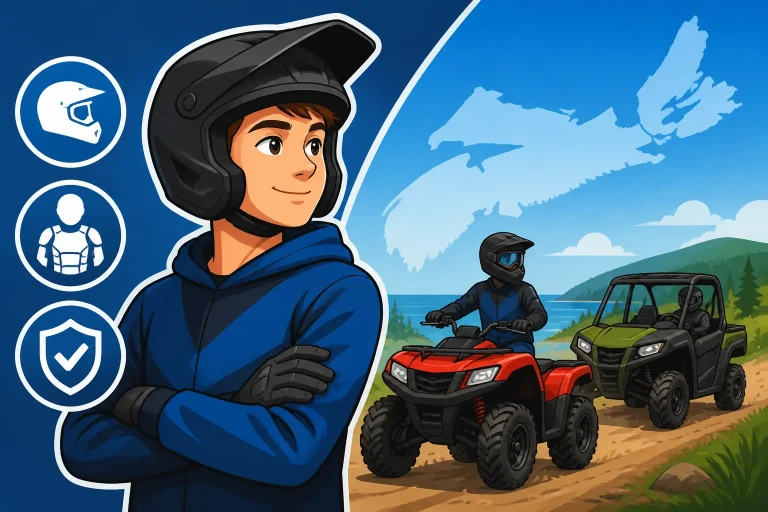
Protective gear affects fit too. A helmet should be properly sized and secured, and gloves and boots should allow the rider to operate controls without slipping or snagging. Oversized gloves can make it harder to feel a control; bulky clothing can interfere with movement. Gear should be fitted to the person, not borrowed on the assumption that a larger size is safer.
Choose a type of machine for the rider’s task
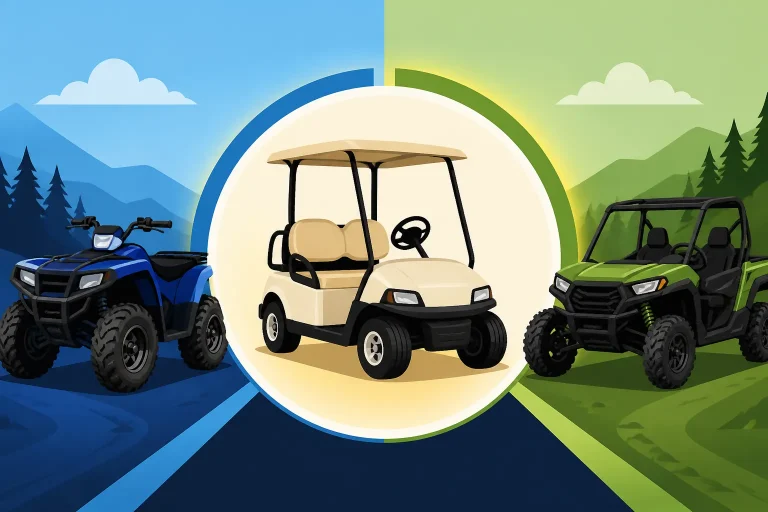
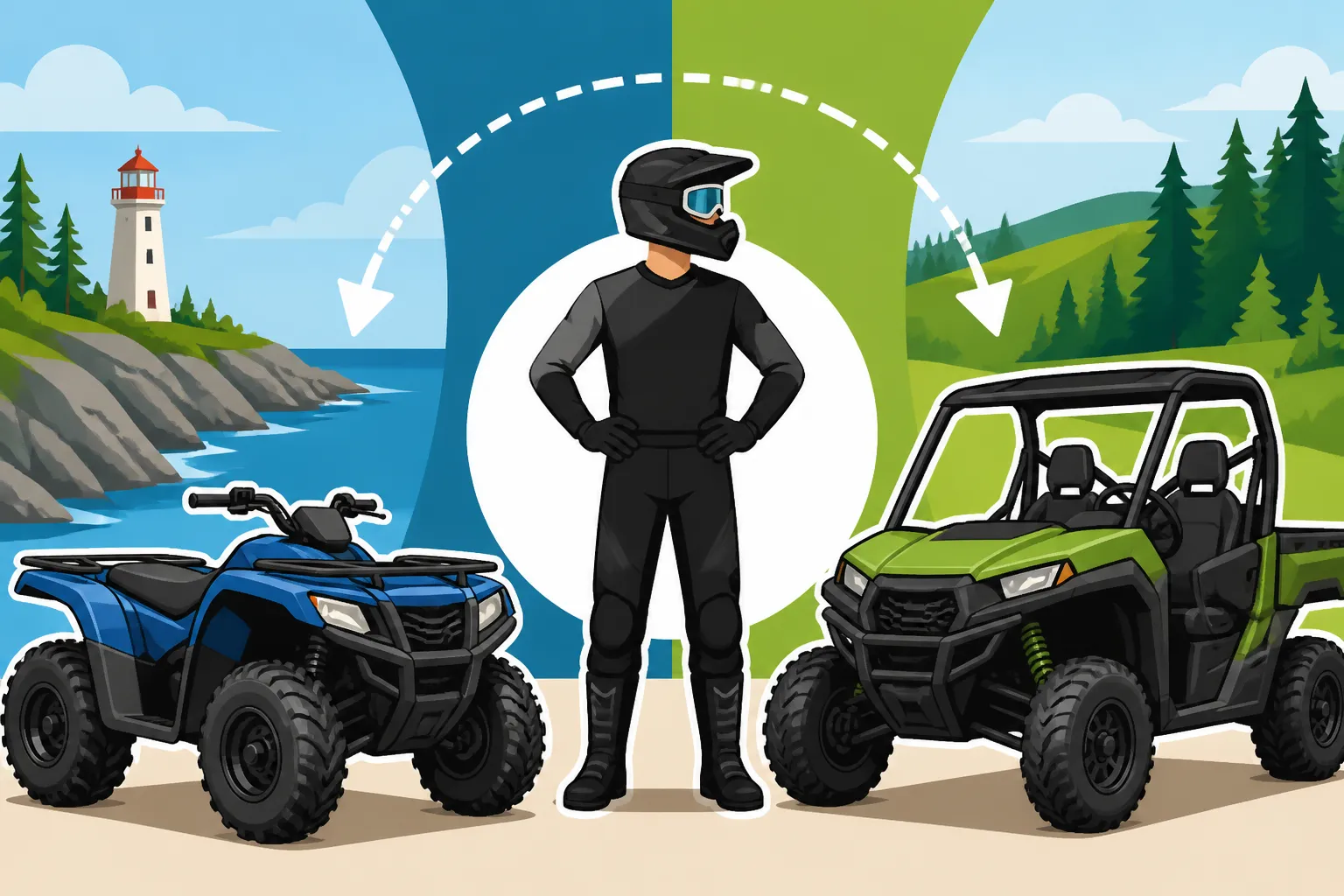
ATVs and UTVs have different layouts and handling characteristics, so the right choice depends on both the rider and the job. A youth ATV typically has a straddle seat and handlebar steering. A UTV has a seat, steering wheel and foot controls, and may be designed for more than one occupant. Neither type should be chosen based only on the idea that one is automatically safer for a smaller rider.
For an ATV, consider whether the rider can shift their body as needed and reach the handlebars without leaning too far forward. The rider should be able to steer without fighting the machine. A utility rack or added cargo may change the machine’s balance and handling, so assess the setup as it will actually be used.
For a UTV, check that the rider can reach the steering wheel and pedals, see clearly from the seat and use the restraint system as designed. Confirm the model’s seating capacity and follow the manufacturer’s instructions for occupants. A UTV’s enclosed or side-by-side layout does not make it suitable for a child who cannot reach the controls or understand how to remain seated and restrained.
Match the machine to the expected work or riding, not to a future role the rider might take on. A small rider using a machine for light property tasks may not need the same capacity or attachments as an adult hauling equipment. If the machine will carry a passenger, cargo or towing load, consider those demands separately and stay within the manufacturer’s limits.
Avoid sizing up because the rider may grow into the machine. A machine that is difficult to operate today is not made safer by the prospect of better reach next year. If a rider cannot control the machine now, use a properly fitting option or wait until they are ready.
Check Nova Scotia rules before choosing and riding
Physical fit and legal eligibility are related, but they are not the same question. A machine can feel manageable and still be unsuitable under the rules that apply to the rider, machine or riding location. Nova Scotia has requirements for young riders, supervision and appropriate machine size; review the current details before buying or allowing a child to ride. The topic-specific overview Nova Scotia Youth Machine Size Rules can help identify what to verify.
Age alone is not a measure of readiness. A rider needs enough judgment to follow instructions, recognize hazards and stop when conditions change. They also need training suited to the type of machine and the places where they will ride. Requirements can differ by age and use, so check the current rules for the particular rider rather than relying on another family’s arrangement. For age-specific questions, see [Nova Scotia Rules for a 10-Year-Old Rider] and Nova Scotia Supervision Requirements.
Training is separate from choosing a machine. It helps a rider understand controls, safe riding habits and the limits of the machine, but it does not make an oversized machine appropriate. Confirm whether the rider needs a safety certificate for the planned riding. Nova Scotia Safety Certificates Are Mandatory explains why this requirement should be checked rather than assumed.
Also separate vehicle registration from a trail permit. Registration paperwork does not confirm that the rider is physically ready for a particular machine, and a trail permit does not replace training, insurance or other operating requirements. If the household has more than one machine, check the permit rules for each one; Nova Scotia Permit for a Second Machine addresses that separate issue. Before riding, confirm that the route is open to the machine and rider, and that the machine meets the requirements for that location.
| Decision | What it answers | What it does not answer |
|---|---|---|
| Physical fit check | Can this rider reach and manage the machine? | Whether riding is allowed for this age or location |
| Training and supervision check | Does the rider have the required preparation and oversight? | Whether the machine is a good physical fit |
| Registration check | Are the required ownership and vehicle documents in order? | Whether a trail permit or insurance is in place |
| Permit and route check | Is the machine permitted to use the intended trail or area? | Whether the rider can control it safely |
Rules and administrative details can change. Check the current official Nova Scotia requirements before purchase and again before the first ride, especially if the machine will be used on trails, roads or land that is not your own. Do not rely on a dealer’s description or a previous owner’s paperwork as a substitute for confirming what applies to your situation.
Use a repeatable buying and readiness checklist
A careful purchase starts with the rider’s needs, not a shortlist based on engine size or price. Write down who will operate the machine, where it will be used, whether it will carry cargo or a passenger, and what the rider can comfortably control. That makes it easier to compare machines on practical criteria.
Before deciding, work through this sequence:
- Identify the intended rider and use. Consider the rider’s current size, strength, experience and judgment, as well as the terrain and tasks involved.
- Check the rules. Confirm the age, supervision, training, registration, insurance and permit requirements relevant to the rider and intended location.
- Review the manufacturer’s instructions. Look for intended-use guidance, occupancy limits, weight limits and any rider restrictions for the model.
- Check fit while stationary. Assess reach, posture, visibility, braking access and mounting before anyone starts the machine.
- Arrange safe, supervised practice if appropriate. Use a controlled area and observe low-speed starts, stops and turns. Stop if the rider is struggling or frightened.
- Reassess before regular use. Check fit again after growth, equipment changes or a change in how the machine will be used.
Be cautious if a seller dismisses fit concerns with comments such as “they’ll grow into it” or “the throttle can just be held back.” A speed limiter, where the manufacturer provides one, may limit speed but does not change the machine’s weight, braking demands, width or reach. Only use controls and adjustments in the way the manufacturer specifies.
If the rider is not ready for the available machine, the safest choice may be to wait, find a more appropriate model or have an adult handle the task. That can be disappointing when a machine has already been purchased, but it is better than asking a young rider to manage something they cannot control. The right match is the machine the rider can operate safely now, within Nova Scotia’s rules and the manufacturer’s instructions.
Disclaimer
This article is for general informational purposes only and does not constitute professional advice. Laws, prices and regulations vary by location and change over time. Consult a qualified professional for guidance on your specific situation.