What a Rider Under 16 Must Wear
A young rider’s gear is more than a comfort choice: Nova Scotia has equipment rules for riders under 16, and the wrong fit can leave a child poorly protected. The key is to know what must be worn, choose gear that fits the rider and machine, and check age and supervision rules separately before setting out.
Required gear for a rider under 16
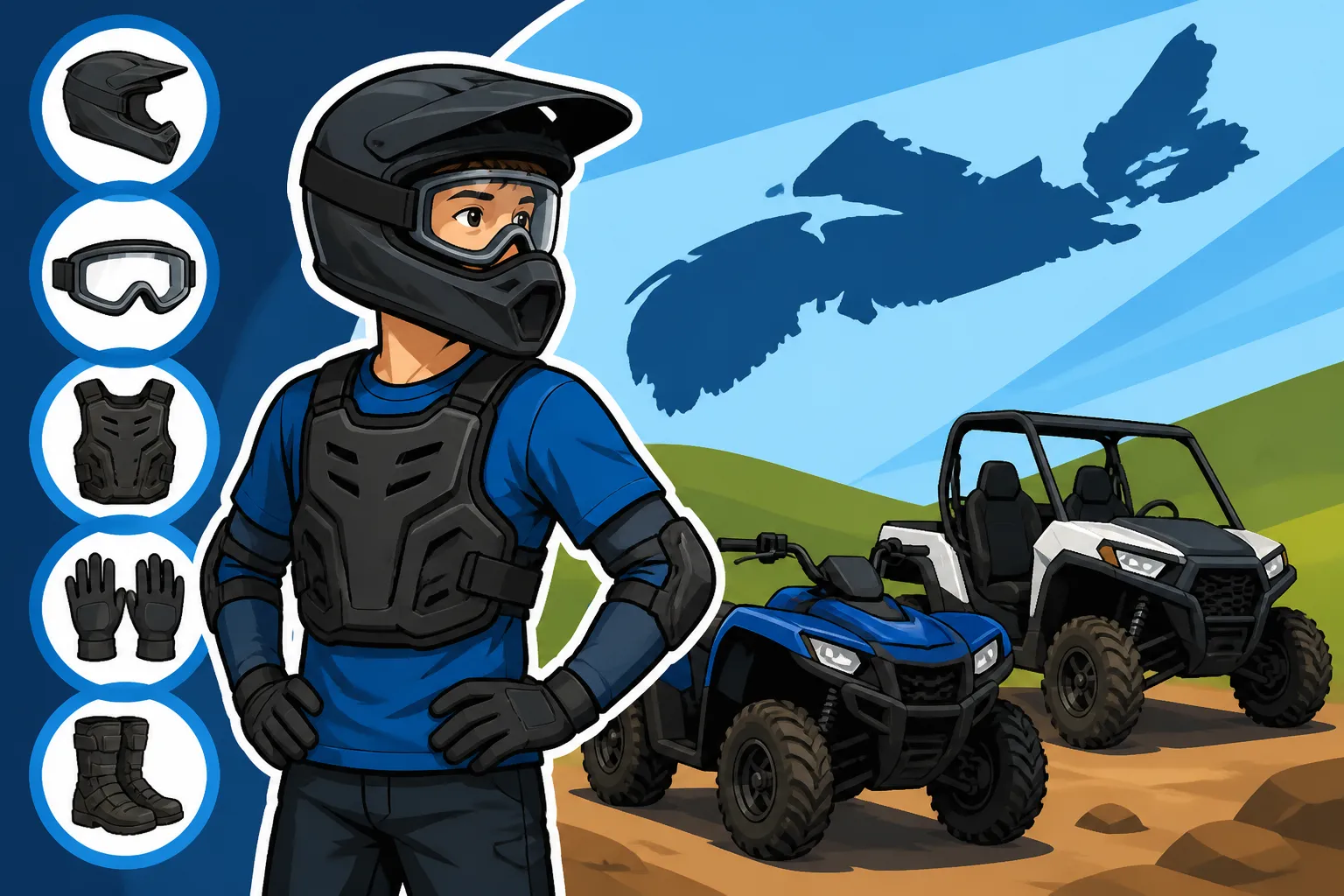
Nova Scotia’s under-16 equipment rules call for protective clothing as well as a helmet. A rider should wear an approved helmet, eye protection, gloves, long sleeves, long pants and protective boots. The details matter: a bicycle helmet, ordinary sunglasses or sneakers are not substitutes for suitable off-highway riding gear.
These requirements apply to young riders operating an off-highway vehicle, including an ATV or UTV. A passenger also needs appropriate protection. If a young person is riding as a passenger, check that the vehicle is designed to carry one and that the passenger can sit securely with feet supported and hands holding on. For a broader summary of the clothing rules, see Nova Scotia Gear Rules for Riders Under 16.
| Equipment | What to look for | Common mistake |
|---|---|---|
| Helmet | A properly fitted helmet that meets an accepted safety standard and is in good condition | Choosing a bicycle helmet or a loose, damaged helmet |
| Eye protection | Goggles or a suitable visor that keeps debris and wind out of the eyes | Assuming ordinary sunglasses provide enough coverage |
| Gloves | Riding gloves that fit securely and allow a firm grip | Wearing loose gloves that bunch up or slip |
| Long sleeves | A durable shirt or jacket that covers the arms | Riding in a short-sleeved top because the weather is warm |
| Long pants | Sturdy pants that cover the legs | Wearing shorts or thin clothing that can snag or tear easily |
| Boots | Protective footwear that covers the feet and ankles and stays on securely | Substituting sneakers, sandals or loose footwear |
The helmet rule deserves particular attention. Look for a helmet made for off-highway use and check for a certification label accepted in Nova Scotia. A label such as DOT or CSA can help identify a compliant helmet, but buyers should confirm that the specific helmet and marking meet the applicable standard. More on labels and accepted certifications is covered in Nova Scotia Helmet Standards Accepted and Why a DOT or CSA Mark Matters.
The helmet must also fit the rider, not just appear to be the right size. It should sit level, feel snug around the head and stay in place when the rider moves their head. A helmet that rocks, slides forward or can be pulled off easily is not a safe fit. If it has been in a significant impact, is cracked or has damaged fasteners, replace it rather than relying on its appearance.
Eye protection helps prevent dust, insects, branches and small stones from reaching the eyes. Goggles should fit comfortably with the helmet and stay in place when the rider looks around. A face shield can be useful if it provides adequate coverage and is compatible with the helmet. A windshield may reduce some wind and debris, but it is not a reason to assume the rider can skip eye protection; check the applicable rule and choose protection suited to the conditions. See Eye Protection Under Sixteen for more on this part of the equipment list.
The clothing requirements can feel inconvenient on a hot day, but exposed skin is vulnerable to brush, grit, hot machine parts and falls. Long sleeves and long pants should be made from material that can take some abrasion. Gloves help protect the hands and support a steady grip on the controls. A rider should still be able to reach the controls and operate them without the gloves bunching or restricting movement. Long Sleeves and Gloves Under Sixteen explains these items in more detail.
Boots should stay firmly on the feet and protect the toes and ankles. They should not be so bulky that the rider cannot use the foot controls safely. Sneakers may look sturdy, but they leave more of the foot and ankle exposed and can come off more easily. For the difference between suitable boots and casual footwear, see Boots Instead of Sneakers.
Gear must be worn properly, not merely carried on the machine. A helmet hanging from a handlebar does not protect the rider, and goggles pushed up on the helmet do not shield the eyes. Before the engine starts, check that the helmet is fastened, eye protection is in place, sleeves and pants cover the skin, gloves are on, and boots are secured.
Choosing gear that fits a young rider
Children grow quickly, so equipment bought at the start of a season may not fit well later. Check fit again as the rider grows, and before longer rides or trips on unfamiliar trails. Gear that is too large can shift, snag or interfere with controls; gear that is too small can be uncomfortable enough that a child tries to remove it.
Start with the helmet. Measure the rider’s head according to the helmet maker’s instructions, then try the helmet on with the rider’s usual riding clothing. It should feel evenly snug rather than painful. Fasten the chin strap and check whether the helmet moves independently of the head when gently pushed. If the fit is uncertain, ask a knowledgeable retailer to help rather than choosing a larger size to leave room to grow.
A helmet designed for one activity is not automatically suitable for another. Check the product’s intended use, safety certification and fit. When shopping online, including on Amazon, inspect the exact model and its certification details rather than relying only on a product title or a general claim that it is “protective.” Make sure the seller’s photos and specifications match the model being purchased, and confirm that the helmet can be returned if the fit is wrong.
Eye protection should not press painfully against the face or leave large gaps around the edges. If the rider wears prescription glasses, check that the goggles fit over them or choose an option intended to work with prescription eyewear. A clear lens is often useful in low light; tinted lenses can make it harder to see in shaded woods or changing conditions. Replace scratched or cracked lenses when they interfere with vision.
Clothing needs to stay put during normal movement. Have the rider sit on the machine with the engine off and reach for the handlebars, brakes and other controls. Sleeves should not catch on levers, and pants should not bunch so much that they interfere with movement. Gloves should allow the rider to grip the bars and operate controls securely. Boots should provide enough flexibility for control use while covering and supporting the foot and ankle.
A practical fitting check is to let the child move as they would while riding:
- Put on the helmet and fasten it.
- Add goggles or the chosen eye protection.
- Sit on the machine with the engine off.
- Reach the controls, move the arms and legs, and turn the head.
- Check for slipping, pinching, restricted movement or loose straps.
- Confirm that the boots stay on and the gloves do not interfere with control use.
Use layers that meet the clothing requirements without creating loose fabric. In cooler weather, warm layers can go under a riding jacket; in wet conditions, a weather-resistant outer layer can help keep the rider comfortable. Avoid scarves, dangling cords or other loose items that could catch on the machine. Comfort matters because a cold, wet or overheated rider may become distracted, but comfort should not come at the expense of required coverage.
Protective gear is not a replacement for choosing a suitable machine. A child needs to be able to reach and operate the controls safely, and the vehicle must be appropriate for the rider’s size and ability. The related Nova Scotia Youth Machine Size Rules can help with that separate decision. A machine that is too large or powerful can be difficult to control even when the rider is fully dressed in protective equipment.
Checks before riding and other rules to confirm
Use a brief gear check every time, even if the same rider used the same equipment the day before. A strap can loosen, goggles can become scratched, and clothing can change with the weather. Ask the young rider to take part in the check so they learn to recognize unsafe equipment and speak up when something no longer fits.
A pre-ride check should include:
- Helmet: Check the shell, lining, strap and fastener. Make sure the helmet is secured and sits correctly.
- Eye protection: Clean the lens and confirm that it is clear, secure and comfortable with the helmet.
- Gloves: Check that both gloves fit and allow a firm grip.
- Clothing: Confirm that arms and legs are covered and that nothing is loose enough to snag.
- Boots: Check that they cover the feet and ankles, fit securely and do not hinder control use.
- Machine fit: With the engine off, make sure the rider can reach and use the controls.
A helmet that appears intact may still be unsuitable if it is too old, poorly stored or has suffered an impact. Follow the manufacturer’s care and replacement instructions. Do not modify the shell or use accessories that interfere with the helmet’s fit or certification. Clean protective equipment according to its care instructions; harsh cleaners can damage some materials.
The equipment list is only one part of the rules for a young rider. Age, supervision, training and where the machine may be operated are separate questions. A child wearing every required item may still be too young for a particular kind of ride or may need an eligible supervisor. Review Nova Scotia Rules for Riders Under 16 and the specific age guidance in [Nova Scotia Rules for a 10-Year-Old Rider] before planning a trip.
Permits and clothing rules are also different things. A trail permit or registration document does not replace protective equipment, and wearing protective equipment does not provide permission to ride on a route where the machine is not allowed. Riders visiting Nova Scotia should check the rules that apply to their trip rather than assuming another province’s requirements settle the question.
For a family ride, it helps to make equipment part of the routine rather than a last-minute argument at the trailhead. Lay out the clothing before departure, let the child check each item, and make the ride conditional on everything fitting and being worn correctly. If an item is missing, damaged or uncomfortable, resolve that before starting. Do not rely on a promise to put goggles on later or fasten a helmet after the machine is moving.
Weather and trail conditions may call for more protection than the minimum. Dusty trails can make eye protection especially important; brush and branches make full coverage useful; cold or wet conditions can reduce comfort and concentration. Add practical layers without allowing them to interfere with the helmet, vision, grip or control of the vehicle.
For a quick final check, ask: Is the helmet approved, fitted and fastened? Can the rider see clearly? Are the arms and legs covered? Do the gloves allow control? Are the boots secure? Is the machine suitable, and are age and supervision requirements met? If any answer is no or uncertain, pause and confirm before riding.
Disclaimer
This article is for general informational purposes only and does not constitute professional advice. Laws, prices and regulations vary by location and change over time. Consult a qualified professional for guidance on your specific situation.