Nova Scotia Road Trail Rules Explained
For any off-highway vehicle (OHV) enthusiast in Nova Scotia, the thought of legally riding your ATV or side-by-side on certain roads has likely crossed your mind, bringing with it a mix of excitement and apprehension. It's a confusing landscape, navigating what feels like constantly shifting rules and trying to understand exactly where you can go without risking a ticket or compromising safety. This guide aims to clear up that confusion, diving deep into the specific regulations and practical considerations for operating your off-highway vehicle on Nova Scotia's designated road trails.
What Exactly is a "Road Trail" in Nova Scotia?
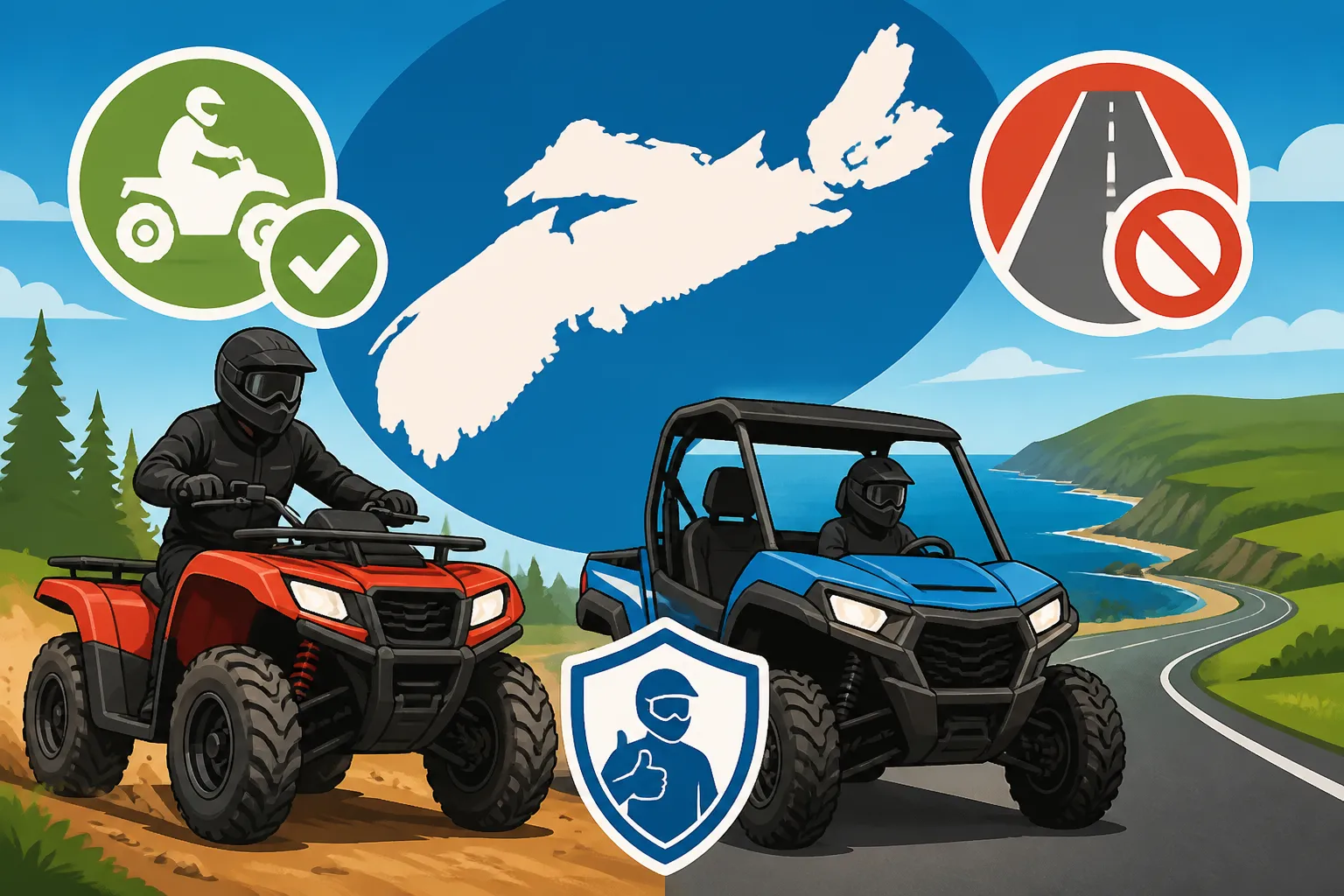
Let's start by defining what we're actually talking about here. When Nova Scotia began introducing "road trails," it wasn't about making every street street-legal for your quad. Far from it! Instead, it's a specific designation that allows off-highway vehicles to legally operate on certain sections of public roads under strict conditions. These aren't just any old roads; they're carefully selected routes, often connecting segments of the traditional trail network, allowing riders to bypass dangerous sections, access services like fuel and food, or link up with other trails.
The Purpose Behind Road Trails
The main idea behind these road trails is to enhance the overall OHV experience by creating a more connected and accessible trail system. For years, riders faced the frustrating reality of having fantastic trail segments interrupted by a public road they couldn't legally cross or travel on. This often meant trailering their machines for short distances, or worse, taking illegal detours that put them at risk. Road trails are meant to be bridges, allowing seamless travel across the province. They’re not designed for joyriding on main thoroughfares but for purposeful transit within a larger recreational network. This initiative acknowledges the growing popularity of off-highway vehicles and the significant economic contribution of OHV tourism to many rural communities.
How Road Trails Are Designated
It’s important to understand that not just any road can become a "road trail." The process for designation involves careful consideration by the provincial government and often local municipalities. These are typically secondary roads, quieter streets, or former highway sections that have been deemed suitable for shared use. You won't find them on busy highways or major arterial routes. The selections prioritize safety for both OHV operators and other road users, often taking into account traffic volume, sightlines, and existing infrastructure. Each designated road trail is clearly signed, indicating that OHVs are permitted and outlining specific rules that apply to that section. These designations can change, or new ones can be added, so it’s always crucial to check the most current information before planning your route. Nova Scotia's road trail system is a dynamic one, gradually expanding to connect more communities and trails, as outlined in [Nova Scotia's Road Trails Act Explained].
Essential Rules for Riding on Nova Scotia Road Trails
Okay, so you've found a designated road trail. That's just the first step! Operating your OHV on these shared-use roads comes with a very specific set of rules, and adhering to them isn't just about avoiding a fine – it's about ensuring your safety and the safety of everyone else on the road. These rules are distinct from those governing off-road trails, and ignoring them can lead to serious consequences.
Speed Limits and Operating Hours
One of the most critical rules to remember is the speed limit. On Nova Scotia road trails, the maximum speed for OHVs is 25 km/h. This isn't a suggestion; it's a hard limit, significantly lower than typical road speeds, designed to manage the speed differential between OHVs and other vehicles, and to account for the often different handling characteristics of off-road machines. You must always ride at a speed that is reasonable and prudent for the conditions, and never exceed that 25 km/h maximum.
Regarding operating hours, OHVs are generally permitted on road trails from half an hour before sunrise to half an hour after sunset. This means night riding on these designated road sections is typically prohibited. It's crucial to plan your rides accordingly, ensuring you have enough daylight to complete your travel on road trail segments. If you find yourself caught out after dark, you must find a safe place to stop until daylight.
Licensing, Registration, and Insurance
Just like driving a car, operating an OHV on a Nova Scotia road trail requires proper documentation. First and foremost, the operator must hold a valid driver's license – a learner's permit simply won't cut it for these shared road sections. [Do You Need a Licence for an ATV in Nova Scotia?] covers this in more detail.
Your machine must also be properly registered with Access Nova Scotia, and this registration needs to be current. You’ll also need to have the provincial vehicle permit. This ensures your OHV is officially recognized and has met the initial compliance requirements. Crucially, your OHV must be insured. Nova Scotia has a minimum liability insurance requirement for OHVs operating anywhere off private property, including road trails. This means carrying at least $500,000 in third-party liability coverage. Always carry your proof of insurance (pink card) with you, as an officer can ask to see it. [Nova Scotia Requires Registration and Insurance] and [Nova Scotia Insurance Requirements for Riders] delve further into these critical requirements.
Helmet, Passenger, and Equipment Requirements
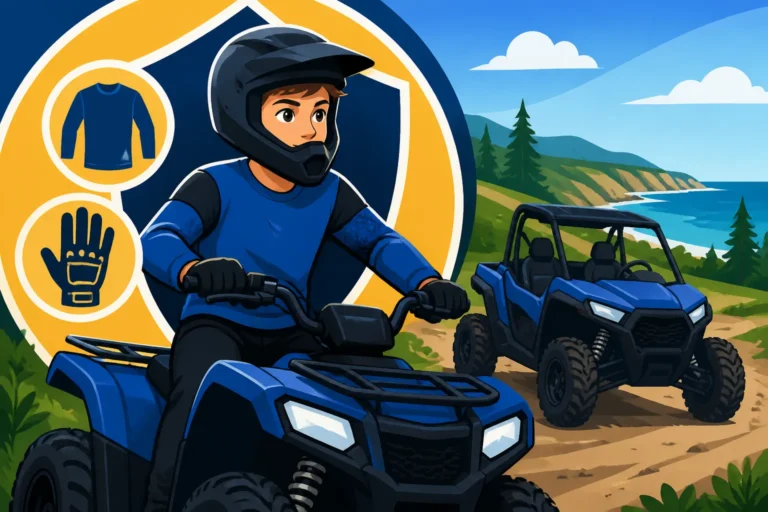
Safety gear is non-negotiable. Anyone operating or riding as a passenger on an OHV on a road trail must wear an approved helmet. This isn't just for younger riders; it applies to everyone, regardless of age or experience. The helmet must meet specific safety standards, such as those set by DOT, CSA, Snell, or BSI. [Nova Scotia Helmet Law for Riders] provides more clarity on acceptable helmet standards.
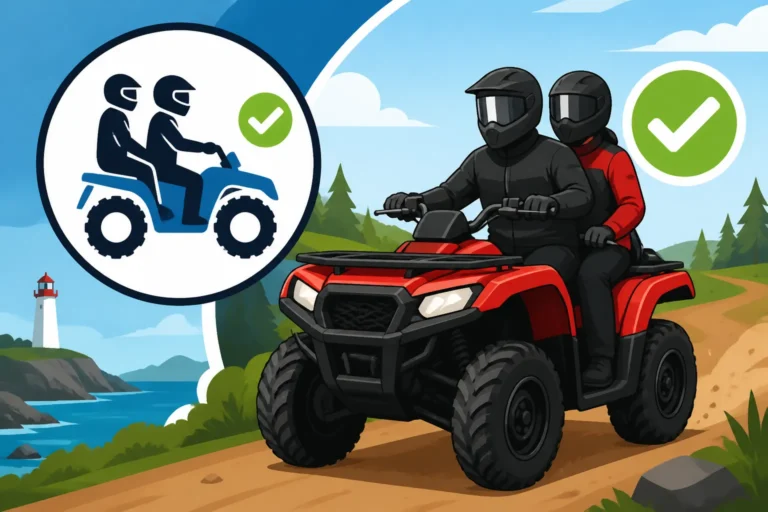
When it comes to passengers, there are strict age requirements. Passengers must be at least nine years old, and the OHV must be designed to safely carry more than one person. You cannot carry a child under nine on a road trail. The machine must have a designated passenger seat and footrests. Riding with a passenger on a single-rider machine is never permitted, whether on a trail or a road trail.
Your OHV also needs to be properly equipped for road use. This means having working headlights that illuminate at least 300 feet ahead, and taillights that are visible from 200 feet behind. Brake lights are also essential. If you’re riding near dusk or dawn, or in low visibility conditions, these lights are critical for your safety and the safety of others. Many riders choose to upgrade their lighting systems, especially if they anticipate riding in varied conditions, and companies like SuperATV offer a robust selection of LED light bars and auxiliary lights that can significantly boost your visibility and illuminate your path. Beyond lighting, your machine must have a working muffler that meets factory noise levels – modified or excessively loud exhausts are generally prohibited.
Here's a quick summary of key rules:
| Rule Category | Requirement | Details |
|---|---|---|
| Speed Limit | Max 25 km/h | Must operate at a reasonable and prudent speed, never exceeding this limit. |
| Operating Hours | Half an hour before sunrise to half an hour after sunset | Night riding on road trails is generally prohibited. |
| Operator Licence | Valid Driver's Licence (not a learner's permit) | Required for all operators on road trails. |
| OHV Registration | Current Nova Scotia OHV Registration & Vehicle Permit | Must be registered with Access Nova Scotia. |
| Insurance | Minimum $500,000 Third-Party Liability | Proof of insurance (pink card) must be carried. |
| Helmet | Approved helmet (DOT, CSA, Snell, BSI) for all riders | Mandatory for operator and any passenger. |
| Passenger Age | Minimum 9 years old | Machine must be designed to carry more than one person with dedicated seating. |
| Lighting | Working headlights (300 ft range), taillights (200 ft visibility), brake lights | Essential for visibility, especially during dawn/dusk transitions. |
| Noise Levels | Factory muffler, no excessive noise | Modified exhausts are prohibited. |
Behavior on Road Trails
When you're on a road trail, you are sharing the road with other vehicles, cyclists, and sometimes pedestrians. This means adopting a defensive and courteous riding style. You must yield to all other traffic, just as if you were a regular vehicle. Riders must travel in single file and are not permitted to pass other OHVs or vehicles on a road trail. You should stay as far to the right side of the paved surface as safely possible. Avoid kicking up dust near homes or other road users, and be mindful of your exhaust noise, even if it meets factory specifications, especially when passing through residential areas. The goal is to integrate safely and minimally disrupt other road users.
Navigating the Practicalities: Where and When You Can Ride
Understanding the rules is one thing, but knowing where these road trails are and how to plan your ride effectively is another. Nova Scotia's road trail system is still evolving, but there are already many opportunities to connect trails and access communities.
Identifying Designated Road Trails
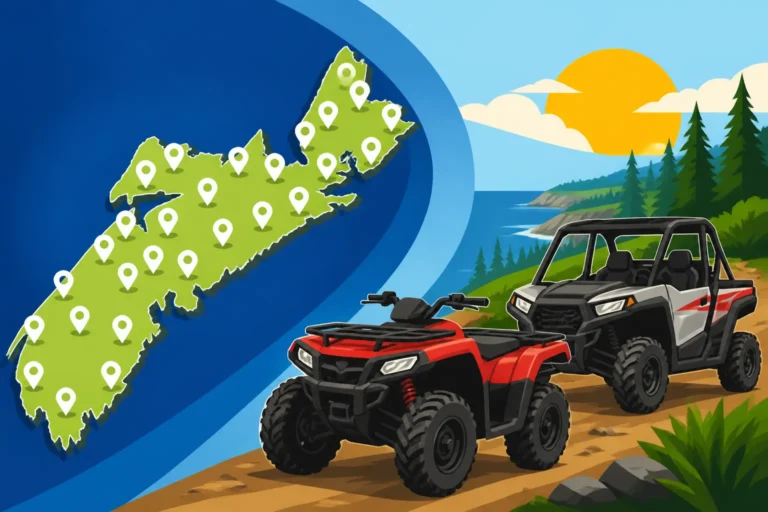
The primary source for identifying designated road trails is the provincial government's official mapping resources, often found on the Department of Natural Resources and Renewables website, or through organizations like the ATV Association of Nova Scotia (ATVANS). These resources typically provide maps that clearly mark the approved segments. It’s important not to assume a road is a road trail just because you see other OHVs on it, or because it looks quiet and unused. Always confirm the designation through official channels. Many of these routes are established in communities across the province, from Cape Breton to the Annapolis Valley, and are often municipal roads or quieter provincial routes. [Nova Scotia Municipal Road Trails] provides more insights into how local governments are participating.
Crossing Highways and Roads
One of the key benefits of road trails is the ability to legally cross certain roads or highways to connect trail segments. However, this is also heavily regulated. When crossing a public highway that is not a designated road trail, you must approach the road, stop, and ensure it's safe to cross directly and perpendicular to the road. This usually means crossing at an intersection, but sometimes at a marked crossing point. You still need a valid driver's license to perform these crossings, and all other rules regarding helmets, registration, and insurance apply. You cannot simply ride down the shoulder of a highway to get to another trail. For more on this, check out [Nova Scotia Rules for Crossing a Highway].
Accessing Services and Amenities
Part of the rationale for road trails is to allow OHV operators to access services within communities. This means you can often ride on a road trail to get to a gas station, a restaurant, or a convenience store, provided the establishment is located directly along the designated route. Again, the 25 km/h speed limit and all other road trail rules apply. This is a huge convenience for long-distance riders, as it reduces the need to trailer your machine into town just for a tank of fuel or a bite to eat. It’s also a boon for local businesses in communities that embrace OHV tourism. Some communities have even adopted "whole-town access" initiatives, as seen in [Pictou's All-Roads Trial in Nova Scotia], where all municipal roads are open to OHVs under specific conditions.
What About Road Shoulders and Woods Roads?
The road trail rules specifically refer to designated sections of public roads. This generally does not extend to riding on the shoulder of a non-designated public road, nor does it automatically open all woods roads or private logging roads to OHV traffic. Woods roads, even if publicly accessible, may have different rules or require specific permissions. Always assume a road is not a road trail unless it is explicitly marked or listed as such by official sources. Riding along the shoulder of a non-designated highway is still illegal and extremely dangerous.
Compliance and Consequences: What Happens If You Don't Follow the Rules
Understanding the rules is good, but adhering to them is paramount. Ignoring the regulations for road trails can lead to significant penalties, safety risks, and even impact your ability to ride in the future.
Fines and Penalties
Operating an unregistered, uninsured, or unpermitted OHV on any public land, including a road trail, can result in substantial fines. We're not talking about a slap on the wrist here. For example, [Nova Scotia Minimum Fine of $250] is just the starting point for certain infractions. Fines can escalate significantly for repeated offenses or more serious violations. Riding without a valid driver's license, carrying an underage passenger, or operating outside of permitted hours can each incur separate penalties. These fines are designed to deter illegal and unsafe practices, protecting both riders and the public. You also run the risk of your machine being impounded in some cases, adding further costs and inconvenience.
Insurance Implications
Operating an OHV without the required insurance on a road trail is not only illegal but incredibly risky. If you're involved in an accident, even if it's not your fault, you could be held personally liable for damages to property or injuries to others. This could mean thousands, even hundreds of thousands of dollars in out-of-pocket expenses. Even if you have insurance, a serious infraction while riding on a road trail could void your policy or lead to significantly higher premiums in the future. Your insurance provider might deny a claim if you were found to be operating the machine illegally at the time of an accident, such as exceeding the speed limit or riding outside operating hours. Always ensure your policy covers you for the type of riding you're doing.
Interactions with Law Enforcement
Nova Scotia's natural resources officers and RCMP patrol these areas, and they are well-versed in OHV regulations. If you're stopped on a road trail, you'll be expected to provide your driver's license, proof of registration, and insurance. They'll also check your machine's equipment, ensuring it meets the lighting and noise requirements. Being respectful and cooperative with officers is always the best approach. If your machine isn't compliant, or if you're not following the rules, they have the authority to issue tickets, seize your machine, and even lay more serious charges depending on the severity of the infraction. Remember, they are there to enforce safety and the law, which ultimately benefits all responsible riders.
The Bigger Picture: Maintaining Access
Every time a rider flaunts the rules, it jeopardizes the future of road trail access for everyone. Incidents of unsafe riding, excessive noise, or disregard for property boundaries erode public trust and can lead to backlash from local communities, potentially resulting in the closure of existing road trails or the prevention of new ones. By adhering to the rules, riders demonstrate their commitment to responsible use and help to ensure the continued expansion and acceptance of the OHV trail network. So, when you're riding, remember you're not just representing yourself; you're representing the entire OHV community in Nova Scotia. Utilizing robust, compliant gear, like the varied accessories offered by SuperATV that help you meet requirements while enhancing your ride, is a great way to ensure you're both safe and within the legal bounds.
Disclaimer
This article is for general informational purposes only and does not constitute professional advice. Laws, prices and regulations vary by location and change over time. Consult a qualified professional for guidance on your specific situation.