When Nova Scotia Requires Riding Single File
It can feel a bit restrictive sometimes when you're out enjoying the vast beauty of Nova Scotia on your ATV or UTV, especially when you're riding with a group. You want to cruise along with your buddies, chatting side-by-side, but then you hit a certain stretch and suddenly, you're wondering, "Can we ride like this here, or do we need to fall into single file?" This guide is all about clearing up that confusion, diving deep into Nova Scotia's rules on when and where you're required to ride single file, and why those rules are so important for everyone's safety and the future of our riding access.
The Core Rule: Single File on Designated Road Trails
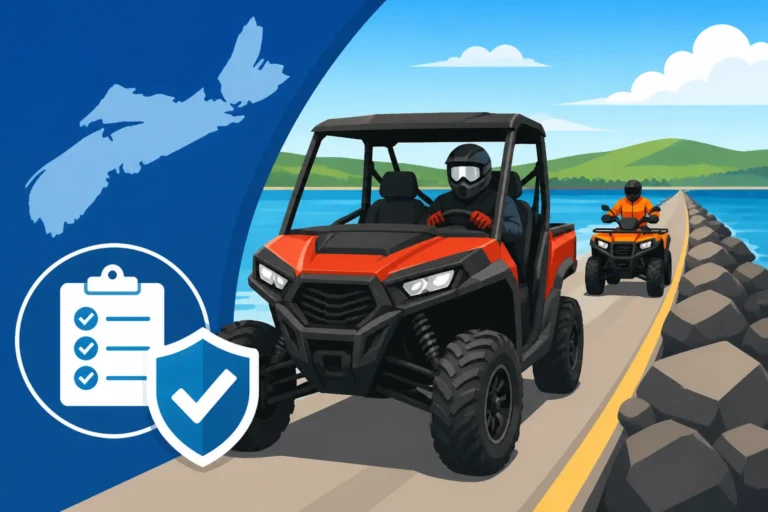
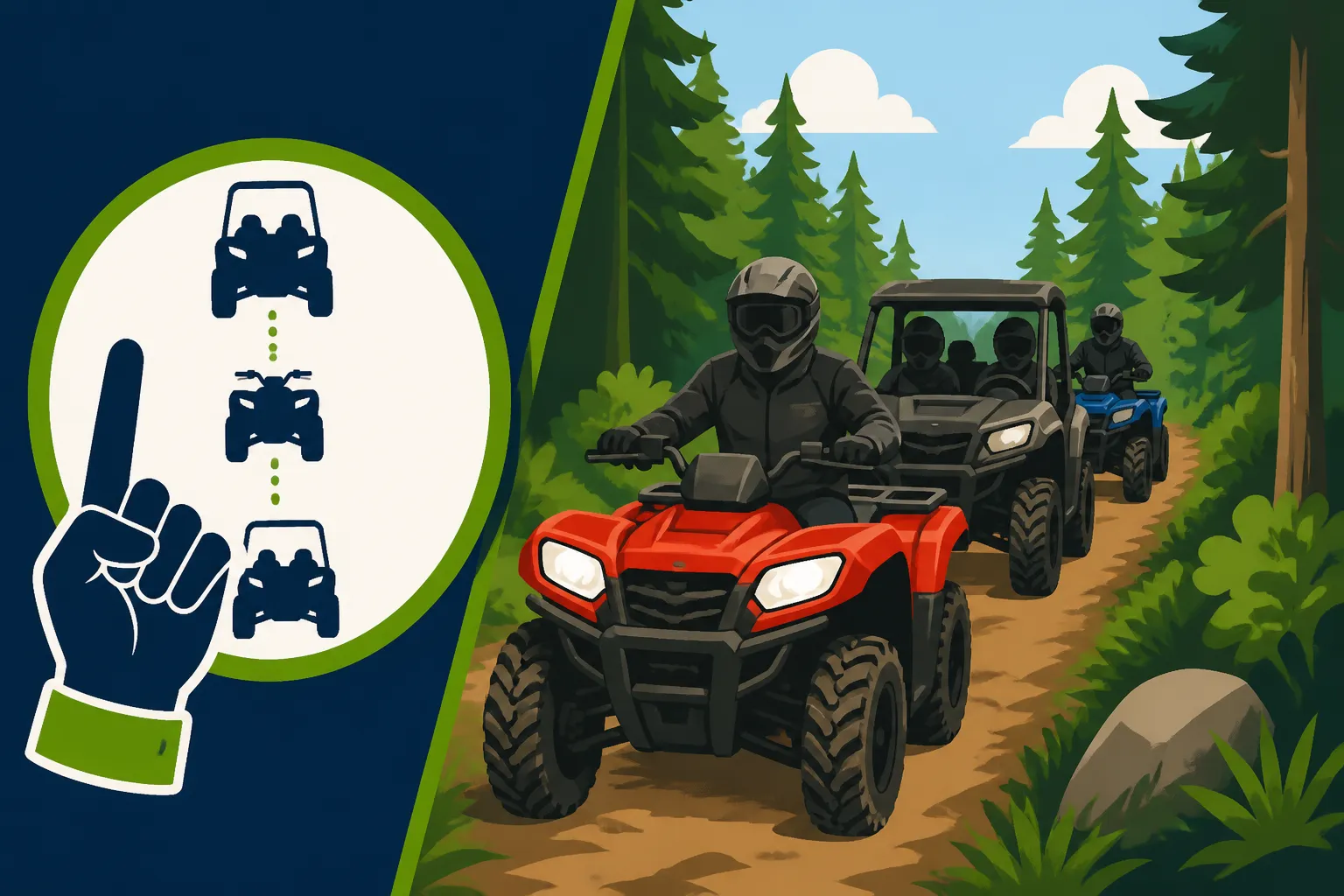
Let's get straight to the most common scenario where riding single file isn't just a suggestion, it's a legal requirement: Nova Scotia's designated road trails. These are specific sections of public roads that have been approved for off-highway vehicle (OHV) use, often acting as connectors between main trail systems or providing access to communities and services. When you encounter these stretches, the expectation is clear: you must ride single file.
This rule isn't arbitrary; it's rooted deeply in safety and the concept of sharing the road. These aren't private trails where you might have more leeway. These are active public roads, even if they are often rural and less traveled. Other vehicles – cars, trucks, bicycles, even pedestrians – have a right to be there, and ensuring that OHVs take up the minimum amount of space possible is crucial for avoiding collisions and maintaining clear sightlines for everyone. It also helps manage traffic flow, especially if you're part of a larger group. You'll also find that a strict speed limit of [25 km/h on a Road Trail] applies on these sections, which naturally pairs with the single-file requirement to enhance safety.
What is a Nova Scotia Road Trail?
It’s easy to think of a road trail as just "any road," but in Nova Scotia, it’s a specific designation. These are not highways or major thoroughfares. Instead, they are typically quieter, less-trafficked municipal roads that have been officially identified and permitted under the [Nova Scotia's Road Trails Act Explained]. These designated routes connect communities, provide access to local businesses like gas stations or restaurants, or bridge gaps between larger off-highway trail networks. You might find them running through small villages, linking up old rail beds, or providing a short passage from a woods trail to a service road. The key is that they are public roads, even if they see less traffic than major routes.
Imagine you're riding a scenic route near Annapolis Royal, and the designated OHV trail momentarily transitions onto a local road to bypass a sensitive area or connect to the next segment of the trail. This transitional stretch is very likely a road trail. Signs are usually posted indicating these sections, so always keep an eye out for official signage that dictates OHV use and regulations. Ignoring these signs not only puts you at risk but can also jeopardize the future of these access points for all riders.
Safety and Sharing the Pavement
The single-file rule on road trails is fundamentally about safety, both for you and for others. When you're riding in a single line, your group is more predictable to other drivers and less likely to pose an obstruction. A long, narrow line of ATVs or UTVs is easier for a motorist to judge for passing or for meeting head-on than a scattered formation. It minimizes your footprint on the road and makes it clear that you are sharing the space responsibly.
Think about a blind curve or a crest in the road. If your group is spread out across the lane, you're creating a much larger obstacle that oncoming traffic might not see in time. By riding single file, you reduce that risk significantly. It's a fundamental part of the rule to [Nova Scotia Riders Yield to Traffic], meaning you are expected to give way to any other vehicle, and riding single file makes that yielding process much smoother and safer. This responsible behavior isn't just about avoiding a ticket; it's about making sure that the privilege of using these road trails continues to be granted to riders in Nova Scotia.
Beyond Road Trails: Other Scenarios for Single File
While designated road trails are the primary place where single-file riding is legally mandated, there are several other scenarios on public lands or shared paths where riding single file is either explicitly required, strongly implied by common sense, or simply the most responsible and safest way to travel. These situations often involve brief interactions with public infrastructure or sharing space with diverse user groups.
Brief Highway Crossings and Shoulder Travel
Sometimes, your trail adventure requires you to cross a public highway or travel for a very short distance on a road shoulder to reach another trail segment or a necessary service like a gas station. In these instances, even if it's not a "road trail," single-file riding is critical. When crossing a highway, you need to execute that maneuver quickly and efficiently, minimizing the time you spend exposed to fast-moving traffic. [Nova Scotia Rules for Crossing a Highway] stipulate that you must stop, yield to all traffic, and proceed only when safe. Doing this in single file ensures your group can cross as a cohesive unit without unnecessarily blocking lanes or creating confusion for motorists.
Similarly, if you're permitted to ride on a road shoulder for a short distance (check local bylaws and the OHV Act for specific allowances, as this is often very restricted), riding single file is a non-negotiable safety measure. [Nova Scotia Rules for Riding a Shoulder] emphasize staying as far to the right as possible, and a single line allows you to do that effectively, maintaining maximum distance from the active traffic lanes. Any deviation from this, like riding two abreast on a shoulder, instantly creates a hazard and reflects poorly on all riders.
Shared Multi-Use Trails and Common Sense
Nova Scotia boasts a fantastic network of multi-use trails, including many [Nova Scotia Rail Trails Open to Quads]. These trails are treasures, but they are also shared spaces. You might encounter hikers, cyclists, horseback riders, or even families out for a stroll. While not all of these are "road trails" in the legal sense, the principles of courtesy, safety, and minimizing your impact demand single-file riding in most cases.
When you're sharing a narrow corridor, especially on an old rail bed, riding side-by-side can be incredibly intimidating for other users, not to mention dangerous. It forces them off the trail or creates pinch points where passing becomes awkward and potentially unsafe. [Sharing a Rail Trail With Cyclists] is a common scenario, and cyclists often move faster or slower than ATVs, requiring clear pathways. Riding single file demonstrates respect for all users and ensures that everyone can enjoy the trail safely and comfortably. For riders looking to enhance their machine for trail compatibility, even subtle modifications can make a difference. Some riders, for instance, might choose a narrower wheel offset or more compact fender designs from brands like SuperATV to keep their machine's width more manageable on tight multi-use paths, contributing to a better shared trail experience.
When You Can Ride Side-by-Side (and When You Can't)
It's not always about riding in a perfectly straight line. There are definitely times and places where you can spread out and enjoy riding side-by-side with your companions. Understanding the distinction is key to staying safe, legal, and respectful of the environment and other trail users. The general rule of thumb is that the further you are from public roads and designated shared trails, the more flexibility you'll have, but always with a strong dose of common sense.
Private Property and Permission
The most straightforward scenario where you can ride side-by-side is on your own private land, or on private land where you have explicit permission from the landowner. If you own a large property with open fields or wide woods roads, you generally have the freedom to ride as you please, including side-by-side. The key here is "private." As soon as you venture onto land you don't own, or without explicit permission, you could be trespassing and subject to fines, regardless of how you're riding. This is why [Riding Your Own Land Without a Registration] (for some cases) and general rules about private land access are important to understand. Even on private land, however, exercising caution, especially with large groups or at higher speeds, is always a good idea to prevent accidents.
When accessing private woodlots, for example, ensure you have secured proper permission. [Nova Scotia Trespass Law for Riders] applies just as strictly to OHV users as it does to anyone else. Even if the landowner permits access, riding side-by-side on narrow woods roads can quickly widen the trail, damage vegetation, and create erosion issues, potentially jeopardizing future access for everyone. Always respect the landowner's wishes and the natural environment.
Wide Designated Trails and Group Riding
While road trails almost always require single file, some dedicated off-highway trails, particularly those managed by ATV clubs or situated on broader Crown land, might be wide enough to safely accommodate two machines abreast. These are typically purpose-built or historically wide paths, such as old logging roads or specific segments of a club trail system that are maintained for wider vehicles. Always look for signage or consult local trail maps from organizations like ATVANS for guidance. If a trail is clearly marked as multi-use but specifically designed with enough width, riding side-by-side might be permissible.
However, even on wide trails, it's crucial to consider visibility, speed, and other trail users. If you're approaching a blind corner, a crest, or a section with reduced visibility due to trees or terrain, it’s always safest to revert to single file. Group communication is vital in these situations; a lead rider can signal when it’s safe to spread out or when to tighten back up. Maintenance of these trails is often done by volunteers, so riding responsibly, regardless of width, helps with [Nova Scotia Club Trail Maintenance] efforts. For those with wider machines, such as certain UTVs equipped with SuperATV's wider A-arms or suspension kits designed for aggressive off-roading, it's even more critical to be mindful of trail width. While these enhancements offer fantastic stability and performance in open areas, they reinforce the need for careful consideration and single-file adherence on narrower or shared paths.
The Bigger Picture: Why Rules Like Single File Exist
It's easy to view rules as inconvenient restrictions, but in the world of off-highway vehicle riding, they are fundamental to our continued access, safety, and the positive reputation of the sport. Rules like single-file riding on road trails aren't just about avoiding a ticket; they're about ensuring we can all keep enjoying the trails and the beautiful Nova Scotian landscape for years to come.
Safety First, Always
At its core, the single-file rule, along with speed limits and other operating regulations, is about preventing accidents and ensuring the well-being of everyone involved. Riding an OHV carries inherent risks, and adding the complexities of shared public roads or multi-use trails increases those risks exponentially. When riders adhere to these rules, they reduce the chances of collisions, rollovers, and other dangerous incidents. This applies not only to your group but also to unsuspecting motorists, cyclists, or pedestrians. Ignoring these rules can lead to serious injury or worse, and nobody wants their enjoyable ride to turn into a tragedy.
Beyond the physical danger, there's the legal ramification. Violations like riding unsafely or off-limits can lead to significant penalties, including fines for an unregistered machine, as well as citations for [Nova Scotia Impaired Riding Penalties] or [Nova Scotia Noise Limits on a Machine], which impact everyone's perception of our sport. A moment of carelessness can have lasting consequences, far beyond the initial thrill.
Preserving Access and Reputation
Every time an OHV rider breaks a rule, it contributes to a negative perception of the entire riding community. This is especially true in areas where OHVs interact with the public, such as on road trails or shared pathways. Incidents of irresponsible riding, excessive noise, or perceived disregard for other users can quickly lead to public complaints, calls for stricter regulations, and even the closure of valuable access points.
By diligently following rules like single-file riding, riders act as ambassadors for the sport. They demonstrate that OHV users are responsible, considerate, and committed to sharing public spaces respectfully. This helps to build positive relationships with local communities, landowners, and other recreational groups, which in turn helps preserve and even expand our access to trails and riding areas. Organizations like ATVANS work tirelessly to advocate for riders, and their efforts are significantly aided when the riding community consistently shows itself to be responsible and law-abiding. Think of it this way: the more responsible we are, the harder it is for critics to justify limiting our access. Even small upgrades to your machine, such as those offered by SuperATV for improving visibility (like better mirrors or lighting), contribute to this overall responsible image on the trails.
Practical Tips for Group Riding
Whether you're required to ride single file or have the space to spread out, effective group riding is essential for safety and enjoyment. Here are a few tips to ensure your next outing is a smooth one:
- Designate Lead and Sweep Riders: Always have a designated leader who knows the route and sets the pace, and a sweep rider at the back to ensure no one gets left behind.
- Maintain Proper Spacing: Even in single file, don't ride too close. Give yourself enough room to react to sudden stops or changes in terrain. A good rule of thumb is a two-second following distance.
- Communicate Effectively: Use hand signals, helmet communicators, or two-way radios to relay information about trail conditions, hazards, or upcoming turns.
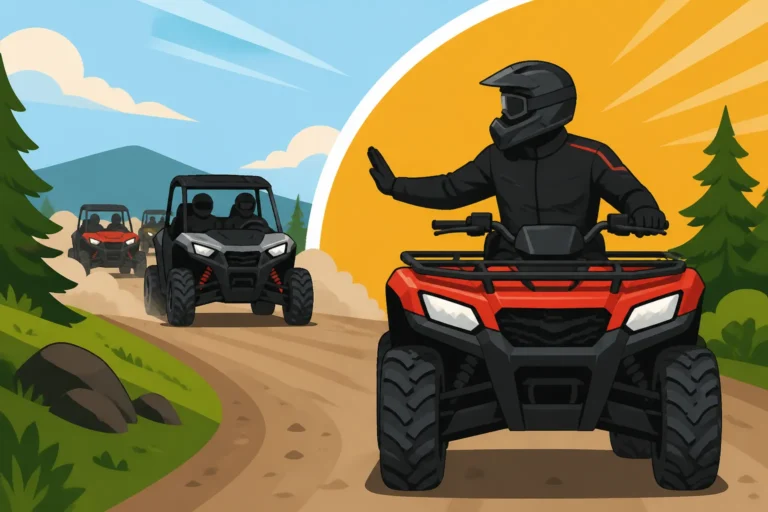
- Stay Right, Be Predictable: On any shared path or road, always keep to the far right, and make your movements clear and predictable to others.
- Regular Checks: Periodically check in with the riders behind you to ensure everyone is doing okay and nobody has fallen too far back.
- Gear Up Safely: Ensure all riders have appropriate safety gear, including helmets that meet [Nova Scotia Helmet Standards Accepted]. Having reliable components, perhaps from brands like SuperATV, that stand up to varied trail conditions also contributes to overall ride safety, allowing riders to focus more on the rules and the trail.
Remember, every time you head out, you're representing the entire Nova Scotia ATV and UTV community. By knowing and following the rules, especially those around single-file riding, you're not just protecting yourself, you're contributing to the positive future of OHV recreation in our beautiful province.
Here's a quick summary of when you'll typically need to ride single file:
| Scenario | Single File Required? | Explanation |
|---|---|---|
| Designated Road Trails | Yes, Legally | Specific sections of public roads approved for OHVs; shared with other traffic; mandated for safety and compliance. |
| Crossing Public Highways | Yes, Safest | Brief, high-risk maneuvers requiring quick, organized passage; minimizes exposure to fast-moving traffic. |
| Riding on Road Shoulders | Yes, Safest | Where permitted for short distances; essential to stay as far right as possible and minimize intrusion into traffic lanes. |
| Narrow Multi-Use Trails | Yes, Recommended | Shared paths with hikers, cyclists, etc.; reduces intimidation, prevents widening of trails, ensures safe passing and access for all users. |
| Blind Corners/Crests | Yes, Safest | Any section with limited visibility where oncoming traffic or hazards may be unseen; critical to reduce footprint and allow maximum reaction time. |
| Private Property (wide paths) | No, but use caution | On your own land or with explicit permission on wide paths; generally more freedom, but still prioritize safety and environmental impact. |
| Wide, Designated OHV Trails | No, but check rules | Some club trails or forestry roads may be wide enough; always verify local rules and trail signage; revert to single file in uncertain or congested areas. |
Disclaimer
This article is for general informational purposes only and does not constitute professional advice. Laws, prices and regulations vary by location and change over time. Consult a qualified professional for guidance on your specific situation.