No Passing on a Road Trail
It’s a fantastic feeling when you finally get to hit one of Nova Scotia’s growing network of designated road trails on your ATV or UTV. These trails offer incredible opportunities to connect segments, access services, or simply enjoy a scenic ride. However, many riders, excited by the freedom, can sometimes overlook the specific rules that keep everyone safe – especially when it comes to passing. This guide will walk you through the ins and outs of the "no passing" rule and other critical regulations for riding your off-highway vehicle on Nova Scotia's shared road trails, ensuring you can enjoy your ride responsibly and legally.
Understanding the 'No Passing' Rule on Nova Scotia Road Trails
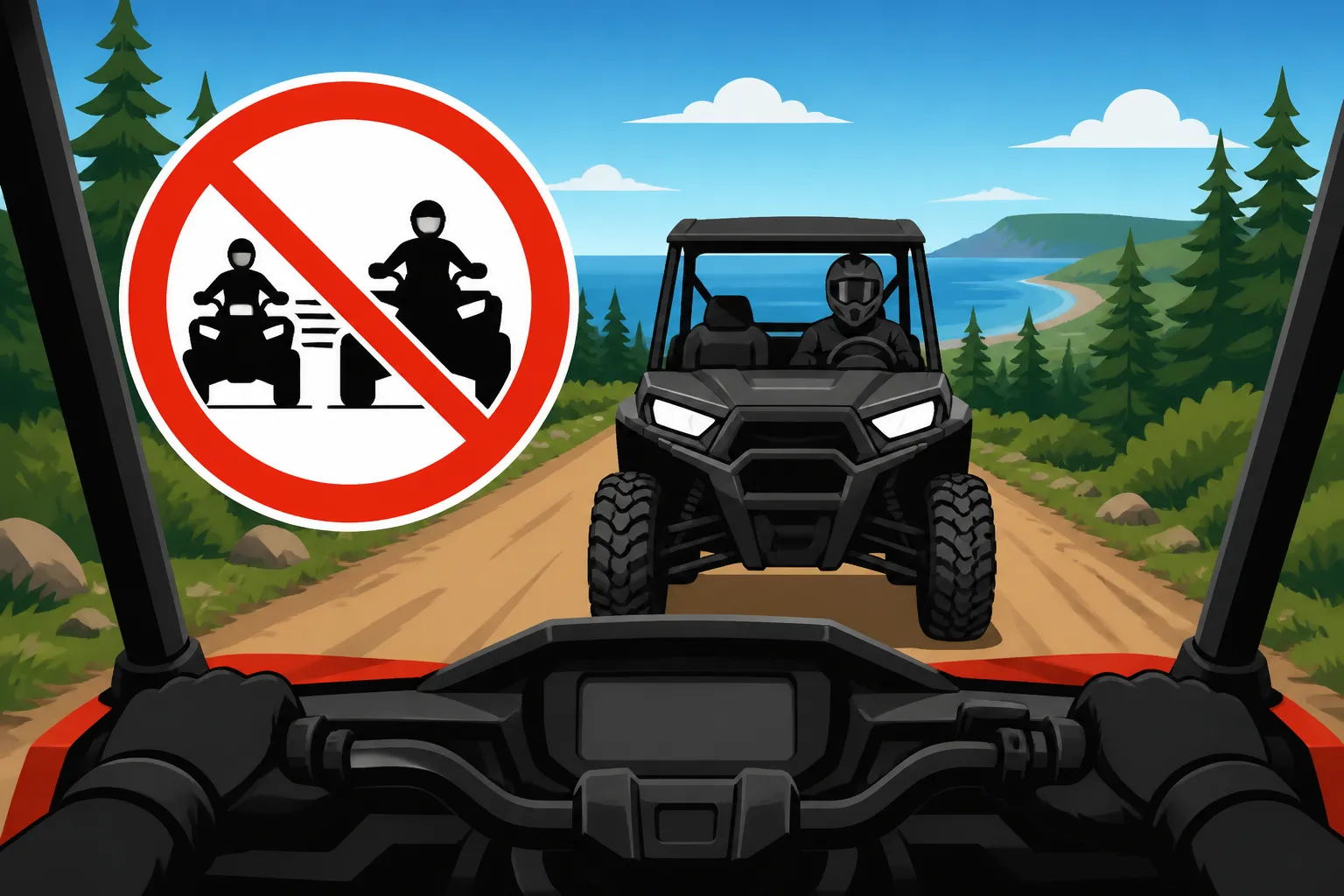
When you’re out on a road trail, it can be tempting to want to push a little harder, especially if you’re riding with a group or come across someone going a bit slower. But on Nova Scotia's designated road trails, there’s a very clear directive: [Nova Scotia Riders Must Not Pass]. This isn’t just a suggestion; it’s a foundational rule designed for everyone’s safety, and understanding why it's in place is key to respecting it.
Why Single File Riding is Non-Negotiable
The core reason for the "no passing" rule is tied directly to the nature of these road trails. They are, by definition, public roads that have been designated for shared use, often narrow, and sometimes with limited visibility. Many of these routes are single-lane, sometimes winding through rural areas, or even passing through residential zones. Allowing machines to pass would immediately introduce significant risks that simply aren't present on wider, dedicated off-road trails. Think about it: an off-highway vehicle, whether it’s a nimble ATV or a wider UTV, requires a certain amount of space to maneuver. When you’re trying to pass another machine, you’re either infringing on the oncoming lane (if it exists and is open to traffic), moving too close to the shoulder where hazards like ditches or soft ground might be, or simply not leaving enough room for error.
Moreover, the act of passing can be startling to other riders, pedestrians, or even local traffic sharing the road, leading to unpredictable reactions. Maintaining a single file, orderly procession helps keep the overall flow predictable and reduces the chances of sudden movements, collisions, or machines being forced off the trail. It's about creating a harmonious and safe environment for all users, whether they are fellow riders, cyclists, or even the odd local vehicle accessing their property.
Scenarios Where Passing Becomes a Hazard
Imagine you're on a beautiful, winding stretch of road trail near Port Hood, enjoying the scenery, and you come up behind another rider who’s taking their time. Your instinct might be to speed up and get around them. However, this is precisely where the rule becomes crucial. On these roads, hidden driveways, blind curves, or even pedestrians enjoying a walk can appear without warning. If you’re in the act of passing, your field of vision is restricted, your reaction time is compromised, and you’re potentially putting both yourself and the other party at extreme risk.
Consider a scenario where the trail runs alongside a ditch or an uneven shoulder. A sudden swerve while passing, perhaps due to an unexpected bump or an approaching vehicle, could easily send one of the machines into a rollover. Even if there's no oncoming traffic, the dust kicked up by a passing machine can temporarily blind the rider being passed, creating a hazardous situation for them. Furthermore, many road trails might have varying surfaces, from smooth asphalt to gravel and packed dirt, often with potholes or loose material. Attempting to pass on these unpredictable surfaces, especially at higher speeds, drastically increases the risk of losing control. The rule is there to prevent these kinds of avoidable accidents and ensure everyone arrives safely at their destination, whether they're heading for a scenic lookout or just to the next fuel stop.
General Conduct and Safety on Shared Road Trails
Beyond the "no passing" rule, there are several other critical regulations that riders must adhere to when operating their machines on Nova Scotia’s designated road trails. These rules collectively contribute to a safe and enjoyable experience for all. Familiarizing yourself with them is just as important as knowing [Nova Scotia's 25 km/h Road Trail Limit].
Yielding and Right-of-Way Etiquette
One of the most important aspects of sharing any roadway, even a designated road trail, is understanding who has the right-of-way. On Nova Scotia's road trails, off-highway vehicle riders [Nova Scotia Riders Yield to Every Vehicle]. This means if you encounter a car, truck, or even a bicycle, you must slow down, move to the side of the road, and allow them to pass safely. These trails are not exclusive to OHVs; they are often public roads or pathways that grant access to local residents and other forms of traffic. Assuming you have priority can lead to dangerous confrontations or even collisions.
Think of it this way: you're a guest on these roads. The privilege of riding there comes with the responsibility of being courteous and safety-conscious. This means always being aware of your surroundings, listening for approaching vehicles, and being prepared to pull over. It's not just about avoiding a ticket; it's about maintaining good relationships with the communities these trails pass through and ensuring the continued access that we, as riders, value so much. A polite nod and a clear demonstration of yielding go a long way in fostering positive perceptions of the OHV community.
Maintaining Safe Speeds and Distances
The speed limit on most Nova Scotia road trails is a strict 25 km/h. This limit might seem low to some, especially if you're used to open fields or wider forest trails, but it's deliberately set for safety. These roads are often narrower, might have blind spots, and are shared with various users, as we just discussed. Maintaining a consistent, safe speed allows you ample time to react to unexpected obstacles, other vehicles, or pedestrians. It also significantly reduces the severity of any potential accident.
Equally important is maintaining a safe following distance from the machine in front of you. This isn't just common sense; it’s a crucial safety practice. A good rule of thumb is to leave enough space so that you can safely stop if the rider ahead of you suddenly brakes or encounters an issue. This buffer zone is essential because off-highway vehicles, particularly ATVs and UTVs equipped with rugged tires, don't always brake like a car on pavement, especially on loose gravel or dirt sections. Furthermore, a proper following distance helps reduce dust for the rider behind you and gives both of you better visibility of the path ahead. Accessories like a wider rearview mirror from a brand like SuperATV can significantly improve your awareness of who is behind you and help you maintain proper spacing within your group.
Essential Equipment and Visibility Requirements
When riding on road trails, your machine isn't just an off-roader anymore; it's sharing space with road-legal vehicles. This means certain equipment and visibility standards must be met to ensure you can be seen and heard effectively. [Nova Scotia Lighting Requirements] are paramount: your machine must have working headlights and tail lights, and these need to be on at all times, even during daylight hours, to maximize your visibility. Reflective gear, while not always explicitly mandated for adults, is a smart addition, especially when riding in areas with dappled sunlight, coastal fog, or near dusk.
Beyond lights, ensure your braking system is in top condition and your tires are suitable for mixed surfaces. While an aggressive mud tire might be great for deep bogs, it might not offer the best traction or handling on pavement or hard-packed gravel, potentially affecting your stopping power. Think about the safety of your passengers too. [Nova Scotia Passengers Must Be 9 or Older] and must wear appropriate helmets, just like the operator. Investing in quality equipment, from your helmet (which must be DOT or CSA approved, or meet Snell or BSI standards as per [Nova Scotia Helmet Standards Accepted]) to functional lights and brakes, is an investment in your safety and the safety of others on the trail. A good set of bright, reliable LED lights, perhaps an upgrade from SuperATV, can make a huge difference in being seen by other users, especially if you find yourself on a road trail at dawn or dusk.
Consequences of Non-Compliance on Road Trails
While the thought of exploring more of Nova Scotia's beautiful landscapes on your machine is exciting, ignoring the rules for road trails carries significant risks and penalties. These aren't just minor inconveniences; they can have serious financial, legal, and community impacts. It's crucial to understand that simply having your machine registered and insured, as required by [Nova Scotia Requires Registration and Insurance], is only the first step. You must also adhere to the operational rules.
Fines and Legal Ramifications
Let's not sugarcoat it: breaking the rules on Nova Scotia's road trails can hit your wallet hard. The penalties for infractions like passing when prohibited, exceeding the 25 km/h speed limit, or failing to yield are not trivial. [Nova Scotia Ticket Costs for Riders] can quickly add up, and in some cases, you could face additional [Nova Scotia Court Costs for an OHV Citation]. These aren't just warnings; they are tangible consequences designed to deter unsafe behaviour and maintain order.
Beyond monetary fines, repeated or severe violations could potentially lead to more serious legal ramifications, including the suspension of your driving privileges for off-highway vehicles, or even confiscation of your machine in extreme cases. Law enforcement officers actively patrol these areas to ensure compliance, and they are well-versed in the specific regulations outlined in the [Nova Scotia Road Trails Act Explained]. It's a harsh reality, but an unregistered or uninsured machine, or one being operated recklessly, can lead to severe fines, starting with a [Nova Scotia Minimum Fine of $250] for operating an unregistered machine, which really puts things into perspective about taking these rules seriously.
Impact on Trail Access and Community Relations
Perhaps even more important than the individual penalties is the broader impact that non-compliance has on the entire OHV community. The privilege of using road trails in Nova Scotia is relatively new, having expanded significantly since the [Nova Scotia's 2018 Road Trail Pilot]. This access was hard-won through advocacy and cooperation, and it relies heavily on responsible rider behaviour. Every instance of an OHV rider ignoring speed limits, passing unsafely, or disturbing local residents erodes public trust and gives ammunition to those who oppose OHV access on public lands.
If there are too many complaints or incidents stemming from irresponsible riding, municipalities and the province could easily reconsider their stance on these shared trails. We've seen it happen in other regions where misuse leads to closures, and it’s a risk we face here. Maintaining a positive image for the OHV community means being good neighbours, respecting property, and following the rules. This includes being mindful of [Nova Scotia Noise Limits on a Machine], especially when passing through residential areas, even if you’re adhering to the speed limit. Every rider has a role to play in protecting our access to these incredible trails, ensuring that initiatives like [Nova Scotia's 2025 Road Trail Expansion] can continue to grow and benefit everyone. By investing in accessories that help you be a more responsible rider, like a quiet exhaust system or a robust horn from SuperATV to alert others, you’re contributing to a positive riding future.
Here's a quick summary of key rules for Nova Scotia Road Trails:
| Rule Category | Specific Regulation | Why It Matters |
|---|---|---|
| Passing | No passing other vehicles or OHVs. Travel single file. | Prevents collisions, maintains order, reduces risk. |
| Speed Limit | Maximum 25 km/h. | Allows reaction time, safer for shared use. |
| Yielding | Yield to all other traffic (cars, bikes, pedestrians). | Prioritizes other road users, prevents conflict. |
| Headlights/Taillights | Must be on at all times, day or night. | Enhances visibility for all users. |
| Driver's Licence | Full driver's licence required. No learner drivers. | Ensures operator competence and road awareness. |
| Helmet Law | Approved helmet mandatory for all riders. | Critical for head protection and safety. |
| Passenger Age | Passengers must be 9 years or older. | Ensures passenger can safely brace and understand risks. |
| Registration/Insurance | Mandatory for all OHVs on road trails. | Legal requirement, provides financial protection. |
Disclaimer
This article is for general informational purposes only and does not constitute professional advice. Laws, prices and regulations vary by location and change over time. Consult a qualified professional for guidance on your specific situation.