Gates Across a Nova Scotia Woods Road
It's incredibly frustrating, isn't it? You're out for a beautiful ride on your ATV or UTV, cruising along what you thought was a perfectly legitimate woods road, only to encounter a formidable gate blocking your path. It can instantly deflate your adventurous spirit, leaving you wondering if you've done something wrong or if you're suddenly trespassing. This guide aims to clear up the confusion around gates on Nova Scotia woods roads, helping you understand why they're there, what your responsibilities are, and how to navigate these situations respectfully and legally.
The Reality of Woods Roads in Nova Scotia
Many of us envision Nova Scotia's vast network of woods roads as open territory, free for exploration on our off-highway vehicles. The truth, however, is far more complex. Unlike dedicated public trails or highways, most woods roads are privately owned and maintained, primarily by forestry companies, woodlot owners, or even individual landowners accessing their properties. This fundamental difference is often the root cause of confusion and, subsequently, the appearance of gates.
These roads aren't just for recreation; they are vital arteries for resource industries and private citizens. Loggers use them to access timber, farmers use them for agricultural purposes, and private landowners depend on them to reach their cottages or hunting camps. When you encounter a gate, it's rarely there just to be an inconvenience. It's usually serving a very practical purpose for the owner of that land.
Who Owns the Woods Roads?
The vast majority of woods roads you'll encounter throughout Nova Scotia are on private land. This is a crucial distinction that many riders, especially those new to the province or new to the sport, don't always grasp. While some may look like public thoroughfares, complete with gravel surfaces and well-maintained ditches, their ownership status is often private. This means that access is not a right; it's typically a privilege, often requiring explicit permission.
Large forestry companies, such as J.D. Irving or Northern Pulp (even with its current operational status), own extensive tracts of land and the roads that traverse them. So do smaller, local logging operations and countless private woodlot owners. Even seemingly abandoned logging roads might still be part of a private land parcel. Understanding this helps frame why gates are necessary for these landowners to manage their property.
Why Are Gates Necessary?
Landowners, whether they're individuals or large corporations, have a legitimate need to control access to their property. This isn't about being exclusionary for the sake of it; it's about protecting assets, ensuring safety, and managing natural resources. Gates serve several critical functions that benefit the landowner and, indirectly, the responsible riding community.
One primary reason for gates is to prevent unauthorized access and theft. Unfortunately, rural areas can be targets for illegal dumping, timber theft, or the pilfering of equipment and fuel. A locked gate is a significant deterrent. Another reason is safety: active logging operations can be incredibly dangerous, with heavy machinery, falling trees, and truck traffic. Gates are often installed to keep the public out of these active work zones, protecting both riders and workers. Furthermore, gates help manage environmental impacts, prevent damage to roads during wet conditions, and control hunting or fishing access.
Understanding Different Types of Gates
Not all gates are created equal, and understanding the nuances of what you're seeing can help you determine the best course of action. It's rarely a good idea to make assumptions about access, especially if a gate looks "easy" to go around or if there's no clear signage. Your first instinct should always be to respect the barrier and assume it's there for a good reason.
You might encounter anything from a simple cable strung across a path to a formidable steel structure with multiple locks. Each type sends a slightly different message about the landowner's intent, but the core principle remains: a gate means controlled access. Even a gate that appears to be broken or left open should be treated with caution, as it could be temporarily open for specific work and still denotes private property.
Closed Gates and What They Imply
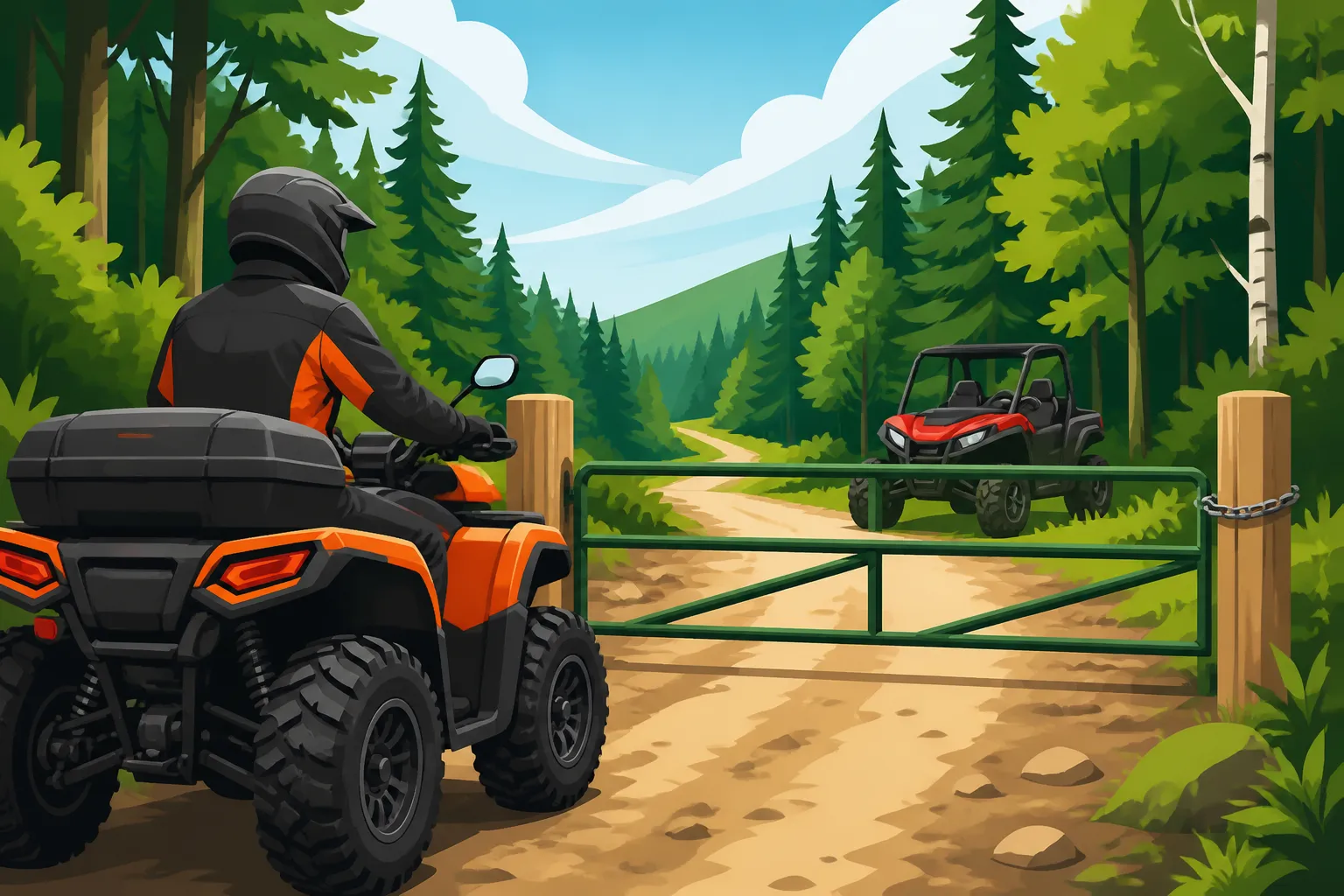
A closed gate, especially one that is locked or reinforced, is a clear signal: do not enter. This is private property, and access is restricted. The reasons can vary widely: perhaps there's active logging, sensitive environmental work, or simply a desire for privacy from the landowner. Disregarding a closed gate, whether by attempting to go around it, cutting a lock, or forcing it open, is not only illegal but also incredibly disrespectful to the landowner.
If you encounter a closed gate, the safest and most responsible action is to turn around. There are no shortcuts here. Attempting to bypass a closed gate can lead to charges under [Nova Scotia Trespass Law for Riders], significant fines, and potential damage claims. It's simply not worth the risk, and it gives all ATV and UTV riders a bad name. Some riders might invest in robust winches, like those offered by SuperATV, for self-recovery on legitimate trails, but these are certainly not for forcing gates.
Open Gates and Ambiguity
An open gate can be a bit more ambiguous, and this is where riders sometimes get into trouble. While an open gate might suggest public access or temporary access, it doesn't automatically mean you have permission to enter. It could be open because workers are in the area, or the landowner simply hasn't gotten around to closing it yet. Without clear signage indicating public access (like a "Public Access Welcome" sign or official trail markings), you should still operate under the assumption that it's private land.
If you're unsure, it's always best to err on the side of caution. If there's no explicit permission, treat it as if it were closed. Riding through an open gate on private land without permission is still trespassing. Many landowners leave gates open during periods of active work but expect them to be closed once operations cease. It's a tricky situation, and responsible riders need to be discerning.
| Gate Type | Appearance | Common Implications | Recommended Action |
|---|---|---|---|
| Locked/Reinforced | Heavy chain, multiple locks, solid steel | No Public Access, Private Property, Active Operations, Security | Turn Around, Do Not Enter, Seek Permission if absolutely needed |
| Simple Cable/Chain | Often a single chain, sometimes unlocked | Private Access, Temporary Closure, Boundary Marking, Deterrent | Turn Around, Do Not Enter, Assume Private Access |
| Open Gate | Gate left ajar, no visible lock | Temporary Access, Active Work, Oversight, Still Private Property | Proceed with Extreme Caution, Assume Private, Look for Signage |
| Signage Present | "No Trespassing," "Private Road," "Trail" | Explicit Instruction from Landowner or Trail Association | Follow Signage Instructions Precisely |
Navigating Gated Woods Roads Responsibly
The key to a positive experience when encountering gates on Nova Scotia woods roads is respect, due diligence, and adherence to the law. Responsible riding is about ensuring continued access for everyone, and that starts with honouring the rights and wishes of landowners. Before you even head out, a little research and preparation can save you a lot of headaches on the trail.
Remember, the goal isn't just to find a way around the gate, but to understand if you should even be there in the first place. This often means doing your homework before you leave the driveway, especially if you're planning a route through unfamiliar territory. Relying on local knowledge or trail apps can be invaluable, but always verify information if possible.
Seeking Permission and Respecting Boundaries
The golden rule for private land is simple: ask permission. If you want to ride a woods road that appears to be on private property and is gated, your first step should be to identify the landowner and seek their consent. This isn't always easy, especially for large forestry tracts, but it's the only way to legally gain access. Local ATV clubs often have established relationships with landowners and can sometimes facilitate access or provide guidance on designated trails. You might find a lot of information through [Nova Scotia ATV Trails: The ATVANS Network].
When permission is granted, treat it as a privilege, not a right. Abide by any conditions the landowner sets, such as specific hours of operation, speed limits, or restrictions on certain areas. If you encounter a gate that you do have permission to pass through, ensure you close and lock it behind you if it was locked initially. Leaving gates open can compromise the landowner's security and jeopardise future access for everyone. Be mindful of your impact, and follow general [Nova Scotia Trail Etiquette Locals Expect] to build goodwill.
What to Do When Access is Denied or Unavailable
Sometimes, despite your best efforts, you won't be able to obtain permission, or the landowner simply doesn't allow recreational use of their roads. In these instances, you must respect their decision. It can be disappointing, especially if it cuts off a planned route, but their property rights are paramount. Remember, you have no inherent right to access private land.
If you find a closed gate and cannot identify the landowner or gain permission, the only option is to turn around and find an alternative route. This might mean rerouting your ride entirely or exploring official club trails. Getting creative with your navigation and having backup plans is a crucial part of responsible off-highway vehicle operation in Nova Scotia. It's a good reminder that not every path is meant for your machine. When in doubt, always default to finding a legal, open route rather than risking trespassing.
Legal Ramifications and Rider Responsibility
Ignoring gates or trespassing on private woods roads in Nova Scotia carries significant legal consequences. These aren't just minor infractions; they can result in substantial fines, legal proceedings, and even the confiscation of your machine. Beyond the legal penalties, irresponsible behaviour erodes trust between landowners and the riding community, making it harder for everyone to enjoy the trails.
Every rider has a responsibility to understand and abide by the laws governing off-highway vehicle use in the province. This includes respecting private property boundaries and understanding the purpose of gates. Education is your best defence against accidentally breaking the law.
Trespass Law and Penalties
Under Nova Scotia law, riding on private land without permission is considered trespassing. The consequences can be quite severe. A landowner has the right to report trespassers to the police, who can then issue tickets or lay charges. Fines for trespassing can be considerable, and repeated offences or malicious damage (like cutting a lock) can lead to even harsher penalties. In some cases, your ATV or UTV could be impounded, and you might be liable for any damages caused to the property.
It's not just about getting caught; it's about the principle. When a gate is bypassed or damaged, it sends a clear message to the landowner that their property rights are not being respected. This can lead to increased restrictions, more gates, or even the permanent closure of what might have once been accessible informal routes. Ignorance of the law is not an excuse, and every rider is expected to know where they are permitted to ride.
The Role of ATVANS and Local Clubs
The All-Terrain Vehicle Association of Nova Scotia (ATVANS) plays a vital role in advocating for riders and establishing a network of authorized trails. Many of these trails are developed through agreements with private landowners, forestry companies, and the provincial government. By joining ATVANS and local clubs, you gain access to thousands of kilometres of designated trails and contribute to the maintenance and expansion of this network. [Nova Scotia Trail Permits From ATVANS] are essential for accessing these club trails.
These clubs often act as intermediaries, fostering relationships with landowners and helping to manage access. When you encounter a gate on an official ATVANS trail, it's usually marked and managed in a way that provides clear guidance for riders. Supporting these organizations is one of the best ways to ensure that responsible access to Nova Scotia's beautiful backwoods continues for generations to come. They work tirelessly to maintain trails, often using specialized equipment and components, perhaps even heavy-duty parts from a company like SuperATV, to keep the routes clear and safe.
Protecting Access for the Future
The future of off-highway vehicle riding in Nova Scotia hinges on the collective responsibility of its riders. Every time a gate is disrespected, a private woodlot is damaged, or trespassing occurs, it jeopardizes the goodwill and working relationships that have been built over years. It's a delicate balance, and maintaining it requires constant vigilance and education.
By adhering to best practices, being informed, and actively participating in the riding community, we can ensure that future generations continue to enjoy the incredible natural beauty and adventurous spirit that Nova Scotia's woods roads offer. It’s about being a part of the solution, not adding to the problem.
Becoming an Ambassador for Responsible Riding
Consider yourself an ambassador for the sport every time you head out. Your actions reflect not just on you, but on all ATV and UTV riders. This means leading by example: respecting private property, staying on designated trails, practicing [Leaving Woodlot Gates Exactly as You Found Them], and cleaning up any litter you encounter. If you see someone behaving irresponsibly, gently educate them if it's safe to do so, or report serious infractions to the appropriate authorities.
Getting involved with a local ATVANS club is another powerful way to support responsible riding. Clubs are always looking for volunteers for trail maintenance, signing, and community outreach. By lending a hand, you directly contribute to the sustainability of the trail network and help ensure that legal, managed access remains a cornerstone of the Nova Scotia riding experience. You might also learn valuable insights into [Nova Scotia Private Woodlot Permission] through these connections.
Advocacy and Education
Beyond individual actions, supporting advocacy efforts is crucial. ATVANS works with government bodies and landowners to negotiate access agreements and influence policy. By staying informed about proposed changes to off-highway vehicle regulations and participating in public consultations, you can help shape the future of riding in the province. Education campaigns are also vital to inform both riders and non-riders about responsible practices, the benefits of the sport, and the importance of respecting property rights.
When you encounter a gate on a woods road in Nova Scotia, take a moment. Understand why it's there. Respect the landowner's rights. Make the responsible choice. Your actions today will directly impact the riding opportunities available tomorrow.
Disclaimer
This article is for general informational purposes only and does not constitute professional advice. Laws, prices and regulations vary by location and change over time. Consult a qualified professional for guidance on your specific situation.