Reporting an ATV Collision to Nova Scotia Police
A collision on an ATV trail or road can leave you shaken, muddy, and unsure whether to call 911, the local police, or your insurer first. This guide explains what to do after an ATV or UTV crash in Nova Scotia, when to contact police, what information to collect, and how to protect your safety and your account of what happened.
What to do immediately after an ATV or UTV collision
Get people out of danger and check for injuries
Stop riding and check yourself, passengers, and anyone else involved. If someone is seriously hurt, trapped, unconscious, having trouble breathing, or in immediate danger, call 911. Give the dispatcher your location as clearly as you can. On a remote trail, useful details might include a trailhead, road crossing, nearby community, posted trail marker, or GPS coordinates from your phone.
Do not move a seriously injured person unless leaving them where they are creates an immediate danger, such as fire or traffic. Keep others back from unstable machines, leaking fuel, electrical hazards, or a trail where approaching riders may not see the crash. If someone may have a head, neck, or back injury, avoid shifting them while you wait for help.
If nobody appears badly hurt, take a moment to check again before deciding the incident is minor. Pain and shock can make injuries harder to notice at first. A passenger who says they are fine may become dizzy or develop pain after the adrenaline wears off. When you are uncertain, call emergency services or seek medical care rather than letting the need to move a damaged machine rush the decision.
Make the area safer without disturbing important evidence
If it is safe to do so, warn approaching riders and keep people away from the machines. Do not stand in a roadway or blind corner to direct traffic. Ask another adult to help if you can do so without putting them in danger. On a narrow trail, move people to a safe place while leaving the machines where they are, unless they create an immediate hazard or police or emergency responders direct you to move them.
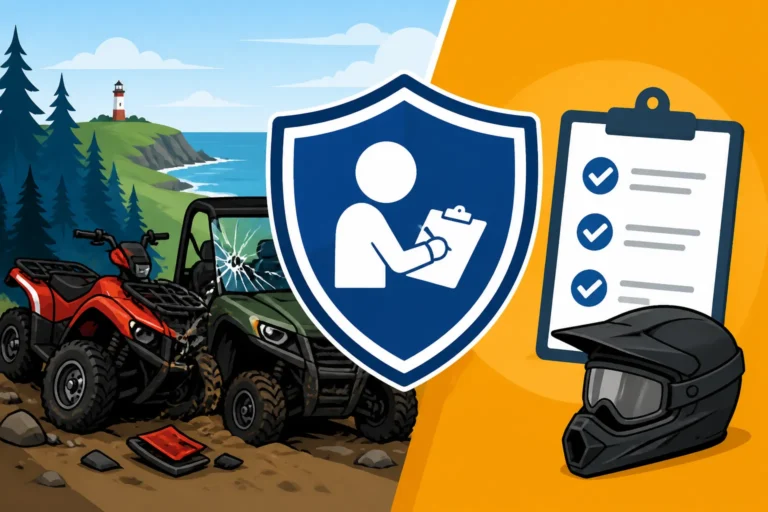
Once urgent safety needs are handled, avoid cleaning up or rearranging the scene before you have documented it. Take photographs from a distance and close up: the trail or road, the machines’ positions, visible damage, skid marks, debris, signs, and any conditions that may matter, such as loose gravel or poor visibility. Do not put yourself in traffic or on unstable ground to get a better picture.
If a machine must be moved to prevent another crash, make a quick note of its original position if possible, then photograph the scene after moving it. Tell responding officers that you moved it and why. That simple explanation can help prevent confusion later about what the scene looked like immediately after the collision.
Contact police and ask how the incident should be reported
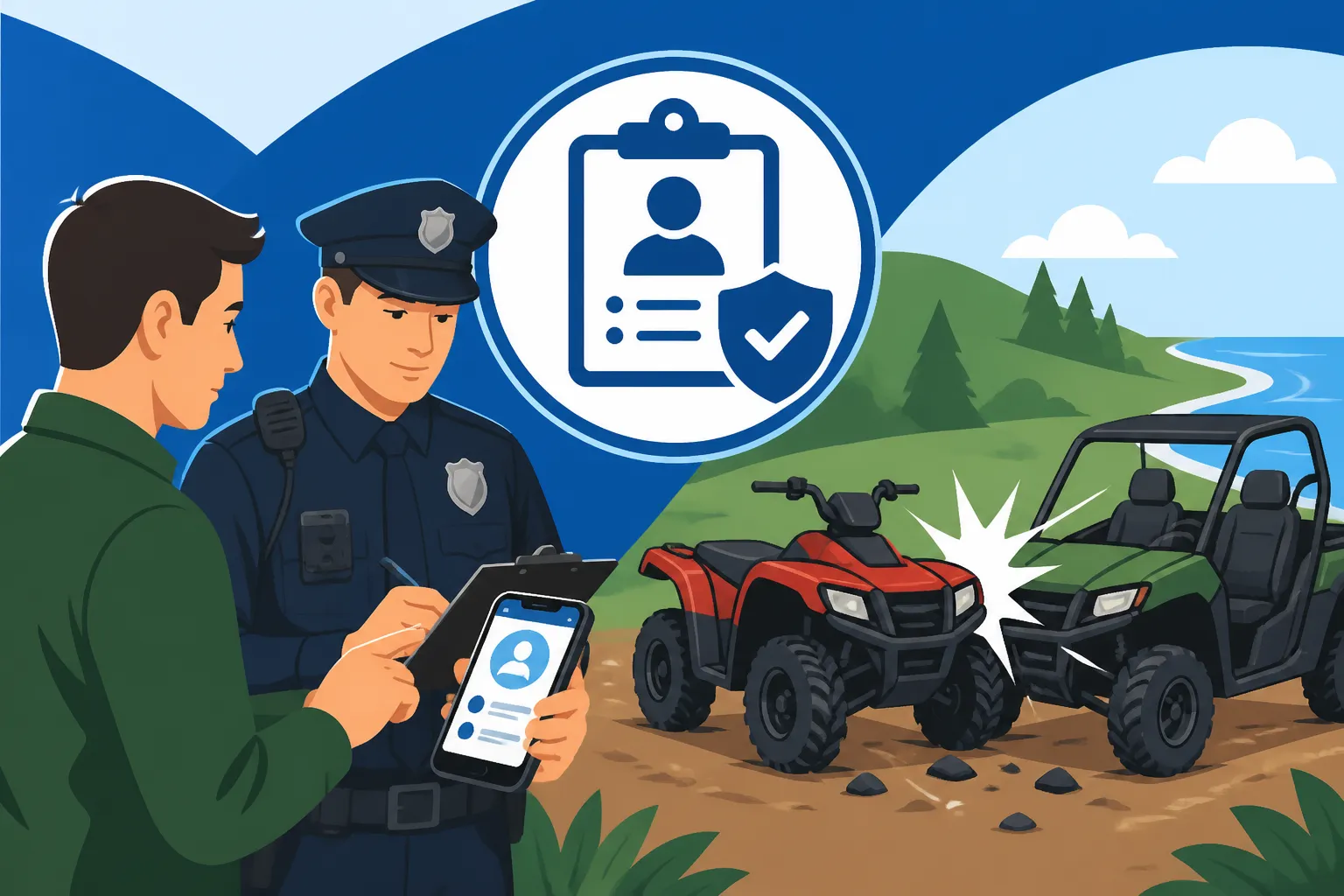
Call 911 when someone needs urgent help, a hazard is still present, or the situation requires an immediate police response. For a collision without an emergency, contact the appropriate police service using its non-emergency number and explain where the crash happened, whether anyone is injured, and whether the machines can be moved safely. If you are unsure which police service has jurisdiction, ask the dispatcher or local authorities to direct you.
Nova Scotia has rules requiring certain collisions to be reported. The right response can depend on what happened, the location, injuries, property damage, and whether the incident involved a public road or road trail. Do not decide that a collision is “too small” to report based only on how the machines look. If there is an injury, a hit-and-run, suspected impairment, a serious hazard, or uncertainty about the reporting requirement, contact police and ask what to do.
An officer may attend, or you may be directed to make a report another way. Ask for the incident or occurrence number, the officer’s name or identifying information where available, and instructions for obtaining a copy of any report. For more detail on the legal duty, see [Nova Scotia Accident Reporting Rules].
When police should be contacted
Collisions involving injury, danger, or possible impairment
Call 911 for a serious injury or immediate danger. If a rider appears impaired, do not let them continue riding. Avoid arguing or attempting to physically restrain someone unless there is an immediate threat and you can act safely. Tell the dispatcher what you observed, where the person and machine are, and whether they are trying to leave.
If you suspect alcohol or drugs played a part, stick to what you actually saw or heard. For example, describe unsteady movement, confusion, an admission of drinking, or unsafe operation rather than presenting a guess as a proven fact. Police can assess the situation. The same careful approach applies if you suspect speeding or reckless riding: report observable actions and let investigators decide what they mean. Related rules are covered in [Nova Scotia Impaired Riding Penalties].
Injury can be easy to underestimate after a rollover or a forceful impact. A helmet, protective clothing, and the fact that a rider walked away do not prove there is no injury. If a person feels faint, confused, unusually sleepy, numb, or increasingly sore, treat that as a reason to get medical help. Do not let pressure from other riders to “keep moving” replace a proper assessment.
Collisions on roads and designated road trails
A collision on a road or designated road trail can involve other road users, traffic hazards, and rules that differ from riding on a private property or remote trail. Keep clear of moving traffic and do not assume an ATV is allowed to remain on a road simply because a crash happened there. If the machine is blocking traffic or creates a hazard, tell the dispatcher and follow instructions.
Nova Scotia’s road-trail framework has specific operating requirements, including rules about where and how machines may be used. A crash does not make an otherwise restricted route legal, and a road-trail location does not remove the need to report a serious incident. If the collision happened while crossing a highway or near an intersection, describe the exact location and direction of travel. You can review related requirements in [Nova Scotia Requires Registration and Insurance] and [Nova Scotia Rules for Crossing a Highway].
Be especially careful about continuing the ride after a collision on a public route. A damaged steering component, tire, light, or brake may not be obvious in poor light or bad weather. If the machine is not safe to operate, arrange a tow or other recovery rather than riding it away. If it must be moved out of a dangerous spot, tell police what was damaged and what you did.
Hit-and-run or damage to someone else’s property
If the other rider leaves, do not chase them. Chasing can create another crash and may take you away from an injured person or the scene. Note the direction they went, the machine’s appearance, any visible registration or identifying details, and the time. Share that information with police as soon as it is safe.
If an ATV or UTV damages a parked vehicle, fence, gate, building, trail structure, or other property, make a reasonable effort to identify and contact the owner. Photograph the damage and surrounding area, and do not leave without addressing the incident. If you cannot locate the owner, or there is significant damage or a safety concern, contact police and ask how to proceed.
Do not promise to pay a specific amount or sign a statement you do not understand while you are shaken. You can exchange information and cooperate without deciding fault or the final cost at the trail. If the other party is confrontational, keep a safe distance and let police handle a dispute that feels unsafe.
Information to gather and what to tell police
Details to record at the scene
When it is safe, write down the time, date, exact location, direction each machine was travelling, weather, visibility, and trail or road conditions. Record the names and contact details of the riders, passengers, witnesses, and property owners involved. Ask witnesses what they saw and whether they are willing to share their contact information; avoid coaching them or comparing accounts before they give their own version.
Photograph the machines, damage, scene, signs, trail markers, and any relevant conditions. Take pictures before removing damaged parts or loading the machines, when practical and safe. Keep original photos and notes rather than relying only on edited or shared versions. If your phone has a map pin or location history, save the location while you are still there.
Make a factual note of the sequence as you remember it, as soon as you can. Separate what you saw from what someone else told you. For instance, write “I saw the rear machine slide left on the gravel” rather than “the other rider caused the crash” if you did not witness the full sequence. Memory gets less reliable as time passes, especially when several people are discussing a frightening event.
Documents and insurance details
Exchange names, contact details, machine identifiers, and insurance information with the other parties where it is safe and appropriate. Keep your registration and insurance information available, but do not leave original documents unattended. If an officer asks to see documents, follow the request and ask how to provide anything you do not have with you. See [Carrying a Pink Card on the Trail] for more on carrying proof of insurance.
Registration, insurance, and a trail permit serve different purposes. Having a trail permit does not replace required insurance, and proof of insurance does not settle who was responsible for a collision. For related roadside questions, [Nova Scotia Equipment Checks by Officers] explains why riders should be ready to show required documents and equipment when asked.
Report the incident to your insurer promptly and follow its instructions about photographs, repairs, towing, and inspection. Do not assume a police report automatically starts an insurance claim, or that an insurer’s claim replaces any required police report. Keep receipts for towing, storage, and emergency costs, and save any messages or emails related to the collision.
How to describe what happened
When speaking with police, give a clear account in your own words. Start with where you were, what direction you were travelling, who was involved, and what happened immediately before and after impact. If you do not know an answer, say so. It is better to be precise about what you remember than to fill in gaps with a guess.
If you are injured, exhausted, or in shock, tell the officer. You can ask for time to collect your thoughts or clarify a question. Do not speculate about speed, distance, or fault if you did not measure or directly observe it. If you later remember an important detail, ask police how to add it to the report.
Police attendance and a collision report do not necessarily determine who is legally or financially at fault. An officer may document statements, scene conditions, injuries, and other available evidence. Insurers and other decision-makers may consider additional information. If you receive a ticket and disagree with it, the process for challenging it is different from correcting or supplementing a collision report; see [Disputing an ATV Ticket in Nova Scotia].
After the scene: medical care, machine damage, and follow-up
Get checked and keep a record of symptoms
Seek medical attention when an injury is suspected, symptoms worsen, or you are unsure whether it is safe to wait. A collision can cause pain that appears hours later, particularly after a rollover or a hard landing. Note when symptoms began and how they change, and keep discharge instructions or other medical records.
Do not return to riding just because the machine can still move. A rider with a possible concussion, significant pain, or impaired coordination should not drive an ATV or UTV. Arrange a safe ride home and let someone know if symptoms change. If a new urgent symptom appears, contact emergency services or a medical professional.
Preserve the machine and document repairs
Before repairs, take clear photographs of the full machine and each damaged area. Keep damaged parts if practical, and save repair estimates, invoices, towing receipts, and records of any inspection. If the machine is financed or insured for physical damage, check with the relevant provider before authorizing major repairs; the provider may have steps you need to follow.
If aftermarket parts are involved, document their condition and any identifying details before they are removed. For example, if a SuperATV windshield, bumper, or other SuperATV component is damaged, photograph it in place and keep purchase or repair records if available. That is useful documentation, not a conclusion about who caused the collision. If the part must be replaced for safety, note why it was removed and keep the damaged component when feasible.
Avoid posting a detailed account or speculation about fault on social media while the matter is unresolved. Photos and messages can be shared beyond the people you intended to reach. Keep communications factual, and provide relevant information directly to police, your insurer, or a qualified adviser when requested. If a SuperATV part is part of the repair discussion, treat it like any other component: record the damage, part details, and repair work without assuming the brand itself determines liability.
A practical checklist for the next day
Within the next day, confirm that any required police contact or report has been completed, write down your incident number, and notify your insurer. Check in with everyone who may have been injured, including passengers who initially felt fine. Save photographs, witness contacts, medical paperwork, and receipts in one place so they are not scattered across texts and email.
If police told you to make a follow-up report, ask what information is needed and how to submit it. If you are contacted for another statement, be consistent and truthful, and distinguish clearly between what you observed and what you later learned. If you have concerns about a ticket, liability, or a serious injury claim, get appropriate professional advice rather than relying on informal comments from other riders.
| Situation | Practical next step |
|---|---|
| Serious injury or immediate danger | Call 911 and give the clearest location details you can |
| No emergency, but you are unsure whether the collision must be reported | Contact the appropriate police service and ask how to report it |
| Hit-and-run | Do not chase; record identifying details and contact police |
| Damage to another person’s property | Document it, try to contact the owner, and ask police what to do if the owner cannot be found |
| Machine is unsafe to ride | Keep it off the trail or road and arrange recovery |
| Possible injury develops later | Seek medical care and notify your insurer as appropriate |
Disclaimer
This article is for general informational purposes only and does not constitute professional advice. Laws, prices and regulations vary by location and change over time. Consult a qualified professional for guidance on your specific situation.