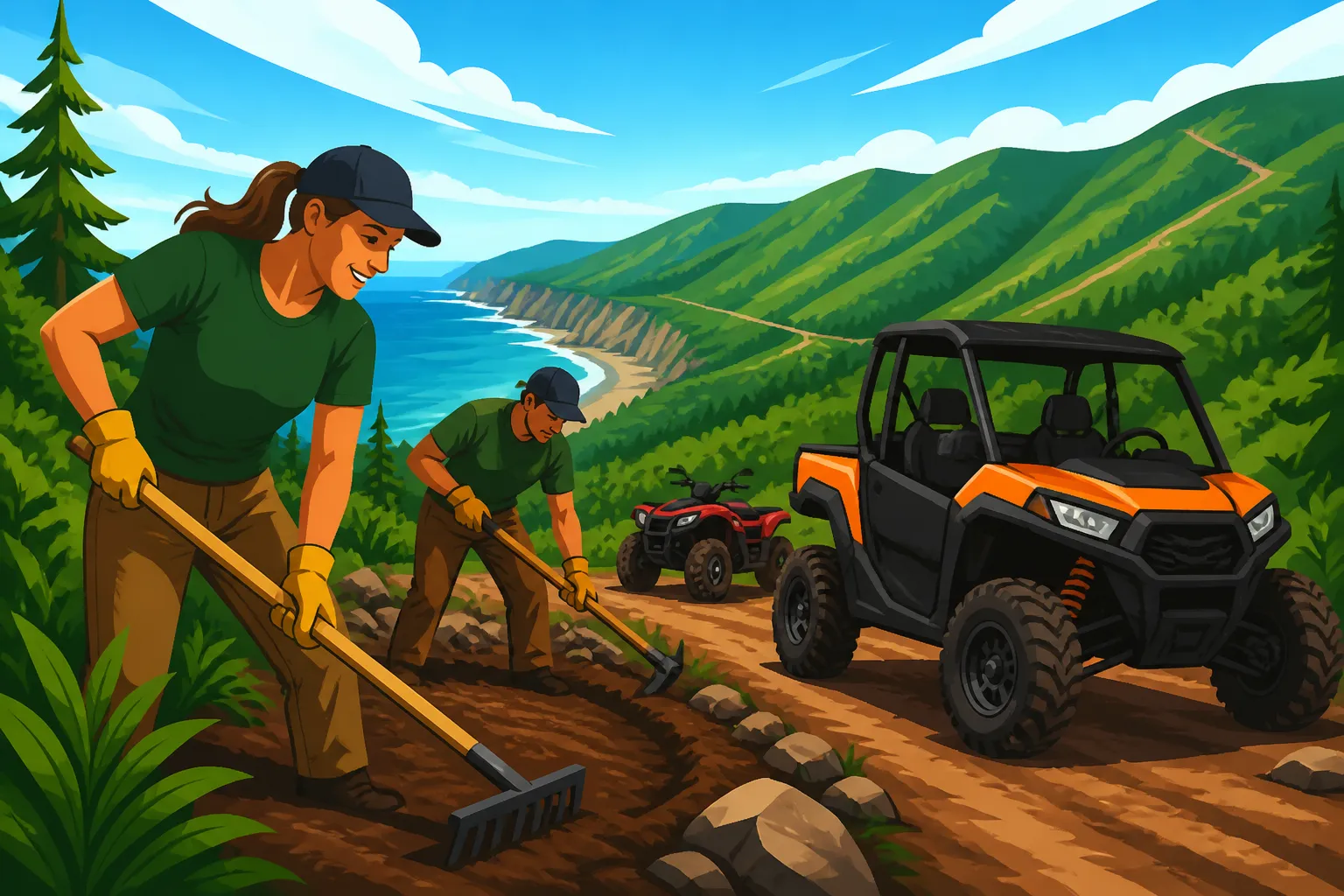
Joining a Trail Work Weekend in Cape Breton
A trail work weekend can sound simple until you wonder where to meet, what tools to bring, or whether you’re allowed to clear a fallen tree yourself. In Cape Breton, the safest and most useful first step is to connect with the club or group responsible for the trail. This guide explains how to find a workday, prepare, and help without creating extra work for volunteers.
Find the group responsible for the trail
Start with a local club, not a saw or shovel
Cape Breton’s riding corridors pass through a mix of land and trail settings, including former rail lines, wooded routes, and coastal areas. The group maintaining one stretch may not be responsible for the next. Before heading out, find the club or organization that manages the route you want to help with and ask whether it has a scheduled workday.
If you already have a particular area in mind, name it when you get in touch. For example, a volunteer interested in trails around Mabou or Inverness can ask which local group handles that corridor and whether it needs help there. Someone closer to Port Hawkesbury or Baddeck should make the same check rather than assume that one club’s workday covers the whole island.
A club may welcome people who are new to organized trail work, but its needs can vary. One weekend might involve brushing back vegetation, while another could focus on checking signs or repairing minor drainage problems. Ask what the group plans to do, where volunteers should meet, and whether the task is suitable for a first-timer. Finding a Member Club Near You in Nova Scotia can help you identify a place to start.
Check conditions and access before you go
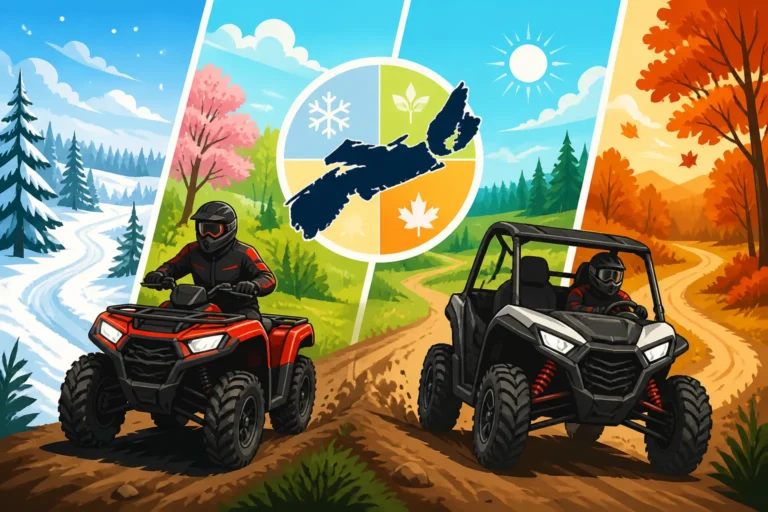
A route that looks passable on a map may be muddy, damaged, temporarily closed, or unsuitable for a particular task. Spring thaw, heavy rain, washouts, and storm damage can all change what a club can safely work on. Check in with the local group shortly before the workday, especially if you have to travel a long way across Cape Breton to attend.
Online maps are helpful for orientation, but they are not a substitute for a club’s current instructions. A mapping app such as onX Offroad can help you understand the general area and plan a route to a meeting point. Treat it as a navigation aid, not confirmation that a trail is open or that you have permission to enter every road or property shown. Ask the club to confirm the route, parking, and access arrangements.
If you are going to a trailhead for the first time, ask for a clear meeting location and any local directions. A pin on a map may lead to a road entrance, a parking area, or a nearby landmark rather than the exact place volunteers should gather. The club can tell you what to expect and whether parking is available. For planning, Nova Scotia Trailheads Worth Knowing and Nova Scotia Trail Conditions and Closures are useful related reads.
Get ready for the kind of work planned
Ask what to bring instead of guessing
The right preparation depends on the task. For a light brushing day, sturdy gloves, eye protection, boots with good traction, water, and weather-appropriate layers may be enough. A project involving tools, heavy material, or a damaged crossing needs a more specific plan. Ask the organizer whether tools are supplied, whether volunteers should bring anything, and what clothing or protective equipment is expected.
Do not bring a chainsaw, power tool, or vehicle with the assumption that you can use it. The organizer may have rules about who can operate equipment, what training is required, and how work is coordinated. A volunteer who arrives with a tool that has not been requested may add complications rather than help. If you have relevant experience, mention it when you register your interest, but let the work lead assign tasks.
Cape Breton weather can shift quickly, particularly in exposed or coastal areas. Pack for the forecast, but allow for changing wind, damp ground, and cooler conditions than you might expect in a sheltered town. If the group expects volunteers to work away from vehicles, ask whether you should bring extra water, food, a first-aid kit, or other personal supplies.
Know your limits and be clear about them
Trail maintenance is not a test of toughness. Tell the organizer if you have a physical limitation, are uncomfortable around particular tools, or need a task with lighter lifting. Many workdays include a mix of jobs, and useful help can mean carrying supplies, collecting litter, checking signs, or assisting with a simple task under direction.
If you are new, say so. A good organizer can explain the plan, pair you with someone experienced, and make sure you understand where volunteers are expected to work. Before starting, ask what to do if you find a hazard or discover that the planned area is more damaged than expected. Nova Scotia Club Volunteer Days and Nova Scotia Club Trail Maintenance offer more context on what organized trail work can involve.
It is also worth asking whether the workday is suitable for children or other family members. A trail project may involve sharp tools, uneven footing, moving equipment, or other hazards. Do not assume that a family-friendly ride or event is automatically appropriate for a work crew. The organizer should be able to explain age expectations and whether supervision is available.
| Before the workday | What to confirm |
|---|---|
| Location | Meeting point, parking, and route to the work area |
| Task | What the group plans to do and how strenuous it may be |
| Equipment | Whether tools are supplied and what protective gear to bring |
| Access | Whether volunteers need permission, a key, or an escorted entry |
| Conditions | Whether weather or trail damage could change the plan |
| Personal needs | Water, food, first aid, age suitability, and physical demands |
Work safely and leave the trail better
Follow the organizer’s plan
At the start of the day, listen to the briefing even if the task seems familiar. The group lead may explain property boundaries, hazards, tool use, where equipment should be stored, and which sections must remain untouched. A downed tree, blocked ditch, or damaged sign may look like an obvious fix, but it could involve a landowner’s instructions, buried infrastructure, or a larger repair that requires different equipment.
Stay within the work area the group has approved. Do not cut, dig, move signs, alter drainage, or clear a new line on your own. On a private woodlot, even well-intended changes can affect the landowner’s property or the agreed trail corridor. If a gate is part of the access route, follow the group’s instructions and leave it as you found it; Leaving Woodlot Gates Exactly as You Found Them explains why that small habit matters.
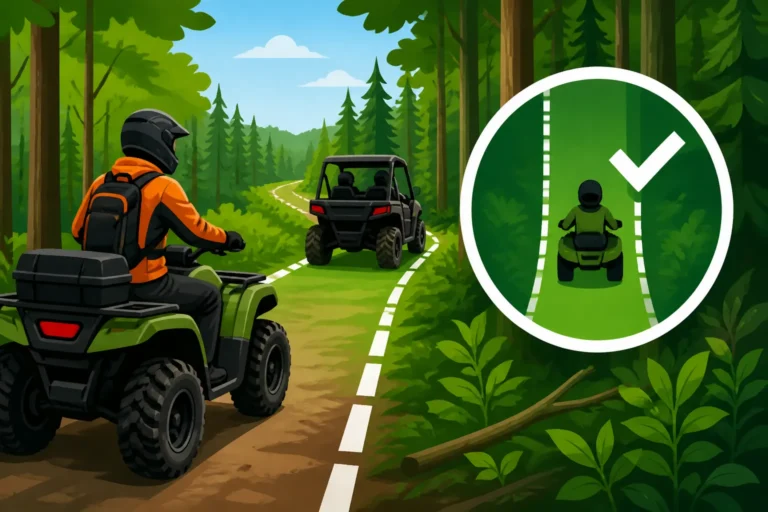
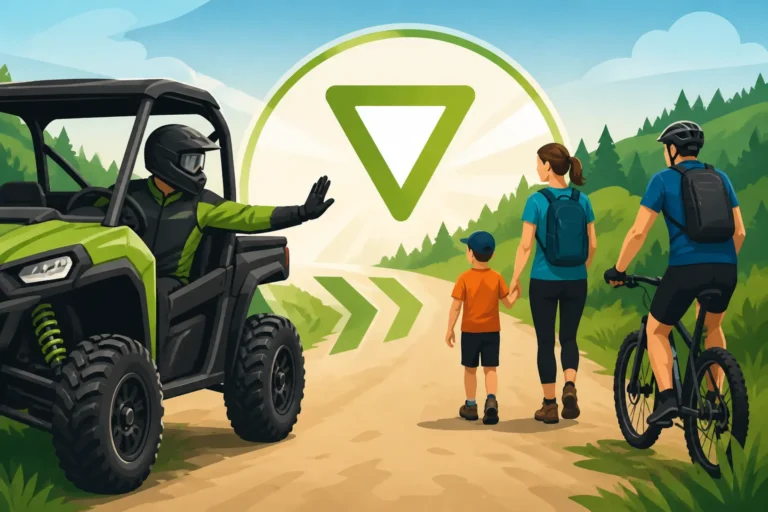
Take care around other trail users. A work crew may share a corridor with riders, walkers, cyclists, or people travelling through for other reasons. Follow any directions about signs, temporary closures, or keeping equipment clear of the route. If you’re riding to the work site, make sure the trail is open to your machine and that you have the required permits and documents. Nova Scotia Trail Etiquette Locals Expect is a helpful companion for sharing a corridor respectfully.
Report damage rather than improvising a repair
If you spot a washout, unstable bridge, exposed culvert, dangerous tree, damaged sign, or other concern outside the assigned task, tell the work lead. Give a clear description of the location and what you observed. A photo can help, provided you take it safely and do not step into a hazardous area to get a better view.
Avoid riding around a wet or damaged section to get past it. That can widen the trail, damage vegetation, or create a confusing new track for others. Do not remove a barrier or reopen a closed section because it appears usable. A closure may be there to protect riders, the trail surface, wildlife, or a landowner’s property. Reporting Trail Damage to a Nova Scotia Club and Nova Scotia Trails After a Hurricane cover what to do when a corridor needs attention.
Mapping apps can help you record where you are, but use them as a note-taking aid rather than an official reporting system. If you use onX Offroad to mark a general location, share that information with the responsible club and follow its preferred reporting process. Include nearby landmarks, the direction you approached from, and a brief description. That is usually more useful than sending an unexplained pin.
Make your first volunteer day count
Arrive ready to listen and communicate
Plan to arrive with enough time to park, check in, and hear the briefing. If you are running late or cannot attend, let the organizer know. Work leaders often divide people into small groups, coordinate tools, or arrange access with a landowner, so a quick message can save someone from waiting or reworking the plan.
During the day, ask when you are unsure. Confirm where debris should go, whether a section is finished, and what to do with tools when a task is complete. If conditions change or you feel unsafe, stop and tell the lead. You do not need to quietly struggle through a task to prove you are helpful.
The most valuable contribution is often consistent, careful work rather than a dramatic repair. Clearing a small area under direction, helping carry supplies, or staying alert to trail users can make the day easier for the whole crew. Respectful work also helps maintain trust with landowners and other groups who share the corridor.
Stay connected after the workday
Before leaving, ask whether there is a preferred way to report unfinished work, hazards, or lost equipment. If the group has another workday planned, ask how to hear about it. Trail maintenance is ongoing: a corridor can need brushing one season, drainage attention after a storm, and signage checks later on.
If you want to explore more areas, look for the local group responsible for each trail rather than assuming volunteer access or maintenance responsibilities transfer between regions. The Nova Scotia ATV Trail Map Downloads can help you get oriented, while the club can clarify what is open, who maintains it, and how to participate. Keep using onX Offroad, if it suits your planning, as one layer of information—not as a replacement for current directions from the organization responsible for the trail.
A good first workday is one where you arrive with realistic expectations, follow the crew’s lead, and leave the corridor in the condition the organizer intended. You do not need to know every trail or own specialist equipment to contribute. You do need to ask before acting, respect access rules, and communicate when something does not look right.
Disclaimer
This article is for general informational purposes only and does not constitute professional advice. Laws, prices and regulations vary by location and change over time. Consult a qualified professional for guidance on your specific situation.