Leaving a Trailhead Tidy After a Group Ride
A group ride can leave a trailhead looking like a yard sale: drink bottles on tailgates, muddy gloves on the ground, and straps scattered where everyone loaded up. A few minutes of cleanup helps keep Nova Scotia ATV and UTV trailheads welcoming, reduces hazards for the next visitors, and shows respect for the clubs and landowners who make riding possible.
Why trailhead cleanup matters after an ATV or UTV ride
A busy staging area affects more than your group
Trailheads are shared spaces. The next people to arrive may be ATV riders, hikers, cyclists, snowmobilers, or neighbours who use the same parking area. A discarded can or loose tie-down strap can seem minor when everyone is tired and ready to head home, but several groups leaving “just a little mess” can quickly turn a useful staging area into an unpleasant one.
In Nova Scotia, many trails cross or connect with club-maintained corridors, old rail lines, and private woodlots. A tidy trailhead is part of being a good guest in those places. It also makes it easier for a club volunteer to focus on trail work rather than repeatedly cleaning up after visitors. For more on everyday shared-space habits, see Nova Scotia Trail Etiquette Locals Expect.
Cleanup also has a practical safety benefit. A strap left on the ground can catch a boot or snag in a tire. Broken glass can injure a person or an animal, while food scraps may attract wildlife. When a group checks the area before leaving, it can catch hazards that might otherwise be missed in the rush to load machines.
Small habits protect future access
Trail access depends on goodwill as well as signs and maps. A trailhead that stays clean, orderly, and easy to use is more pleasant for everyone, including local residents and landowners who may pass through the area. A group that leaves garbage, blocks an access route, or spills fluids risks creating extra work and frustration for the people who help keep the corridor open.
Trailheads with limited parking need particular care. Parked trucks and trailers can block turning space or make it difficult for emergency and maintenance vehicles to get through. Before loading, check that your group has not spread gear into another parking spot or left a vehicle across a gate, road, or trail entrance. For ideas on choosing a practical staging spot, see Nova Scotia Trailheads With Parking.
Cleanup is not just about removing obvious rubbish. It also means leaving gates as you found them, not disturbing nearby property, and reporting damage instead of attempting an unapproved fix. The same care matters on private land: Leaving Woodlot Gates Exactly as You Found Them explains why a gate’s position can matter to the landowner and to other trail users.
A simple group cleanup routine
Start before anyone unloads
The easiest cleanup is the kind you plan for. Before leaving home, bring a sturdy garbage bag, a separate container for recyclables if you use one, and a small tote or bin for dirty gear. A reusable bag clipped inside a truck or trailer keeps the cleanup supplies together, so no one has to search through muddy equipment at the end of a long ride.
At the trailhead, agree on where the group will stage vehicles and where people should put garbage, tools, and riding gear. A designated spot for loose items makes the return routine faster. If the group has several vehicles, ask each driver to keep a bag or small bin in their truck rather than relying on one person to collect everything.
Before you set off, take a quick look at the parking area. Notice whether there are waste bins, posted rules, a gate, or a narrow access lane that must stay clear. Never assume a bin is available just because the location is a public trailhead. If there is no suitable disposal option, plan to pack everything out.
Give people clear jobs when the ride ends
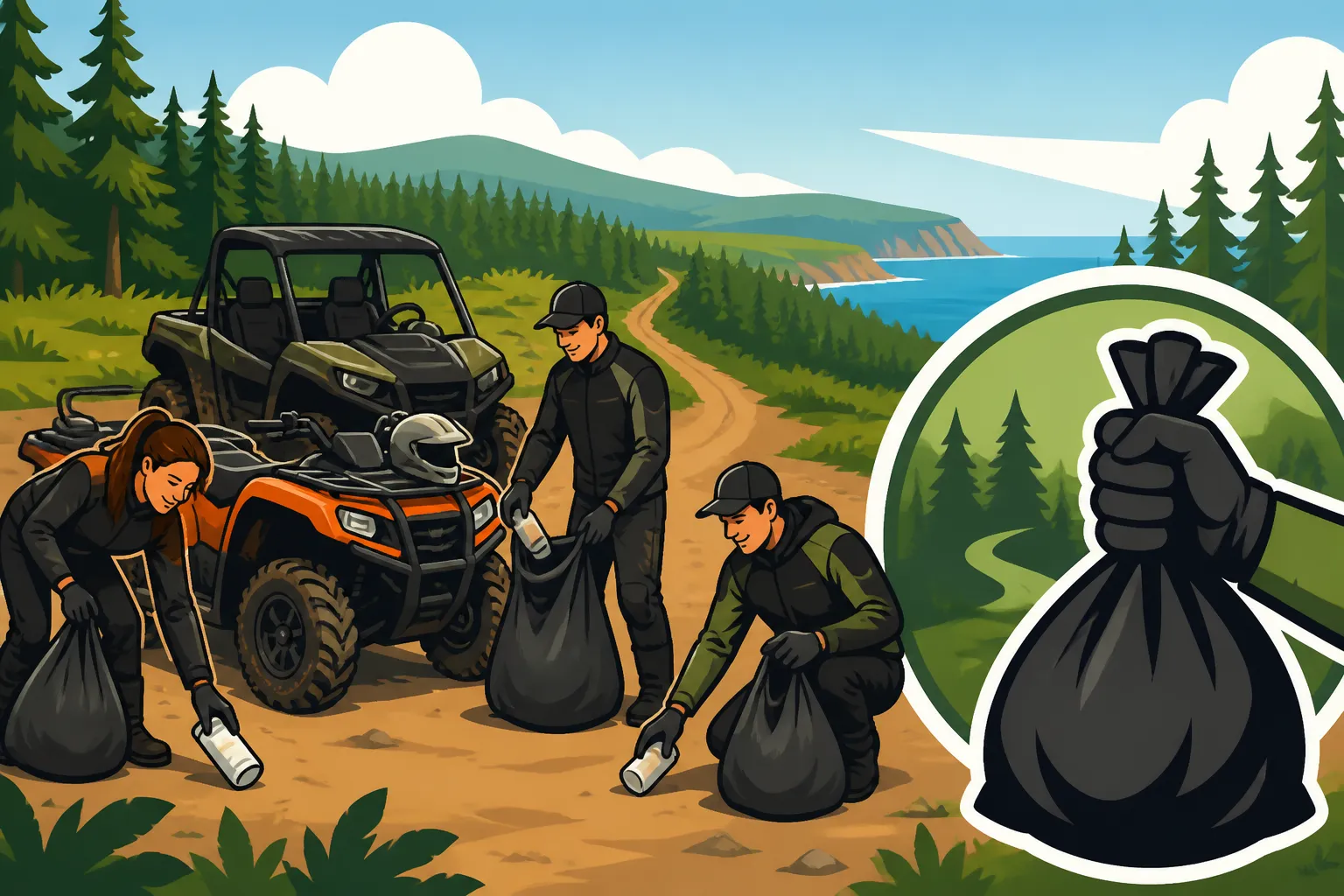
A group cleanup works better when it is specific. “Let’s leave the place clean” sounds reasonable, but people may assume someone else is handling the rubbish. Instead, give each person a small task: one rider checks the ground around the machines, another gathers food wrappers and bottles, and a driver checks the loading area after the last trailer leaves.
A simple end-of-ride routine might look like this:
- Switch off and secure the machines, then keep vehicles and trailers out of the trail entrance and any marked access lane.
- Collect garbage, food scraps, cans, bottles, and other items brought by the group.
- Check underneath and around trucks, trailers, and parked machines for dropped straps, gloves, tools, or personal items.
- Put dirty gear and muddy equipment into bins or bags rather than leaving it on the ground.
- Walk the area once more after loading, then take all rubbish with you unless a clearly marked bin is available for that waste.
A headcount helps, too. Ask whether anyone has left a helmet, phone, tool, or fuel container behind. It is easier to catch a missing item before the convoy has pulled onto the road than after someone is already miles away.
Keep the cleanup considerate
Cleaning up does not mean washing machines or dumping liquids at the trailhead. Do not pour fuel, oil, coolant, or wash water onto the ground, into a ditch, or near a watercourse. If a machine has leaked, keep people away from the spill and deal with it using appropriate materials. For a larger or uncertain spill, seek help rather than spreading it around with water or soil.
Avoid brushing mud and plant material from machines directly onto a trailhead surface or into a drainage area. Mud can carry seeds and other material, and runoff can move toward a ditch or stream. If you need to knock loose debris off boots or gear, do so in a way that does not create a new mess or damage vegetation.
Be mindful of noise and timing as the group departs. Starting every machine at once, revving engines in the parking area, or lingering beside nearby homes can undermine the good impression a tidy cleanup creates. A calm, organized departure is part of leaving the place well.
What to pack and what to do with it
A useful cleanup kit for group rides
A small cleanup kit does not need to take up much space. The best kit is one people actually bring and can reach without unloading an entire trailer. For a larger ride, ask the group organizer to carry a shared kit and encourage each driver to bring a garbage bag.
| Item | How it helps | Practical note |
|---|---|---|
| Heavy-duty garbage bags | Collect wrappers, bottles, and general waste | Bring more than one for a large group |
| Reusable tote or gear bin | Keeps muddy gloves, straps, and clothing off the ground | Label it so it returns to the right vehicle |
| Work gloves | Make it easier to pick up sharp or dirty items safely | Do not handle unknown chemicals or hazardous waste |
| Small hand broom or brush | Gathers loose debris from a loading area | Use it without sweeping waste into vegetation or drainage |
| Paper towels or absorbent material | Helps contain a small, manageable fluid drip | Seek help for a significant or uncertain spill |
| Headlamp or flashlight | Helps spot dropped items in low light | Especially useful when a ride ends near dusk |
Sort items only when it is practical and the destination has the right disposal options. A clean bottle is not useful recycling if it is left beside an overflowing bin or placed where local rules do not allow it. When in doubt, carry the waste out and dispose of it appropriately later.
Use route planning to reduce trailhead confusion
Groups often arrive with different expectations: one rider thinks everyone is meeting at the same parking area, while another is headed to a different access point. That confusion can lead to blocked entrances, vehicles parked across more than one space, and people leaving gear behind while they search for the rest of the group.
Share the planned trailhead and a backup meeting point before departure. Make sure everyone understands where to park, which route the group intends to take, and who is responsible for checking that all vehicles are ready to leave. If you use onX Offroad to help organize a route, share the meetup details clearly and confirm trail access with local club information. A mapping app should not replace checking closures, signage, or permission requirements.
It can also help to assign one person as the “last look” lead. That person does not have to do all the cleanup; they simply check that the group has collected its belongings and that no vehicle or trailer is blocking access. Keep the route information easy to find, whether it is in a group message, a printed note, or onX Offroad. For more route-planning context, see Nova Scotia Trail Maps Worth Downloading and Nova Scotia Trail Conditions and Closures.
Handling problems before you leave
Report damage instead of improvising a repair
A cleanup walk can reveal more than litter. You might notice a damaged sign, a washout near the parking area, a broken gate, a hazardous branch, or a new rut that makes the access route difficult to use. Take note of the location and describe what you saw clearly. A photograph can help, provided you take it safely and do not block other trail users while doing so.
Avoid making repairs that could create a safety problem or conflict with the club’s plans. Moving a sign, cutting a tree, filling a ditch, or changing a barrier may seem helpful, but the work could affect drainage, access, or a planned reroute. Contact the relevant club or trail organization and let the people responsible decide what action is appropriate. Reporting Trail Damage to a Nova Scotia Club covers the value of sharing useful details.
If there is immediate danger, such as a major obstruction or a spill, move people away from it and use the appropriate local reporting channel. Do not put yourself or another rider at risk to take a photograph or move heavy debris.
Check the trailhead before the next ride
After a storm, during thaw, or following maintenance work, the place where you parked last time may not be suitable for the next outing. A gate may be closed, parking may be restricted, or a trail segment may have been rerouted. Check available club updates and posted signs before setting out, then make sure your whole group has the same information.
onX Offroad can be useful for keeping a planned route organized, but confirm access against current local notices and signs before riding. If your group is unsure whether a corridor is open or where to stage vehicles, pause and check rather than assuming the previous trip’s arrangement still applies. A few minutes of planning can prevent a frustrating drive, an awkward turn-around, or a parking problem for another group.
Trailhead responsibilities also include using appropriate permits and respecting the rules for the corridor. If riders in the group have questions about access requirements, Nova Scotia Trail Permits From ATVANS is a useful starting point. For clubs and volunteers who maintain the area, Nova Scotia Club Trail Maintenance offers related context on the work behind a rideable corridor.
Make the final walk part of the ride
The end of a ride is often when people are cold, hungry, and eager to get home. That is exactly when a dependable routine helps. Before the convoy leaves, have one person walk the parking area while another confirms that every machine and vehicle is accounted for. If the group is large, ask each driver to check around their own truck and trailer.
Keep the standard simple: take what you brought, leave access clear, and report anything that needs attention. You do not need to turn cleanup into a long process. A short, consistent check can prevent litter, lost gear, avoidable hazards, and extra work for local volunteers.
When the next riders arrive, they should find a trailhead that is ready to use—not evidence of the group that left before them. That small courtesy helps protect the trails and the welcome that makes riding across Nova Scotia so enjoyable.
Disclaimer
This article is for general informational purposes only and does not constitute professional advice. Laws, prices and regulations vary by location and change over time. Consult a qualified professional for guidance on your specific situation.