Nova Scotia Riders Visiting New Brunswick
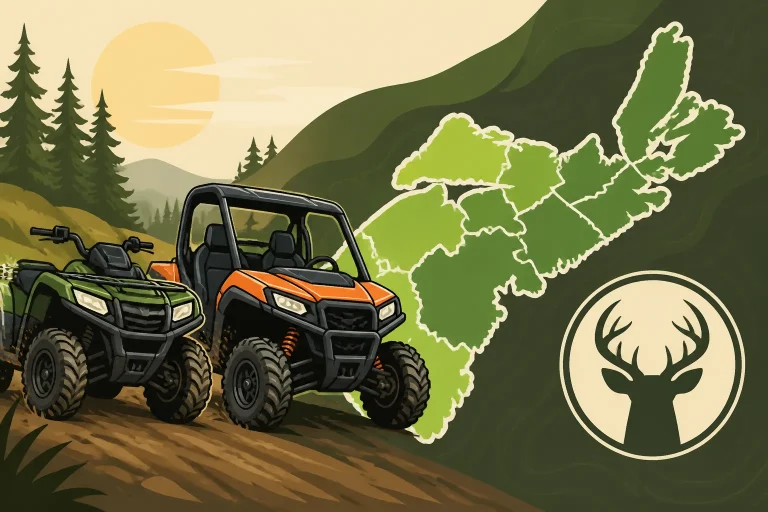
A New Brunswick ride can look like a simple extension of your Nova Scotia route, but a Nova Scotia trail permit no longer automatically gives you access across the border. The practical fix is to check the New Brunswick trail requirements before you go, arrange the right permit for the route, and carry your machine’s registration and insurance documents.
What changed for Nova Scotia riders
Nova Scotia and New Brunswick no longer have trail-permit reciprocity. In practical terms, having a valid Nova Scotia trail permit does not, by itself, authorize you to ride on New Brunswick trails. You may need to buy a separate permit or pass for the New Brunswick trail system you plan to use.
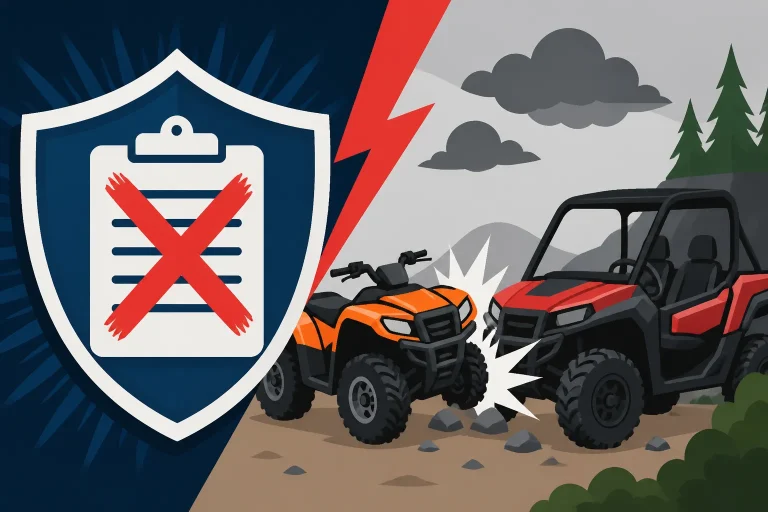
This is separate from your machine’s registration and insurance. A trail permit is about access to a trail network; registration identifies the machine and its registered owner; insurance addresses financial responsibility and other coverage. One document does not replace the others. If you want a refresher on the distinction at home, see Nova Scotia Registration and the Trail Permit.
Reciprocity used to make cross-border riding simpler because one province recognized a permit issued by the other. That arrangement has ended, so plan on meeting the requirements of each province when you ride in both. For background on the change, Nova Scotia Ended Reciprocity With New Brunswick and Why the New Brunswick Reciprocity Agreement Ended explain why you should not assume your Nova Scotia permit will be accepted in New Brunswick.
| What you have | What it generally establishes | What it does not establish |
|---|---|---|
| Nova Scotia vehicle registration | The machine is registered under Nova Scotia requirements | Permission to use every New Brunswick trail |
| Nova Scotia trail permit | Access associated with the Nova Scotia permit and trail system | Automatic access to New Brunswick trails |
| New Brunswick trail permit or pass | Access under the applicable New Brunswick trail rules | Exemption from registration, insurance, or operating rules |
| Proof of insurance | Evidence of insurance for the machine and intended use | Trail access by itself |
| A route map or club information | Where a route may be available and who maintains it | A guarantee that the route is open or legally accessible on the day |
Treat the border as a point where your planning needs to change, not as a line you can cross without checking. A trail may connect to another route on the map, but that does not tell you whether the connecting segment is open, whether a permit is accepted, or whether the landowner or trail manager allows machines.
The key question is not simply, “Do I have a permit?” It is, “Is the permit valid for this specific New Brunswick trail, and do I meet the requirements for the machine and rider?” Confirm the answer with the current New Brunswick trail authority or the club responsible for the route before setting out. Requirements can differ by trail system, type of use, or local access arrangement.
Sort out permits, registration, and insurance before leaving
The safest way to avoid a frustrating border-area turnaround is to make three separate checks: trail access, machine paperwork, and insurance. Do not rely on a single permit sticker, card, or registration document to answer all three.
Confirm the New Brunswick trail permit
Find out which organization manages the route you intend to ride and what it requires from an out-of-province rider. Ask whether a New Brunswick permit is needed, how it must be obtained, and whether it applies to your machine type. If you are joining a club ride or using a managed trail network, ask the organizer or local club rather than assuming the permit rules are universal.
Buy or arrange the pass before riding. Some permit systems provide proof by email or another format, while others may have specific placement or display requirements. Check what you must carry and whether anything must be attached to the machine. Keep a digital copy if available, but do not treat a phone screenshot as a substitute for a required physical permit or document.
A Nova Scotia permit remains useful for Nova Scotia riding, but it does not become a New Brunswick permit just because the trail crosses a provincial boundary. If you plan to ride on both sides, budget for both systems. Buying Two Permits for Two Provinces looks at that separate-permit approach, while Buying a Pass Before You Cross focuses on getting the out-of-province access requirement settled before the ride.
Carry the machine’s registration documents
Bring the registration document for each machine you are taking. Check that the owner’s name and machine details match the documents and that the registration has not expired or otherwise become invalid. If you are riding a machine registered to someone else, confirm that you have permission to use it and can explain the ownership arrangement if asked.
Also verify the machine identification number before the trip, especially if the machine is older or its serial number is difficult to read. A clear photo of the identification number and your paperwork can help if a document is misplaced, but it does not replace the required original document. Keep the paper copy somewhere protected from water and mud.
If you are unsure which Nova Scotia documents apply to your machine, use Nova Scotia Registration and the Trail Permit as a starting point. For a practical overview of insurance distinctions, Nova Scotia Association Insurance Explained can help clarify what a trail-related insurance benefit does and does not mean. Do not assume that insurance connected with an association membership is the same as a full policy for your machine.
Check insurance for the trip you are actually taking
Before crossing, ask your insurer whether your policy covers the machine while it is operated in New Brunswick, and whether the planned riding activity is included. Confirm that the policy applies to the machine, the operator, and the kind of route you intend to use. A policy that covers liability in one setting may not cover every loss, injury, or use you might assume it covers.
Carry the proof of insurance required for your machine and know how to contact your insurer. If the machine is borrowed, rented, financed, or owned by a business, check that the policy allows the person who will ride it to operate it in another province. If you are bringing more than one machine, verify coverage for each one rather than assuming one card covers the whole group.
Insurance and trail access solve different problems. A trail manager may require a pass even if the machine is insured, and having a trail pass does not prove that the machine has the insurance coverage required by law or by the trail operator.
Check the route and local rules, not just the border
A route that looks continuous on a map may include several kinds of land and access: a club-maintained trail, a public road, a private connection, or a section that is temporarily closed. Confirm the specific New Brunswick route with the local trail organization or land manager. A province-wide assumption is not enough when access is managed locally.
Ask these questions before you load the machine:
- Is the exact trail segment open to ATVs or UTVs?
- Who maintains or authorizes access to it?
- Does that trail require a New Brunswick permit, and what proof must you carry?
- Are there restrictions by machine type, width, season, or operating conditions?
- Is the route open to through-riding, or does it end at a gate or private boundary?
- Are there temporary closures, construction, washouts, or seasonal restrictions?
- Where can you legally park and unload near the trail?
Do not treat a road, rail bed, woods road, or private track as an ATV trail just because it appears to connect two marked routes. A mapped line can be out of date or may show a corridor that is not open to your machine. If the route crosses private land, follow the landowner’s access conditions and do not go around a closed gate.
Rules that apply to Nova Scotia road trails do not automatically carry over to New Brunswick. Each province has its own laws, and a local trail organization may also set conditions for the trails it maintains. Check requirements for helmets, passengers, speed, lighting, road use, and youth riders in the jurisdiction where you will operate. Do not rely on a familiar Nova Scotia rule as proof that the same rule applies across the border.
The same caution applies to road connections. A trail permit does not grant permission to ride on any public road. Confirm whether a road segment is legally open to off-highway vehicles and whether crossing or travelling along it is permitted. If a route depends on a short road connection, verify it before leaving rather than improvising when you reach the junction.
Local conditions matter as much as the written rules. A trail may be closed after a storm, during a thaw, for forestry work, or because a bridge or culvert has been damaged. Look for a recent notice from the club or trail manager, and have an alternate route that is also authorized. For a broader checklist on out-of-province riding, What a Visitor Riding for a Month Needs can help you think through the difference between a short visit and an extended stay.
Plan for the machines, riders, and length of your visit
The right permit and paperwork depend on what you are taking and how you intend to ride. Make a list of the machines and riders before contacting a club or buying a pass. This prevents common mistakes, such as arranging one permit for a group with several machines or overlooking a youth rider’s requirements.
One machine, one rider, or a group
For every machine, confirm the required trail access, registration documents, insurance, and any local equipment rules. Do not assume that a pass bought for one machine covers a second one, or that a group leader’s permit covers everyone riding with them. Ask the permit provider how coverage is assigned and what information is needed for each machine.
For a group ride, ask the organizer to confirm the route’s access requirements for visitors from Nova Scotia. Get the meeting point, start time, fuel plan, emergency contact, and any trail-specific restrictions in advance. If the route crosses multiple managed sections, make sure the group has permission and permits for each one.
If you are travelling with a child or a less experienced rider, check both legal age and supervision rules in New Brunswick. Nova Scotia requirements are not a substitute for the rules where the ride takes place. Choose a route that fits the least experienced rider in the group and avoid relying on a long, unfamiliar route as a first cross-border outing.
A short visit versus a longer stay
A day trip or weekend visit is different from keeping a machine in New Brunswick or riding there regularly. A visitor permit, where offered, may have specific eligibility or duration rules. Confirm what applies to your visit rather than assuming a short-term pass is available or that a Nova Scotia resident can use a local-only option.
For a longer stay, ask whether the machine’s registration, insurance, or other obligations change based on where it is kept and how often it is used. Do not use a visitor arrangement as a workaround for a move or a permanent change in where the machine is based. The relevant requirements may depend on residency, ownership, and the machine’s location.
If your plans include riding in both provinces throughout the season, compare the cost and conditions of the separate trail systems before you commit. Permit costs and terms can change, so check with the organizations that issue them for current details. Nova Scotia Trail Permit Cost is useful for understanding the Nova Scotia side of the budget, but it does not determine the New Brunswick permit price or requirements.
Confirm machine type and route suitability
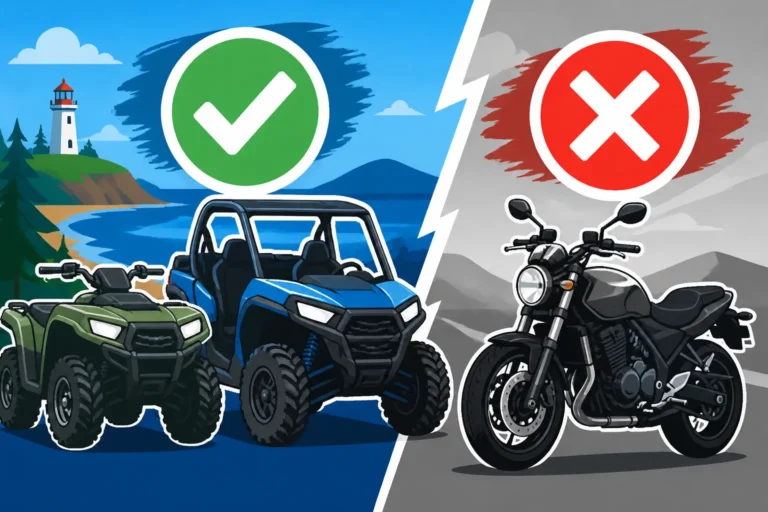
ATVs and side-by-sides may not be treated identically by every trail manager. A narrow trail, bridge, gate, or seasonal route may not be suitable for a wider machine even if the general trail system allows off-highway vehicles. Ask specifically whether your UTV’s dimensions or type affect access.
Check the machine’s condition before the trip. Make sure the tires, brakes, steering, lights, and controls are working, and carry basic recovery and repair equipment appropriate to the route. On a remote or unfamiliar trail, a breakdown can become a safety problem quickly. Tell someone who is not riding where you plan to go and when you expect to return.
Do not plan to solve a permit or access problem by unloading somewhere different and riding in from an unapproved location. Parking, unloading, and access to the trailhead also need to be lawful. Confirm the trailhead location and parking arrangements with the club or land manager.
A practical before-you-go checklist
Use this checklist a few days before departure, then check again for closures or weather-related changes on the day of the ride.
- Identify the New Brunswick trail system and the exact route you intend to use.
- Contact the trail manager or club to confirm current access and closures.
- Ask which New Brunswick permit or pass applies to an out-of-province rider.
- Confirm whether each ATV or UTV needs its own permit or proof of access.
- Arrange the required New Brunswick permit before riding.
- Check that Nova Scotia registration is current and bring the registration document.
- Confirm that insurance covers the machine, rider, province, and planned use.
- Carry the required proof of insurance and know whom to contact if there is a problem.
- Check New Brunswick rules for the riders in your group, including youth riders and passengers.
- Confirm that the machine type is allowed on the route and fits through any restricted sections.
- Verify legal access to roads, trailheads, parking areas, and connecting corridors.
- Pack a map or offline route information, communication equipment, basic tools, and recovery gear.
- Share your route and return time with someone who is not on the ride.
- Keep an alternate route available in case of a closure or unsafe trail condition.
For a group, assign one person to verify route access and another to check that every rider has the required documents. A group leader’s confirmation is helpful, but each rider should know what permits and paperwork they personally need to carry.
Keep permit receipts and confirmation messages accessible, but do not rely on them as a substitute for the permit itself if the provider requires a separate document or display. Before the group starts, do a quick document check and make sure everyone knows the route, turnaround point, and procedure if the group becomes separated.
Frequently Asked Questions
Does my Nova Scotia trail permit work in New Brunswick?
No. Nova Scotia and New Brunswick no longer have trail-permit reciprocity, so a Nova Scotia permit does not automatically provide access to New Brunswick trails. Check the local trail requirements and arrange any separate permit before riding.
Do I still need Nova Scotia registration and insurance?
Yes, do not treat a New Brunswick trail pass as a replacement for your machine’s registration or insurance. Carry the required documents for the machine and confirm with your insurer that your coverage applies to the planned New Brunswick riding.
Can I buy a New Brunswick permit at the trailhead?
That depends on the permit provider and trail system. Do not assume a permit can be purchased at the trailhead or after you start riding. Contact the relevant organization in advance and ask how to buy the right pass and what proof you must carry.
Can I follow a connected trail across the provincial boundary?
Only if the route is open and authorized on both sides, and you meet each province’s permit and operating requirements. Confirm the connecting segment, closures, and road access with the trail managers before setting out.
Disclaimer
This article is for general informational purposes only and does not constitute professional advice. Laws, prices and regulations vary by location and change over time. Consult a qualified professional for guidance on your specific situation.