Snorkels for Eastern Shore Brook Crossings
An ATV or UTV snorkel raises engine and CVT air intakes to reduce water damage during Eastern Shore brook crossings.
The map is not the permission.
National forest and BLM routes, state OHV parks, and club trails crossing private land — with the closures and passes that decide whether today counts.
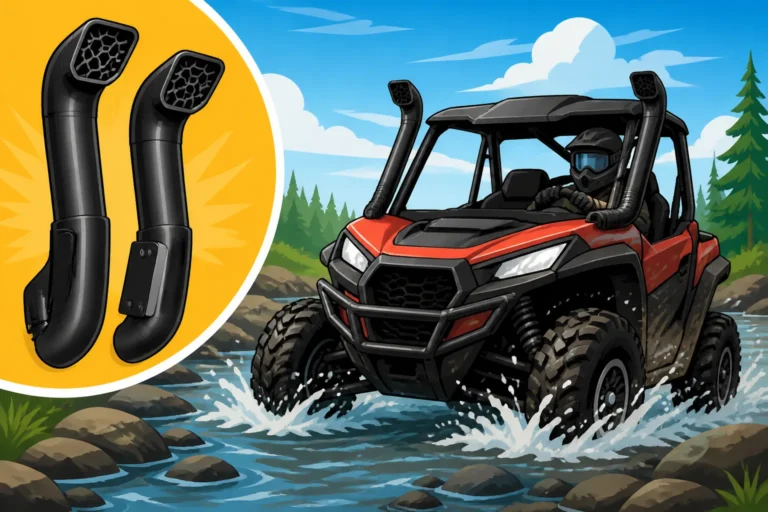
An ATV or UTV snorkel raises engine and CVT air intakes to reduce water damage during Eastern Shore brook crossings.
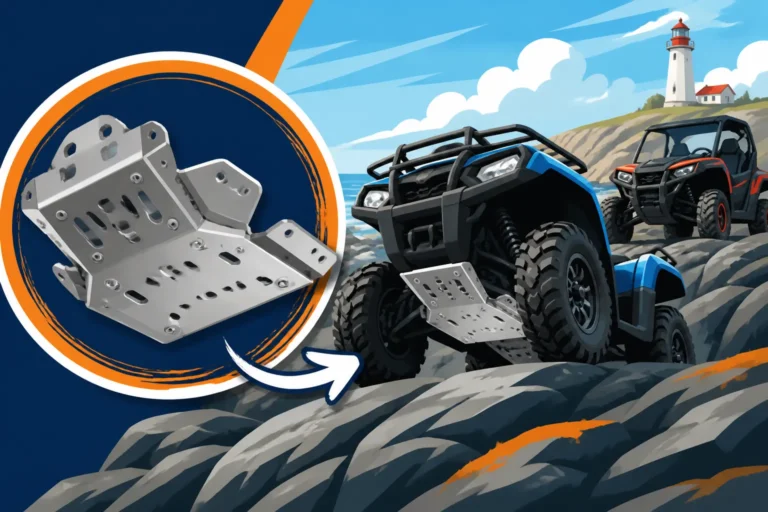
Skid plates for coastal rock rides shield ATV and UTV frames, engines, and differentials from sharp trail impacts.
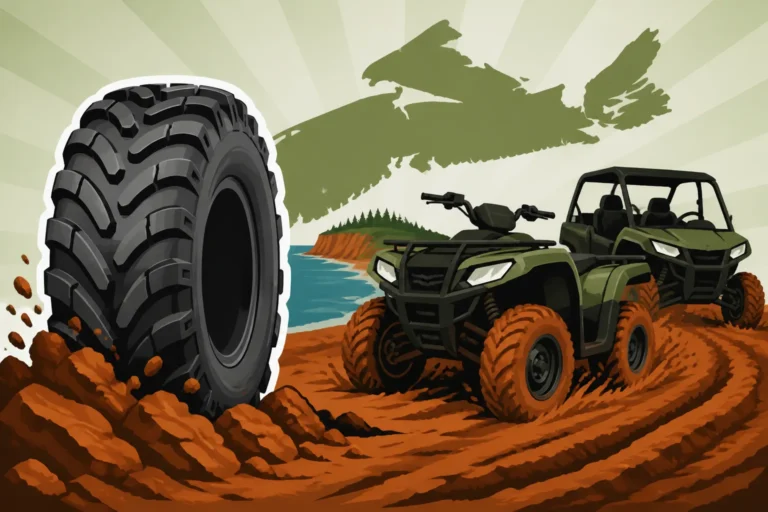
ATV and UTV tires for Nova Scotian clay require matching tread design to mixed trail conditions and riding habits.
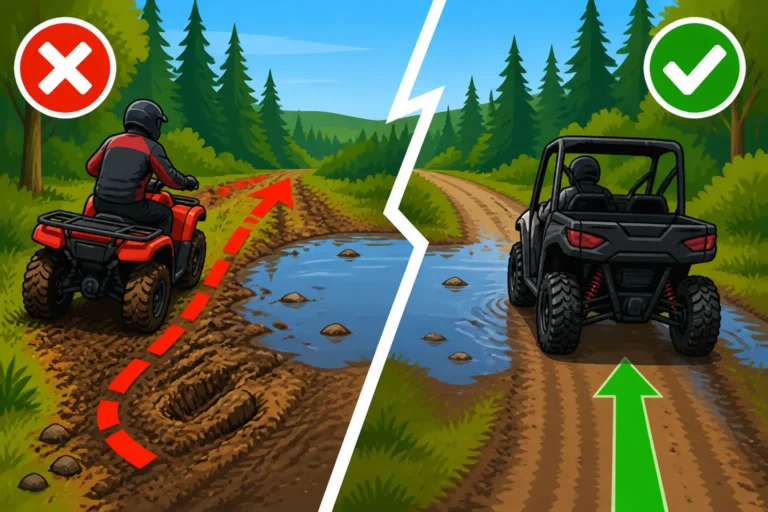
Repeated trail bypasses around wet sections widen Nova Scotia paths by destroying vegetation and creating multiple damaged parallel ruts.
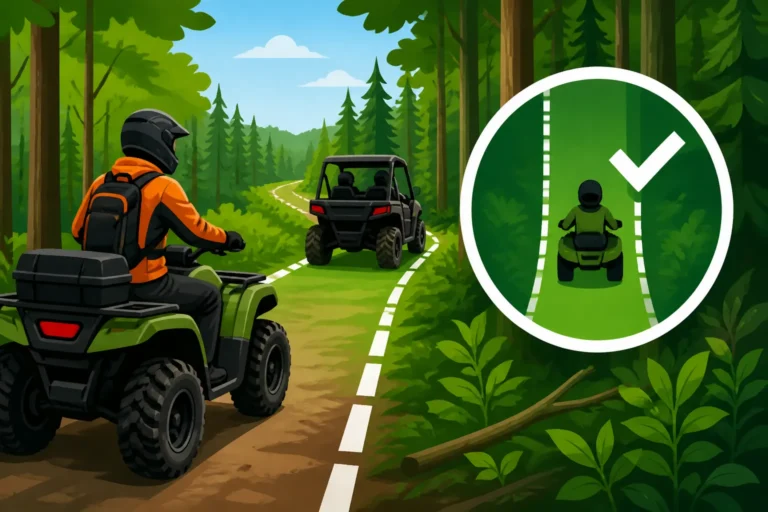
An authorized ATV corridor through a Nova Scotia private woodlot protects trail access and respects landowner boundaries.
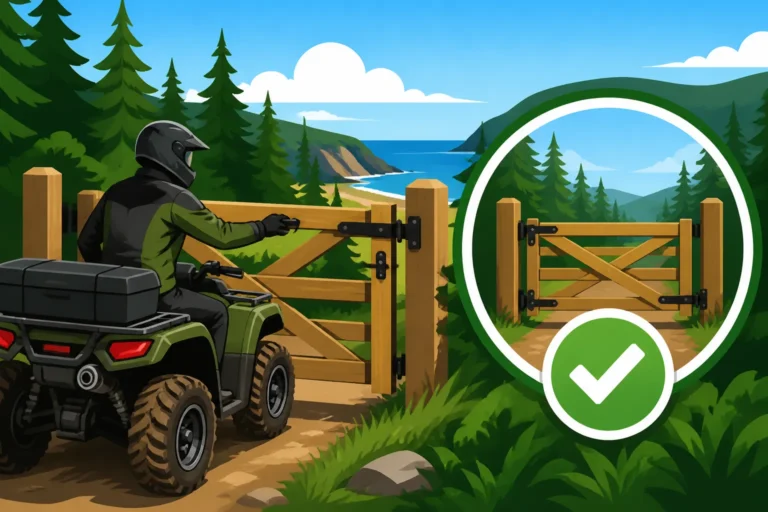
Nova Scotia trail riders learn proper woodlot gate etiquette to protect private property, manage livestock, and prevent forestry interference.
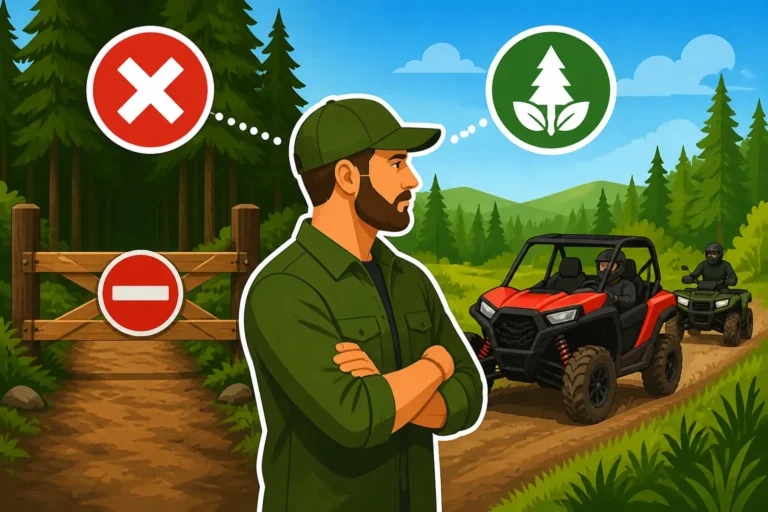
Nova Scotia woodlot closures happen for logging, wet ground protection, or safety, helping riders prevent trail conflicts.
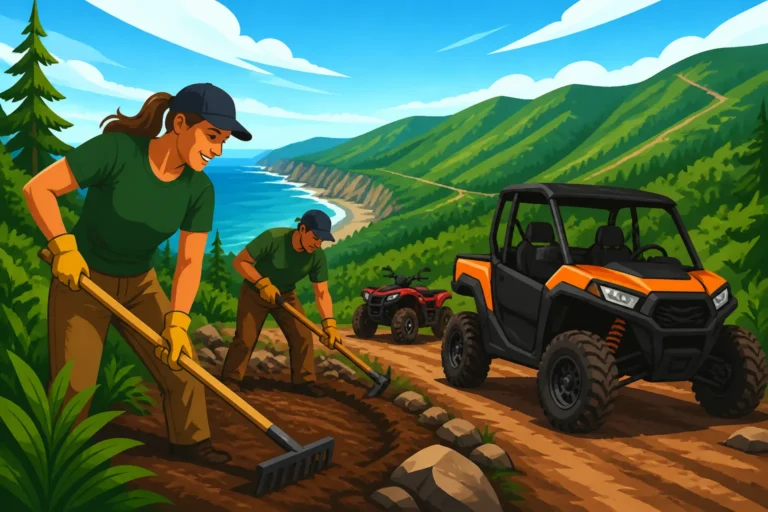
Cape Breton trail work weekends require contacting local groups to find projects, confirm access, and prepare properly.
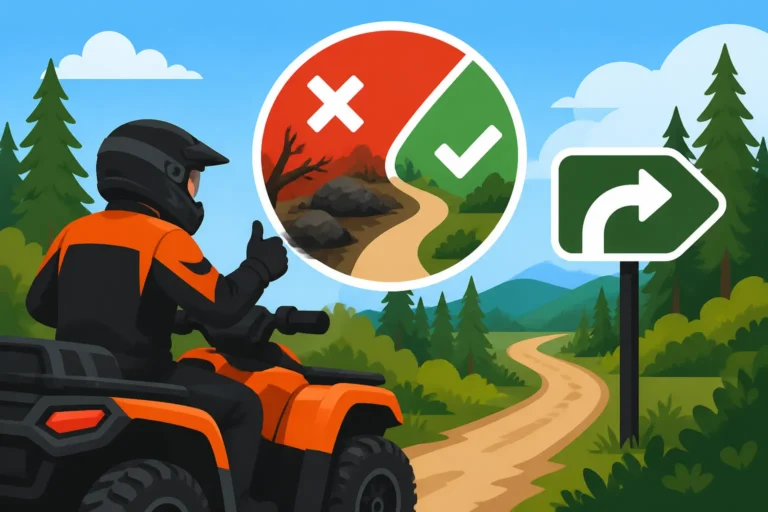
Signed ATV trail reroutes in Nova Scotia protect riders, prevent further damage, and maintain proper land access permissions.
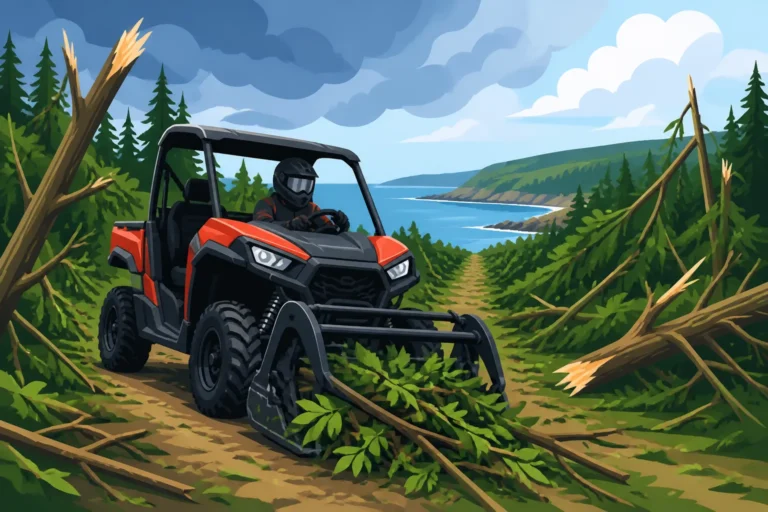
Storm damage on Nova Scotia ATV trails requires riders to assess hazards and report unsafe corridors before clearing debris.