Nova Scotia Registration After the Owner Dies
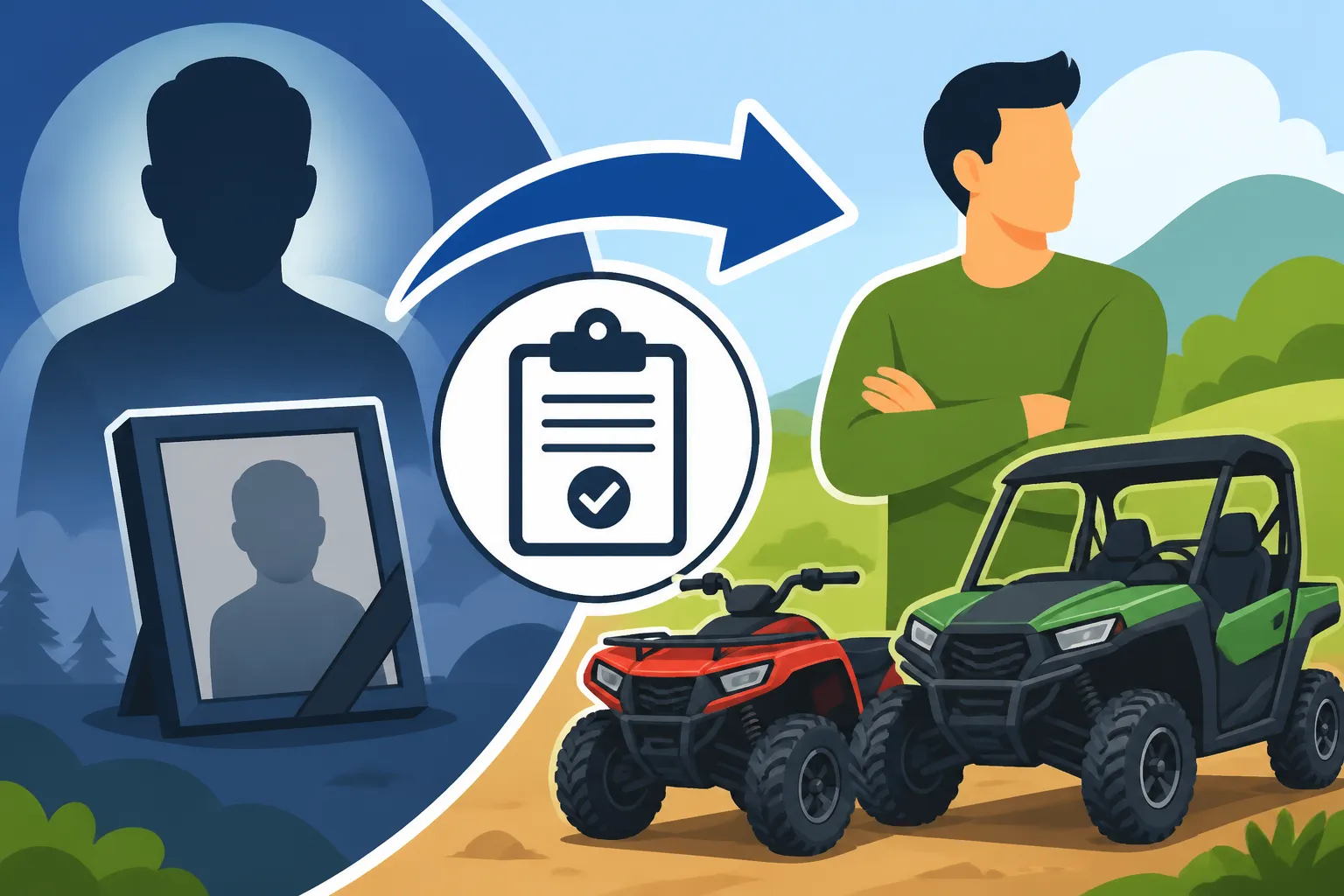
Dealing with the loss of a loved one is incredibly difficult, and often, amidst the grief, you find yourself facing a mountain of practical tasks, some of which you never even considered. If you've inherited an off-highway vehicle (OHV) in Nova Scotia – perhaps a beloved ATV or a workhorse side-by-side that belonged to someone dear – figuring out the legal ins and outs of ownership transfer can feel like another confusing hurdle in an already challenging time. This guide is here to walk you through the process of registering an inherited off-road machine in Nova Scotia, making sure you understand the steps to properly get it on the books, whether you plan to keep it or eventually sell it.
Navigating the Emotional and Practicalities of an Inherited OHV
When someone passes, the sheer volume of details to sort through can be overwhelming. From personal belongings to bank accounts, every aspect of their life requires attention, and often, that includes their cherished off-highway vehicles. It’s not just about getting the keys; it’s about legally taking on the responsibility and ensuring everything is above board.
The Initial Shock and What Comes Next
That moment of realization – "Oh, what about Dad's quad?" or "Grandma's side-by-side needs to be looked after" – can come at an unexpected time. Beyond the emotional weight of memory, there's the practical question of what to do with the machine itself. Is it stored safely? Does it need maintenance? And, crucially, how do you even begin to prove it's now yours in the eyes of the law? It's easy to push these things aside, especially when your plate is full, but addressing the ownership transfer sooner rather than later can save you headaches down the road.
Why Proper Registration Matters
It might seem like a minor detail, but the proper registration of an inherited OHV isn't just bureaucracy; it's a critical step. Riding an off-highway vehicle in Nova Scotia without current registration can lead to significant problems. You could find yourself facing [Nova Scotia Penalties for Riding Unregistered], which can range from a substantial [Nova Scotia Minimum Fine of $250] to much higher amounts, depending on the circumstances. Imagine trying to enjoy a quiet ride on a trail, only to be stopped and ticketed for something you didn't even realize was an issue. Beyond the fines, an unregistered machine might not be covered by insurance in the event of an accident, leaving you vulnerable to financial ruin. Proper registration also proves legal ownership, protecting you from potential disputes if questions about the machine's provenance ever arise. It's about peace of mind and staying on the right side of the rules.
Gathering Essential Documents for Transfer
Before you even think about heading to Access Nova Scotia, you’ll need to do some detective work to gather all the necessary paperwork. This is often the most time-consuming part, as legal documents can sometimes be tricky to locate or understand.
Identifying the Key Legal Paperwork
The cornerstone of transferring ownership of an inherited machine is establishing your legal right to it. This typically comes in one of a few forms:
- The Will: If the deceased had a will, it should clearly state who inherits their assets, including specific items like OHVs. You'll need an official, probated copy of the will, along with the Letters of Probate issued by the Nova Scotia Supreme Court. These letters officially confirm the will's validity and the executor's authority to act on behalf of the estate.
- Letters of Administration: If there was no will, or the will didn't name an executor or couldn't be probated, the court will appoint an administrator. The Letters of Administration grant this person the legal authority to manage and distribute the deceased's assets, including transferring the OHV to the rightful heir.
- Affidavit of Heirship or Declaration: In some less complex situations, especially if the estate is small and there are no disputes among heirs, an Affidavit of Heirship might be accepted. This is a sworn legal document signed by someone familiar with the deceased's family history and debts, identifying the legal heirs. You might find resources on legal document platforms like LawDepot that can guide you in creating such a declaration, though it's always wise to confirm its acceptability with Access Nova Scotia first for your specific circumstances.
Without these foundational documents, proving your legal entitlement to the OHV will be impossible for the registry.
Locating the Original OHV Registration Papers
Once you've established your legal authority, the next step is to find the machine's existing paperwork. You'll be looking for two main documents:
- The Nova Scotia Certificate of Registration: This is the permanent record of ownership for the off-highway vehicle. It contains important details about the machine and the original owner. [Nova Scotia's $39.80 Certificate Fee Explained] refers to the initial charge for this document, and ideally, you'll have the original.
- The Nova Scotia Vehicle Permit: This is the annual permit that allows the machine to be operated. It usually shows the expiry date and is renewed annually. [What Nova Scotia's $13.20 Vehicle Permit Buys] covers the purpose of this yearly permit.
What if the papers are missing? This is a common scenario, especially with machines that have been in the family for years. Don't panic. You'll likely need to provide additional sworn declarations or affidavits explaining the situation. You might be asked to declare that the original certificate and permit cannot be found and that you are the rightful heir. Again, online resources or platforms like LawDepot can be helpful in understanding how to draft such declarations, but be prepared for Access Nova Scotia to have specific requirements or forms they prefer. They may also be able to do a records search for the machine using its Vehicle Identification Number (VIN), but having as much information as possible will speed up the process.
Proof of Relationship and Identity
While the will or letters of administration establish your right to the estate, you, as the new owner, will also need to prove your own identity and relationship to the deceased. Bring your valid government-issued photo identification (like a driver's license), and potentially documents that confirm your relationship if it's not explicitly clear in the will (e.g., a birth certificate if you're a child of the deceased). Ensure your identification is current and clearly shows your legal name and address.
The Step-by-Step Registration Process
Once you've assembled all your legal documents and the machine's paperwork (or a plan for what to do if it’s missing), you’re ready to tackle the official transfer at Access Nova Scotia. This isn't just about updating a name; it's a formal process that ensures the machine's history is accurately recorded.
Understanding the Transfer of Ownership
Even when an OHV is inherited, Nova Scotia treats it as a transfer of ownership from the deceased's estate to you. This isn't a simple name change; it's a legal transaction that requires specific documentation and fees. The purpose is to officially remove the deceased as the registered owner and place you, or the estate if it's holding the machine for sale, as the new legal owner. The [Nova Scotia Transfer of Ownership at $13.20] fee applies here, just as it would for a regular sale. It reflects the administrative work involved in updating the provincial registry records. This step is crucial because without it, the machine is still technically registered to the deceased, which can create issues for future use or sale.
Required Forms and Declarations at the Counter
When you arrive at Access Nova Scotia, you'll typically need to fill out a standard "Application for Off-highway Vehicle Certificate of Registration and Vehicle Permit." However, for an inherited machine, you'll also be submitting the legal documents you've gathered (the will, letters of probate/administration, or affidavits).
Here's a breakdown of what you'll typically present:
- Original Certificate of Registration and Vehicle Permit: If you found them.
- Legal Documents: The probated will and Letters of Probate, or Letters of Administration, or the approved Affidavit of Heirship.
- A Declaration of Inheritance: You may need to sign a specific declaration form provided by Access Nova Scotia, or a sworn affidavit, stating that you have legally inherited the machine and that all information provided is true and accurate. This is where a document created using a template from a service like LawDepot could come in handy if no specific government form exists, as long as it meets legal requirements.
- Proof of Identity: Your valid government-issued photo ID.
- Proof of Address: If your ID doesn't show your current address, or if it's a different address than the one you're registering the machine to, bring a utility bill or other official document.
The clerk will review these documents to verify your authority to register the machine and process the transfer. Be prepared for them to ask questions to ensure clarity and compliance with the regulations.
What to Expect at the Counter
Visiting an Access Nova Scotia centre can sometimes involve a wait, so it's best to go prepared and, if possible, during off-peak hours. When your number is called, clearly explain to the clerk that you are there to register an off-highway vehicle you have inherited. Present all your documents upfront. The clerk will process the transfer, collect the [Nova Scotia Vehicle Permit at $13.20] fee (and any other applicable fees like the annual levy), and issue you a new [Nova Scotia Certificate of Registration at $39.80] and Vehicle Permit in your name (or the estate’s name, depending on how it's handled). They will confirm all the machine details, including the VIN, make, model, and year. Double-check all the information on the new documents before you leave to ensure accuracy. Should you have any questions before you go, don't hesitate to use the [Calling the OHV Line for Help] service. It's better to clarify details beforehand than to arrive unprepared.
Beyond Registration: Insurance and Other Considerations
Getting the machine formally registered in your name is a massive step, but your responsibilities don't end there. There are other critical aspects to consider, especially if you plan to ride the machine or eventually sell it.
Mandatory Insurance Requirements
Just as important as registration is ensuring the inherited OHV is properly insured. In Nova Scotia, [Nova Scotia Insurance Requirements for Riders] are mandatory for off-highway vehicles, regardless of where you ride (unless it's exclusively on your own private, unenclosed property). This isn't just a suggestion; it's a legal requirement. You need to carry proof of liability insurance, often referred to as your [Nova Scotia Pink Card Rules].
You should contact an insurance broker as soon as possible to get a policy in your name for the machine. They will need all the details of the OHV, including its VIN, make, model, and year. Explain that you've just inherited it and are looking for coverage. Having the new registration in your name will make this process smoother. Riding without insurance can lead to severe penalties, including fines and potential financial liability if you're involved in an accident. Don't let an inherited machine become a financial burden; secure proper coverage immediately.
Understanding the Infrastructure Fund and Trail Permits
When you register your off-highway vehicle, you'll also be contributing to the [Nova Scotia's OHV Infrastructure Fund]. This fund helps maintain and develop trails across the province, supporting the riding community. This charge is typically included in your annual vehicle permit renewal fee. It's part of the [Nova Scotia's Combined $53.20 Annual Figure] that many riders pay yearly.
If you plan to ride on designated club trails, you'll also need to purchase an ATVANS (All-Terrain Vehicle Association of Nova Scotia) [Nova Scotia Trail Permit Cost]. This is a separate permit from your provincial registration and directly supports the clubs that build and maintain thousands of kilometres of trails. You can often purchase this permit as part of a club membership, which also provides additional benefits like association insurance. Without a trail permit, you're restricted from using these valuable resources, limiting your riding options.
Selling the Inherited Machine
Perhaps the inherited OHV isn't quite right for you, or you simply don't have the space or time for it. If you decide to sell it, you'll need to ensure the registration is firmly in your name (or the estate's name, if you're selling it directly from the estate) before completing the transaction.
When [Selling a Registered Machine in Nova Scotia], you'll act as the seller, providing the new buyer with the Certificate of Registration in your name, along with a bill of sale. A proper bill of sale is crucial for both you and the buyer, documenting the transaction, price, and condition of the machine. You can find templates for bills of sale through services like LawDepot, which can help ensure all necessary legal information is included. The buyer will then take these documents to Access Nova Scotia to register the machine in their name, completing the transfer process. Be prepared to discuss any provincial sales tax implications with the buyer, as they will be responsible for paying the HST at the time of registration if it's a private sale and tax hasn't been collected.
Here's a quick summary of the key documents you'll need:
| Document Type | Purpose | Where to Get It / What to Look For |
|---|---|---|
| Legal Authority | Proves your right to the deceased's estate | Probated Will & Letters of Probate, OR Letters of Administration, OR Affidavit of Heirship |
| Deceased's OHV Papers | Original proof of machine ownership and current permit | Nova Scotia Certificate of Registration, Nova Scotia Vehicle Permit |
| Your Identification | Proves who you are and your address | Government-issued photo ID (e.g., driver's license), Proof of Address (e.g., utility bill) |
| Proof of Relationship | (If not clear from will) Confirms your connection to the deceased | Birth certificate, marriage certificate, etc. |
| Declarations (if papers missing) | Sworn statement explaining missing documents or clarifying inheritance details | Often available from Access Nova Scotia, or use a template from services like LawDepot |
| Insurance Proof (after transfer) | Mandatory liability coverage for the machine | Insurance company or broker |
Remember, navigating the transfer of an inherited OHV can feel like a complex maze, but by breaking it down into these steps, you can confidently ensure everything is handled correctly. It allows you to honour the memory of the original owner by properly looking after their cherished machine, or to pass it on to a new owner with all the legalities in order.
Disclaimer
This article is for general informational purposes only and does not constitute professional advice. Laws, prices and regulations vary by location and change over time. Consult a qualified professional for guidance on your specific situation.