Nova Scotia’s 25 km/h Road Trail Limit
It can be incredibly frustrating to feel confined to designated off-highway trails when you know there are so many backroads and charming routes in Nova Scotia just waiting to be explored. You want to connect those great riding areas, grab a coffee in a quaint village, or simply run into town for gas without fearing a ticket. This guide is here to shed light on Nova Scotia's specific rules for off-highway vehicles (OHVs) on public roads, particularly the crucial 25 km/h speed limit on designated road trails, helping you navigate these regulations with confidence and enjoy more of our beautiful province.
Understanding Nova Scotia's Road Trail Act
For years, many Nova Scotian ATV and UTV riders faced a dilemma: how to legally get from one trail system to another, or even just into town for supplies. The solution, which has been evolving, is the Nova Scotia Off-highway Vehicles Act and its associated regulations, allowing for designated "road trails." This wasn't a snap decision; it was a carefully considered move to improve rider access and safety, while also integrating OHVs more smoothly into our communities.
The Genesis of Road Trails and Their Purpose
The idea of allowing off-highway vehicles onto specific public roads didn't just appear overnight. It really started gaining traction with the [Nova Scotia's 2018 Road Trail Pilot] project. This pilot was a way to test the waters, to see how well OHVs could share certain sections of roads with other traffic and pedestrians in a controlled environment. The goal was to connect existing trail networks, allow riders access to essential services like gas stations and restaurants, and ultimately, to reduce the instances of illegal road riding born out of necessity.
After a successful pilot phase, the comprehensive [Nova Scotia's Act Proclaimed in September 2023] officially laid the groundwork for the expansion of these road trails. This proclamation marked a significant shift in how Nova Scotia views OHV use, moving away from a strictly isolated, off-highway mindset to one that acknowledges the need for integrated access. The intent was clear: to create a safer, more connected riding experience while minimizing conflicts and ensuring community acceptance. It means you can now plan a ride that takes you through parts of a town, allowing you to stop for lunch or visit a local shop, which is a game-changer for many riders and local businesses alike.
Who Can Ride and What Machines Are Permitted
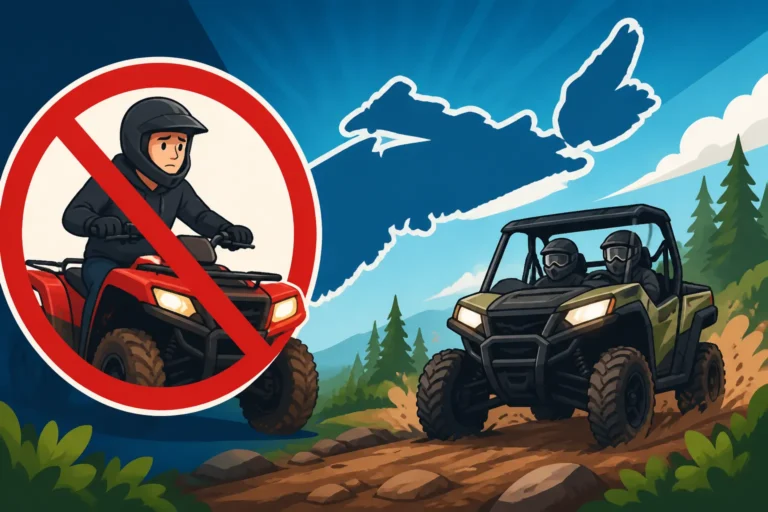
One of the first questions riders ask is, "Can I ride on these road trails, and can my machine?" The answer depends on a few key factors. First, for the operator, you absolutely need a full driver's license. This isn't a place for your learner's permit; the regulations are very clear that [Nova Scotia Bans Learner Drivers on Road Trails]. This ensures that anyone operating an OHV on a road trail has demonstrated a certain level of driving competence on public roads. It's about safety, not just for the OHV rider, but for everyone else using the road.
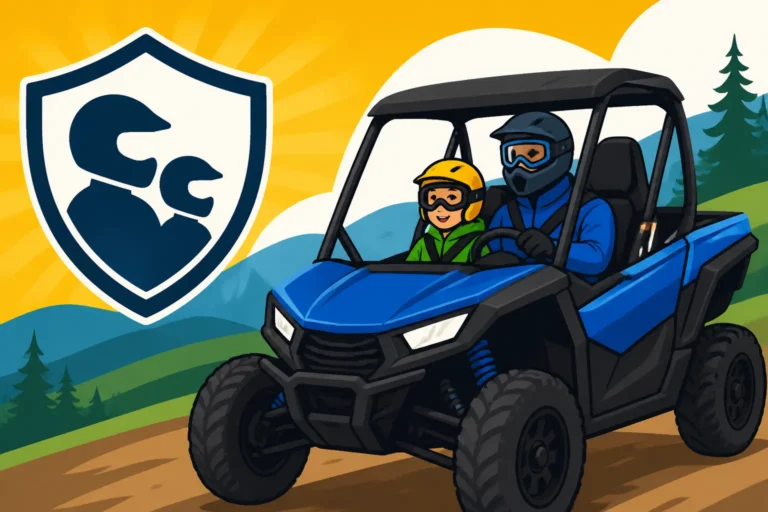
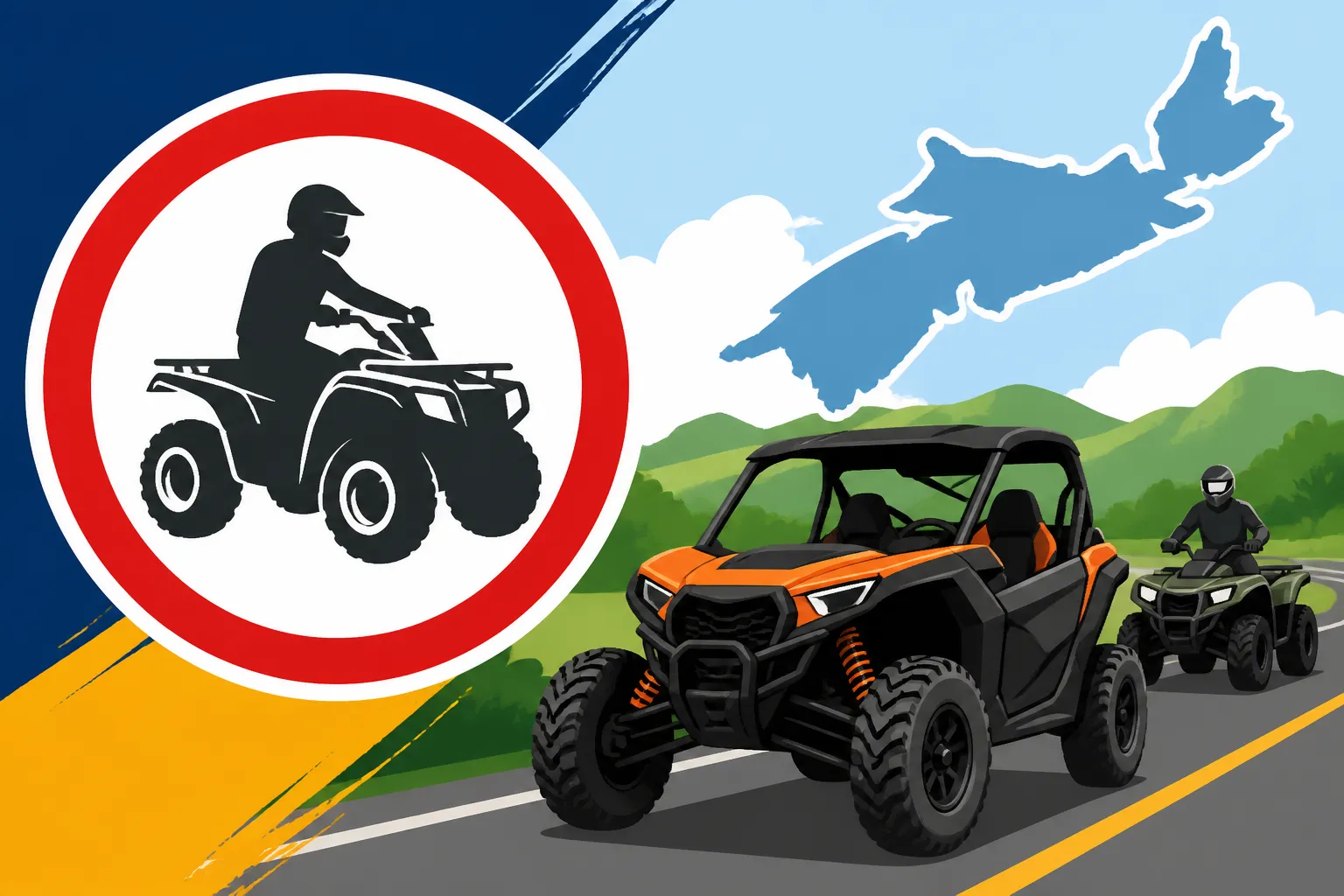
When it comes to passengers, there are also specific age requirements. If you're planning to take someone along for the ride, remember that [Nova Scotia Passengers Must Be 9 or Older]. This rule is in place to protect younger passengers, as OHVs, even at slower speeds, can be inherently more dynamic than a car. As for the machines themselves, generally, registered ATVs and UTVs are permitted. If you're wondering about a larger machine, rest assured, [A Side-by-Side at a Nova Scotia Counter] can be registered and used on these designated road trails, provided it meets all other requirements. However, it's worth noting that typically, off-road motorcycles (dirt bikes) are not included in the road trail allowances unless explicitly stated by local signage or regulations, which is a common point of confusion for riders with mixed fleets. Always check local signage and current regulations, as these can evolve.
Deciphering the 25 km/h Speed Limit
The 25 km/h speed limit is perhaps one of the most talked-about and, at times, frustrating aspects of Nova Scotia's road trail regulations. It feels slow, especially on a machine designed for more spirited adventures. However, understanding why this limit exists is key to accepting it and adhering to it for the benefit of the entire OHV community.
Why a Strict Speed Limit? Safety and Integration
Let's be real, riding at 25 km/h can feel like crawling, particularly if you're used to open trails. But this specific speed limit isn't arbitrary. It's a critical component of the strategy to safely integrate off-highway vehicles onto public roads. Think about it: you're sharing these sections with cars, pedestrians, cyclists, and often, children playing near their homes. The lower speed dramatically reduces the risk of serious injury in the event of an accident and allows both OHV operators and other road users more time to react to unexpected situations.
The 25 km/h limit is about creating a low-impact presence. It signals to residents and other road users that OHVs are moving slowly, deliberately, and respectfully through their communities. This isn't a highway where vehicles are designed for high speeds; these are specific corridors meant to connect points safely and conveniently. While it might feel like a drag sometimes, adhering to this limit is paramount for the longevity and expansion of the road trail system. It's about proving that OHV riders can be responsible members of the broader road-using public, making these shared spaces work for everyone.
Enforcement and Penalties for Exceeding the Limit
Breaking the 25 km/h limit on a designated road trail isn't just a slap on the wrist. Law enforcement in Nova Scotia takes these rules seriously because they are directly tied to public safety. If you're caught exceeding the speed limit, you can expect consequences that range from significant fines to more serious penalties, depending on the severity and context. Officers often use radar or visual observation, much like they would with any other vehicle, to ensure compliance.
The fines for speeding on a road trail can be substantial, and they're designed to be a deterrent. Beyond the immediate financial hit, there's the potential for your machine to be impounded, which means additional costs for towing and storage. There can also be points against your driver's license, affecting your insurance premiums. The overall message is clear: these are not advisory limits; they are legally binding. Ignoring them puts not only yourself at risk but also the future of the road trail network. For instance, consider [Nova Scotia Ticket Costs for Riders]; speeding will certainly factor into those potential costs. Every time a rider gets caught speeding, it creates negative press and public opinion, which can jeopardize further expansion or even lead to the closure of existing road trails. It’s in every rider’s best interest to treat this limit with the utmost respect.
Essential Requirements for Road Trail Riding
Before you even think about hitting a designated road trail, there are fundamental requirements you must meet. These aren't suggestions; they are legal necessities designed to ensure safety, accountability, and proper integration of OHVs into the public road system. Skipping any of these steps could result in serious penalties and could also undermine the very existence of these valuable riding opportunities.
Registration and Insurance: Non-Negotiables
Just like any other vehicle on a public road, your ATV or UTV needs to be properly registered and insured. This is not optional for road trail use. First, your machine must be registered with the Province of Nova Scotia. If you've been riding exclusively on private land or dedicated off-highway trails, you might already be familiar with this, but it bears repeating: [Do You Need to Register an ATV in Nova Scotia]? Yes, you do, especially for road trails. The registration process ensures your machine is on the provincial registry and helps identify owners in case of an incident. You can find detailed information about the associated costs by looking into [Nova Scotia OHV Registration Cost]. This fee, alongside a yearly permit, is essential.
Equally important is insurance. The province mandates that [Nova Scotia Requires Registration and Insurance] for OHVs operating on road trails. Specifically, you must carry a minimum of [Nova Scotia's $500,000 Liability Minimum] in third-party liability insurance. This protects you in case you're found at fault for an accident involving another person or property. Proof of this insurance comes in the form of a "pink card" or certificate, and you absolutely must carry it with you when riding. [Nova Scotia Pink Card Rules] stipulate this clearly, and an officer can request to see it at any time. Imagine being involved in a minor fender bender with a car on a road trail and not having the proper insurance – the financial implications could be catastrophic. This isn't just a legal hoop to jump through; it's vital financial protection.
Safety Gear and Machine Equipment
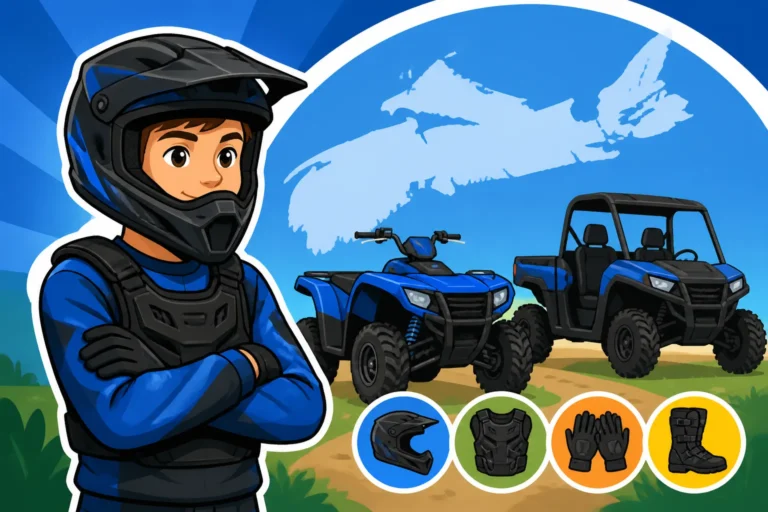
Beyond registration and insurance, personal safety gear and proper machine equipment are paramount. The rules here are designed to protect you, your passengers, and others on the road. For starters, helmets are non-negotiable. [Nova Scotia Helmet Law for Riders] requires that you wear an approved helmet that meets standards such as DOT, CSA, Snell, or BSI. This isn't just for high-speed trail riding; a helmet protects you at 25 km/h just as much, if not more, from unexpected falls or impacts with static objects.
If you're riding with younger passengers, or if you yourself are under the age of 16, there are additional requirements for protective gear. [Nova Scotia Gear Rules for Riders Under 16] specify that eye protection, long-sleeved shirts, gloves, and sturdy boots are mandatory. These items provide crucial protection against debris, impacts, and abrasions. On the machine itself, you need functional headlights and tail lights – not just for night riding, but for visibility during the day, especially in changing weather or shaded areas. Your machine also needs working brake lights, and most critically for road trails, mirrors. Accessories like a SuperATV mirror kit can be incredibly helpful here, providing the necessary visibility to safely share the road with other traffic. Finally, your exhaust system must meet factory noise levels; [Nova Scotia Noise Limits on a Machine] are in place to prevent disturbance in residential areas. A loud, modified exhaust can quickly erode public support for road trails.
Where You Can and Cannot Ride on Road Trails
The "road trail" designation doesn't mean every road in Nova Scotia is now open to ATVs and UTVs. Far from it. This is a common misunderstanding that can lead to fines and negative interactions with local communities. It's crucial to understand precisely where these allowances apply and, just as importantly, where they do not.
Designated Road Trail Networks and Municipal Access
The whole concept of road trails hinges on specific, designated sections of public roads. These are not just any old backroads; they are carefully selected routes intended to connect existing off-highway trail systems or provide access to services. You won't find OHVs allowed on controlled access highways, for instance. Instead, the focus is on secondary roads, often those with lower traffic volumes, within or adjacent to communities. You need to keep an eye out for clear signage indicating where a road trail begins and ends.
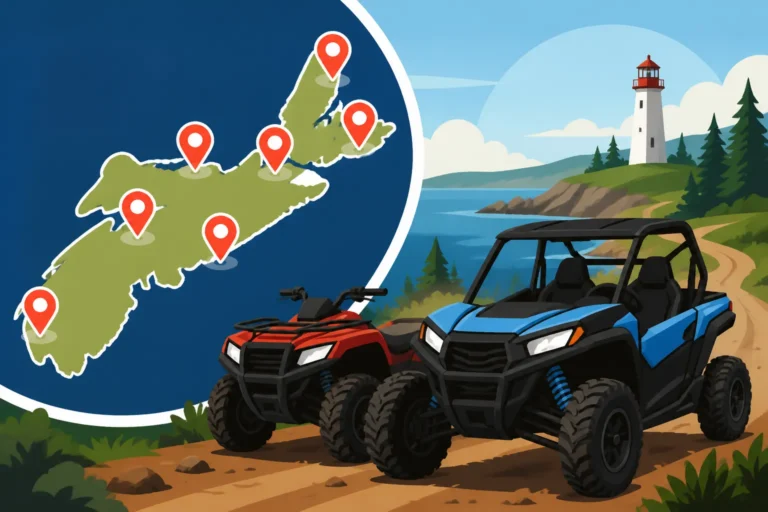
The good news is that the network is growing. There are ongoing plans for expansion, with [Nova Scotia's 2025 Road Trail Expansion] and [Nova Scotia's 2026 Road Trail Expansion] aiming to significantly increase the kilometres available to riders. Some municipalities have even embraced the concept more broadly, such as [Pictou's All-Roads Trial in Nova Scotia], where a temporary pilot allowed OHVs on nearly all municipal roads. These municipal efforts are crucial, and you should always check local government websites or the provincial road trail site for the most up-to-date maps and specific locations. Knowing where these trails are, for example, the [Nova Scotia Road Trails Near Halifax] or those connecting different regions, is essential for planning your route. The provincial "Road Trail Site Lists" are your best friend here, giving you accurate information on what’s open.
Restricted Areas and Prohibited Maneuvers
Just as important as knowing where you can ride is understanding where you cannot. As mentioned, controlled access highways are strictly off-limits to OHVs. You also cannot simply ride on the shoulder of any public road. Shoulders are generally for emergencies or specific, very short access points, not for prolonged travel. You must stay on the designated paved or gravel portion of the road trail.
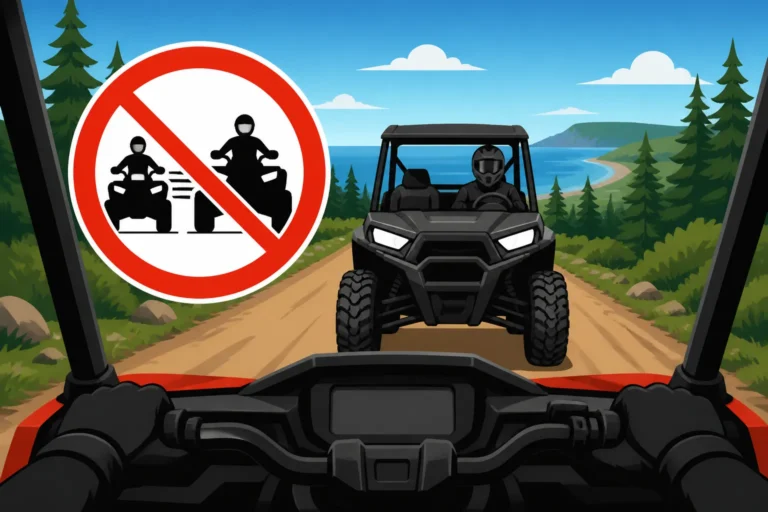
Beyond location, certain maneuvers are strictly prohibited on road trails. [Nova Scotia Riders Travel Single File], meaning no side-by-side riding. There's also a strict rule that [Nova Scotia Riders Must Not Pass] other vehicles on these road trail sections. This is about maintaining a steady, predictable flow of traffic and minimizing risk. You must also [Nova Scotia Riders Yield to Traffic], giving way to cars, trucks, and other road users. These are shared spaces, and OHVs are considered secondary users.
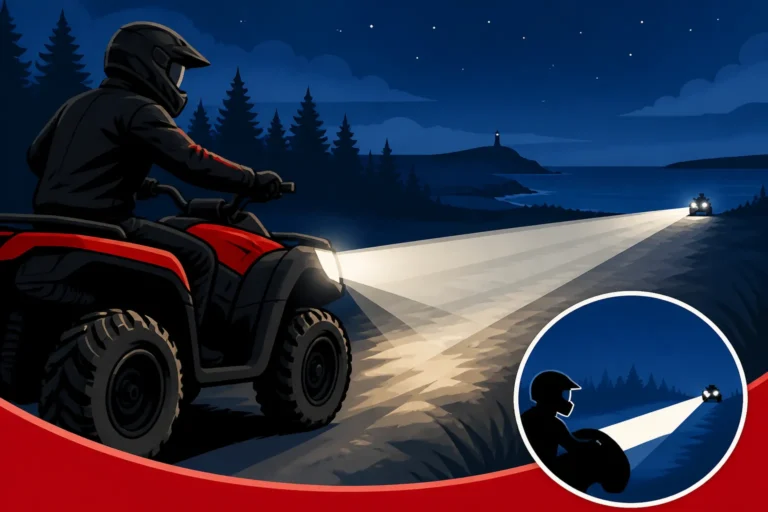
Furthermore, sensitive environmental areas like beaches, dunes, and watercourses are typically off-limits. [Nova Scotia Beach and Dune Riding Bans] are in place to protect fragile ecosystems, and attempting to ride in these areas can lead to significant fines and environmental damage. Finally, pay close attention to the clock. There are strict operating hours for road trails, generally restricting riding from half an hour before sunrise to half an hour after dusk, as specified in [Nova Scotia Road Trail Operating Hours]. Riding after dark requires specific lighting and significantly increases risk, so these restrictions are for your safety and to minimize noise disruption in residential areas.
The Rider's Conduct and Responsibilities
Riding on designated road trails isn't just about knowing the rules; it's about embodying a spirit of responsibility and respect for shared spaces. Your conduct as a rider directly impacts public perception, the safety of others, and the future viability of these precious connections. It’s an opportunity to be an ambassador for the sport.
Sharing the Road Safely and Respectfully
When you're riding your ATV or UTV on a road trail, you're no longer just out in the woods; you're often in a community, sharing space with people who might not be familiar with off-highway vehicles. This demands a higher level of courtesy and awareness. It means being mindful of your speed (sticking to that 25 km/h limit!), giving way to pedestrians, cyclists, and other vehicles, and being predictable in your movements. Imagine riding through a quiet coastal village in Cape Breton; your noise and dust levels become much more noticeable than on a remote trail. [Riding Quietly Through a Cape Breton Village] isn't just good manners, it's essential for maintaining positive relationships with residents.
Minimizing dust, especially during dry periods, is also a crucial consideration. If you're on a gravel section near homes, slow down even further. Excessive dust can be a major nuisance for residents and quickly leads to complaints. It's about blending in, not standing out negatively. By consistently demonstrating responsible and respectful behavior, riders help build trust and support for these road trail initiatives, ensuring they remain open and perhaps even expand in the future. Defensive riding is key – always assume other road users might not see you, and be prepared to react safely.
Impaired Riding and Accident Protocols
One area where there is absolutely zero tolerance is impaired riding. Operating an OHV on a road trail while under the influence of alcohol or drugs carries the same severe penalties as impaired driving in a car. [Nova Scotia Impaired Riding Penalties] are stringent, including hefty fines, license suspension, and potential jail time. Your OHV is considered a motor vehicle when on these public road sections, and the laws apply equally. This isn't just about legality; it's about your safety and the safety of everyone around you. Never, ever ride impaired.
In the unfortunate event of an accident, knowing what to do immediately can make a significant difference. Just like a collision involving two cars, you must follow specific protocols. [Nova Scotia Accident Reporting Rules] generally require you to stop, assess for injuries, call emergency services if needed, exchange information with other parties involved (if any), and report the incident to the police. Even if it seems minor, if it involves another vehicle or property damage, reporting it officially is crucial, especially for insurance purposes. Carry a basic first aid kit, your phone, and emergency contact information. Being prepared for the unexpected is always the best approach, especially when riding in areas with mixed traffic.
Planning Your Road Trail Adventures
The introduction of designated road trails has opened up a whole new dimension for OHV riding in Nova Scotia. It means you can now plan rides that are more extensive, more integrated with communities, and offer a wider variety of experiences. However, it also requires a different approach to trip planning compared to solely off-highway excursions.
Integrating Road Trails into Your Ride Planning
The real magic of road trails is their ability to act as connectors. Instead of having to trailer your machine between two fantastic off-highway trail systems, you can now legally ride a short road trail segment to link them. This allows for much longer, more diverse rides. When planning your route, use official maps to identify these connectors. For example, you might want to explore the [Nova Scotia Road Trails Near Halifax] to bridge gaps between different club trails. This connectivity also makes it easier to access essential services. You can factor in fuel stops in towns along your route, grab a bite at a local diner, or pick up supplies without the hassle of loading and unloading your machine.
Remember that the 25 km/h limit will significantly impact your travel time estimates. A 10-kilometre road trail section that might take you a few minutes on an open trail could take 20-25 minutes on a road trail. Factor this into your overall ride duration, especially if you have a set schedule. Navigation is also key; while paper maps are great, a GPS unit or a reliable app on your phone can be invaluable for staying on the designated road trail. A sturdy GPS mount from a brand like SuperATV can ensure your navigation device is secure and visible, allowing you to focus on the road. Don't forget to check [Nova Scotia Trail Conditions and Closures] before heading out, as even road trails can be affected by weather or maintenance.
What to Expect: From Scenery to Local Interactions
Riding on road trails offers a unique blend of experiences. You'll transition from rugged off-highway terrain to paved or gravel roads, often winding through picturesque coastal villages, past farm fields, or alongside historic properties. The scenery is different, offering glimpses into local life that you might miss on secluded trails. This also means you'll have more interactions with local residents and other road users. Be prepared to wave, acknowledge pedestrians, and be a friendly face for the OHV community.
You'll encounter various road conditions. Some road trails might be freshly paved, others could be older asphalt, and many will be well-maintained gravel. Be ready for these changes, and ensure your tires and suspension are appropriate for mixed terrain. Keep an eye out for local signage, as rules can sometimes vary slightly by municipality within the provincial framework. This is also a chance to support local businesses; pulling into a small-town gas station or corner store on your quad can be a fun experience and a great way to put money back into the communities that welcome riders. Just ensure you're always parking respectfully and not obstructing traffic or pedestrian flow.
| Feature / Rule | Off-Highway Trail Riding | Designated Road Trail Riding |
|---|---|---|
| Speed Limit | Varies by trail, conditions, usually higher | Strictly 25 km/h |
| Driver's Licence | Not always required (depends on age/training) | Full driver's licence mandatory |
| Registration | Mandatory for public lands, often for private clubs | Mandatory |
| Insurance (Liability) | Mandatory for public lands (minimum $500k) | Mandatory (minimum $500k) |
| Helmet | Mandatory | Mandatory (DOT, CSA, Snell, BSI approved) |
| Eye Protection/Gear | Recommended, mandatory for under 16 | Mandatory for under 16 |
| Mirrors | Not typically required | Required |
| Head/Tail Lights | Often required (especially if riding at dusk/night) | Mandatory (must be functional) |
| Exhaust Noise | Regulations exist, often less strictly enforced | Strict factory noise levels enforced |
| Riding Formation | Can ride side-by-side (if safe/allowed by trail) | Strictly single file, no passing |
| Yielding to Traffic | Less applicable (few other vehicles) | Mandatory to all other traffic |
| Operating Hours | Varies, sometimes 24/7 on private trails | Half an hour before sunrise to half an hour after dusk |
| Prohibited Areas | Private land without permission, protected areas | Controlled access highways, non-designated roads, beaches, dunes, watercourses |
Future Outlook and Rider Advocacy
The road trail system in Nova Scotia is still relatively young, but it's growing and evolving. This isn't a static set of rules; it's a dynamic system influenced by rider behavior, community feedback, and ongoing collaboration between various stakeholders. Your participation, not just as a rider but as an advocate, plays a vital role in its future.
The Evolution of Nova Scotia's Road Trail Network
The initial pilot project and subsequent proclamation of the Off-highway Vehicles Act were just the beginning. The province has a clear vision for expanding the road trail network, aiming to connect more communities and riding areas. This expansion isn't just talk; we're seeing tangible targets like [Seventy-Four Sites by Late 2025] and even more ambitious plans for further growth. This demonstrates a commitment from the provincial government to enhance OHV tourism and recreational opportunities. This ongoing evolution is often driven by collaborative efforts between government departments and organizations like the All-Terrain Vehicle Association of Nova Scotia (ATVANS), which represents the interests of riders.
The success of these expansions, however, hinges significantly on how well riders adhere to the existing rules, particularly the 25 km/h speed limit. Every instance of responsible riding reinforces the positive aspects of the program, while every infraction can slow down or even reverse progress. The future could see more [Nova Scotia Municipal Road Trails] being opened, potentially connecting even more granularly within towns and villages, providing unparalleled access for riders to explore. Your actions on the trail, and especially on these shared road sections, directly contribute to this future.
Your Role in Responsible Riding and Advocacy
As riders, we have a collective responsibility to be good stewards of our sport and its access privileges. Joining a local club and the provincial association is one of the most impactful ways to do this. [Nova Scotia Quad Clubs Worth Joining] often participate in trail maintenance, provide education, and act as a collective voice for riders. Participating in trail work days, such as [Joining a Trail Work Weekend in Cape Breton], helps maintain the infrastructure that we all enjoy.
Beyond active participation, simply being a courteous and compliant rider is advocacy in itself. Respecting the speed limit, yielding to other traffic, minimizing noise and dust, and always carrying your proper documentation are all ways you contribute positively. If you see trail damage or have concerns, reporting them responsibly to your club or the relevant authorities is much more effective than simply complaining. It's about being proactive and showing that the OHV community is mature, responsible, and worthy of the trust placed in it by allowing road trail access. Remember, continued access is not a guarantee; it's a privilege that must be continually earned through responsible conduct.
Disclaimer
This article is for general informational purposes only and does not constitute professional advice. Laws, prices and regulations vary by location and change over time. Consult a qualified professional for guidance on your specific situation.