Nova Scotia’s Road Trail Pilot in Seven Communities
It’s a common frustration for off-highway vehicle (OHV) enthusiasts in Nova Scotia: you want to get from one trail segment to another, or perhaps grab a coffee in town, but the roads feel like forbidden territory. The old rules often meant long detours or hauling your machine, breaking up the flow of a perfect day's ride. This guide is here to shed light on how Nova Scotia has been working to bridge those gaps, detailing the foundational Road Trails Act and, more specifically, the exciting pilot project that initially opened up access in seven communities.
Understanding the Nova Scotia Road Trails Act
For years, the idea of legally riding an ATV or UTV on public roads in Nova Scotia felt like a pipe dream for many. The laws were clear: off-highway vehicles were generally off the highway. This created a significant barrier for riders who wanted to connect trails, access services, or simply navigate short road sections safely and legally. The frustration was palpable, as riders often saw opportunities for longer, more enjoyable rides thwarted by these critical missing links.
The provincial government recognized this challenge and the potential for a more integrated trail system. The [Nova Scotia Road Trails Act Explained] was a significant step forward, providing a framework to allow OHVs to use designated sections of public roads. This wasn't about turning every road into an OHV trail, but rather creating specific, managed connections that could enhance the riding experience and support rural economies. It aimed to strike a balance between rider access, public safety, and respecting the concerns of local communities.
Why the Act Matters to Riders
Before the Road Trails Act, navigating any paved or public road on an ATV often meant risking hefty fines and impoundment. This made it incredibly difficult to plan longer rides that might weave through different communities, access amenities like gas stations or restaurants, or even just get to a trailhead that wasn't directly accessible from private land. For many, it felt like being perpetually constrained to isolated loops or needing a truck and trailer for every little move.
The Act changed the conversation entirely. It signaled a shift towards recognizing OHVs as a legitimate part of the recreational landscape, rather than merely an agricultural or industrial tool confined to the woods. For riders, it means the potential for expanded trail networks, more convenient access to services, and a truly interconnected riding experience. Imagine being able to ride from one community to another, pausing for lunch, and then continuing your journey without the logistical headache of loading and unloading. This legislative move laid the groundwork for the future of off-highway vehicle use in the province, providing a clear path for municipalities to embrace controlled road access.
Key Legal Requirements for Road Trail Use
While the Act opened doors, it certainly didn't mean a free-for-all. There are strict requirements in place to ensure safety and order on these designated road trail sections. First and foremost, any machine using a road trail must be properly registered with the province. This includes having a valid [Nova Scotia's Certificate and Vehicle Permit] and ensuring your registration is current. An unregistered machine on a road trail is an absolute no-go and can lead to significant penalties, starting with a [Nova Scotia Minimum Fine of $250].
Beyond registration, insurance is another critical component. Nova Scotia mandates that all OHVs operating on a road trail must have at least $500,000 in liability insurance coverage. This is not optional; carrying your [Nova Scotia Pink Card Rules] is as important as having your driver's license for a car. Furthermore, riders themselves must meet specific criteria. A full, valid driver's license is required to operate an OHV on a road trail, meaning [Nova Scotia Bans Learner Drivers on Road Trails]. Age restrictions also apply for both operators and passengers, with strict rules about helmets and other safety gear. These requirements are in place to integrate OHVs safely into shared spaces, ensuring that everyone on the road, whether in a car, on a bicycle, or on a quad, can do so with confidence.
The Genesis of the Road Trail Pilot
The Road Trails Act was the enabling legislation, but putting it into practice required careful consideration and testing. Nova Scotia recognized that simply throwing open the doors wouldn't work. There needed to be a measured approach, a way to learn and adapt based on real-world experience. This led to the launch of the [Nova Scotia's 2018 Road Trail Pilot]. It was a groundbreaking initiative designed to gradually introduce OHVs onto specific, pre-approved sections of municipal roads, under carefully controlled conditions.
The pilot project wasn't just about giving riders more places to ride; it was a collaborative effort involving provincial authorities, municipalities, and ATV clubs. The idea was to identify areas where short road connections were vital for linking existing trails, enhancing recreational tourism, and providing local access for residents. It was an acknowledgment that a vibrant OHV community could bring economic benefits to rural areas, provided it was managed responsibly and with public safety at the forefront.
The Vision Behind the 2018 Pilot
The primary vision behind the 2018 pilot was to create an interconnected trail system that could rival those in other provinces, offering longer, more diverse riding experiences. Riders in Nova Scotia often faced geographical barriers, such as a major highway or a small town, that would break up what could otherwise be a fantastic multi-day journey. The pilot sought to address this by strategically opening short road sections, acting as crucial arteries to connect the broader trail network.
This wasn't just about recreation; it was also about community. By allowing OHVs to access local services like gas stations, convenience stores, and restaurants, the pilot aimed to integrate riders more fully into the local economy. For many small, rural communities, the influx of riders, especially on a long weekend, could provide a welcome boost to local businesses. The pilot was a forward-thinking move to test the waters, gather data, and build confidence among the public that OHVs could share road space respectfully and safely. It was about proving that these machines were not just for secluded woods, but could contribute positively to the fabric of Nova Scotian life.
Goals and Outcomes of the Initial Phase
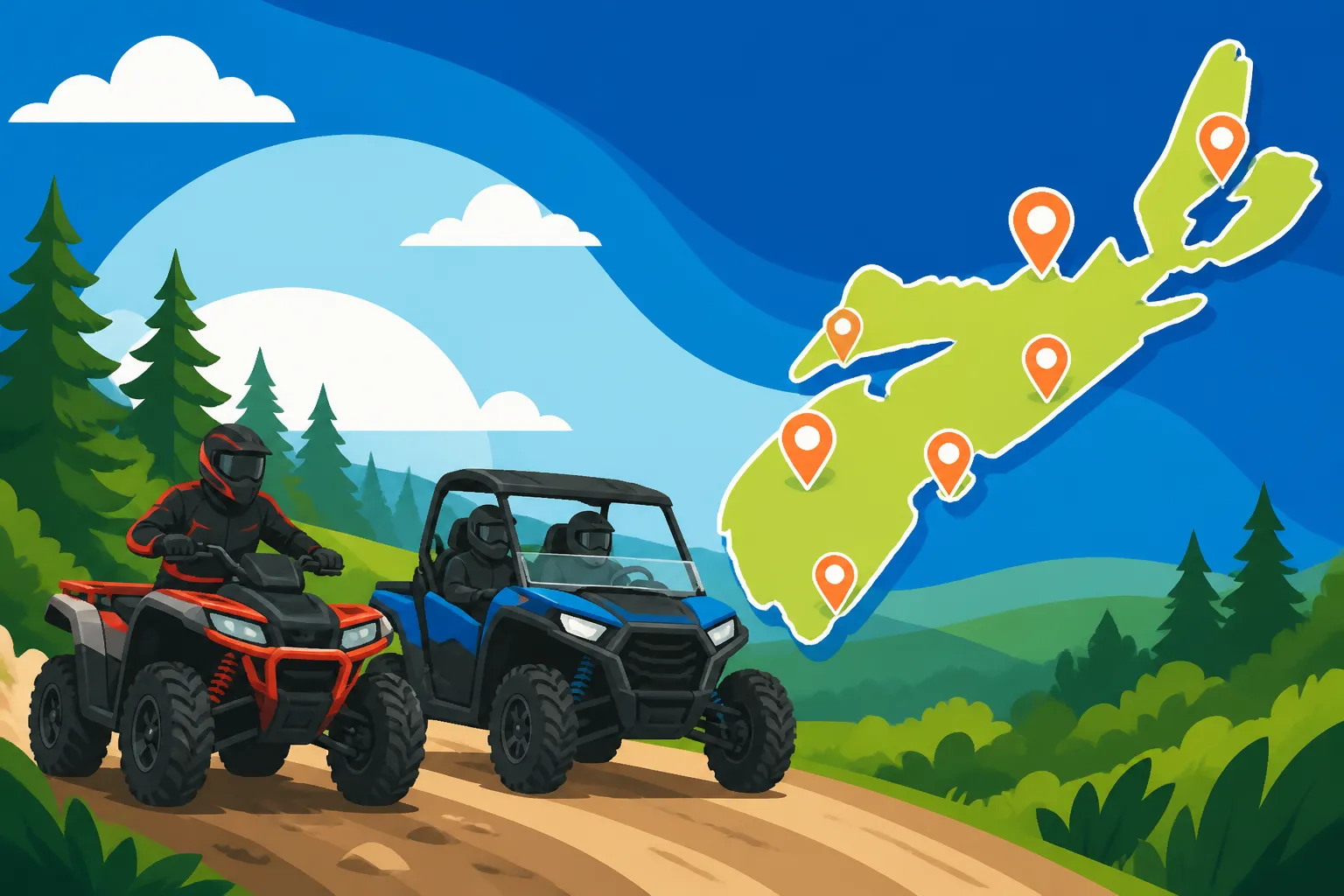
The initial phase of the pilot had several clear goals: to enhance rider access, support local economies, ensure public safety, and gather valuable data to inform future expansions. By carefully selecting the initial [Seven Communities at the Start] and monitoring their experiences, the province aimed to understand the practical implications of shared road use. This included observing traffic patterns, rider compliance with rules, public feedback, and any unforeseen challenges that might arise.
One significant outcome was the validation that, with proper signage, clear rules, and rider education, OHVs could successfully and safely share designated road sections. The initial communities saw an increase in rider traffic, often leading to positive economic impacts for local businesses. This success built confidence among other municipalities, encouraging more to consider joining the program. The pilot also highlighted areas for improvement, such as the need for clearer communication regarding rules and increased enforcement in certain areas. These learnings were crucial for refining the program and laying the groundwork for subsequent expansions, demonstrating a commitment to continuous improvement rather than a rigid, one-size-fits-all approach.
Navigating the Pilot: Rules and Regulations
Riding on Nova Scotia's designated road trails comes with a very specific set of rules. It’s not like riding on a private woodlot where you might have more leeway. These are public roads, even if they are designated for OHV use, and that means adhering to traffic laws and specific OHV regulations. The success of the pilot, and the potential for future expansion, hinges entirely on riders understanding and respecting these rules. Ignoring them not only puts yourself and others at risk but also jeopardizes the entire road trail program for everyone.
It's important to approach these sections with a mindset of shared responsibility. You're sharing the road with cars, bicycles, and pedestrians, and your actions reflect on the entire OHV community. Think of it as an opportunity to be an ambassador for responsible riding, demonstrating that ATVs and UTVs can be integrated safely into the broader transportation network. Being prepared and knowledgeable about the regulations is your first step to a smooth and enjoyable experience on these unique road trail segments.
Speed Limits and Traffic Etiquette
One of the most crucial rules for road trails is the speed limit: [25 km/h on a Road Trail]. This speed is significantly lower than typical rural road limits and is strictly enforced. The reason for this lower speed is simple: it allows OHV operators more time to react to unexpected situations, reduces noise, and minimizes dust, making the experience safer and more comfortable for everyone, including residents along the route. It’s not about getting somewhere fast; it's about making a safe, controlled connection.
Beyond speed, traffic etiquette is paramount. Riders are required to travel [Nova Scotia Riders Travel Single File], never side-by-side, and [Nova Scotia Riders Must Not Pass] other vehicles on the road trail. When encountering other traffic, including cars, cyclists, or pedestrians, OHV operators must [Nova Scotia Riders Yield to Traffic]. This means being prepared to pull over safely to allow other vehicles to pass, especially if there's a line of traffic behind you. The goal is to minimize disruption and maintain a safe, harmonious environment. Remember, these are shared spaces, and courtesy goes a long way in ensuring the longevity of the road trail program.
Equipment and Rider Requirements for Road Trails
Beyond the basic registration and insurance, your machine and your gear must meet specific standards for road trail use. Every OHV must be equipped with working headlights and tail lights. Your headlight must be visible from [Why Your Headlight Must Show at 300 Feet] and your tail light from [Why Your Tail Light Must Show at 200 Feet], especially if you're riding during permitted hours around dawn or dusk, or in low visibility conditions. These lights are critical for your visibility to other road users.
Riders themselves also have stringent requirements. A helmet is mandatory, and it must meet recognized safety standards such as DOT, CSA, Snell, or BSI. [Wearing a Helmet on Every Road Trail] is not just a suggestion; it's a legal requirement designed to protect you. Additionally, riders under the age of 16 have specific gear requirements, including long sleeves, gloves, and sturdy boots, emphasizing protection beyond just a helmet. Passengers are permitted, but they must be [Passengers Nine and Older] and seated properly. All these measures are in place to maximize safety for OHV operators and passengers on these shared road sections.
Prohibited Activities and Areas
Just as there are rules for what you can do, there are strict prohibitions on what you cannot do on road trails. Riding outside of designated hours is a major no-no; typically, operation is permitted from [Half an Hour Before Sunrise] to [Half an Hour After Dusk], but always check local regulations as operating hours can vary. Riding after dark without adequate lighting is not only dangerous but illegal.
Certain areas are explicitly off-limits, even within communities that have road trails. For instance, [Nova Scotia Beach and Dune Riding Bans] are universal across the province, regardless of whether a road trail exists nearby. Operating an OHV while impaired by alcohol or drugs carries severe penalties, mirroring those for operating a motor vehicle. Modifying your exhaust to be excessively loud is also prohibited, as [Nova Scotia Noise Limits on a Machine] are enforced to minimize disturbance to residents. These prohibitions are in place to protect the environment, ensure public safety, and maintain peace within the communities that host these road trail segments.
The Initial Seven Communities and Their Significance
The selection of the initial seven communities for the road trail pilot project was a strategic decision, aiming to represent a diverse range of geographical areas and community needs across Nova Scotia. These communities stepped forward, eager to explore the potential benefits of integrating OHVs into their local infrastructure. Their willingness to participate and adapt became foundational to the success and expansion of the entire program. Without these pioneering locations, the broader provincial roll-out might have been much slower or faced greater skepticism.
Each community offered unique insights into how road trails would function in different settings – from small, quiet villages to slightly more populated areas. They helped to demonstrate that the concept was viable across the province, not just in isolated pockets. This initial phase was essentially a living laboratory, providing invaluable lessons on implementation, community engagement, and rider behavior that could then be applied to other regions considering participation.
Spotlight on the Pioneering Areas
While the specific names of all seven original communities might vary in official documentation over time, they generally included locations that offered critical connections for riders. Communities in areas like Pictou, Guysborough, Annapolis, Cumberland, and Yarmouth counties were often among those involved early on. For example, some early pilots focused on connecting existing trail networks, such as those maintained by local ATV clubs, through short village roads to essential services. Imagine a trail that ends abruptly at the edge of a village, and suddenly, a designated road trail allows you to safely ride a few blocks to a gas station or a general store, and then rejoin another trail section on the other side.
These pilots often involved specific streets or short sections of roads. For example, a community might have designated [West Street and King Street] or a section of [Mooseland Road and Old Guysborough Road] as a road trail. These weren't typically bustling main highways but rather lower-traffic municipal roads where OHVs could integrate more safely. The selected routes were often chosen to minimize impact on residential areas while maximizing connectivity for riders, demonstrating how thoughtful planning could create win-win scenarios for both the communities and the riding public.
Local Impact and Rider Experience
The introduction of road trails in these pilot communities had a noticeable impact. For local businesses, it often meant new customers arriving directly on their machines, seeking fuel, food, or supplies. This economic boost was a key selling point for municipalities considering participation, as it offered a tangible benefit beyond just recreational access. Shop owners reported seeing more OHV users in town, particularly on weekends, contributing to the local economy in ways that weren't possible when riders had to truck their machines in and out.
From a rider's perspective, the experience was transformative. The ability to connect segments meant longer, uninterrupted rides. It eased the logistical burden of multi-day trips and opened up new possibilities for exploring different parts of the province. Riders could now plan routes that previously would have been impossible or highly inconvenient, leading to a richer and more varied off-highway adventure. The pilot not only enhanced individual riding experiences but also strengthened the sense of community among riders, fostering group rides and exploring new destinations, knowing that crucial road links were now legally accessible.
Looking Ahead: Expansion and Future of Road Trails
The success of the initial pilot project quickly demonstrated that there was a strong appetite for expanded road access for OHVs in Nova Scotia. The learnings from the first seven communities provided a robust foundation, showing that with clear regulations, rider compliance, and municipal collaboration, the program could grow safely and effectively. This positive feedback and the clear benefits spurred the province to consider broader implementation, leading to further legislative refinements and planning for a more extensive network of road trails across the province.
It's clear that the Road Trails Act and the pilot project were not meant to be one-off experiments but rather the first steps in a long-term strategy to enhance off-highway vehicle recreation and tourism in Nova Scotia. The province has been working to build on this success, recognizing the value that responsible OHV use brings to rural economies and the overall quality of life for residents and visitors alike.
What to Expect from Future Phases
Building on the pilot, Nova Scotia has seen subsequent phases of the Road Trail initiative, with plans for ongoing expansion. The goal has been to gradually increase the number of municipalities and the total length of road trails available. This expansion is often driven by requests from local communities and ATV clubs who see the benefits firsthand. You might hear about [Nova Scotia's 2025 Road Trail Expansion] or [Nova Scotia's 2026 Road Trail Expansion], indicating a steady commitment to growing the network.
These future phases aim to build a more comprehensive and interconnected system, allowing riders to travel further and with greater ease across the province. The ultimate vision is a network where riders can truly experience Nova Scotia's diverse landscapes, from coastal routes to inland forests, all while adhering to safety and environmental standards. This ongoing development means more opportunities for you to explore, but it also reinforces the need for riders to stay informed about the latest regulations and designated routes in any new area you plan to visit.
The Role of Municipalities in Expansion
While the provincial government provides the overarching legislative framework, the actual implementation and expansion of road trails heavily rely on the participation of individual municipalities. It's the municipal councils that must decide to opt into the program and designate specific roads within their jurisdiction as road trails. This local control ensures that decisions are made with community-specific needs and concerns in mind, leading to solutions that are genuinely beneficial for everyone.
The process often involves consultation with local residents, businesses, and ATV clubs to identify suitable routes and address any potential issues. This collaborative approach means that the road trail network grows organically, driven by local demand and readiness. Some progressive municipalities might even explore concepts like [Nova Scotia Towns With Whole-Town Access], where an entire community opens all its roads to OHVs under specific conditions, further integrating OHV use into the fabric of the town. This decentralized approach ensures that the expansion is sustainable and supported at the local level, making it a truly community-led initiative.
Preparing Your Machine for Road Trails
Taking your off-highway vehicle onto a designated road trail isn't quite the same as just hitting a muddy logging road. While the thrill of the ride remains, the context shifts to a shared environment where visibility, control, and adherence to specific equipment standards become paramount. It's crucial to ensure your machine is not only in excellent running condition but also properly equipped to meet the demands and legal requirements of road-going segments. This proactive approach ensures your safety, compliance, and helps maintain the positive image of OHV riders in Nova Scotia.
Think of it as preparing for a different kind of adventure. You're still exploring, but now you're doing so in closer proximity to other vehicles and residential areas. A little preparation goes a long way in ensuring a smooth transition between wild trails and designated road sections. Neglecting these checks could lead to fines, mechanical issues, or worse, an accident.
Essential Safety Upgrades
When riding on road trails, your machine's safety features take on added importance due to the presence of other traffic. First and foremost, check your brakes. They need to be in top working order, providing reliable stopping power. This isn't just about passing an inspection; it's about reacting quickly to unexpected hazards, like a car turning suddenly or a pedestrian stepping into the road. If your brakes feel spongy or you notice unusual noises, get them serviced immediately.
Your lighting system is another non-negotiable. Ensure your headlights are bright and properly aimed, and that your tail lights and brake lights are fully functional. Many riders also choose to add additional reflective tape or markings to their machines, especially if they have aftermarket accessories that might obscure factory reflectors. For UTVs, a robust set of side mirrors, like those offered by companies such as SuperATV, can significantly improve your situational awareness, allowing you to monitor traffic behind and beside you. Upgrading to brighter, more reliable lights or ensuring all your existing ones are in perfect working order can make a huge difference in how visible you are to others, especially during low light conditions or adverse weather.
Maintenance for Mixed-Use Riding
Riding on a mix of rugged trails and smoother road sections puts different stresses on your machine, necessitating a comprehensive maintenance routine. Pay close attention to your tires. While knobby tires are excellent for mud and rocks, they wear faster on pavement and can affect handling. Ensure they are properly inflated for optimal performance on both surfaces. Regularly check for cuts, cracks, or excessive wear, as a tire blowout on a paved section can be extremely dangerous.
Suspension components, such as shocks and bushings, should also be inspected frequently. The transition from bumpy trails to smooth roads can highlight any looseness or wear in these areas, affecting steering and stability. Similarly, your steering system – tie rods, ball joints, and power steering components – should be free of play. Aftermarket components, like heavy-duty tie rods or A-arms from SuperATV, might be a wise investment if you frequently ride aggressive trails and plan to use road sections. Finally, don't overlook your exhaust system. Ensure it's in good condition and not excessively loud, as noise complaints can quickly lead to restrictions or even fines. A well-maintained machine is a safer machine, and it also contributes to a more positive public perception of OHV riding on shared road trails.
| Requirement | Description | Why it Matters |
|---|---|---|
| Registration | Valid Nova Scotia OHV Certificate and Vehicle Permit. | Legal requirement; unregistered machines face significant fines starting at [Nova Scotia Minimum Fine of $250]. |
| Insurance | Minimum $500,000 third-party liability coverage; proof (pink card) must be carried. | Protects you financially in case of an accident and is mandatory for road use. |
| Driver's Licence | Full, valid driver's licence required (no learner's permits). | Ensures operators have basic road driving knowledge and experience. [Nova Scotia Requires a Full Driver's Licence] |
| Helmet | Approved helmet (DOT, CSA, Snell, BSI) must be worn by all operators and passengers. | Critical for head protection in case of impact. |
| Lighting | Working headlights, tail lights, and brake lights. Headlight visible from 300 ft, tail light from 200 ft. | Essential for visibility to other road users, especially during dawn, dusk, or low light. |
| Speed Limit | Maximum 25 km/h on designated road trail sections. | Ensures safe operation, reduces noise, and allows time for reaction in shared spaces. |
| Single File Riding | Must ride in a single file line; no side-by-side operation. | Maximizes safety and space on narrow road sections. |
| Yield to Traffic | OHVs must yield to all other vehicles, cyclists, and pedestrians. | Promotes courteous and safe sharing of public roads. |
| Age Restrictions | Operator must be 16+ (or [Nova Scotia Registration at 16 With Permission] with proper training/supervision); passengers must be 9+. | Ensures mature and capable operators; protects younger passengers. [Nova Scotia Passengers Must Be 9 or Older] |
| Quiet Exhaust | Machine must have a factory-standard or approved aftermarket exhaust; no excessively loud modifications. | Minimizes noise pollution for residents and prevents fines. [Nova Scotia Noise Limits on a Machine] |
| Operating Hours | Generally, half an hour before sunrise to half an hour after dusk; check local bylaws for specifics. | Ensures operation during periods of adequate natural light for visibility. [Half an Hour After Dusk] |
| No Impaired Driving | Strict prohibition against operating an OHV while under the influence of alcohol or drugs. | Non-negotiable safety rule; penalties are severe. [Nova Scotia Impaired Riding Penalties] |
| Environmental Rules | No riding on beaches, dunes, or environmentally sensitive areas, even near road trails. | Protects fragile ecosystems and prevents habitat damage. [Nova Scotia Beach and Dune Riding Bans] |
| Machine Fitness | Machine must be in good mechanical working order (brakes, steering, tires, etc.). | Ensures reliable and safe operation on public roads. Consider heavy-duty components from brands like SuperATV for enhanced durability. |
Disclaimer
This article is for general informational purposes only and does not constitute professional advice. Laws, prices and regulations vary by location and change over time. Consult a qualified professional for guidance on your specific situation.