Nova Scotia Road Trails Near Antigonish
If you've been dreaming of exploring the stunning landscapes around Antigonish on your ATV or UTV, but find yourself scratching your head over where exactly you can legally ride, especially on roads, you're not alone. It can feel like a maze of rules and regulations. This guide is here to untangle the complexities of Nova Scotia's road trail system, focusing specifically on what it means for off-highway vehicle (OHV) riders in and around the beautiful Antigonish area, helping you plan safe and legal adventures.
Understanding Nova Scotia's Road Trail Act for Antigonish Riders
The desire to connect trails, access communities, or simply get to a gas station without breaking the law has been a long-standing point of frustration for OHV enthusiasts across Nova Scotia. For years, riders felt restricted, often forced to load their machines onto trailers just to move a short distance between trail sections. This wasn't just inconvenient; it limited the scope of a day's ride and made multi-day trips logistically challenging. Recognizing this, the provincial government introduced significant changes, creating a designated "road trail" system to bridge these gaps.
The Legal Framework for Off-Highway Vehicles on Roads
The pivotal shift came with the [Nova Scotia's Road Trails Act Explained], which fundamentally changed where and how off-highway vehicles can interact with public roads. This Act, [An Act Proclaimed in 2023], was a game-changer, moving beyond limited pilot projects to establish a more formal and expansive framework. The overarching goal was to create a network that allows OHVs to legally access communities, services, and connect disparate parts of the province's extensive trail system, like the ones you find weaving through Antigonish County. It’s about more than just recreation; it’s about supporting local businesses and enhancing the overall OHV experience.
However, it’s crucial to understand that this isn’t a blanket permission to ride your quad or side-by-side on any paved road you encounter. The Act establishes a carefully regulated system where specific roads are designated as "road trails" by municipalities that choose to participate. This means that while the spirit of the law is to open up access, the practical application is highly localized. Riders must always operate with the utmost respect for public safety and the local community, as this privilege depends entirely on responsible use.
Key Regulations for Riding on Road Trails
Navigating road trails, even those officially designated, comes with a clear set of responsibilities and rules designed to ensure safety for everyone sharing the space. When you're riding near Antigonish on a designated road trail, you need to be acutely aware of these regulations. Firstly, there's a strict [25 km/h on a Road Trail] speed limit. This isn't a suggestion; it's a legal requirement designed to minimize speed differentials with other traffic and ensure you have ample time to react to changing conditions, especially in residential areas or where visibility might be limited.
Secondly, operating hours are defined: you can only ride from [Half an Hour Before Sunrise] to [Half an Hour After Dusk]. This means no night riding on road trails, which helps with visibility for both OHV operators and other motorists. Additionally, every operator on a road trail must possess a [Why Crossing a Highway Needs a Driver's Licence]. This means learner's permits won't cut it. Your machine itself must also be legally compliant: [Nova Scotia Requires Registration and Insurance] are non-negotiable, just like with any other motor vehicle. Carrying your proof of insurance, often called a "pink card," is essential.
Finally, specific operational rules govern how you interact with the road. You must wear an approved [Nova Scotia Helmet Law for Riders], ride [Nova Scotia Riders Travel Single File], and passing other vehicles is strictly forbidden. You also have a legal obligation to yield to all other traffic, including pedestrians and cyclists. These rules might seem numerous, but they are all in place to ensure that OHVs can coexist safely and respectfully with other road users, especially in bustling areas like the approaches to Antigonish.
Specific Road Trail Opportunities Around Antigonish
One of the unique aspects of Nova Scotia's road trail system is its decentralized implementation. While the provincial government provides the legislative framework, it's the individual municipalities that decide which roads, if any, within their boundaries will be designated as road trails. This local control means that what's legal in one county might not be in another, adding a layer of complexity for riders exploring different regions, including Antigonish County.
Municipal Participation in the Road Trail Network
Antigonish County, with its mix of vibrant communities and expansive natural areas, has specific considerations when it comes to road trails. The decision to open up certain roads as OHV corridors rests with the local council. Some municipalities have eagerly adopted the road trail concept, seeing it as a way to boost local tourism and make their regions more accessible to OHV enthusiasts. These designations often prioritize secondary roads, gravel roads, or quieter paved sections that help link existing trails to amenities like gas stations, restaurants, and accommodation within towns or villages.
For instance, you might find designated sections connecting a main trail hub to the outskirts of Antigonish town, or linking smaller communities within the county. Riders are strongly advised to consult the official maps or announcements from Antigonish County directly, as these designations can change and are highly specific to local routes. While the province sets the overall framework, the specific "where" near Antigonish comes down to local decisions. These local road trails are crucial for transforming disparate trail segments into cohesive riding experiences, allowing riders to extend their adventures without the hassle of constantly trailering their machines. [Nova Scotia Municipal Road Trails] are the key to unlocking these local connections.
Connecting to Wider Trail Networks
The true beauty of the road trail system, particularly for those exploring the Antigonish area, lies in its potential to create seamless connections to the broader provincial trail network. Imagine being able to ride from a club trail directly into a village to refuel or grab a bite to eat, then hop back onto another trail segment without missing a beat. This is exactly what road trails aim to facilitate. In a region known for its stunning natural beauty and rich cultural heritage, like Antigonish, these connections enhance the overall riding experience significantly.
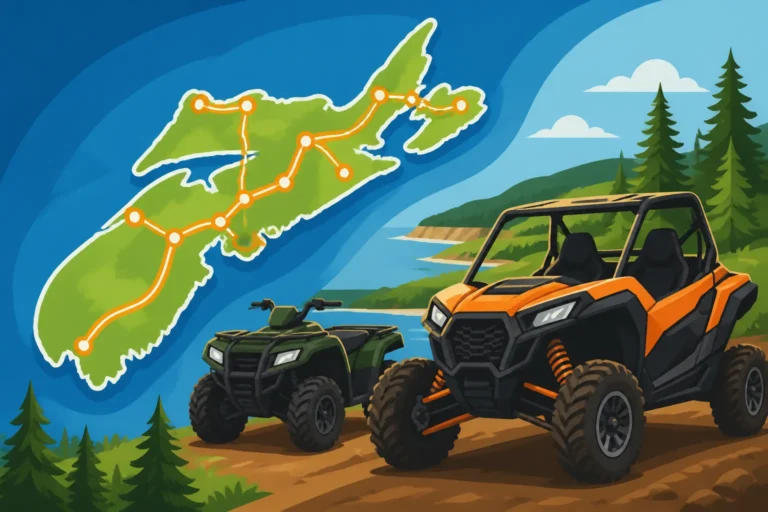
Antigonish is close to segments of [Nova Scotia ATV Trails: The ATVANS Network], an extensive system maintained by dedicated volunteers and member clubs. Road trails serve as vital arteries, allowing you to link up with these official trails, explore scenic routes, and truly immerse yourself in the landscape. For example, if you're riding the trails that crisscross Guysborough County and want to reach services in Antigonish, a designated road trail could be your legal pathway. Similarly, these connections allow riders to access the beginning or end points of longer journeys, perhaps even parts of famous routes like the Celtic Shores Coastal Trail, from a convenient starting point near [Nova Scotia Riding Near Antigonish]. This interconnectedness transforms localized rides into epic explorations, making the most of Nova Scotia's diverse terrain.
Navigating the Rules and Enhancing Your Ride in Antigonish
Successfully and safely navigating Nova Scotia's road trails, especially in a picturesque area like Antigonish, requires more than just knowing where you can ride. It demands proper preparation, the right equipment, and a commitment to responsible riding practices. Being prepared not only keeps you safe but also helps ensure the continued acceptance and expansion of these valuable road trail opportunities.
Essential Gear and Machine Setup for Road Trails
When transitioning between rugged off-road trails and designated road trails, your machine and gear need to be up to the task. As previously mentioned, an approved helmet is non-negotiable. Ensure it meets recognized standards like DOT, CSA, Snell, or BSI. Beyond the helmet, visibility is paramount. Your OHV must have fully functional headlights, capable of showing a clear white light for [Why Your Headlight Must Show at 300 Feet], and a red tail light visible from at least 200 feet [Nova Scotia Lighting Requirements]. If you're riding during dusk or dawn, reflective clothing for yourself and any passengers is a smart addition, greatly enhancing your presence to other motorists.
Consider your tires as well. While knobby tires are fantastic for mud and rocky trails, they can wear quickly and feel unstable on paved sections. Many riders opt for versatile, multi-terrain tires, like those offered by SuperATV, that perform well both on loose gravel and the occasional paved section, ensuring good grip and reduced wear. Additionally, a robust set of mirrors is legally required and invaluable for keeping an eye on traffic behind you. Riding at 25 km/h on an open road can kick up dust or debris. Many riders find accessories like a quality windshield, perhaps one from SuperATV's extensive lineup, makes the experience much more enjoyable and safer. Finally, ensure your machine's exhaust system is stock or meets regulated [Nova Scotia Noise Limits on a Machine]; excessive noise can quickly lead to community complaints and potential fines.
Safety and Etiquette on Shared Road Trails
Riding on road trails is a privilege, and maintaining that privilege hinges on every rider upholding a high standard of safety and etiquette. When you enter a designated road trail segment around Antigonish, you're not just on a trail; you're sharing the road with cars, trucks, cyclists, and pedestrians. Your behaviour directly reflects on the entire OHV community. Always be acutely aware of your surroundings, especially in residential areas. The noise from OHVs can be disruptive to local residents, so riding quietly and respectfully, particularly when passing homes, is crucial. Avoiding kicking up [Dust Near a Coastal Home] is also a gesture of respect that goes a long way.
Maintain your distance from other vehicles, always be prepared to stop, and make eye contact with pedestrians or cyclists to ensure they know your intentions. Remember, you must yield to all other traffic, without exception. This isn't just a rule; it's a fundamental principle of shared road use. Avoid any sudden movements or aggressive driving. The goal is to be seen as a responsible and courteous road user. This commitment to good conduct helps build positive relationships within the communities you ride through, which is vital for the long-term success and expansion of the road trail system in Nova Scotia.
Planning Your Antigonish Adventure
Embarking on an OHV adventure through the Antigonish region, especially when incorporating road trails, requires careful planning. Accessing accurate, up-to-date information and knowing what to expect can make all the difference between a frustrating experience and a memorable one.
Resources for Up-to-Date Information
One of the biggest challenges riders face is ensuring they have the most current information regarding designated road trails. Since municipalities control these designations, official provincial maps might not always reflect every local nuance immediately. Your first point of contact should always be the provincial government's official Off-Highway Vehicle pages, which typically list the approved road trail segments. However, for the most localized and often real-time information, reaching out to the local ATVANS member clubs in the Antigonish area is highly recommended. These clubs are usually intimately familiar with local trail conditions, road trail designations, and any temporary closures or reroutes. You can often find contact information for these clubs through the provincial association, by [Reaching the Provincial ATV Association in Lower Sackville].
Additionally, never hesitate to make use of official channels if you have specific questions. The provincial OHV line can be a valuable resource for clarification. [Calling the OHV Line for Help] can provide insights into provincial regulations and help you understand the nuances of the system. While online resources are helpful, sometimes a direct conversation can resolve confusion more effectively. Staying informed ensures you're riding legally and responsibly, contributing positively to the OHV community's reputation.
What to Expect and How to Prepare
When planning your route through Antigonish, assume that road trails are there to connect, not to be destinations in themselves. They are segments designed to link you from one off-highway trail system to another, or to access services within a community. Plot your journey carefully, noting where you'll transition from traditional trails to road trails, and be ready to adapt your riding style accordingly. Always carry essential documents: your valid driver's license, proof of machine registration, and your insurance [Carrying Papers on a Coastal Ride]. Failure to produce these can lead to significant fines.
Beyond paperwork, consider practical preparations. A GPS device or a reliable mapping app on your phone (downloaded for offline use, as cell service can be spotty in rural Nova Scotia) is invaluable for navigating unfamiliar territory. Pack a basic toolkit, a first-aid kit, and enough water and snacks for your planned duration. For longer rides that traverse varying terrain and connect through road trails, many riders find aftermarket storage solutions, like those from SuperATV, invaluable for carrying emergency gear, tools, and personal items securely. Weather can change quickly in Nova Scotia, so layers of clothing and rain gear are always a good idea. By preparing thoroughly, you ensure your Antigonish riding adventure is not only legal but also safe, comfortable, and truly enjoyable.
| Rule Category | Nova Scotia Road Trail Requirement |
|---|---|
| Speed Limit | Maximum 25 km/h |
| Operating Hours | 30 minutes before sunrise to 30 minutes after sunset |
| Driver's License | Full, valid driver's license required (no learners) |
| Registration | Mandatory, machine must be registered |
| Insurance | Mandatory, minimum liability coverage required |
| Helmet | Approved helmet (DOT, CSA, Snell, BSI) is mandatory for all riders |
| Riding Formation | Single file only |
| Passing | Not permitted on road trails |
| Yielding | Must yield to all other vehicles, pedestrians, and cyclists |
| Alcohol/Drugs | Zero tolerance, same as highway driving |
| Local Bylaws | Check with Antigonish County for specific local regulations |
Disclaimer
This article is for general informational purposes only and does not constitute professional advice. Laws, prices and regulations vary by location and change over time. Consult a qualified professional for guidance on your specific situation.