Nova Scotia Rules for Two Riders on a Quad
It’s a common scenario for many Nova Scotia off-highway vehicle enthusiasts: you’re geared up for an adventure, and a friend, partner, or child wants to join you on your quad. But can two people legally ride on a single ATV in Nova Scotia? This can be a real source of confusion, leaving riders wondering if they’re breaking the rules or risking their safety. This guide aims to clear up Nova Scotia’s regulations regarding carrying passengers on ATVs and UTVs, helping you ensure your ride is both compliant and enjoyable.
Understanding Nova Scotia's Off-Highway Vehicle Passenger Rules
The regulations around carrying a passenger on an off-highway vehicle (OHV) in Nova Scotia are specific and important for rider safety and legal compliance. Many riders assume that if there's space, or if they can physically fit two people, it's permissible. However, the law focuses on the manufacturer's design and intent for the machine. It's not just about fitting two bodies; it's about the vehicle being engineered to safely accommodate that extra weight and occupant.
The key takeaway here is that most standard, single-rider ATVs are exactly that – designed for one operator only. They lack the extended seating, grab handles, and dedicated passenger footrests that are integral to safely carrying a second person. Attempting to carry a passenger on a machine not designed for it introduces significant stability and control issues, increasing the risk of an accident. An officer stopping you on the trail will be looking for clear evidence that your machine is purpose-built for more than one person.
The "Designed for One Operator" Clause
Nova Scotia's Off-highway Vehicles Act clearly states that an off-highway vehicle designed by the manufacturer for one operator shall not carry a passenger. This is the bedrock of the regulation and where many riders can inadvertently fall afoul of the law. Think about your typical sport quad or even many utility ATVs; they come with a single, saddle-style seat meant for one person. There are no secondary foot pegs, no backrest for a passenger, and often, the machine's suspension and frame aren't rated for the added weight distribution of a second person.
This isn't just a bureaucratic rule; it's a safety measure. When a second person sits behind the operator on a single-rider quad, it shifts the centre of gravity significantly. The operator's ability to shift their weight, crucial for maintaining balance and control, especially on uneven terrain or during turns, is severely hampered. This makes the machine much harder to control, increasing the likelihood of a rollover or loss of steering. It also limits the operator's visibility and can interfere with their access to controls.
The onus is on the owner and operator to understand their machine's design specifications. If your ATV's manual or manufacturer's sticker indicates it's a "1-up" model, then carrying a passenger is a direct violation of the law. This holds true whether you're on a designated trail, a private woodlot with permission, or even crossing a road on a permitted road trail segment. Enforcement officers are well-versed in identifying machines not designed for multiple occupants, and ignorance of the law is rarely an acceptable defence.
What Constitutes a "Two-Up" Machine?
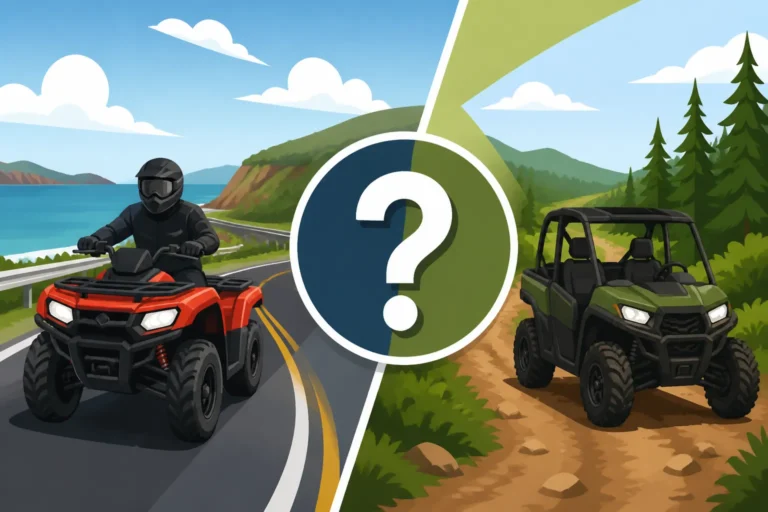
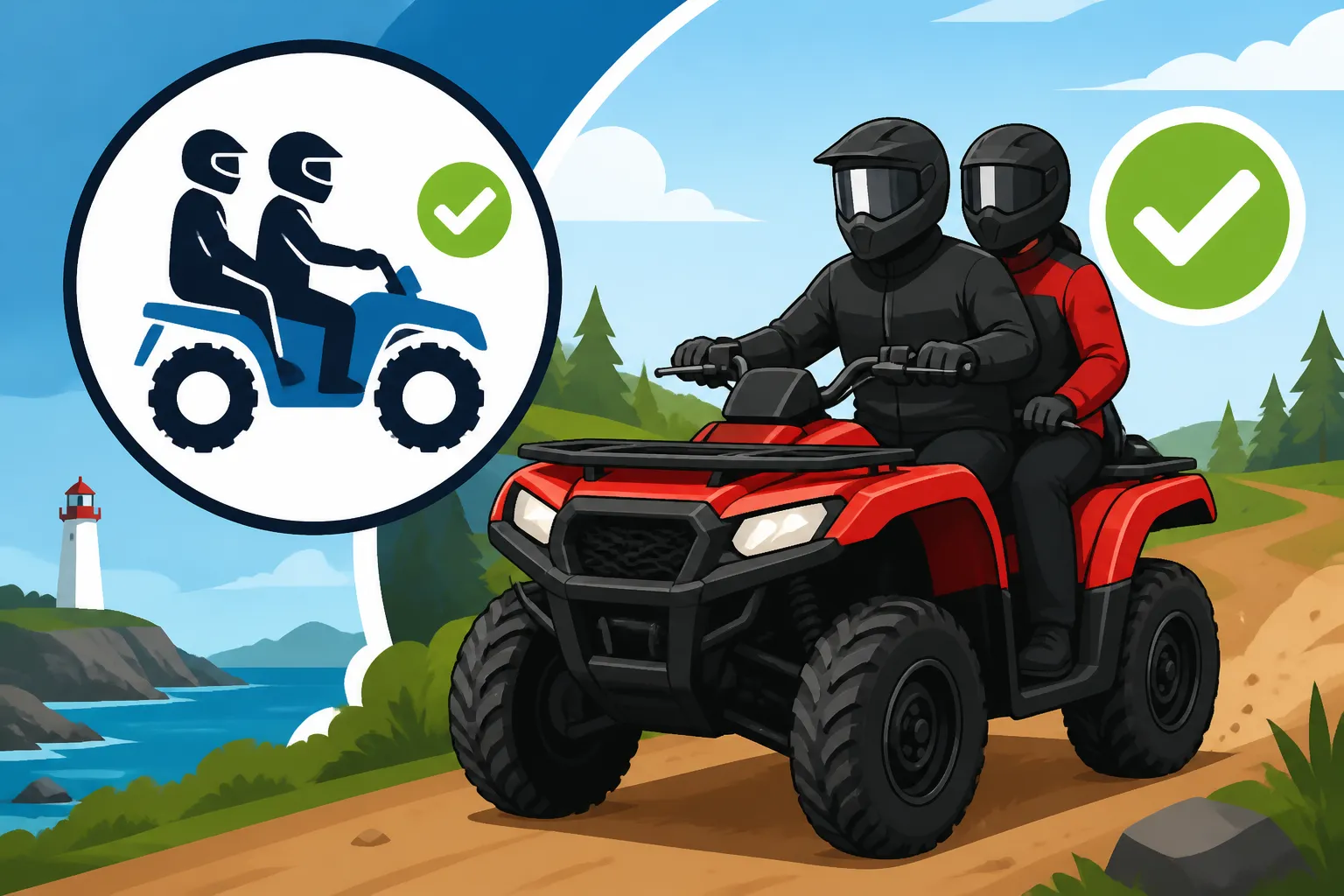
So, if single-rider quads are out, what kinds of machines are allowed to carry passengers? Nova Scotia law permits passengers on OHVs that are designed by the manufacturer to carry more than one person. These are commonly known as "two-up" ATVs or side-by-sides (UTVs). These machines are purpose-built from the ground up to safely accommodate additional occupants. They feature a longer chassis, an extended or separate seat for the passenger, dedicated footrests (often raised for comfort and safety), and sometimes even a backrest and grab handles for the passenger to hold onto.
Side-by-sides (UTVs) are almost always designed for multiple occupants, with configurations ranging from two-seaters to four-seaters or even six-seaters. These vehicles resemble small cars with roll cages and seatbelts, offering a much different and often safer passenger experience than an ATV. When you're considering buying a machine with the intent of regularly carrying passengers, explicitly look for models designated as "2-up" ATVs or choose a UTV that fits your needs. Dealers are usually very clear about the seating capacity of each model they sell, and manufacturer websites provide detailed specifications.
The critical distinction is the manufacturer's design. While you might see aftermarket seats or passenger kits available, retrofitting a single-rider ATV with these additions generally does not make it legally compliant as a "two-up" machine in Nova Scotia. The law refers to the original design. Companies like SuperATV offer fantastic accessories and upgrades for various machines, but if your ATV wasn't originally engineered by the manufacturer for two, adding an aftermarket seat won't magically change its legal designation or its inherent safety limitations. Always prioritize the manufacturer's original intent and the vehicle's structural integrity.
Safety Considerations for Carrying Passengers
Beyond the legalities, the safety of your passenger and yourself should always be your top priority. Riding with a passenger, even on a machine designed for it, changes the dynamics of the ride considerably. It requires a different approach to operating the vehicle, increased awareness, and strict adherence to safety protocols. A casual ride can quickly turn dangerous if the added weight and movement of a passenger aren't properly managed.
Imagine navigating a tricky, rocky ascent or a sharp, muddy turn. With an extra person, your machine will feel heavier, its centre of gravity will be higher, and it will respond differently to your steering and throttle inputs. Communication with your passenger becomes vital, especially if they're not an experienced rider. They need to understand how to move with the machine, when to lean, and what to hold onto. Overlooking these details can lead to discomfort at best, and serious injury at worst.
Passenger Age and Requirements
Nova Scotia has specific age requirements for both ATV operators and passengers. Generally, passengers on an OHV must be at least nine years old. However, this is for machines designed to carry a passenger. An even stricter rule applies to young operators. For operators under 16, there are additional rules about engine size and supervision. For passengers specifically, the minimum age of nine years old is a baseline, but the actual safety depends on the child's size, maturity, and ability to follow instructions. You can find more details in [Nova Scotia Rules for a Passenger Under 9].
It's not enough for a child to simply meet the age requirement; they must also be able to sit securely, reach the footrests, and hold onto the designated grab handles (if applicable) for the entire duration of the ride. A child who is too small or restless could easily fall off, especially over bumps or during sudden maneuvers. Always assess if your passenger, regardless of age, is physically and mentally ready for the ride ahead. For instance, if you're planning a long, strenuous ride through challenging terrain, it might not be suitable for a young child, even if they technically meet the age minimum. Always ensure they are comfortable and secure before you even start the engine.
| Age Group | Operator Rules in NS | Passenger Rules in NS (on a "two-up" machine) |
|---|---|---|
| Under 6 | Not permitted to operate (closed course for 6-13) | Not permitted |
| 6 to 15 | Specific engine size limits, supervision, training | Not permitted (minimum 9 years old) |
| 9 to 15 | As above (if operating) | Permitted on a designed two-up machine if supervised |
| 16 to 18 | Training required, may operate without supervision | Permitted |
| 19 and Older | Full operating privileges | Permitted |
Note: Specific engine size guidance for youth operators and training requirements are crucial and detailed in other regulations.
Essential Gear for Passengers
Just like the operator, any passenger on an ATV or UTV in Nova Scotia must wear appropriate safety gear. The helmet is non-negotiable. It must be a helmet that meets approved safety standards (such as DOT, CSA, Snell, or BSI), securely fastened under the chin. There's no compromise here; an ill-fitting or uncertified helmet offers little protection. You can learn more about specific requirements in [Nova Scotia ATV Helmet Law].
Beyond the helmet, passengers should wear eye protection (goggles or a visor), sturdy over-the-ankle boots, long pants, and long-sleeved shirts or a jacket to protect against scrapes, branches, and debris. Gloves are also highly recommended for grip and hand protection. Just imagine a sudden stop or a branch whipping back – proper gear can be the difference between a minor inconvenience and a significant injury. Ensure your passenger is dressed appropriately for the weather and terrain conditions, as well as for potential impacts. Companies like SuperATV also offer UTV accessories like full or half windshields, which can significantly enhance passenger comfort and protection from elements like dust, mud, and wind on multi-occupant UTVs. While not mandatory gear, they contribute to a safer and more pleasant ride.
It's your responsibility as the operator to ensure your passenger is correctly geared up before you set out. Don't assume they know what to wear or have the right equipment. A quick check before departure can prevent a lot of headaches later. If a passenger is under 16, specific gear rules are even more stringent, often requiring eye protection, long sleeves, gloves, and sturdy footwear.
Penalties and Enforcement for Non-Compliance
Ignoring Nova Scotia's regulations regarding passengers on OHVs can lead to more than just a stern lecture from an enforcement officer. There are tangible legal and financial consequences for operators who choose to carry passengers on machines not designed for them, or for failing to meet other safety requirements. These penalties are in place to deter unsafe practices and reinforce the importance of safe OHV operation for everyone sharing our trails and rural roads.
It’s easy to think "it won't happen to me" or that an officer won't be in your remote riding area. However, enforcement patrols are common on popular trails, road trail segments, and even on Crown land access points. Officers are trained to spot violations, and they take these rules seriously because they directly impact public safety. A moment of convenience or a desire to accommodate a friend could end up being a very costly mistake, both financially and in terms of your riding privileges.
Fines for Unlawful Passenger Carriage
If you are caught carrying a passenger on an ATV not designed for two operators in Nova Scotia, you could face significant fines. The minimum fine for operating an unregistered machine is $250, and while this specific fine might differ slightly for passenger violations, expect penalties that reflect the seriousness of the offence. The exact amount can vary depending on the specific section of the Off-highway Vehicles Act that is contravened, but it will certainly put a dent in your wallet.
These fines are not just a slap on the wrist. They are intended to be a deterrent. A single fine can easily exceed the cost of a trail permit or even some basic safety gear. Furthermore, receiving a ticket can have implications for your driving record, even though it's an off-highway vehicle offence, especially if it leads to repeat violations. Always check the current regulations or consult Access Nova Scotia for the most up-to-date fine schedules. You can also get a general idea of potential costs by looking at [Nova Scotia Ticket Costs for Riders].
Beyond the immediate fine, there's the potential for your ride to be cut short. An officer might order you to cease operation until the violation is corrected, which could mean walking back to your truck or waiting for someone to pick up your passenger. This not only ruins your day but can also be inconvenient and embarrassing. The best way to avoid these penalties is simply to ensure your machine is appropriate for the number of occupants you plan to carry.
Insurance and Liability Implications
Perhaps even more critical than the fines are the potential insurance and liability implications of carrying an unlawful passenger. In Nova Scotia, off-highway vehicles must be insured for liability. While this insurance typically covers you if you cause damage or injury to another party, carrying a passenger unlawfully could potentially void or complicate your coverage in the event of an accident. If your insurance company determines that you were operating the vehicle outside of its intended design or in violation of the law, they might refuse to cover claims. You can find more information about requirements in [Nova Scotia Insurance Requirements for Riders].
Imagine a scenario where you're riding a single-rider ATV with an unauthorized passenger, and you have an accident. If your passenger is injured, you could be held personally liable for their medical expenses, lost wages, and pain and suffering. Without insurance coverage due to non-compliance, you could be facing a devastating financial burden. This risk far outweighs the convenience or fun of carrying an extra person on a machine not designed for it.
Always carry your proof of insurance (pink card) with you, as it's a requirement to have it available for inspection. The minimum liability coverage is $500,000, but this protection hinges on you operating your machine legally. Check your specific policy details with your insurer to understand how operating in violation of the Off-highway Vehicles Act might affect your coverage. Ensuring you have adequate [Nova Scotia Liability Insurance Requirement] is crucial for peace of mind, but it only works if you're following the rules.
Riding an OHV on Nova Scotia's Road Trails
Nova Scotia has made significant strides in expanding access for off-highway vehicles, including opening up designated road trails in many communities. This means more opportunities for riders to explore our beautiful province, but it also comes with a whole new set of rules and responsibilities. Riding on these road trails is not the same as riding on a private trail system, and understanding the nuances, especially concerning passengers, is critical for safe and legal travel.
The [Nova Scotia Road Trails Act Explained] allows for ATVs and UTVs to share certain public roads, typically with lower speed limits and specific operating hours. These initiatives aim to connect trail systems and provide access to services like gas stations and restaurants. However, the presence of other road users – cars, bicycles, pedestrians – necessitates even greater vigilance from OHV operators. The relaxed atmosphere of a forest trail shifts to one of shared responsibility and strict adherence to traffic laws when you enter a road trail segment.
Passenger Rules on Road Trails
The passenger rules for ATVs and UTVs on Nova Scotia's road trails remain consistent with the general OHV regulations: passengers are only permitted on machines specifically designed by the manufacturer to carry more than one person. This means if your ATV is a single-rider model, you cannot carry a passenger on a road trail, just as you can't on a regular off-highway trail. UTVs, which are almost universally multi-passenger vehicles, are generally permitted to carry passengers up to their manufacturer's seating capacity on road trails, assuming all occupants are properly secured and meet age requirements.
When riding on a road trail, every occupant, including passengers, must wear an approved helmet. For UTVs, seatbelts are mandatory and must be worn by all passengers at all times. The reduced speed limit on road trails (typically 25 km/h) might give a false sense of security, but the risk of collision with other vehicles is always present. A passenger's safety relies heavily on the operator's adherence to all road rules, defensive driving, and ensuring everyone in the machine is properly restrained. Always remember that when you're on a road trail, you're interacting with different types of traffic, and everyone's safety depends on your compliance and caution.
It's also worth noting that while road trails offer incredible access, they are not universal. Not every road is an OHV road trail, and signage is crucial. You can find out more about where you can ride in [Nova Scotia Road Trails: Where You Can Ride]. Always consult current maps and signage to ensure you're on a designated road trail.
Importance of Communication and Preparedness
Riding with a passenger on any terrain, but especially on road trails, demands excellent communication. Before you even start the engine, discuss with your passenger what they should expect. Explain how the machine moves, what to hold onto, and how to react to bumps or turns. Establish a few hand signals for 'slow down,' 'stop,' or 'are you okay?' This is particularly important for younger or inexperienced passengers who might not anticipate the machine's movements.
Preparedness also extends to having the right equipment and knowledge. Ensure your machine is well-maintained, with good tires, brakes, and lights, especially if you plan to be out during twilight hours on a road trail. Carry a basic first-aid kit, a small tool kit, and a communication device. While riding on a road trail, you might be closer to help, but remote sections still exist. Knowledge of the specific rules for [Nova Scotia Road Trail Operating Hours] and [Nova Scotia Night Riding Equipment Rules] is also vital if your ride extends beyond daylight hours.
Ultimately, whether you're deep in the woods or cruising a designated road trail, the responsibility for your passenger's safety rests squarely on your shoulders. By adhering to Nova Scotia's regulations, riding a machine designed for multiple occupants, and prioritizing clear communication and proper gear, you can ensure that bringing a friend or family member along for the ride is a truly enjoyable and safe experience for everyone.
Disclaimer
This article is for general informational purposes only and does not constitute professional advice. Laws, prices and regulations vary by location and change over time. Consult a qualified professional for guidance on your specific situation.