Nova Scotia Noise Complaints About Quads
Nova Scotia noise regulations for off-highway vehicles, legal limits, and responsible riding practices to prevent complaints.
Legal here, illegal one county over.
What each state allows, the mirrors, horn and signals a conversion requires, and the county and city overrides that quietly change the answer.
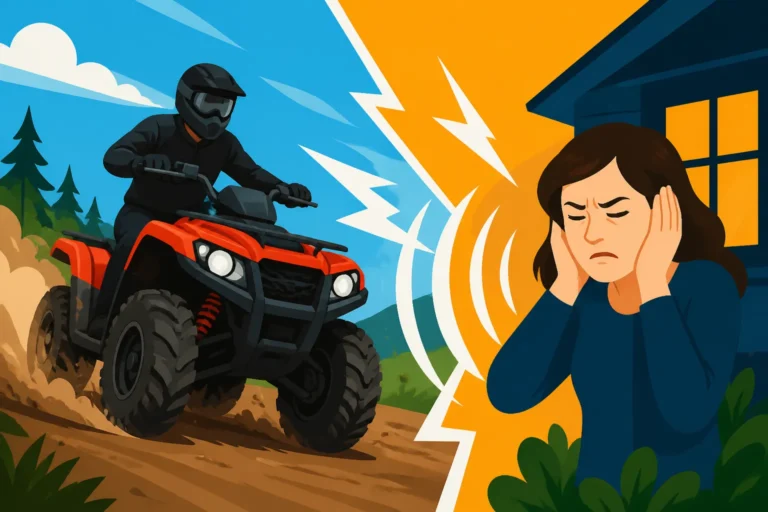
Nova Scotia noise regulations for off-highway vehicles, legal limits, and responsible riding practices to prevent complaints.
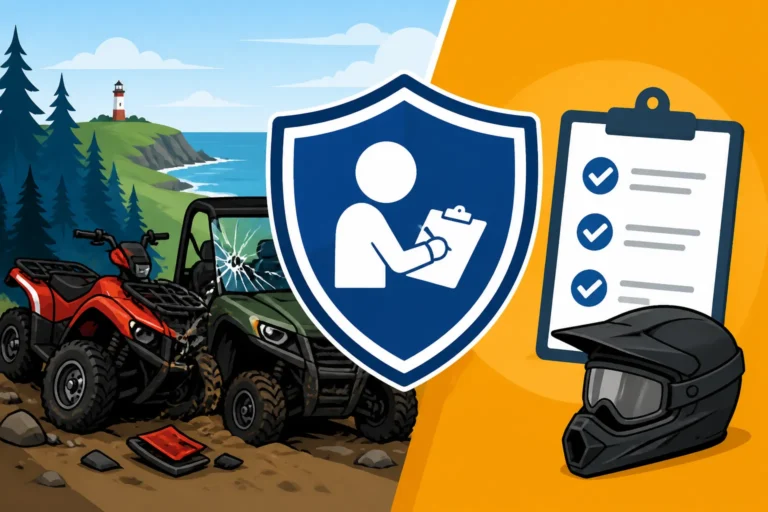
Nova Scotia off-highway vehicle accident reporting rules specify when operators must report injuries, deaths, and property damage.
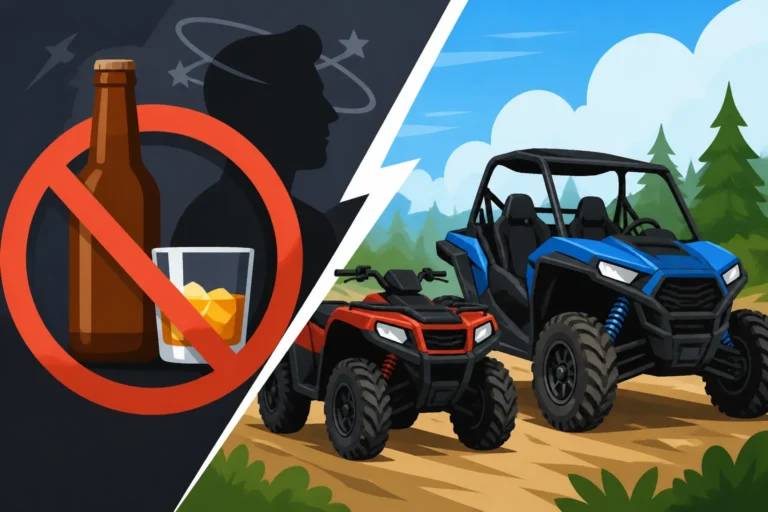
Nova Scotia impaired riding penalties for off-highway vehicles include criminal records, fines, and federal charges under the law.
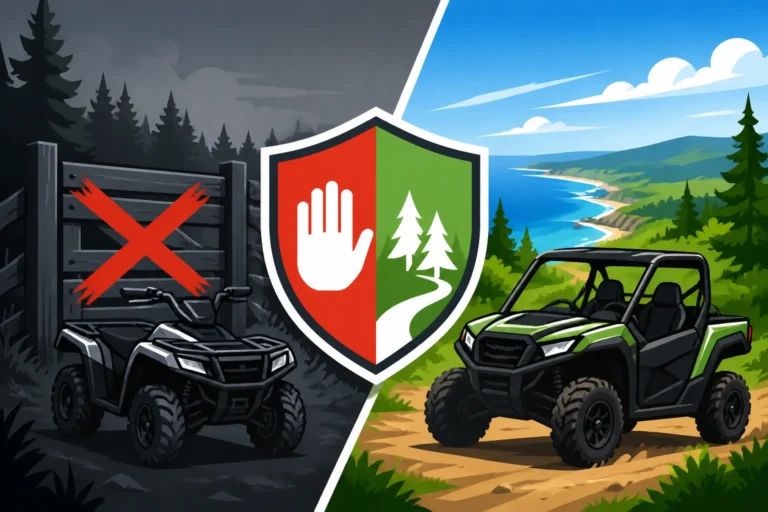
Nova Scotia trespass law for ATV and UTV riders explains property boundaries, private land rules, and legal riding responsibilities.
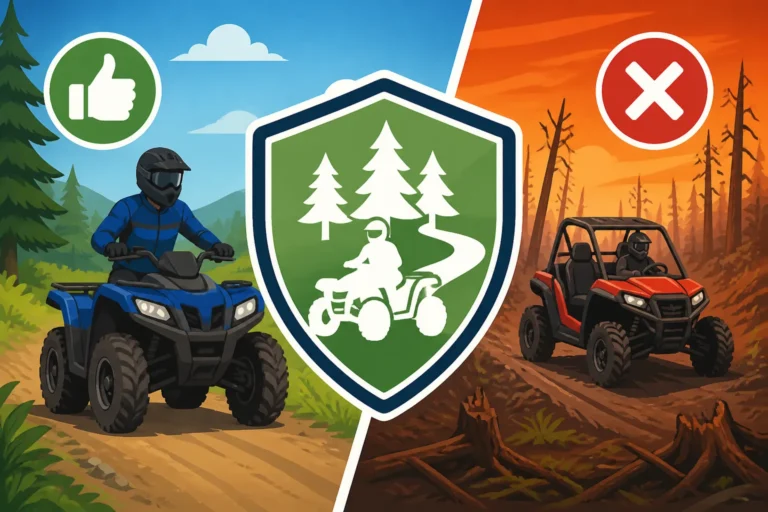
Nova Scotia off-highway vehicle riders must obtain explicit landowner permission before riding on private woodlots to avoid legal penalties.
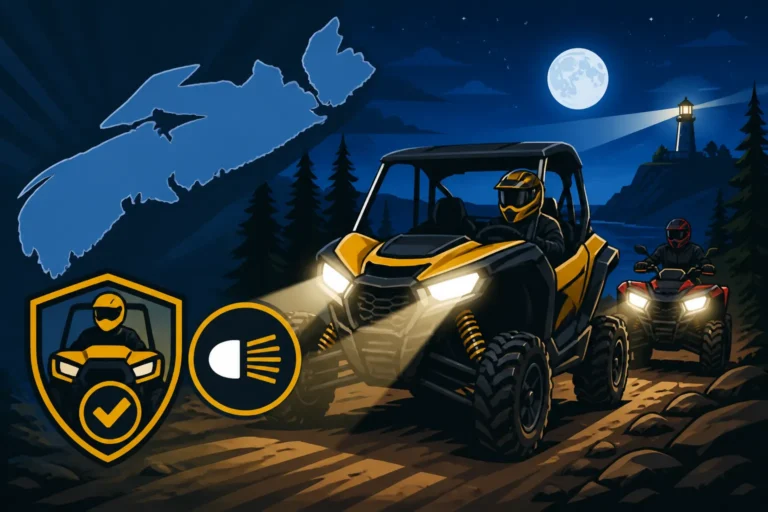
Nova Scotia regulations for riding an off-highway vehicle after dark require working headlights, tail lights, and specific lighting times.
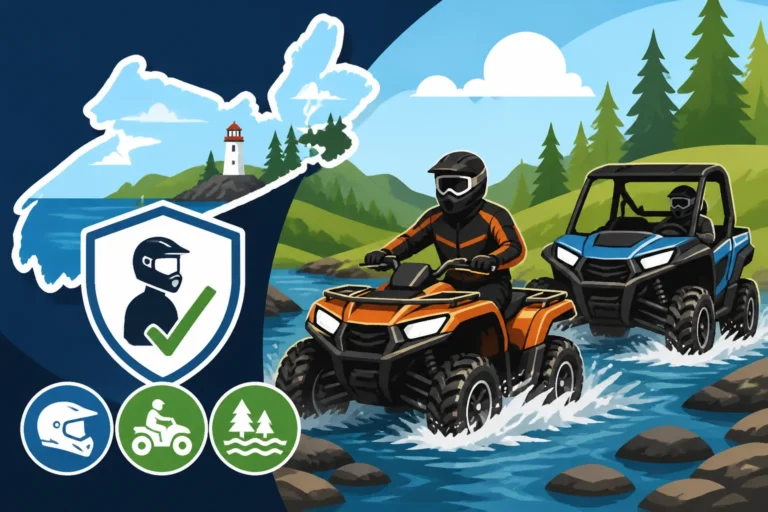
Nova Scotia off-highway vehicle regulations and the Environment Act prohibit riding ATVs through streams to prevent environmental damage.

Nova Scotia dune riding rules prohibit off-highway vehicles to protect fragile coastal ecosystems and prevent severe environmental erosion.
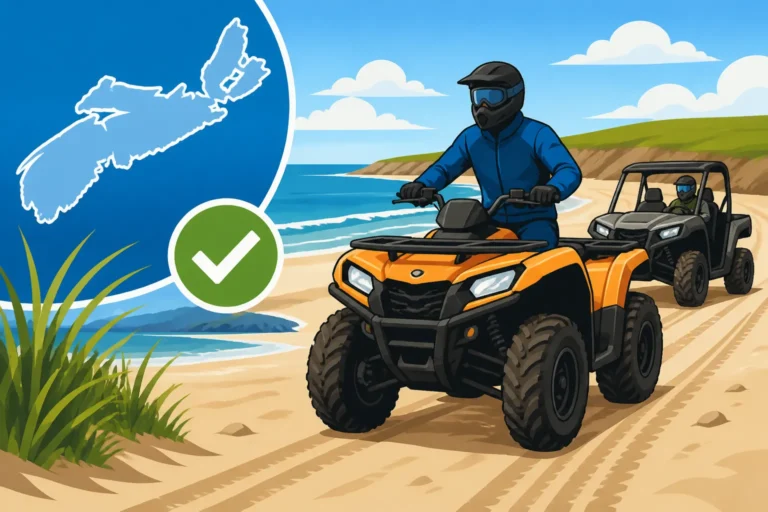
Nova Scotia off-highway vehicle regulations prohibit riding ATVs and UTVs on beaches to protect fragile ecosystems and ensure public safety.
Nova Scotia rail bed regulations and designations explain where off-highway vehicle riders can legally operate quads.