Nova Scotia Parent Riding With a Child
Riding with a child in Nova Scotia takes more than choosing an easy trail. The rules can depend on the child’s age, whether they are driving or riding as a passenger, the machine and where you plan to ride. Here’s how to separate those questions, prepare for a safer outing and avoid assuming that an adult riding nearby makes every situation legal.
First, distinguish driving from riding as a passenger
A child driving their own ATV or side-by-side has different requirements from a child riding as a passenger. Start by deciding which situation applies: will your child operate a machine, or ride on one with you?
If your child is driving, being their parent does not automatically make you a qualified supervisor. Nova Scotia’s youth rules include age and supervision requirements, and the adult must meet the applicable qualifications. The child’s age also affects what kinds of riding and locations are allowed. Check Nova Scotia Youth Supervision Rules before treating a family ride as a routine outing.
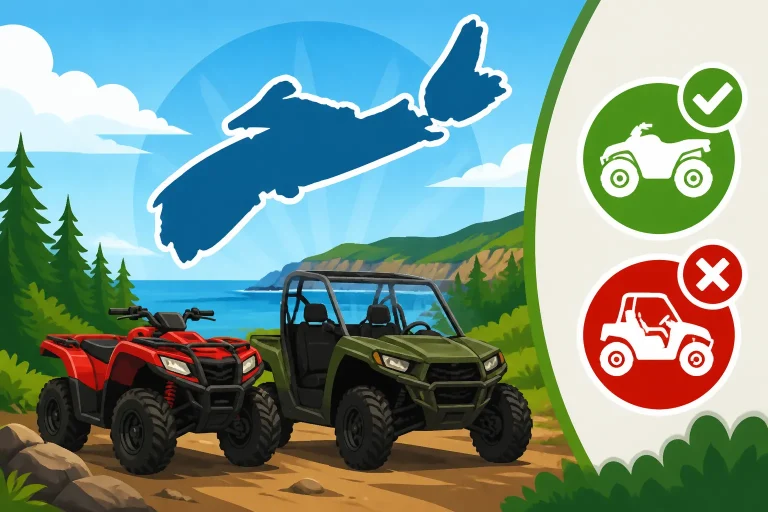
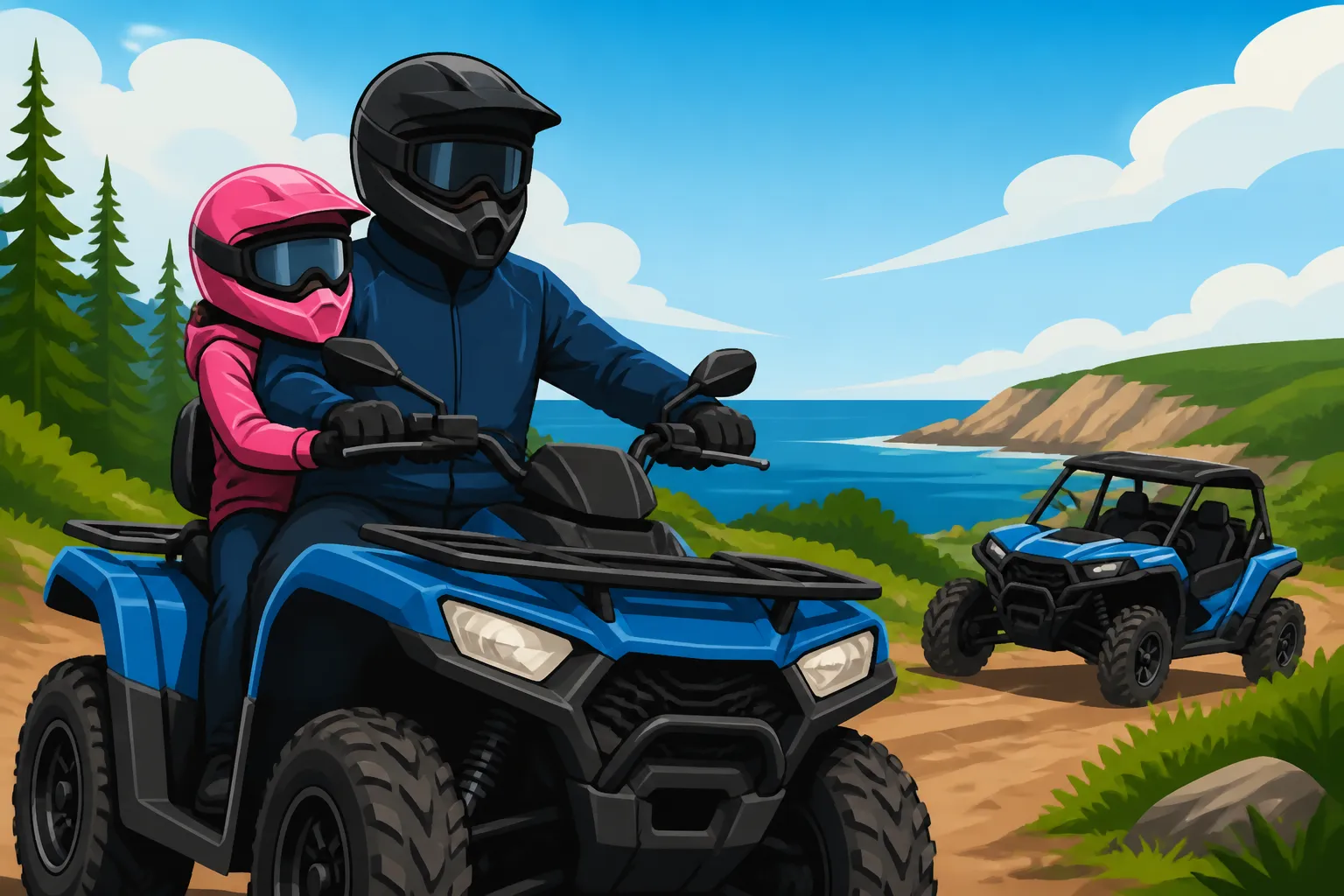
If your child will be a passenger, check the machine’s design and the rules for the particular place you intend to ride. A passenger should have a proper seating position and footrests; sitting on a cargo rack or being held on a seat is not a safe substitute. Do not assume a machine can carry a passenger just because there is room. Follow the manufacturer’s passenger instructions and any more restrictive age rules that apply. On road trails, passengers must be at least nine; see Nova Scotia Rules for a Passenger Under 9 for that specific restriction.
These distinctions matter because a family might be following one set of requirements while missing another. For example, a child could be old enough to ride as a passenger in a particular setting but still not be allowed to operate a machine on that route. Likewise, a child’s ability to ride on private property does not by itself establish that they can join you on a public trail.
Before setting out, identify the machine, the child’s role, the child’s age and the exact riding location. Then check each requirement for that combination. If you are unsure whether a rule applies to an ATV, a side-by-side or a particular type of trail, confirm it before the ride rather than relying on what another family does.
Match your plan to the child’s age and location
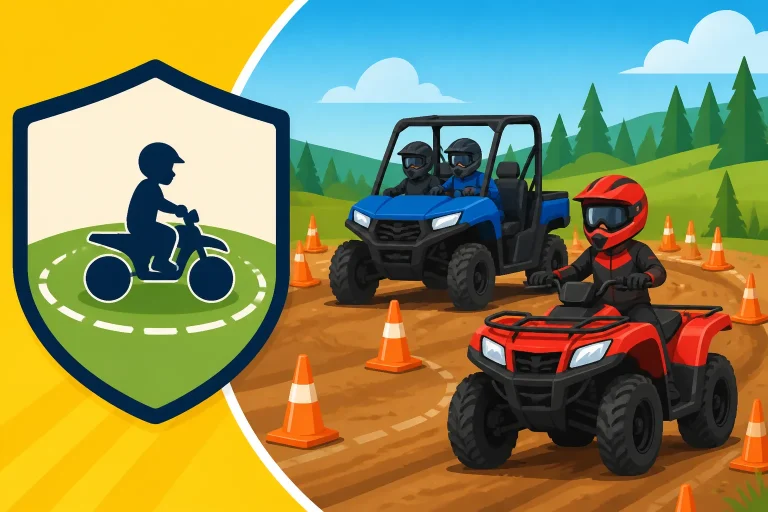
Age affects more than whether a child may sit on a machine. It can affect supervision, machine suitability and where a young rider may operate. A supervised ride on private property is not automatically the same as riding on a club trail, a road trail or another public corridor.
| Child’s situation | What to check before riding |
|---|---|
| Child under six | Do not plan for them to operate an off-highway vehicle. Check separate passenger restrictions and the machine’s instructions if considering a passenger ride. |
| Rider aged six to 13 | Check the youth supervision rules, machine suitability and any closed-course restriction that applies to this age group. Do not assume an ordinary trail qualifies as a closed course. |
| Rider aged 14 or 15 | Confirm the supervision and operating requirements for the specific route and machine. Being older than 13 does not remove every youth rule. |
| Rider aged 16 or older | Check the training and other requirements that apply to the rider’s age and history. The rules may differ from those for younger children. |
| Passenger on a road trail | Confirm the minimum passenger age, a proper passenger seat and footrests, and all other road-trail requirements. |
The table is a starting point, not permission to ride in any location. In particular, young riders may face a closed-course restriction. The term can have a specific meaning under the rules, so a quiet section of trail, a backyard or a private road should not be treated as a qualifying course without confirmation. Review Nova Scotia Closed Course Requirements and check whether the place you have in mind actually meets them.
Supervision is also separate from location permission. An adult may satisfy the supervision requirement but still cannot make a prohibited route or unsuitable machine acceptable. If you are planning a ride on public trails with a child under 14, verify the current rules for that child’s age and the precise trail before you go. The same applies when riding on a road trail: road-trail access and age requirements are not interchangeable with rules for off-road riding.
A practical way to plan is to call the relevant authority or trail organization with specific details: the child’s age, the vehicle type, whether the child will drive or ride as a passenger, and the route. General questions such as “Can kids ride?” often lead to incomplete answers because the requirements can change with those details.
For age-specific examples, [Nova Scotia Rules for a 10-Year-Old Rider] and Nova Scotia Rules for a 14-Year-Old Rider can help you identify the questions to ask. For machine sizing, see Nova Scotia Youth Machine Size Rules. A parent’s comfort with a child’s skill is important, but it does not replace the legal requirements or the need for a machine that fits.
Prepare the child, adult and machine before leaving
A family ride is safer when the child can operate the machine confidently and the supervising adult can focus on them rather than on last-minute adjustments. Preparation should cover the rider, the vehicle, the route and the adult’s responsibilities.
Check that the machine suits the rider
A child should be able to reach and use the controls correctly, sit in a stable position and manage the machine without stretching or losing control. A machine that is too large or powerful for the child can be difficult to stop, turn or handle on uneven ground. Follow the manufacturer’s age, size and passenger guidance, and do not use engine size alone as proof that a machine is appropriate.
For a passenger, check that the machine is designed to carry one. Confirm there is a proper seat and foot support, and that the child can remain in the intended position without leaning into moving parts or interfering with the driver. If the child cannot sit securely for the whole trip, choose another plan.
Use protective equipment that fits
A helmet must be an approved type and fit securely. A loose helmet can shift; one that is too small may not sit correctly. Follow the rules for eye protection and other required equipment, and make sure clothing covers the child appropriately. Gloves and sturdy footwear help protect against scrapes and hot or moving components.
Check the rules that apply to your riding location, not only general riding advice. Nova Scotia ATV Helmet Law covers helmet requirements, while youth rules may add clothing or equipment obligations for younger riders. A helmet that looks suitable is not enough if it does not meet the accepted standard or fit the child properly.
Do a fit check before starting: the helmet should remain in place when the child moves their head, the chin strap should fasten properly and the child should be able to see clearly. Protective clothing should not snag on controls or prevent safe movement. Replace or adjust gear that has been outgrown, damaged or altered.
Make supervision active
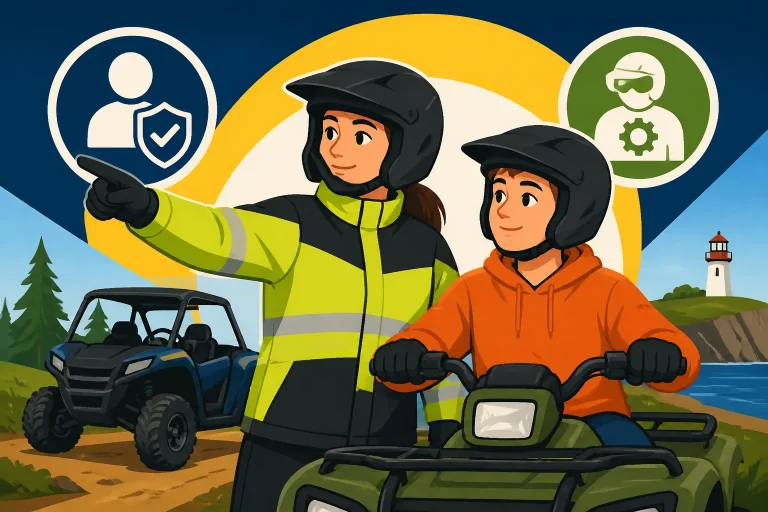
A qualified adult should be able to see the young rider and respond quickly. Riding ahead and assuming the child will follow is not effective supervision. Keep the group arranged so the child stays in view, choose a pace the child can manage and stop when conditions change.
Before the ride, agree on simple signals and what the child should do if the group stops, becomes separated or reaches an unexpected obstacle. Explain that the child must not try to catch up by speeding, cross an unfamiliar route alone or follow another rider onto an unapproved path.
For a group with several children, check the applicable limit on how many young riders one supervisor may oversee. More children can mean less attention for each rider, especially on narrow or unfamiliar trails. Arrange another qualified adult if needed, and do not count on a second adult who does not meet the required qualifications.
Check the route and paperwork
Confirm that the route is open to the vehicle and rider, and that it is not subject to an age, access or seasonal restriction. A road trail is not simply any road that seems quiet, and a club trail is not automatically suitable for every young rider. Check local access information and any temporary closure before transporting the machine.
Also confirm that the vehicle’s registration, insurance and trail access requirements are in order. Registration and a trail permit serve different purposes, and having one does not necessarily satisfy the other. If the machine will be used on an ATVANS trail, check the permit requirements for that trail and rider. Carry the required documents and make sure the adult knows where they are.
On the day of the ride, inspect the machine’s brakes, throttle, tires, lights and controls. Make sure the child knows how to stop the vehicle and what to do if it stalls. Choose a short, familiar route first; a child who is comfortable in a yard may find a long trail with ruts, traffic crossings or changing surfaces much harder.
Avoid the assumptions that cause trouble
The most common planning mistakes happen when one true fact is treated as if it answers every question. A parent may be present, the child may be old enough to ride, and the machine may be registered, yet the planned ride can still fail another requirement.
- “I’m the parent, so I can supervise.” The required qualifications apply to the supervising adult. Check the age and training rules rather than relying on family relationship alone.
- “The child can ride at home, so they can ride on a trail.” Private property, a closed course and a public trail may have different rules. Confirm the location category.
- “The child is a passenger, so youth operating rules do not matter.” Passenger rules are separate, but minimum age, vehicle design and trail-specific restrictions can still apply.
- “The machine has two seats, so it is suitable.” Check the manufacturer’s instructions, passenger equipment and the child’s ability to sit securely.
- “We have a permit, so every rider is covered.” A permit does not override age, supervision, training, registration, insurance or access rules.
- “The trail is quiet, so it is a good first ride.” Quiet does not necessarily mean legal, open or appropriate. Surface, visibility, crossings, other users and the child’s skill all matter.
If your child is learning to operate, keep the first outing simple and within the location and machine limits that apply. Do not mix teaching with a busy group ride or a route where the adult cannot stay close. If the child becomes tired, upset or less attentive, end the ride rather than pushing through.
When rules are unclear, ask about the precise situation rather than seeking a broad yes or no. Give the child’s age, whether they will drive or ride as a passenger, the machine type, the supervisor’s qualifications and the planned route. If the answer is uncertain, choose a setting you can verify. That is a better outcome than discovering at the trailhead that supervision alone was not enough.
Disclaimer
This article is for general informational purposes only and does not constitute professional advice. Laws, prices and regulations vary by location and change over time. Consult a qualified professional for guidance on your specific situation.